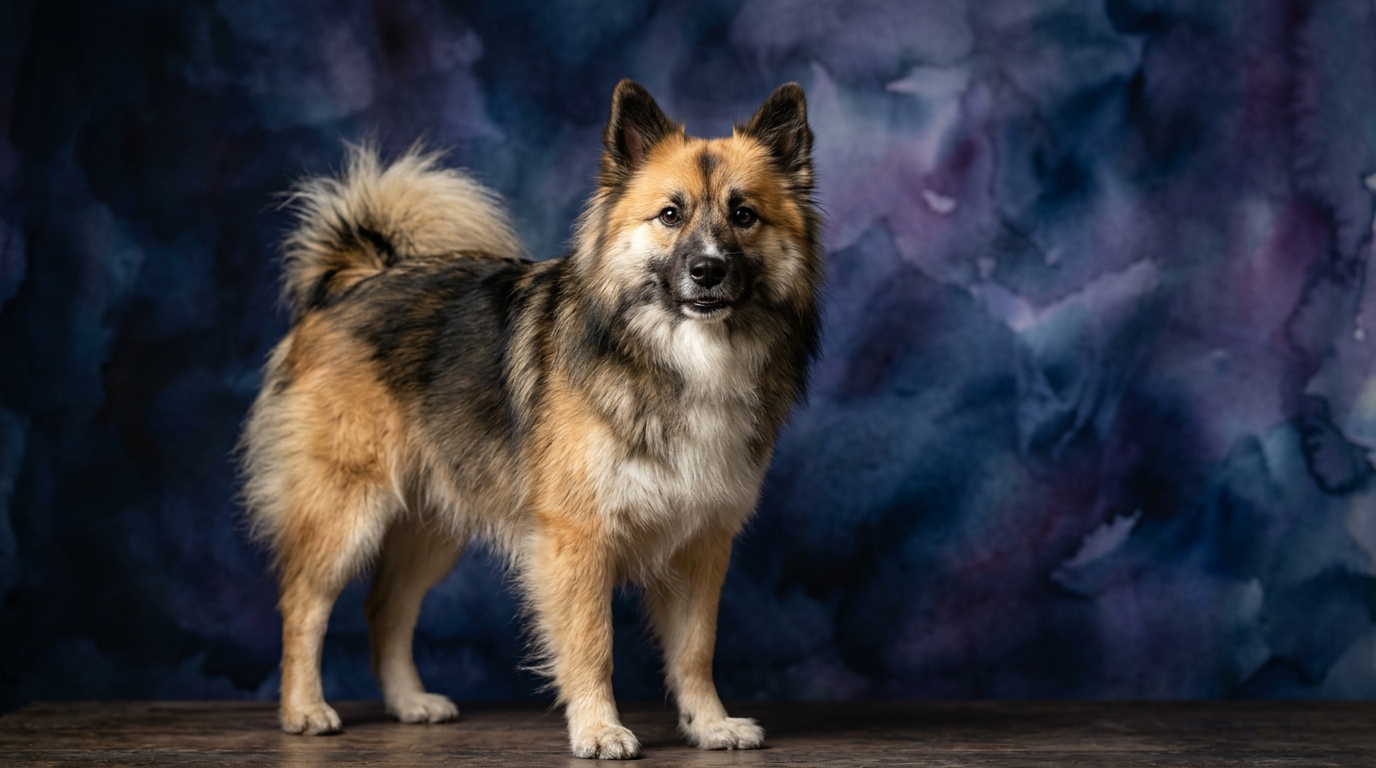
Side-by-Side IQ Profile: Icelandic Sheepdog
The Icelandic Sheepdog, a venerable herding breed, presents a balanced cognitive profile with a consistent rating of 3/5 across all five IQ dimensions. Their Problem Solving ability, rated at 3/5, reflects a practical intelligence suited for navigating the rugged Icelandic terrain and managing livestock; they are resourceful in finding solutions to moderate challenges rather than devising complex strategies. Training Speed, also at 3/5, indicates they learn at a steady, consistent pace, requiring clear and repetitive instruction to master new commands. Their Social Intelligence, scoring 3/5, highlights an aptitude for understanding their familiar human family and flock dynamics, making them perceptive to subtle cues within their established social circle. An Instinctive Drive of 3/5 underscores their innate herding behaviors, including barking to gather and keen observation of their surroundings, which are fundamental to their existence. Finally, their Memory, at 3/5, ensures they retain routines and learned tasks reliably, though perhaps not with the same intricate detail or long-term retention of more specialized breeds without consistent reinforcement.
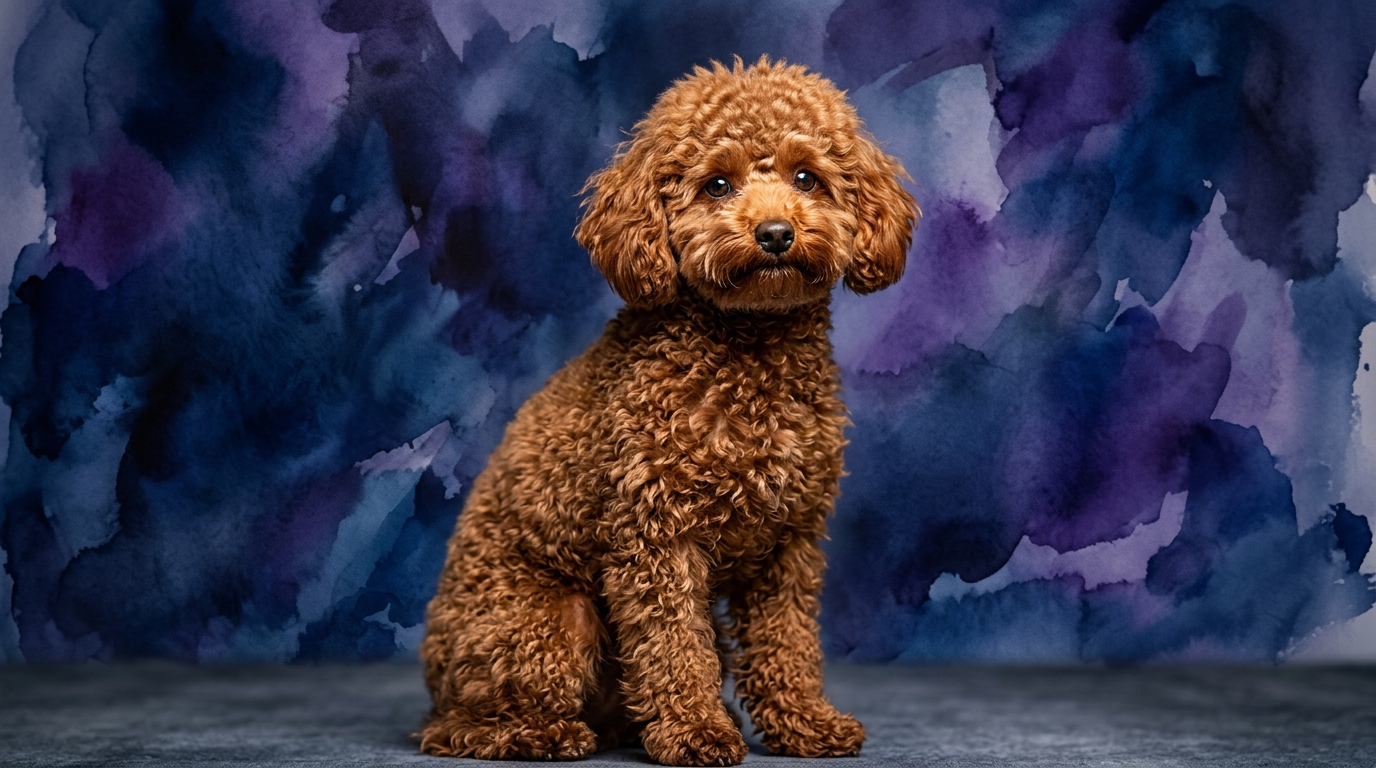
Side-by-Side IQ Profile: Toy Poodle
In stark contrast, the Toy Poodle, a breed celebrated for its companionship and flair, boasts a cognitive profile marked by exceptional acumen in specific areas. Their Problem Solving capability is a remarkable 5/5, signifying an outstanding capacity to analyze novel situations, decipher complex puzzles, and adapt strategies with impressive ingenuity. This translates into a dog that can often figure out how to open gates or learn intricate sequences independently. Training Speed, an equally impressive 5/5, means they acquire new commands and complex tricks with astonishing rapidity, often grasping concepts after only a few repetitions due to their focused attention and eagerness to engage. Their Social Intelligence, rated 3/5, matches the Icelandic Sheepdog in understanding human emotional states and intentions within their social group, fostering deep bonds and responsive interaction. The Instinctive Drive, also 3/5, for the Toy Poodle is often channeled into playful retrieving, agility, or a strong desire for human interaction and performance, a refined echo of their Standard Poodle ancestors' water retrieving heritage. Their Memory, an exceptional 5/5, allows them to retain a vast repertoire of commands, routines, and experiences over extended periods, making them highly reliable performers even with less frequent reinforcement.
Where the Icelandic Sheepdog Wins Cognitively
While the Toy Poodle excels in structured learning, the Icelandic Sheepdog demonstrates a unique cognitive strength rooted in its herding heritage: autonomous decision-making in dynamic, unpredictable environments. Their 3/5 Problem Solving, though not top-tier in abstract puzzles, shines in real-world scenarios requiring independent judgment, such as navigating varied terrain to locate scattered sheep or anticipating subtle shifts in flock movement without constant human direction. This involves a practical, adaptive intelligence focused on environmental awareness and resilient problem-solving under changing conditions, making them masters of their working landscape.
Where the Toy Poodle Wins Cognitively
The Toy Poodle's cognitive victories lie primarily in their remarkable capacity for rapid, sophisticated learning and retention. Their 5/5 scores in both Problem Solving and Training Speed mean they not only pick up new commands with startling quickness but also also excel at understanding complex, multi-step tasks and abstract concepts, such as advanced obedience sequences or intricate agility courses. Furthermore, their 5/5 Memory ensures these skills are retained over long periods, allowing them to build a vast repertoire of behaviors and adapt to diverse training challenges with sustained precision and enthusiasm. This makes them exceptionally versatile and adept at mastering a wide array of human-directed activities.
Which is Easier to Train and Why
When it comes to ease of training, the Toy Poodle holds a distinct advantage, primarily due to their exceptional 5/5 Training Speed and 5/5 Memory. They exhibit a keen desire to engage with their human trainers, often displaying intense focus and an eagerness to please that translates into rapid acquisition of new skills. Their ability to quickly associate commands with actions and rewards, coupled with their superior recall, means they generally require fewer repetitions and retain lessons longer. In contrast, the Icelandic Sheepdog's 3/5 Training Speed necessitates a more patient, consistent approach. While capable learners, their inherent herding drive (3/5 Instinctive Drive) means their attention can sometimes be pulled towards environmental stimuli or their natural inclination to bark and gather, requiring trainers to be highly engaging and to integrate their working instincts into the training process to maintain focus. The Toy Poodle's behavioral inclination towards cooperative learning makes the training journey often smoother and faster.
Which Suits Active Owners vs. Relaxed Owners
Both breeds, despite their size difference, benefit from active engagement, though the nature of that activity differs significantly. The Icelandic Sheepdog, with its robust herding background and inherent 3/5 Instinctive Drive, thrives with owners who can provide ample physical exercise in varied environments, such as long hikes, farm work, or dog sports like herding trials and agility. Their need for mental engagement to prevent boredom aligns well with owners who enjoy structured outdoor activities and problem-solving games that tap into their working intelligence. A truly relaxed owner might struggle to meet their needs, potentially leading to destructive behaviors or excessive vocalization. The Toy Poodle, while not requiring the same strenuous physical output as a herding dog, demands considerable mental stimulation. Owners who are active in the sense of dedicating time to complex trick training, advanced obedience, rally, or agility will find the Toy Poodle a willing and brilliant partner. A relaxed owner can certainly enjoy a Toy Poodle, provided they substitute intense physical activity with consistent, engaging mental puzzles and indoor games, as their keen intellect (5/5 Problem Solving, 5/5 Memory) requires regular challenges to prevent boredom and channel their energy constructively. They are not suited for owners who prefer a purely sedentary companion without mental enrichment.
The Verdict
Opt for the Icelandic Sheepdog if you value an independent, resilient companion with a rich working heritage, are prepared for consistent, patient training, and enjoy a dog that connects deeply with outdoor environments and requires purposeful activity.
Select the Toy Poodle if you seek a highly trainable, versatile, and intellectually agile companion who thrives on complex mental challenges, excels in structured learning, and forms a close bond through shared activities and advanced training.
🧠 Find Your Pet's IQ Score
Our Pet IQ Lab assessment covers 25+ tests across 5 cognitive dimensions — personalized to your breed.
Take the Full IQ Test →Frequently Asked Questions
Are Icelandic Sheepdogs difficult to train?
Icelandic Sheepdogs are not difficult to train, but their 3/5 Training Speed means they require more patience and consistency than some other breeds. Their independent herding instincts can sometimes lead them to prioritize environmental stimuli, so engaging, positive reinforcement methods that tap into their natural drives work best.
Do Toy Poodles need a lot of exercise?
While Toy Poodles don't require the same strenuous physical exercise as larger working breeds, they do need consistent mental stimulation. Their 5/5 Problem Solving and Memory mean they thrive on activities like puzzle toys, trick training, and obedience work, which are crucial for their overall well-being.
How do their social intelligence ratings compare?
Both breeds have a 3/5 Social Intelligence rating, indicating they are adept at understanding human cues and intentions within their familiar social circles. The Icelandic Sheepdog's social intelligence often extends to reading flock dynamics, while the Toy Poodle's is typically focused on intimate human-dog interaction.