Side-by-Side IQ Profile: Unpacking the 3/5 Score
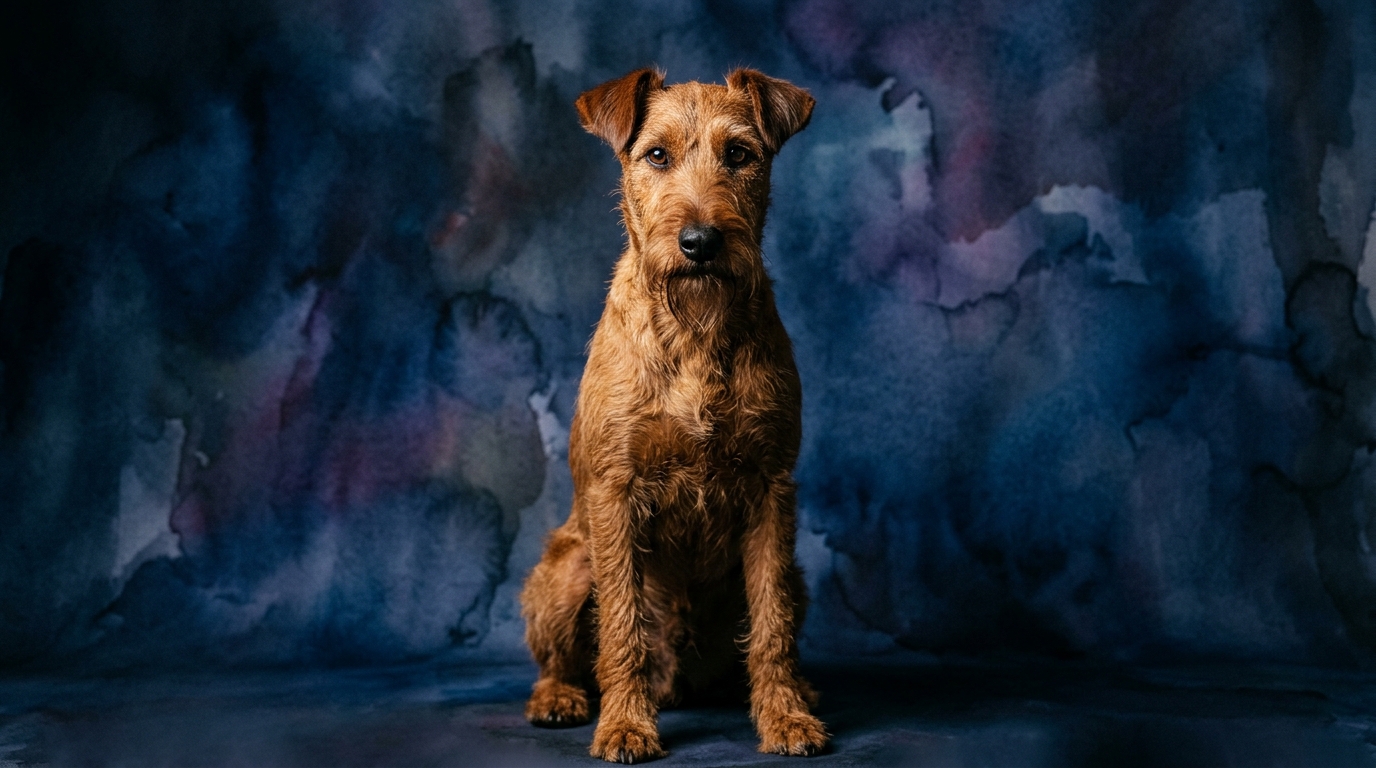
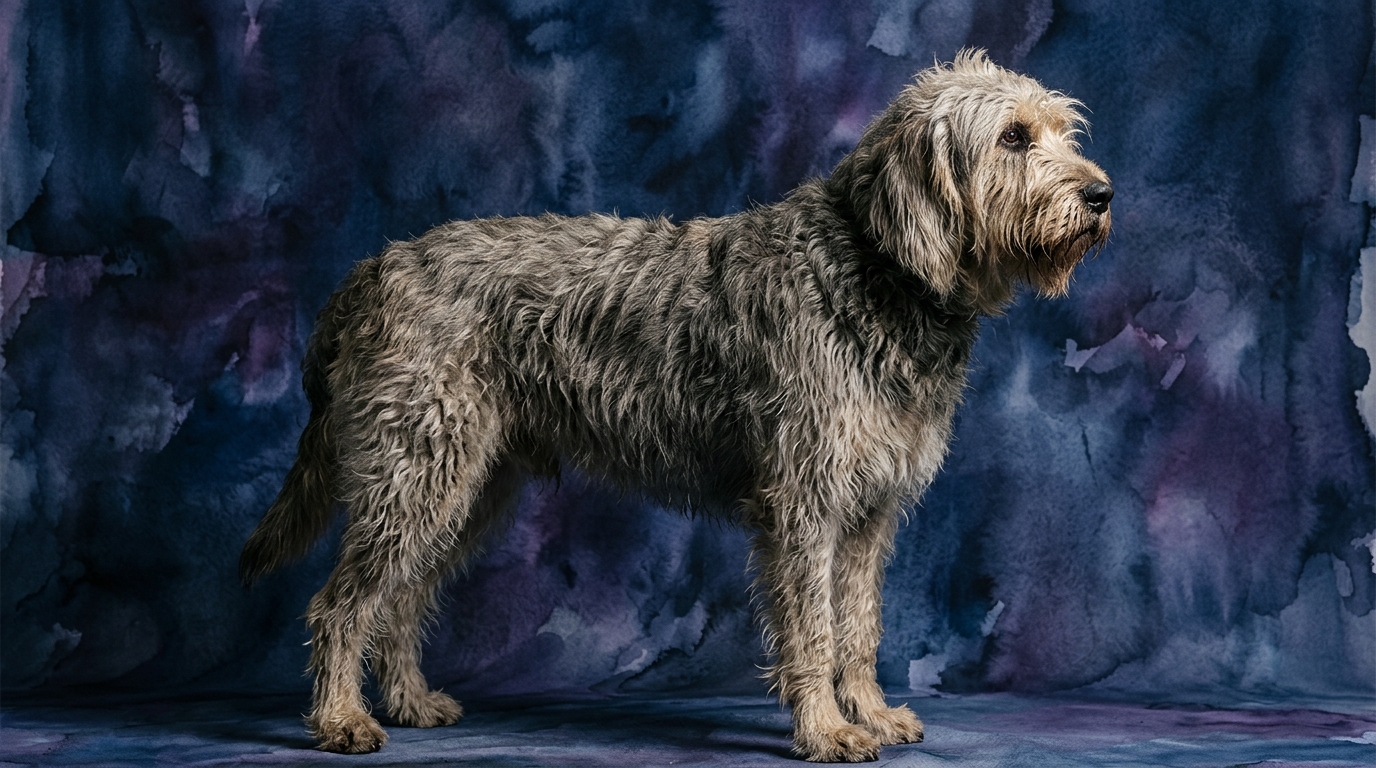
At The Cosmic Pet Pet IQ Lab, both the Irish Terrier and the Otterhound register a consistent 3/5 across all five cognitive dimensions, a score indicating competent, adaptive intelligence rather than extreme specialization. For the Irish Terrier, a 3/5 in Problem Solving reflects a breed capable of independent thought, often finding clever solutions to obstacles, particularly those involving navigating tight spaces or outsmarting small prey. This score signifies a dog that can assess situations and devise a course of action, sometimes with a stubborn streak that suggests their own preferred method. In contrast, the Otterhound's 3/5 Problem Solving manifests as a profound ability to follow complex scent trails, piecing together environmental clues over long distances and varied terrain. Their problem-solving isn't about quick, independent decisions but sustained, methodical deduction driven by olfactory input.
When it comes to Training Speed, the Irish Terrier's 3/5 suggests they are capable learners who grasp commands with moderate repetition, but their inherent independence means they might choose when to comply. They learn quickly but require engaging methods to maintain focus and enthusiasm. The Otterhound, also at 3/5 for Training Speed, learns at a similar pace but often requires significant motivation tailored to their scent-driven nature. While they can learn commands, their nose often dictates their priority, making consistency and patience paramount in shaping their responses. Both breeds are receptive to learning, but their internal motivations differ significantly.
Social Intelligence at 3/5 for the Irish Terrier indicates a dog that forms strong bonds with its chosen family, often exhibiting a keen awareness of their moods and routines. They can be discerning with strangers and other dogs, requiring careful socialization to ensure polite interactions. Their social cues are clear within their trusted circle, but they possess a reserved side. The Otterhound's 3/5 in Social Intelligence reflects a generally amiable and gregarious nature; they enjoy company and are often quite expressive in their affections. While not always subtle in their social overtures, they are adept at integrating into a family unit and often seek out interaction, though their boisterousness can sometimes overshadow finer social nuances.
Instinctive Drive, rated 3/5 for the Irish Terrier, points to a strong prey drive and a territorial instinct. They are alert and can be tenacious in pursuing small game, displaying the classic terrier 'gameness.' This drive fuels their curiosity and provides a robust foundation for their independent problem-solving. For the Otterhound, a 3/5 in Instinctive Drive is overwhelmingly dominated by their powerful scenting ability. Their drive is to track, follow, and investigate every olfactory detail, a persistent and enduring instinct that defines much of their behavior and interaction with the world. This deep-seated drive shapes their focus and provides a constant source of mental engagement.
Finally, Memory at 3/5 means both breeds retain information effectively. The Irish Terrier remembers commands, routines, and experiences, forming lasting associations with people and places. They can also remember past slights or challenges, which can influence future interactions. The Otterhound's 3/5 Memory is particularly strong for scent patterns, geographical routes, and the details of past hunts or explorations. They remember where interesting smells were found and the people associated with positive experiences, demonstrating a robust recall of sensory information and learned behaviors.
Where the Irish Terrier's Cognition Shines
The Irish Terrier's cognitive strengths truly emerge in situations demanding quick, independent decision-making and a degree of resourceful self-reliance. Their 3/5 Problem Solving, paired with their 3/5 Instinctive Drive, equips them to assess novel situations rapidly and act without constant human direction. This translates into a dog that can cleverly navigate unexpected environmental changes, figure out how to access a desired toy, or even devise strategies to get attention. Their tenacity, a hallmark of the terrier group, means they will persist with a cognitive task until a solution is found, often thinking outside the box from a canine perspective. This makes them adept at trick training that involves sequential actions or puzzles requiring a series of distinct steps to unlock a reward.
Where the Otterhound's Cognition Excels
The Otterhound's cognitive profile, particularly their 3/5 Problem Solving and 3/5 Instinctive Drive, is optimized for sustained, methodical engagement with complex sensory information. They excel where a task requires persistent focus over long durations, such as following an intricate scent trail that might be hours old and span various terrains. Their memory is finely tuned to recall these scent patterns and geographical nuances, allowing them to build a mental map of their environment through smell. This makes them particularly adept at scent work, tracking, and activities that leverage their powerful olfactory abilities. While not as quick to react to immediate changes as a terrier, their ability to process and act upon a wealth of sensory data over time is a unique cognitive advantage.
Training Dynamics: Nuances of a 3/5 Training Speed
Despite both breeds having a 3/5 Training Speed, the practicalities of training them differ due to their underlying motivations and temperaments. The Irish Terrier, with its independent streak and terrier 'gameness,' can learn new commands swiftly but might challenge the trainer's authority or decide certain commands aren't worth the effort. Training an Irish Terrier requires creativity, positive reinforcement, and a firm but fair hand to channel their intelligence and prevent them from becoming too headstrong. They respond well to varied training sessions that keep them engaged and mentally stimulated, often excelling in sports like agility where quick thinking and responsiveness are prized, provided they respect their handler. Their social intelligence means they are responsive to their owner's cues, but their independent nature can sometimes override this, making consistency crucial.
The Otterhound, while also a 3/5 in Training Speed, presents a different set of training considerations. Their dominant scent drive means that once a compelling smell is detected, their focus can shift entirely, making recall or attention challenging. Training an Otterhound requires immense patience, a deep understanding of their hound nature, and high-value rewards, often food-based, to compete with environmental distractions. They might take longer to generalize commands across different environments because their primary cognitive function is often tied to their nose. However, once a task is learned and reinforced, especially if it involves scent work, they can be remarkably persistent and reliable. Their social intelligence often makes them eager to please, but their instincts are powerful, demanding a trainer who can work with, rather than against, their natural predispositions. Neither is inherently 'easier' to train; rather, they demand different training approaches tailored to their unique cognitive applications.
Matching Lifestyles: Active Engagement vs. Sustained Exploration
For owners seeking an active and highly engaged canine companion, the Irish Terrier presents a compelling choice. Their 3/5 Problem Solving and Instinctive Drive mean they thrive on mental challenges, regular exercise, and opportunities to use their quick wit. They are excellent partners for active owners who enjoy hiking, running, or participating in dog sports like agility or earthdog trials. An Irish Terrier needs consistent interaction and mental stimulation to prevent boredom, which can manifest as destructive behaviors. They require an owner who can match their enthusiasm and provide structured activities that fulfill their cognitive and physical needs, rather than just providing a yard to run in. Their social intelligence means they genuinely enjoy being a part of family activities and can adapt to varied social settings with proper exposure.
Conversely, the Otterhound, while also requiring significant activity, suits owners who appreciate sustained, methodical outdoor exploration rather than high-octane bursts. Their profound 3/5 Instinctive Drive for scent work means they need long, meandering walks where they can follow their nose and explore the world through olfactory means. They are less about speed and more about endurance and discovery. While they can be relaxed indoors, especially after a satisfying 'scent adventure,' they are not suited for entirely sedentary lifestyles. An Otterhound owner should be prepared for substantial outdoor time, ideally in secure areas where the dog can safely indulge its tracking instincts. They are excellent companions for owners who enjoy long walks in nature and appreciate a dog that is amiable and generally good-natured, though their size and boisterousness mean they need space and robust training to manage their enthusiasm.
The Verdict
Choose the Irish Terrier if you seek a quick-witted, independent companion who thrives on interactive challenges and whose energy aligns with an active, engaged lifestyle.
Opt for the Otterhound if you appreciate a methodical, scent-driven explorer who enjoys long, meandering outdoor adventures and a generally good-natured, if sometimes boisterous, presence.
🧠 Find Your Pet's IQ Score
Our Pet IQ Lab assessment covers 25+ tests across 5 cognitive dimensions — personalized to your breed.
Take the Full IQ Test →Frequently Asked Questions
Are Irish Terriers good family dogs?
Irish Terriers form deep bonds with their families, displaying loyalty and affection. Their 3/5 social intelligence means they are aware of family dynamics, but early socialization is key to ensure they are polite with strangers and other pets, and their independent streak requires consistent boundaries.
Do Otterhounds bark a lot?
Otterhounds are known for their deep, resonant bay, a characteristic hound vocalization. While they don't necessarily bark excessively in a nuisance way, they will use their voice to express excitement, alert to new scents, or communicate, reflecting their 3/5 instinctive drive and social nature.
Which breed is better for first-time dog owners?
Neither breed is typically recommended for first-time owners due to their strong instincts and independent natures, both rated 3/5 in various cognitive aspects. Both require consistent training, patience, and an understanding of their specific breed traits to ensure a harmonious relationship.