
Side-by-Side Cognitive Profiles
The Jack Russell Terrier, a breed not assessed by the Coren ranking system, presents a unique cognitive blueprint marked by extreme independence and drive. Our Pet IQ Lab scores reveal an exceptional Problem Solving ability at 5/5, indicating a dog that can ingeniously navigate challenges and devise solutions, often to their owner's surprise. However, this sharp wit is paired with a Training Speed of 3/5, suggesting a moderate pace of learning commands due to their strong will.
Further defining the Jack Russell's intellect are its Social Intelligence at 3/5, pointing to a focus less on human directives and more on personal objectives, and an outstanding Instinctive Drive of 5/5, which fuels their relentless pursuit, digging, and exploration. Their Memory, rated at 4/5, ensures they retain learned experiences and commands, whether for good or mischief, making them consistently remember what they've figured out.
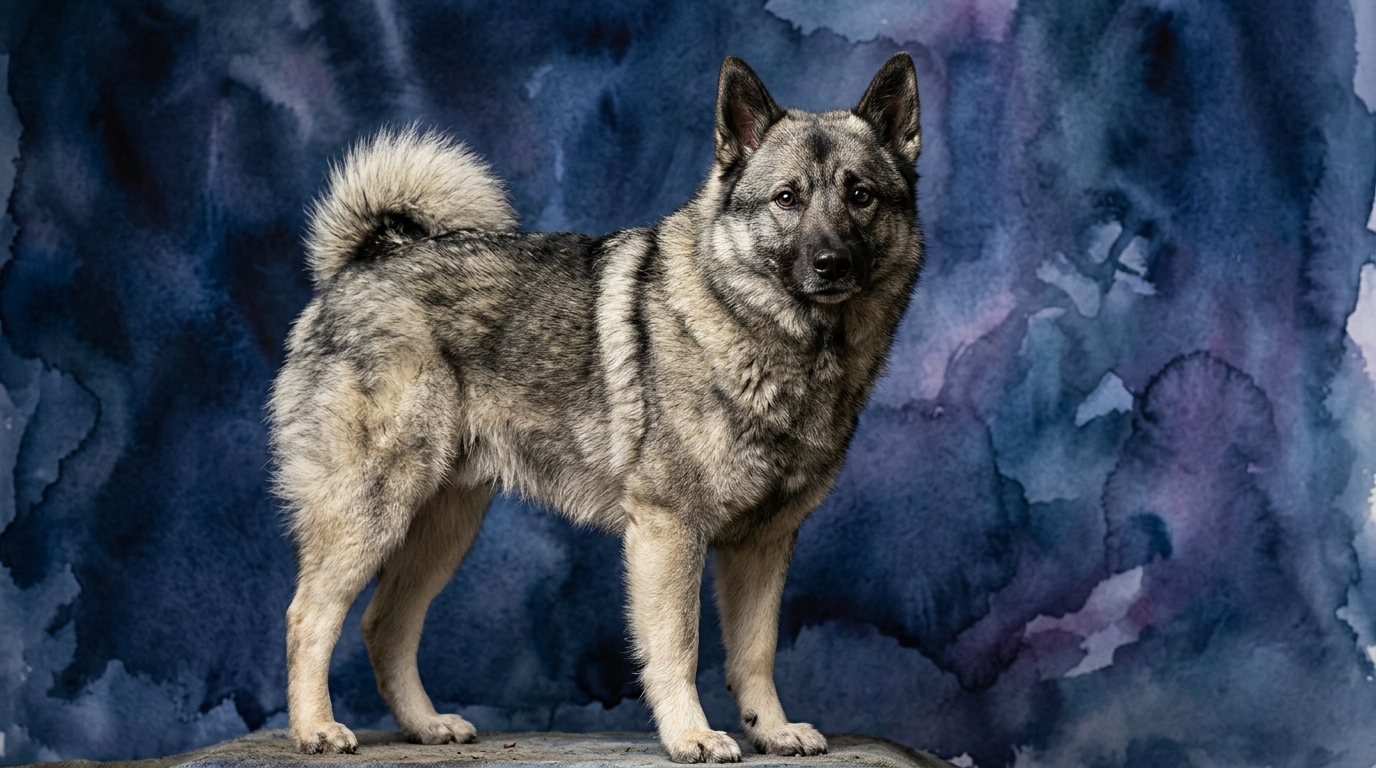
In contrast, the Norwegian Elkhound, holding a respectable Coren rank of #36, offers a more balanced, albeit distinct, cognitive profile. Their Problem Solving is rated at a very capable 4/5, showing a strong capacity to adapt and overcome obstacles, though perhaps less inventively than the Terrier. A notable strength is their Training Speed, scoring 4/5, which indicates a quicker assimilation of new instructions and a more receptive learning attitude.
The Elkhound’s Social Intelligence matches the Jack Russell at 3/5, reflecting a degree of independence characteristic of a hound, yet coupled with deep loyalty to their family. Their Instinctive Drive stands at 3/5, a moderate level that allows them to engage with their primal urges without the overwhelming intensity seen in the Jack Russell. Finally, their Memory also scores 4/5, ensuring consistent recall of training and life experiences, making them reliable companions.
Where the Jack Russell Terrier Wins Cognitively
The Jack Russell Terrier’s superior Problem Solving, rated at a perfect 5/5, is a clear cognitive triumph. This isn't just about figuring out a puzzle toy; it's about an innate capacity to analyze situations, identify pathways to desired outcomes, and execute multi-step solutions independently. This manifests in their legendary ability to open gates, escape enclosures, or strategically corner prey, showcasing an inventive and practical intellect.
Furthermore, the Jack Russell's Instinctive Drive, a perfect 5/5, while often a training challenge, represents an unparalleled cognitive strength in terms of focus and tenacity. This intense drive means they possess an unwavering determination to complete tasks or pursue goals, an attribute valued in working roles. This relentless persistence, whether tracking a scent or retrieving a ball, highlights a unique mental endurance and single-mindedness.
Where the Norwegian Elkhound Wins Cognitively
The Norwegian Elkhound’s higher Training Speed, scoring 4/5 compared to the Jack Russell’s 3/5, marks a significant cognitive advantage for collaborative learning. This indicates a breed more readily inclined to absorb and respond to human-directed instruction, making the process of teaching new commands and routines generally smoother and more efficient. Their learning curve for formal obedience is notably steeper.
While their Instinctive Drive is lower at 3/5, this moderation is a cognitive win in the context of domestic life. It means their natural urges, though present, are less likely to overwhelm their capacity for self-control or their responsiveness to a handler. This balanced drive allows for a more adaptable and less single-minded approach to their environment, fostering a greater capacity for varied engagement beyond pure instinctual pursuit.
Which is Easier to Train and Why
Based on our IQ Lab scores, the Norwegian Elkhound is generally easier to train for the average owner. Their 4/5 Training Speed indicates a quicker grasp of commands and a greater willingness to work alongside their human companions. Coupled with a moderate 3/5 Instinctive Drive, Elkhounds are less prone to letting their primal urges completely override their learned behaviors, making them more biddable and predictable in a structured training environment.
The Jack Russell Terrier, conversely, presents a more significant training challenge. Their 3/5 Training Speed, combined with an overwhelming 5/5 Instinctive Drive, means that while they are incredibly clever, their cleverness is often applied to their own agenda rather than strict obedience. Training a Jack Russell demands exceptional consistency, creativity, and a deep understanding of their terrier nature to channel their high drive and problem-solving skills effectively, preventing them from 'outsmarting' the trainer.
Which Suits Active Owners vs. Relaxed Owners
For truly active owners seeking a demanding, engaged companion, the Jack Russell Terrier is an ideal match. Their boundless energy, 5/5 instinctive drive, and relentless 5/5 problem-solving mind require constant outlets. They thrive in environments where they can engage in intense dog sports like agility, earthdog trials, or advanced trick training, demanding an owner who can consistently provide both physical exertion and intricate mental challenges to prevent boredom and destructive behaviors.
While no dog is suited for a truly 'relaxed' owner, the Norwegian Elkhound is a better fit for those with an active lifestyle that is balanced with periods of calm. Their requirement for regular, robust exercise aligns with hiking, jogging, or long walks, but their moderate 3/5 instinctive drive allows them to settle more readily indoors after their needs are met. Their 4/5 training speed makes them more manageable for owners who appreciate a responsive companion without the constant, high-stakes mental engagement required by a Jack Russell.
The Verdict
Choose the Jack Russell Terrier if you are an experienced, dedicated owner prepared to channel a brilliant, tenacious, and intensely driven mind into structured activities, thriving on a challenge and seeking a partner for high-energy pursuits.
Opt for the Norwegian Elkhound if you desire a loyal, robust, and adaptable companion who learns readily and enjoys an active lifestyle, offering a balanced temperament without the demanding, singular focus of a high-drive terrier.
🧠 Find Your Pet's IQ Score
Our Pet IQ Lab assessment covers 25+ tests across 5 cognitive dimensions — personalized to your breed.
Take the Full IQ Test →Frequently Asked Questions
Is a Jack Russell Terrier difficult to live with due to its high drive?
A Jack Russell Terrier's 5/5 instinctive drive requires significant management and appropriate outlets. Without consistent mental and physical stimulation, their natural urges for digging, chasing, and exploring can lead to challenging behaviors in a domestic setting. They are best suited for owners who can dedicate time to structured activities.
Do Norwegian Elkhounds bark a lot, given their hound nature?
Norwegian Elkhounds were historically used to alert hunters, and their vocalizations are part of their breed heritage. While their instinctive drive is moderate at 3/5, they can be prone to barking, especially when left alone or if they perceive something amiss. Consistent training and socialization from a young age can help manage this trait.
Which breed is better with children?
Both breeds can be good with children, but their temperaments differ. Jack Russell Terriers, with their high energy and drive, require supervision to ensure interactions are positive and their play isn't too rough. Norwegian Elkhounds, being generally more stable and less intensely driven, often display a patient and protective nature, making them a good family companion when properly socialized.