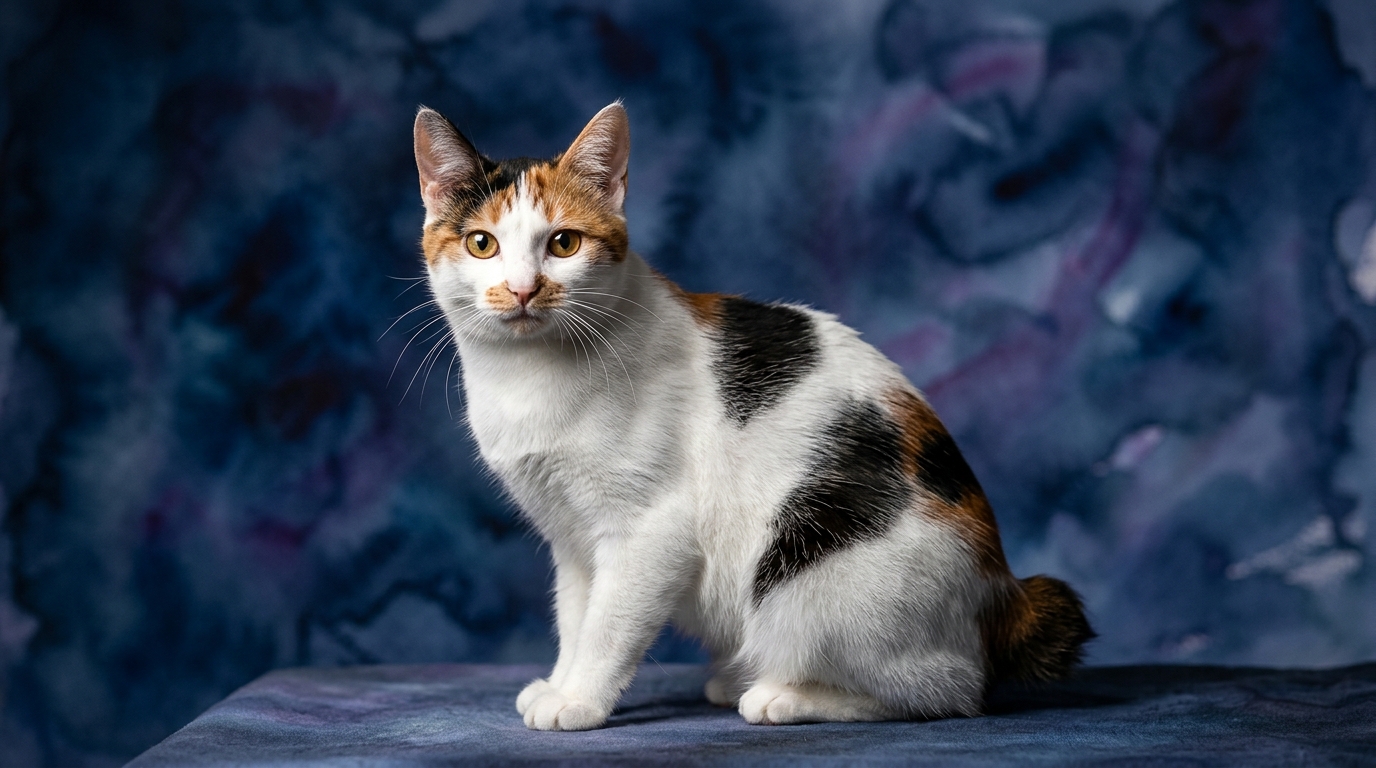
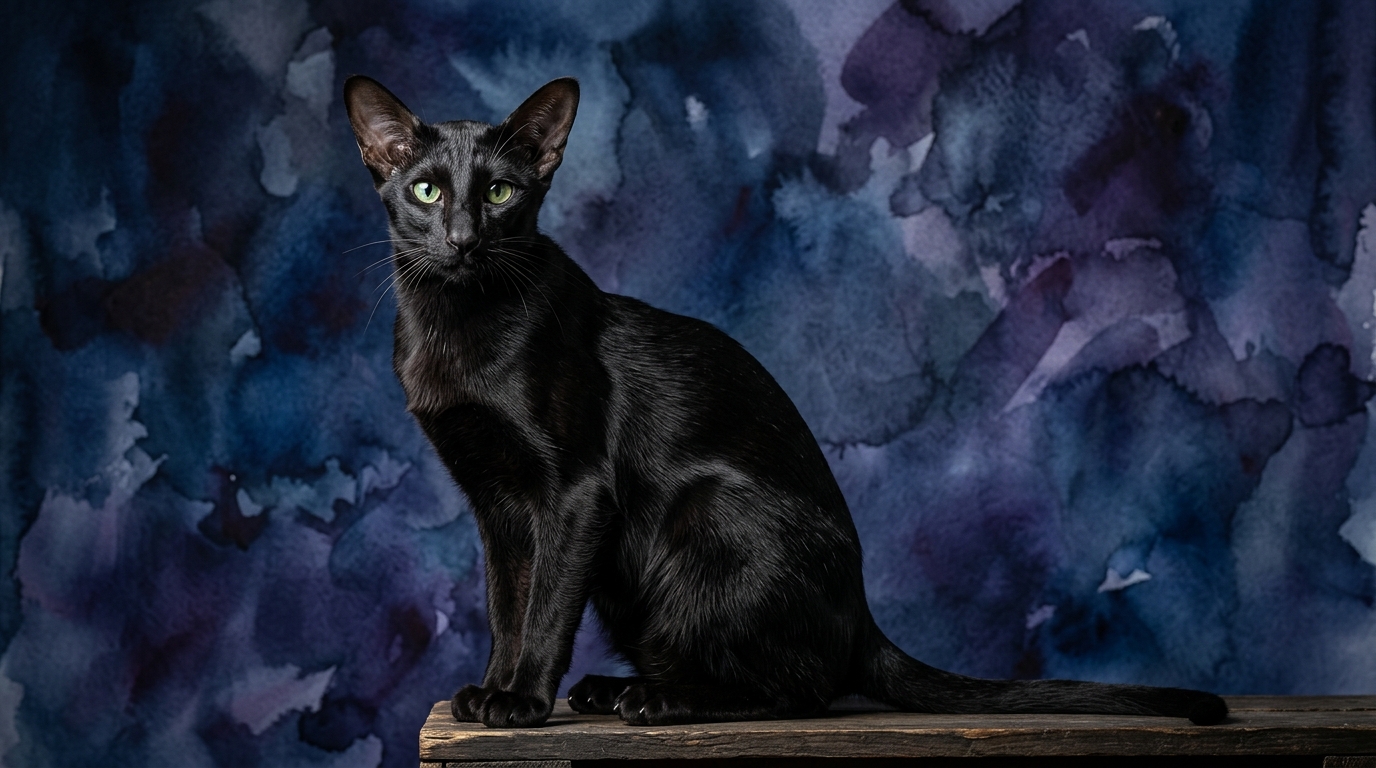
Side-by-Side IQ Profile: Japanese Bobtail vs. Oriental Shorthair
At The Cosmic Pet Pet IQ Lab, both the Japanese Bobtail and the Oriental Shorthair register identical scores across all five dimensions of intelligence, each earning a consistent 3 out of 5. This rating signifies a solid, moderate cognitive capacity, suggesting these breeds are capable and responsive, without being extreme in any particular area. Let’s explore what a 3/5 score means for each breed in practice.
Problem Solving (3/5): These cats demonstrate a moderate capacity to navigate new challenges, open simple latches, or devise strategies for accessing desired items. They are observant and can learn through trial and error. For the Japanese Bobtail, their playful curiosity fuels their problem-solving, evident when they use agile paws on puzzle toys or mimic human actions to open cupboards. An inquisitive nature drives the Oriental Shorthair's problem-solving, leading them to meticulously explore and sometimes vocalize to solicit human help for desired outcomes.
Training Speed (3/5): This score indicates a moderate ability to learn and retain commands or tricks with consistent effort, responding well to positive reinforcement. The Japanese Bobtail, responsive to positive reinforcement, can learn tricks like fetch or leash walking, finding the interactive process a rewarding bonding experience. The Oriental Shorthair's strong desire for human interaction makes them eager learners, quickly picking up routines and cues when highly motivated by attention.
Social Intelligence (3/5): These felines understand human cues, interact well with family, and adapt to social dynamics, forming bonds and expressing affection. As companionable cats, Japanese Bobtails engage directly with family, reading moods and responding with affection or playful antics, integrating smoothly. Oriental Shorthairs form deep, often demanding bonds, with their social intelligence manifesting in "conversations" and persistent desire to be involved.
Instinctive Drive (3/5): This reflects a moderate level of innate hunting, exploring, or territorial behaviors, present enough for engaging play but not typically overwhelming. Japanese Bobtails retain a playful hunting instinct, enjoying chasing toys and mock prey, their agility supporting highly engaging interactive play. The Oriental Shorthair's lean build and keen senses contribute to an active hunting drive, leading them to stalk toys and thoroughly explore their territory.
Memory (3/5): This suggests they reliably remember routines, people, and learned behaviors over time, sufficient for navigating daily interactions and anticipating familiar events. Japanese Bobtails remember family members, preferred playtimes, and item locations, demonstrating consistent recall in daily routines. Oriental Shorthairs quickly recall routines, commands, and human companions, often anticipating mealtimes based on strong memory.
Where the Japanese Bobtail's Cognition Shines
While sharing identical IQ scores, the Japanese Bobtail's unique personality often makes its cognitive abilities feel particularly engaging. Their playful and adaptable disposition means their 3/5 problem-solving is frequently observed in their love for interactive games. They might meticulously work on a puzzle toy, using their agile paws to manipulate objects, demonstrating a focused application of their cognitive capacity in a way that is highly visible and entertaining for owners. This breed's social intelligence, also at 3/5, often manifests in a less demanding, more collaborative way. They integrate smoothly into family life, observing and adapting to household rhythms without constant solicitation, making their understanding of human cues and responsive companionship feel intuitive and rewarding. Furthermore, their distinct physical agility, aided by their unique bobtail, allows their 3/5 instinctive drive to be expressed with remarkable grace and precision, showcasing their cognitive engagement in play with fluid, coordinated movements.
Where the Oriental Shorthair's Cognition Excels
The Oriental Shorthair's intense curiosity and vocal nature often highlight its cognitive strengths, making its 3/5 problem-solving and social intelligence particularly apparent. Their deep bond with humans means their problem-solving is frequently directed towards gaining attention or interacting, such as figuring out how to open specific doors or drawers to join their owner. This persistent, purposeful engagement underscores their cognitive drive. Their 3/5 social intelligence is expressed with a striking intensity; they are often described as "people-oriented" and will "talk" to their owners with a wide range of vocalizations. This can be interpreted as a sophisticated form of communication and a clear demonstration of their understanding of human interaction, making their cognitive understanding of social dynamics extremely apparent. The Oriental Shorthair's lean, athletic build complements their 3/5 instinctive drive, enabling them to explore their environment with a methodical thoroughness. Their keen senses and agility make them effective at tracking and "hunting" toys, often exhibiting a focused determination that underscores their cognitive engagement in these activities.
Which is Easier to Train and Why
Given both breeds register a 3/5 for training speed, neither holds a definitive cognitive advantage in raw learning capability. However, their distinct behavioral profiles significantly influence the *experience* of training. The Japanese Bobtail, with its playful and adaptable temperament, often approaches training as an extension of interactive play. They enjoy the novelty and the shared activity, making positive reinforcement sessions engaging and relatively straightforward. Their willingness to participate and their generally good-natured disposition mean they are often receptive to learning tricks like fetch or walking on a leash, especially if the process is fun and rewarding, fostering a cooperative learning environment.
The Oriental Shorthair, while equally capable of learning at a 3/5 pace, brings a different dynamic to training. Their intense desire for human companionship and their vocal nature can make them highly motivated learners, particularly if the training directly involves their owner and provides ample attention. They might pick up routines and respond to specific verbal cues with remarkable consistency, driven by their powerful bond and their eagerness to be involved. However, their strong opinions and occasional stubbornness might require more patience and creative motivation to maintain engagement, especially if they perceive the task as less rewarding than direct human interaction. Ultimately, ease of training often comes down to an owner's ability to tap into each breed's unique motivational drivers and preferences.
Suited for Active vs. Relaxed Owners
For active owners seeking a constant companion in their daily endeavors, the Oriental Shorthair often aligns well. Their energetic and curious nature, coupled with their desire for constant interaction, means they thrive in environments where they can be involved in activities, whether it's exploring new spaces or "helping" with household tasks. Their vocalizations and persistent presence are a hallmark of their engagement, making them suitable for individuals who appreciate a cat that is deeply integrated into their active lifestyle and enjoys frequent mental and physical stimulation.
Conversely, the Japanese Bobtail can be an excellent fit for owners who appreciate a dynamic yet adaptable companion. While playful and interactive, their companionship often manifests in a more balanced way, offering engagement without the demanding intensity of some Oriental Shorthairs. They enjoy games and interaction but are also content to observe or relax nearby, making them suitable for individuals who appreciate a cat that can seamlessly transition between bursts of activity and periods of calm, fitting into both active playtimes and quiet evenings without constant solicitation. They offer a delightful blend of playful energy and adaptable companionship.
The Verdict
Choose a Japanese Bobtail if you desire a playful, adaptable companion who integrates smoothly into family life, offering engaging interaction tempered with periods of independent contentment. Their balanced social nature and visible enjoyment of interactive play make them a delightful addition for owners seeking a responsive yet not overly demanding feline friend.
Opt for an Oriental Shorthair if you are ready for an intensely bonded, vocal, and curious companion who thrives on constant interaction and involvement in your daily life. Their persistent engagement and expressive communication make them ideal for owners who appreciate a cat that is always present and eager to "converse" and explore alongside them.
🧠 Find Your Pet's IQ Score
Our Pet IQ Lab assessment covers 25+ tests across 5 cognitive dimensions — personalized to your breed.
Take the Full IQ Test →Frequently Asked Questions
Are Japanese Bobtails good with other pets?
Yes, Japanese Bobtails generally possess a 3/5 social intelligence that extends to other household pets, often adapting well to dogs or other cats with proper introductions. Their playful and adaptable nature helps them integrate smoothly into multi-pet households, often initiating friendly interactions.
Do Oriental Shorthairs need a lot of attention?
Oriental Shorthairs, with their 3/5 social intelligence, thrive on significant human interaction and attention, often becoming deeply bonded and vocal companions. Their intense desire to be involved in daily activities means they prefer not to be left alone for extended periods and will actively seek out their owners' presence.
Can either breed learn tricks like fetch?
Both Japanese Bobtails and Oriental Shorthairs possess a 3/5 training speed and problem-solving ability, making them capable of learning tricks like fetch with consistent positive reinforcement. Their respective desires for play and human interaction serve as strong motivators for engaging in such activities.