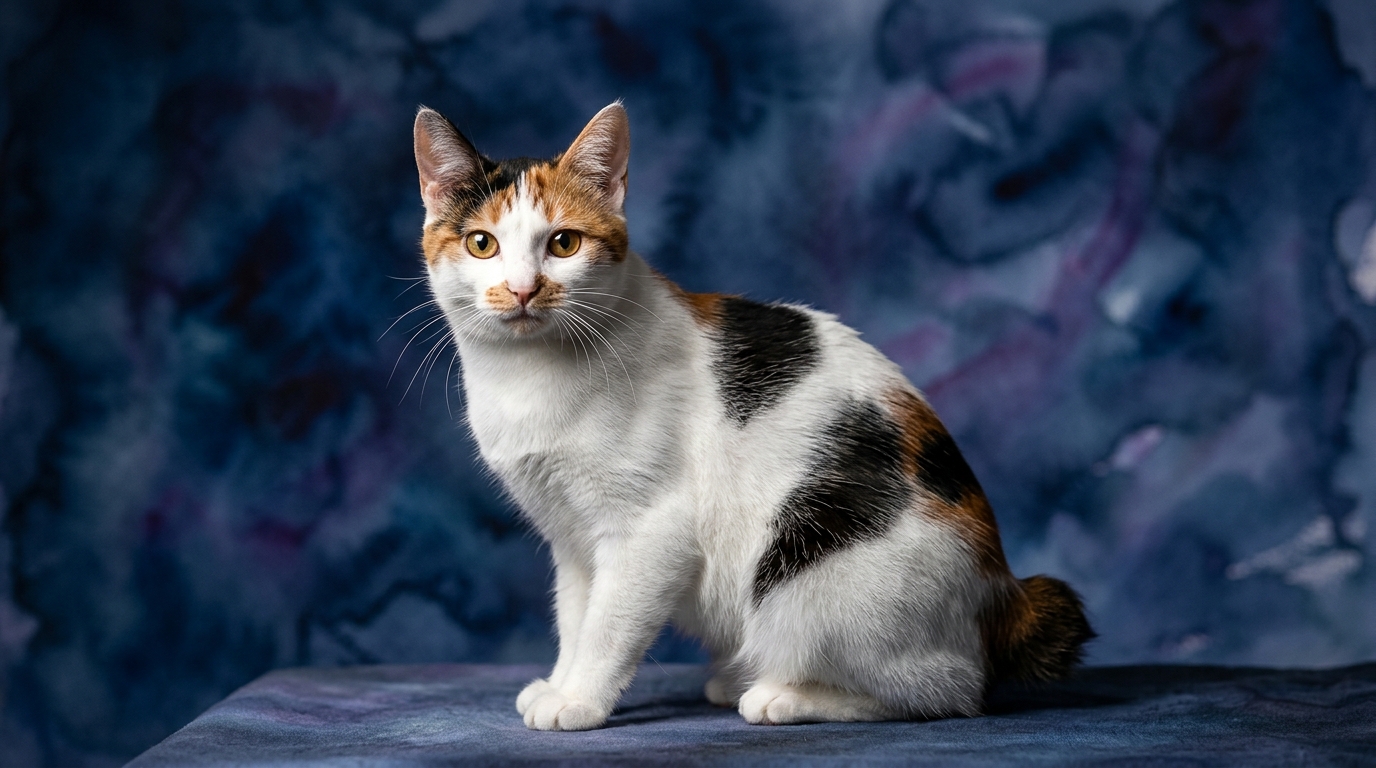
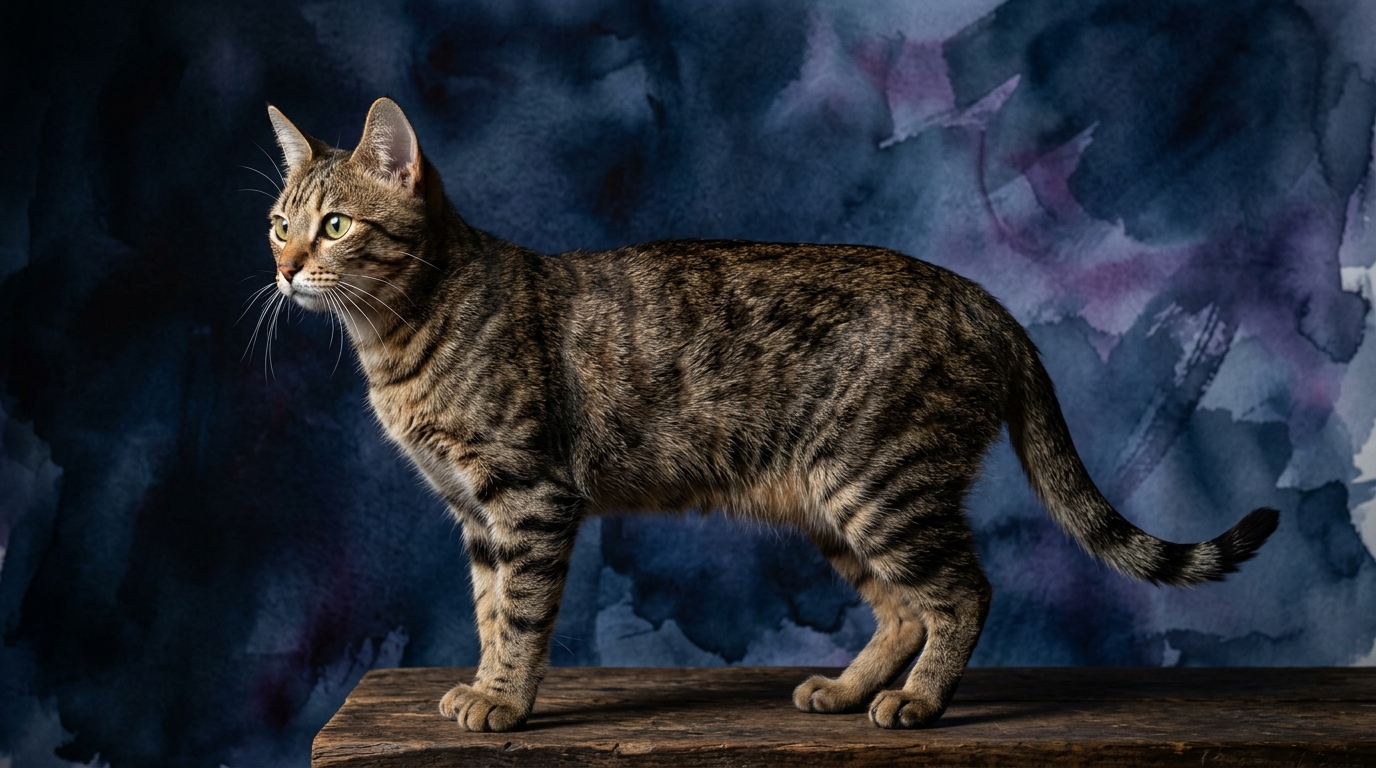
Side-by-Side IQ Profile: Identical Scores, Distinct Personalities
Both the Japanese Bobtail and Sokoke achieve a 3/5 in Problem Solving, indicating a moderate aptitude for navigating challenges, such as figuring out basic puzzle toys or adapting to new routines. Their Training Speed also sits at 3/5, suggesting they can learn new commands or tricks at a steady pace, neither exceptionally fast nor particularly slow, but reliably absorbing consistent instruction. Social Intelligence, rated 3/5 for both, means they generally form connections with their human companions and can adapt to social dynamics within a household, showing a moderate interest in interaction. Instinctive Drive, at 3/5, points to a balanced set of natural behaviors, including hunting instincts and territorial awareness, without being overly dominant or suppressed in a domestic setting. Finally, Memory, also 3/5, indicates they retain learned behaviors and recognize people or places with reasonable recall, remembering routines and past interactions effectively.
Where the Japanese Bobtail Shines Cognitively
While both breeds share a 3/5 rating for Problem Solving, the Japanese Bobtail often demonstrates this through its engagement with interactive games and its propensity for figuring out how to retrieve toys or manipulate objects for play. Their social intelligence, also a 3/5, frequently manifests in their vocal communication, often expressed as unique chirps and trills rather than typical meows, indicating a nuanced, proactive approach to engaging with their human companions. This distinct vocal repertoire suggests a cognitive capacity for varied communication, enabling them to express needs or desires with particular clarity. Their memory (3/5) is often observed in their consistent participation in established play routines, remembering the rules of a game like fetch with impressive accuracy and returning to preferred interaction spots.
The Bobtail’s adaptability, a facet of its problem-solving and social intelligence, allows it to integrate smoothly into diverse family structures, including those with children or other pets. They often seem to 'understand' household dynamics, adjusting their behavior to suit different situations. Their 3/5 training speed is often amplified by their desire to participate and interact, making them receptive to learning simple tricks, particularly when positive reinforcement is tied to playful engagement, demonstrating a cognitive link between learning and enjoyment.
Where the Sokoke Demonstrates Unique Cognitive Strengths
The Sokoke, despite matching the Bobtail's 3/5 across the board, showcases its Instinctive Drive (3/5) through a pronounced athleticism and a keen interest in exploring vertical spaces, often demonstrating a precise calculation of jumps and landings that implies sophisticated spatial reasoning. Their problem-solving skills (3/5) are frequently applied to navigating complex environments, finding creative routes to high perches or intricate hiding spots, rather than solely focusing on object manipulation. This environmental problem-solving highlights a different application of their cognitive aptitude.
Their social intelligence (3/5) often translates into a profound loyalty to their chosen family members, sometimes exhibiting a 'dog-like' devotion, and a nuanced ability to read the moods of their close companions, fostering deep, almost intuitive bonds. This connection often manifests in a quiet attentiveness, distinguishing it from the Bobtail's more vocal approach. The Sokoke’s memory (3/5) is evident in their strong recall of preferred human companions, often greeting them with specific rituals, and their ability to remember safe spaces or challenging climbing routes within their territory, showcasing a practical application of memory for safety and exploration.
Training Dynamics: Bobtail's Playfulness vs. Sokoke's Loyalty
Given their identical 3/5 Training Speed scores, both breeds are moderately receptive to learning, but their motivations and behavioral expressions differ, influencing the training experience. The Japanese Bobtail's inherent playfulness and vocal nature make them responsive to training that incorporates games and positive, interactive feedback. They often enjoy the process of learning tricks like fetch or walking on a leash because it's an extension of their social engagement and provides mental stimulation. Their motivation stems from the desire for interaction and the immediate gratification of a shared activity with their human.
The Sokoke, while equally capable of learning, may be more motivated by the strengthening of their bond with their primary caregiver. Their training often benefits from patience and building trust, as their loyalty drives them to please their chosen human. They might not be as overtly playful during training sessions as a Bobtail, but their focus can be intense once they understand the expectation. Consistency and positive reinforcement, especially those that reinforce the relationship, are key to unlocking their 3/5 training potential, as their focus is often on the individual rather than the game itself.
Matching Owners: Active Explorers vs. Engaged Companions
For owners seeking an active, exploring companion, the Sokoke might be a more fitting choice. Their pronounced instinctive drive and cognitive application to environmental navigation mean they thrive in homes that offer ample opportunities for climbing, exploring, and engaging in physical activity. They benefit from puzzle feeders that challenge their ingenuity to access resources and require space for their athletic pursuits. Owners who appreciate a cat that interacts with its environment in a dynamic way and forms deep, loyal bonds will find the Sokoke rewarding.
Conversely, the Japanese Bobtail often suits owners who desire an engaged, communicative, and adaptable companion that enjoys interactive play and vocal exchanges. Their social intelligence makes them excellent family pets, adapting well to diverse household compositions and enjoying participation in daily activities. Owners who appreciate a cat that 'talks' to them and actively seeks out shared playtime, often with a flair for unique vocalizations, will find the Bobtail's cognitive and behavioral traits align well with their lifestyle, offering a consistently charming and interactive presence.
The Verdict
Choose the Japanese Bobtail if you seek a highly interactive, vocal, and adaptable companion who enjoys playful engagement and integrates seamlessly into a bustling household environment.
Opt for the Sokoke if you desire an athletic, loyal, and environmentally curious cat that thrives on physical activity and forms profound, devoted bonds with its primary caregivers.
🧠 Find Your Pet's IQ Score
Our Pet IQ Lab assessment covers 25+ tests across 5 cognitive dimensions — personalized to your breed.
Take the Full IQ Test →Frequently Asked Questions
Do Japanese Bobtails and Sokokes have the same cognitive abilities?
Based on Cosmic Pet Pet IQ Lab scores, both breeds share identical 3/5 ratings across all five cognitive dimensions. However, their expressions of these abilities differ, with Bobtails showing more vocal and playful intelligence, and Sokokes demonstrating more environmental and loyalty-driven cognition.
Which breed is better for learning tricks?
Both breeds have a 3/5 Training Speed, meaning they can learn tricks at a moderate pace. The Japanese Bobtail might be more overtly enthusiastic due to its love for interactive play, while the Sokoke's motivation often stems from its strong bond and desire to please its trusted human.
Are these breeds suitable for first-time cat owners?
Both breeds, with their moderate social intelligence and adaptability, can be suitable for first-time owners who are prepared to meet their specific needs. Japanese Bobtails offer a more direct, communicative companionship, while Sokokes require more attention to their activity levels and space for exploration.