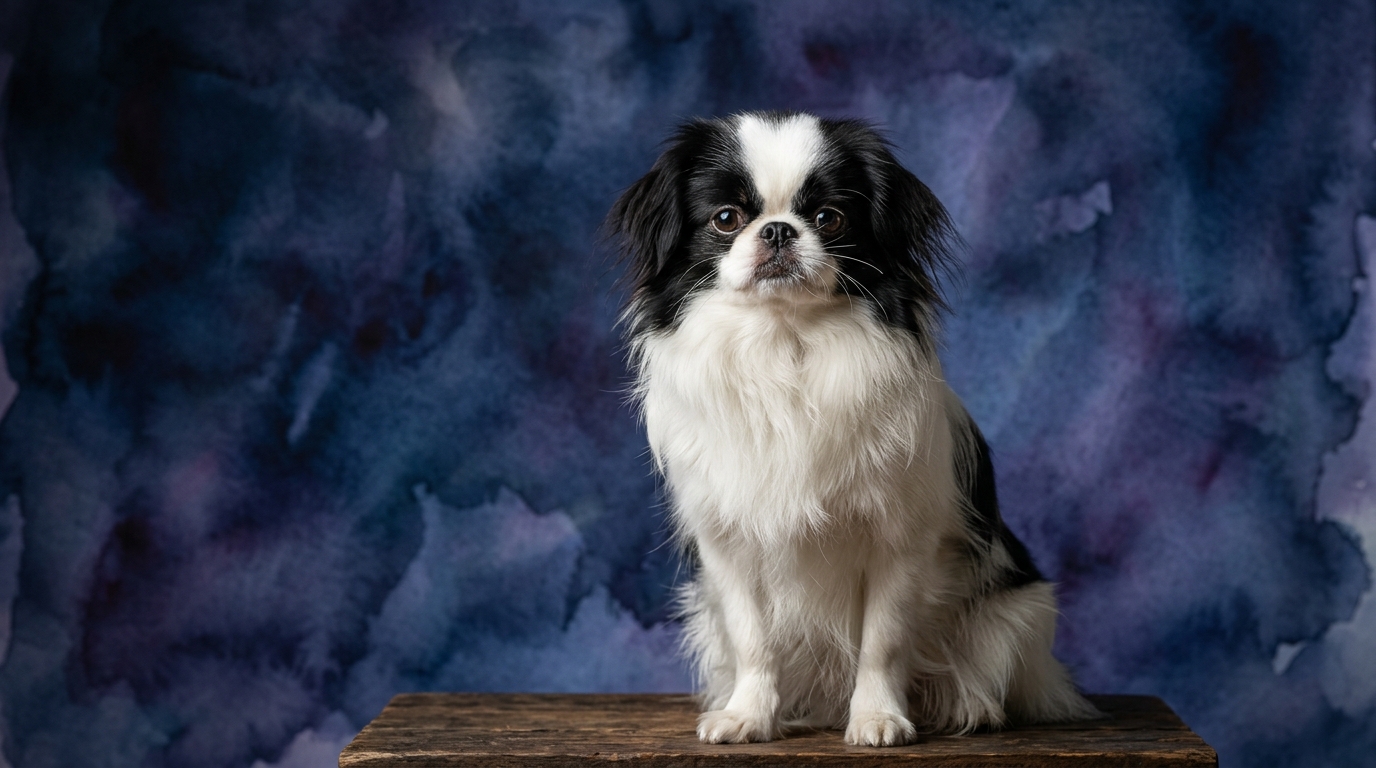
Side-by-Side Cognitive Profiles: Japanese Chin
The Japanese Chin, a breed originating from Asian royalty, presents a captivating cognitive profile, scoring a consistent 3/5 across all five dimensions in the Pet IQ Lab. Their Problem Solving (3/5) manifests as a charming resourcefulness, adept at navigating their immediate environment to secure attention or access preferred lounging spots, often relying on endearing manipulation rather than complex strategic thinking. They quickly grasp household routines and can cleverly leverage situations to their advantage, particularly when it involves human interaction.
In Training Speed (3/5), Chins pick up commands at a moderate pace, responding best to positive reinforcement and a gentle, engaging approach. Their inherent desire to please their primary human facilitates learning, yet their independent spirit means they may opt out if boredom sets in or a more enticing distraction presents itself. Their Social Intelligence (3/5) is particularly pronounced; they are highly attuned to human emotions and social cues, often mirroring their owner's mood. They excel at forming strong bonds and understanding family dynamics, using their expressive faces and body language to communicate effectively and subtly. Instinctive Drive (3/5) in the Chin is moderate, primarily expressed through playful chasing of toys or curious exploration of indoor territories, with a mild awareness of their personal space. Finally, their Memory (3/5) is solid, allowing them to recall routines, people, and specific locations, which aids significantly in house-training and retaining learned commands over time.
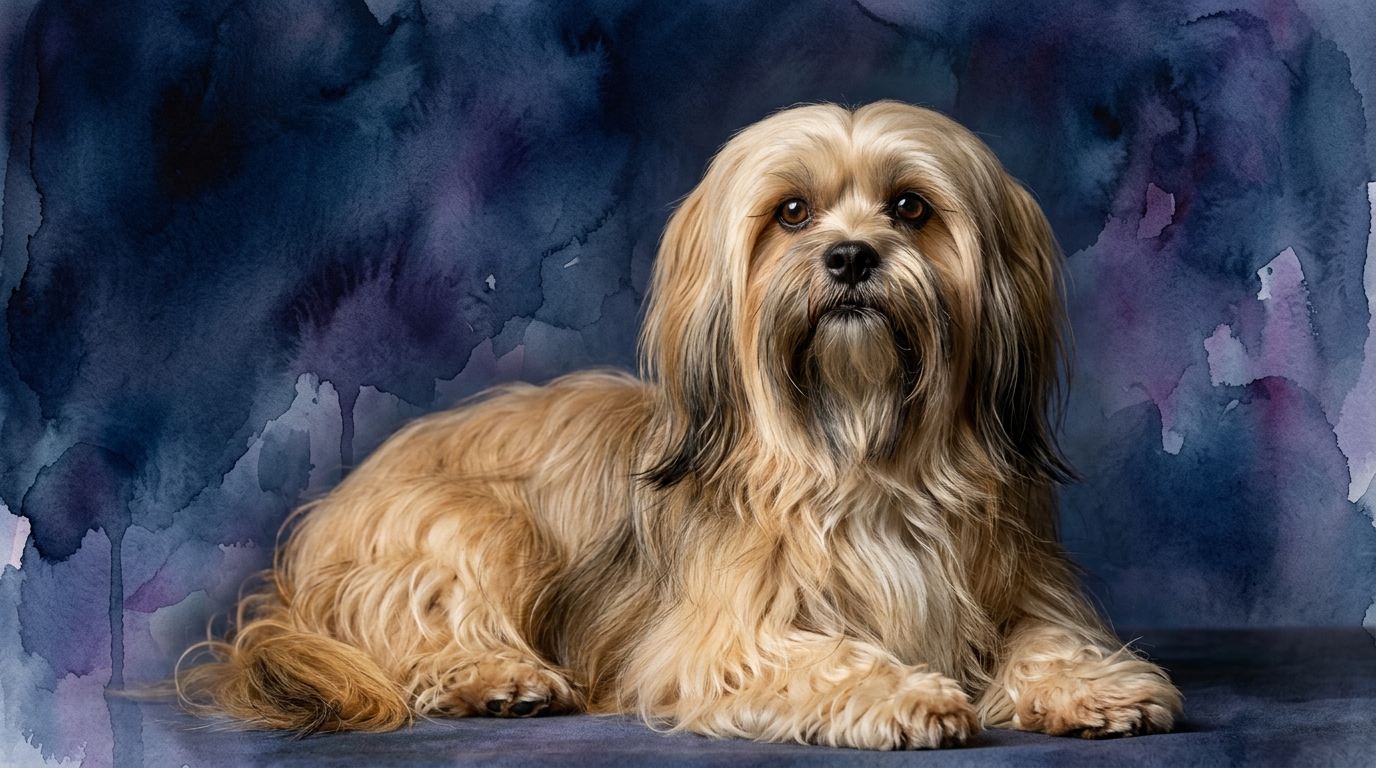
Side-by-Side Cognitive Profiles: Lhasa Apso
The Lhasa Apso, a venerable breed with roots as a sentinel in Tibetan monasteries, also earns a uniform 3/5 across the Pet IQ Lab's five cognitive dimensions, yet their application of these scores is distinct. Their Problem Solving (3/5) is characterized by a practical, discerning intelligence; they are adept at understanding household boundaries and the consequences of actions, often strategically finding optimal vantage points or alerting to perceived threats. They demonstrate a resourceful and sometimes calculating approach to their environment, especially when it concerns their comfort or security.
Regarding Training Speed (3/5), Lhasa Apsos are capable learners, but their renowned independence and occasional stubbornness necessitate a consistent, patient, and fair training methodology. They respond best when they perceive a clear benefit to themselves or understand the logical 'why' behind a command, often testing boundaries before full compliance. Their Social Intelligence (3/5) is geared towards observation and protection; they are deeply loyal to their inner circle and keenly aware of family dynamics, but can be discerning and reserved with strangers. This intelligence manifests as a deep understanding of their family unit's hierarchy and needs, rather than overt people-pleasing. The Lhasa Apso's Instinctive Drive (3/5) is notably strong in its watchdog capacity, historically bred to alert. This translates into keen hearing and a propensity to bark at unfamiliar sounds or sights, coupled with a moderate prey drive for small movements. Their Memory (3/5) is excellent for people, places, and past experiences, particularly those related to territory or routine, which means they remember both consistent training and any perceived inconsistencies, demanding a steadfast approach from their owners.
Where the Japanese Chin Wins Cognitively
The Japanese Chin often demonstrates a more fluid and adaptable social problem-solving approach, giving them an edge in navigating complex human interactions. Their cognitive strength lies in their intuitive ability to quickly gauge human moods and adjust their behavior to elicit positive attention or desired outcomes. This isn't about complex logical deduction, but rather an innate understanding of social dynamics – they might subtly 'win' an argument for a treat by deploying a particularly endearing head tilt or a soft paw tap. Their relatively lower instinctive drive compared to the Lhasa Apso means they are generally less preoccupied with territorial duties, allowing more cognitive bandwidth for nuanced social interactions within the home. This breed excels at reading the room and using their charm to navigate social landscapes, a subtle yet powerful form of intelligence that makes them exceptional companions.
Where the Lhasa Apso Wins Cognitively
The Lhasa Apso's cognitive strengths lean towards a more independent and vigilant form of problem-solving, deeply rooted in their historical role as sentinels. Their Problem Solving (3/5) is particularly evident in their ability to assess their environment for perceived threats or anomalies, quickly determining if a new sound warrants an alert. They are remarkably adept at understanding and enforcing boundaries, not just physical ones within the home, but also social ones regarding new visitors or perceived intrusions. Their stronger Instinctive Drive (3/5), specifically their innate watchdog tendencies, translates into a cognitive advantage in identifying and responding to changes in their territory, making them excellent at 'reading' their immediate surroundings for security purposes. This breed's robust Memory (3/5) serves them well in recalling past interactions and potential dangers, contributing significantly to their discerning and protective nature.
Which Is Easier to Train and Why
Neither breed presents a significantly 'easier' training experience, as both score 3/5 in Training Speed, indicating a moderate learning curve. However, the *nature* of the training challenge differs. The Japanese Chin, with its strong desire for human companionship and a generally less independent streak, tends to be more cooperative in positive reinforcement settings. They are quicker to engage and less likely to actively resist commands, provided the training sessions are fun, rewarding, and consistent. Their social intelligence helps them grasp what their human wants, often making them eager participants.
The Lhasa Apso, while equally capable of learning, often requires a more patient, consistent, and firm approach due to its inherent independence and discerning nature. They might question the necessity of a command or test boundaries to see if the rule is truly absolute. Training a Lhasa Apso often involves convincing them that complying is *their* idea or clearly benefits them, rather than simply pleasing the owner. Their excellent memory for inconsistencies means trainers must be steadfast, fair, and avoid mixed signals, as any lapse can set back progress.
Which Suits Active Owners vs. Relaxed Owners
For truly active owners seeking a canine companion for vigorous outdoor adventures or extensive daily exercise, neither the Japanese Chin nor the Lhasa Apso is an ideal match, as both breeds are generally content with more relaxed, indoor-centric lifestyles. However, within the spectrum of 'relaxed' ownership, there are distinct preferences.
The Japanese Chin is better suited for owners who enjoy gentle strolls, indoor play, and a dog that is always close by, participating in household activities with a quiet, observant presence. They thrive on being the center of attention and forming deep, affectionate bonds, making them perfect for relaxed owners who spend a significant amount of time at home and appreciate a dog that is an integral part of their daily life. The Lhasa Apso, while also content with a relaxed indoor life, benefits from owners who can provide structured daily walks and mental stimulation that taps into their watchdog instincts. They appreciate a routine and opportunities to observe their surroundings, making them suitable for relaxed owners who still appreciate a dog with a bit more independent spirit, a discerning personality, and a natural inclination to be a vigilant home guardian.
The Verdict
Choose the Japanese Chin if you seek a charming, highly social companion who thrives on close human interaction, adapts readily to household routines, and offers intuitive emotional support with a playful, less demanding presence.
Choose the Lhasa Apso if you appreciate a discerning, loyal, and independent companion with a strong sense of territory, who offers a robust watchdog presence and thrives on consistent leadership and structured engagement.
🧠 Find Your Pet's IQ Score
Our Pet IQ Lab assessment covers 25+ tests across 5 cognitive dimensions — personalized to your breed.
Take the Full IQ Test →Frequently Asked Questions
Do Japanese Chins or Lhasa Apsos bark a lot?
The Japanese Chin tends to be a quieter breed, typically barking only to alert to arrivals or express excitement, and they are generally not excessive barkers. The Lhasa Apso, historically a sentinel dog, is more prone to barking to alert to perceived threats or strangers, often displaying a more persistent alarm bark.
Which breed is better with children?
Both breeds can do well with older, respectful children who understand how to interact gently with small dogs and respect their space. The Japanese Chin's social nature often makes them more tolerant and adaptable, while the Lhasa Apso's independent streak means they might prefer to retreat if overwhelmed, necessitating careful supervision and teaching children appropriate interaction.
What are the grooming needs for these breeds?
Both breeds require regular grooming, but the intensity differs. The Japanese Chin has a single, silky coat that needs weekly brushing to prevent mats and maintain its texture. The Lhasa Apso possesses a long, dense double coat that demands daily brushing to prevent severe matting and ensure skin health, often requiring professional grooming or regular trims to manage its length.