Side-by-Side IQ Profile
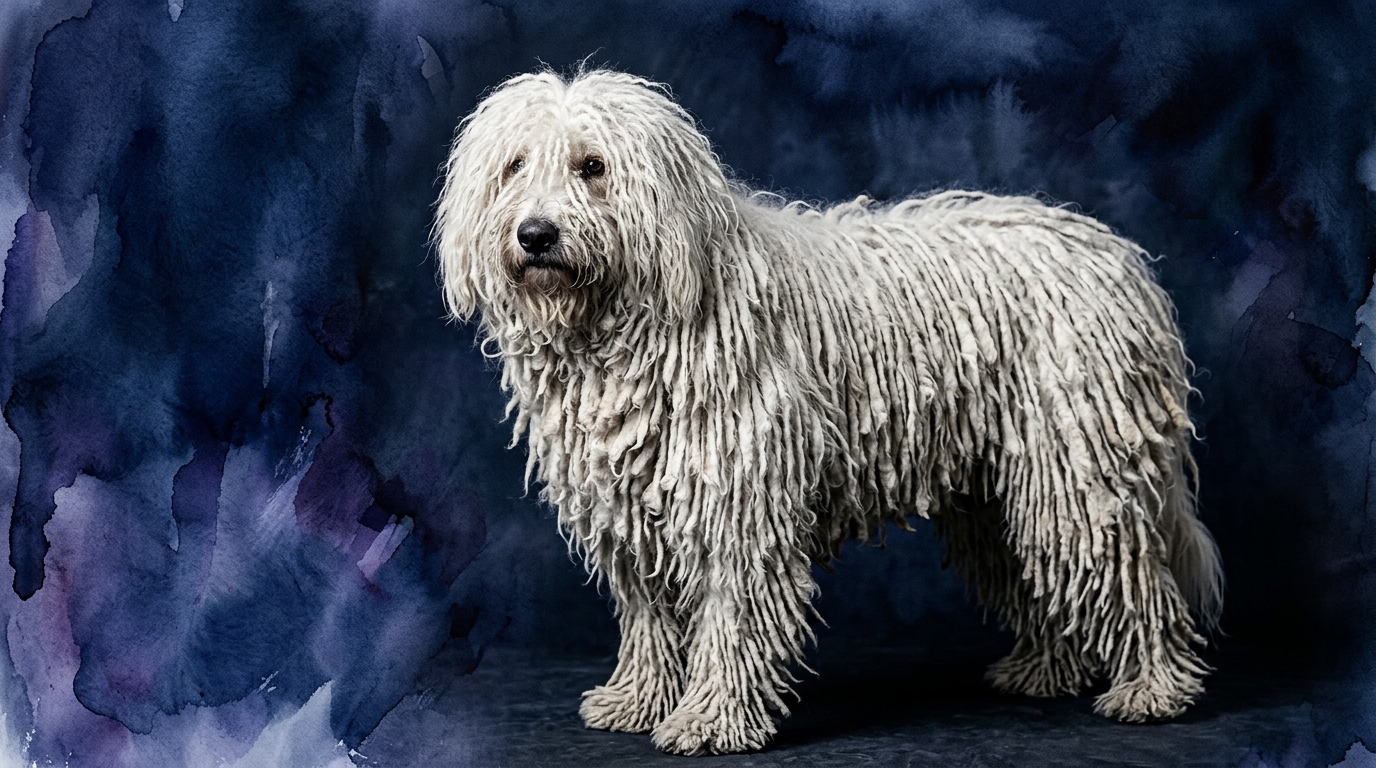
**Komondor (Working Group, Coren Rank #67):** The Komondor, a breed steeped in centuries of guarding tradition, exhibits a moderate capacity for independent problem-solving (3/5), particularly when it pertains to its primary role of protecting livestock. This manifests as assessing potential threats, determining the most effective patrol routes, and making autonomous decisions to safeguard its charges without direct human intervention. Their solutions often prioritize security and self-reliance over immediate human commands. Learning new commands occurs at a moderate pace (Training Speed 3/5) for the Komondor, though their independent nature means compliance is often weighed against perceived necessity. They absorb routines and tasks pertinent to their guarding duties efficiently, but may require consistent, patient reinforcement for arbitrary commands, demonstrating a thoughtful rather than hasty approach to instruction.
Within their established 'flock' or family unit, Komondors show a moderate understanding of social dynamics and form profound, protective bonds (Social Intelligence 3/5). They are adept at discerning friend from foe, reading subtle cues from their charges, and responding to perceived dangers. However, their social circle is typically small and they maintain a reserved, watchful demeanor towards strangers. A moderate yet powerful instinctive drive (3/5) underpins the Komondor's existence, primarily focused on guarding and territorial protection. This drive compels them to patrol, observe, and react to perceived threats, demonstrating an innate understanding of predator-prey dynamics and the welfare of their charges. Their impulses are deeply rooted in their historical function. Komondors possess a moderate memory capacity (3/5), particularly for established routines, recognized individuals (both human and animal), and the geography of their territory. They retain information about past threats and successful guarding strategies, allowing them to anticipate and respond effectively to recurring situations, building upon prior experiences.
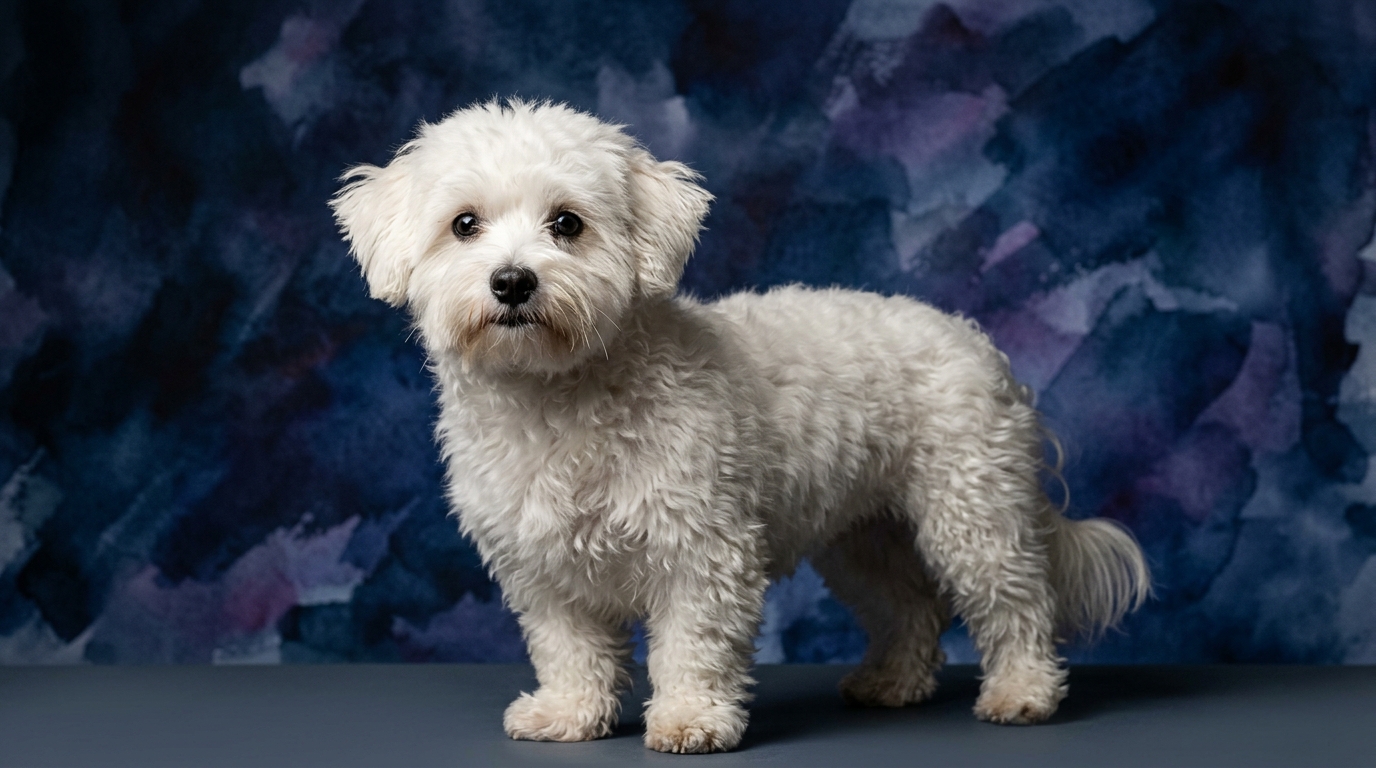
**Coton de Tuléar (Non-Sporting Group, Not Coren-Ranked):** The Coton de Tuléar, a breed celebrated for its companionship, demonstrates a moderate ability to solve problems (3/5), often centered around social engagement and navigating their domestic environment. This might involve figuring out how to retrieve a hidden toy, manipulating objects to gain attention, or adapting to new household rules. Their problem-solving is typically driven by curiosity and a desire for interaction. Cotons learn new commands at a moderate pace (Training Speed 3/5), often eager to please their human companions. Their responsiveness is generally high, especially when training incorporates positive reinforcement and playful interaction. While not instant learners, they show a consistent willingness to engage and master new skills, making the training process a cooperative effort.
The Coton de Tuléar exhibits a moderate and often profound level of social intelligence (3/5), excelling in understanding human emotions and social cues. They thrive on companionship, are highly attuned to their family's moods, and readily adapt their behavior to maintain harmony. Their social acumen makes them excellent emotional support animals and family members. Cotons possess a moderate instinctive drive (3/5) primarily focused on companionship, play, and maintaining close proximity to their human family. While they may have a natural inclination for retrieving or chasing, their strongest impulses revolve around social interaction and being an integral part of the household, rather than specific working tasks. Cotons have a moderate memory capacity (3/5), enabling them to recall commands, routines, and the identities of people and places. They remember positive and negative experiences, learning quickly from interactions and building a repertoire of appropriate behaviors. This memory aids in their adaptability and strengthens their bond with their family.
Where Komondor Wins Cognitively
Despite identical numerical scores, the Komondor's cognitive strengths truly shine in contexts demanding independent judgment and unwavering dedication to a specific, critical task. Their problem-solving, while rated 3/5, is uniquely geared towards complex environmental assessment and threat neutralization, requiring a nuanced understanding of animal behavior and territorial boundaries. A Komondor's ability to autonomously decide when and how to intervene to protect its flock, without human direction, showcases a profound practical application of its problem-solving capacity that differs significantly from a companion breed. This isn't about solving a puzzle for a treat; it's about life-or-death decisions in a dynamic, unpredictable environment.
Furthermore, their instinctive drive, also at 3/5, is channeled into an exceptionally focused and enduring protective instinct. This isn't just a general drive; it's a deep-seated, genetic imperative to guard. While a Coton's drive might be for play or companionship, the Komondor's drive for vigilance and defense is a cognitive advantage in specific, high-stakes scenarios. Their memory, too, is tailored to retain critical information about territory, threats, and flock members, allowing for consistent and reliable guarding over vast periods. This specialized cognitive architecture, though scoring the same numerically, represents a mastery of a demanding and ancient profession.
Where Coton de Tuléar Wins Cognitively
The Coton de Tuléar, with its identical 3/5 scores, demonstrates cognitive superiority in domains emphasizing adaptability, emotional attunement, and seamless integration into human social structures. Their social intelligence, while a 3/5, manifests as an exceptional ability to read and respond to human emotions, making them incredibly empathetic companions. This nuanced understanding of subtle human cues and mood shifts allows them to provide comfort or engage playfully at precisely the right moment, a skill not typically required or developed in a livestock guardian. Their problem-solving, though also 3/5, is often applied to navigating complex social situations or finding creative ways to solicit interaction, showcasing a different type of cognitive flexibility.
The Coton’s training speed, rated 3/5, benefits from a genuine eagerness to please and a strong desire for positive human interaction. While a Komondor might learn at a similar pace, the Coton's motivation is often intrinsically tied to strengthening its bond with its owner, making the learning process more collaborative and enjoyable for both parties. Their memory serves to reinforce these positive interactions and learned social behaviors, leading to a consistently well-adjusted and responsive companion. In essence, the Coton's cognitive strengths lie in mastering the art of companionship and thriving within the intricate tapestry of human family life.
Which is Easier to Train and Why
When considering ease of training, the Coton de Tuléar generally presents a more straightforward experience for the average owner compared to the Komondor, despite both scoring 3/5 in training speed. The Coton's inherent desire to please and their strong social motivation make them highly receptive to positive reinforcement methods. They thrive on interaction and praise, which translates into a willingness to engage in repetitive training exercises and a quicker adoption of new commands. Their relatively lower instinctive drive for independent tasks means they are less likely to question or override a command in favor of their own judgment, making them more consistently compliant in a typical obedience setting.
Conversely, the Komondor’s training speed, while also 3/5, is heavily influenced by its profound independence and centuries of selective breeding for autonomous guarding. A Komondor is wired to make its own decisions regarding flock safety; therefore, it often evaluates commands based on its own assessment of the situation. This doesn't mean they cannot be trained, but rather that training requires immense patience, consistency, and an understanding of their guardian mindset. They learn, but they may choose to obey only if the command aligns with their perceived duty or if the handler has established themselves as a truly respected leader. This makes them less 'easy' in the conventional sense, as their compliance is often conditional on their independent judgment rather than an eager-to-please disposition.
Which Suits Active Owners vs Relaxed Owners
The choice between a Komondor and a Coton de Tuléar based on owner activity levels hinges significantly on the type of activity sought and the context of their home environment. For active owners who enjoy long, purposeful walks, hiking, or have a working farm where a dog can fulfill its historical role, the Komondor can be an excellent fit. While not necessarily a high-energy 'go-go-go' breed in the way a Border Collie might be, their physical stamina and mental engagement are best satisfied through activities that allow them to patrol, observe, and feel a sense of purpose. A Komondor thrives when given a job, even if that job is simply overseeing a large property. Their relaxed demeanor inside the home often comes after a period of outdoor vigilance, making them suitable for owners whose 'activity' involves managing a larger estate or outdoor lifestyle.
The Coton de Tuléar, on the other hand, is a more suitable companion for owners who prefer a moderately active lifestyle or are more relaxed. While Cotons enjoy play sessions, short walks, and engaging in family activities, they do not require extensive, strenuous exercise to be content. Their primary 'activity' often revolves around social interaction, whether it's playing fetch in the living room, accompanying their owner on errands, or simply curling up nearby. Their adaptability means they can thrive in various living situations, from apartments to houses with yards, as long as they receive consistent human companionship and mental stimulation through training and play. They are ideal for individuals or families who want an interactive, affectionate presence without the demands of a working-breed exercise regimen.
The Verdict
If you seek an independent, protective guardian for a large property or livestock, and you appreciate a dog whose cognitive strengths lie in autonomous decision-making and unwavering vigilance, the Komondor is your match.
If you desire an adaptable, emotionally attuned companion dog that excels in social interaction and family integration, thriving on affection and moderate activity, the Coton de Tuléar will be a cherished member of your household.
🧠 Find Your Pet's IQ Score
Our Pet IQ Lab assessment covers 25+ tests across 5 cognitive dimensions — personalized to your breed.
Take the Full IQ Test →Frequently Asked Questions
Do Komondors and Coton de Tuléars have similar intelligence levels?
Numerically, both breeds score 3/5 across The Cosmic Pet Pet IQ Lab's five intelligence dimensions, indicating a moderate capacity for cognitive functions. However, how these scores manifest differs greatly; Komondors apply their intelligence to independent guarding, while Cotons excel in social and companion-oriented cognition.
Which breed is better for first-time dog owners?
Generally, the Coton de Tuléar is more forgiving for first-time dog owners due to their eager-to-please nature and adaptability, making training and integration into a family easier. The Komondor's strong independence and protective instincts require an experienced owner committed to consistent leadership and understanding of their specialized needs.
Can a Komondor be a family pet without livestock?
Yes, a Komondor can be a family pet without livestock, but they still require a 'flock' to guard, which becomes their human family and home. They need extensive socialization from a young age and an owner who understands their protective instincts, providing a secure, spacious environment and consistent, firm guidance to channel their natural drives appropriately.