Side-by-Side IQ Profile: Unpacking Shared Scores
At The Cosmic Pet Pet IQ Lab, we evaluate canine intelligence across five key dimensions. Interestingly, both the Komondor and the Glen of Imaal Terrier register a consistent 3/5 across all categories. This numerical parity, however, belies the distinct ways these breeds apply their cognitive faculties, shaped by centuries of selective breeding for specific roles. Understanding these nuances is crucial to appreciating their individual brilliance.
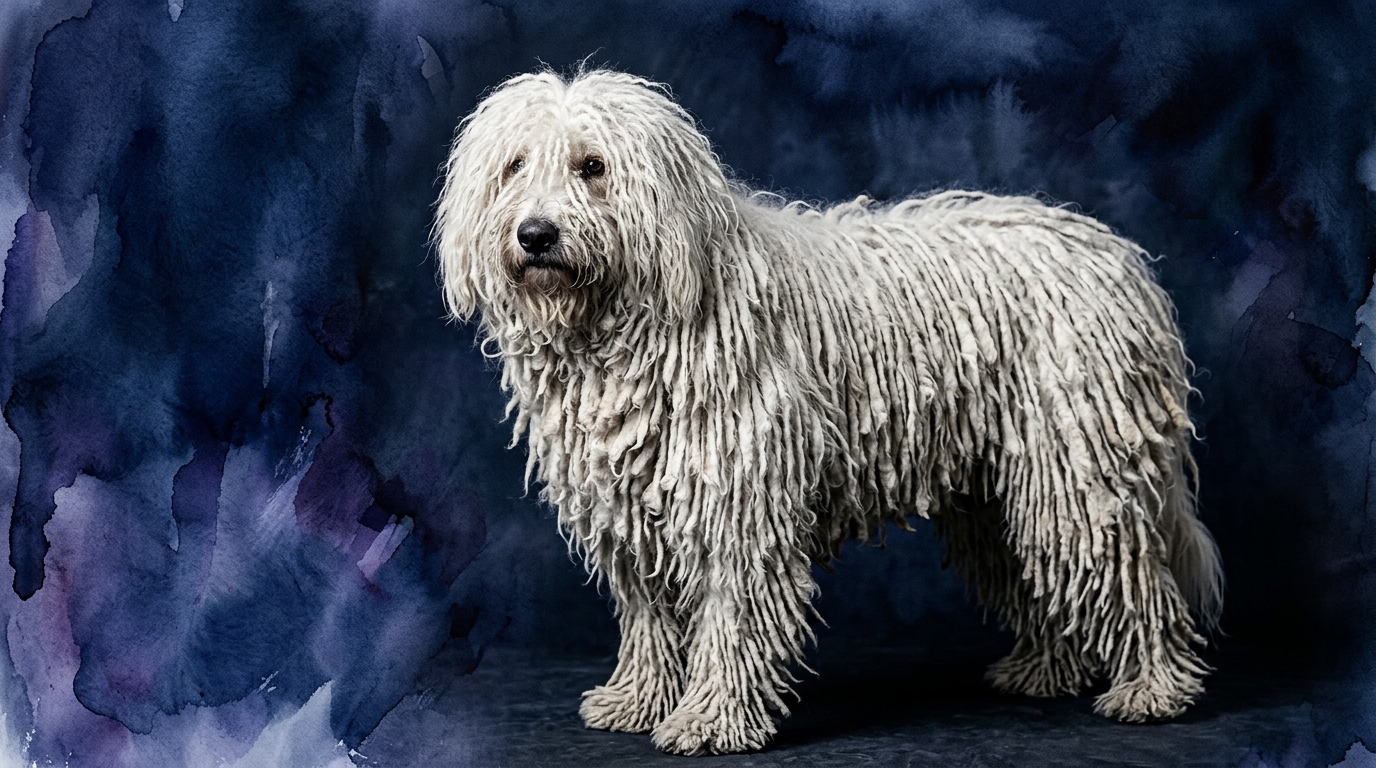
For the Komondor, a majestic dog from the Working Group, its Problem Solving score of 3/5 manifests in its profound ability to independently assess and manage threats to its flock or property. This isn't about solving human puzzles, but about evaluating complex environmental cues and strategizing deterrents without direct command. Its Training Speed, also 3/5, reflects a capacity to learn, but often on its own discerning terms; commands are absorbed but executed when the dog perceives them as relevant or necessary to its guardian duties. The Komondor’s Social Intelligence (3/5) is finely tuned for distinguishing friend from potential foe within its established territory, fostering deep bonds with its family while maintaining a reserved stance towards outsiders. Its Instinctive Drive (3/5) is powerfully geared towards vigilance and protection, a deep-seated programming for its livestock guardian heritage. Finally, its Memory (3/5) allows it to retain detailed knowledge of its territory, routines, and recurring individuals, contributing to its consistent protective role.
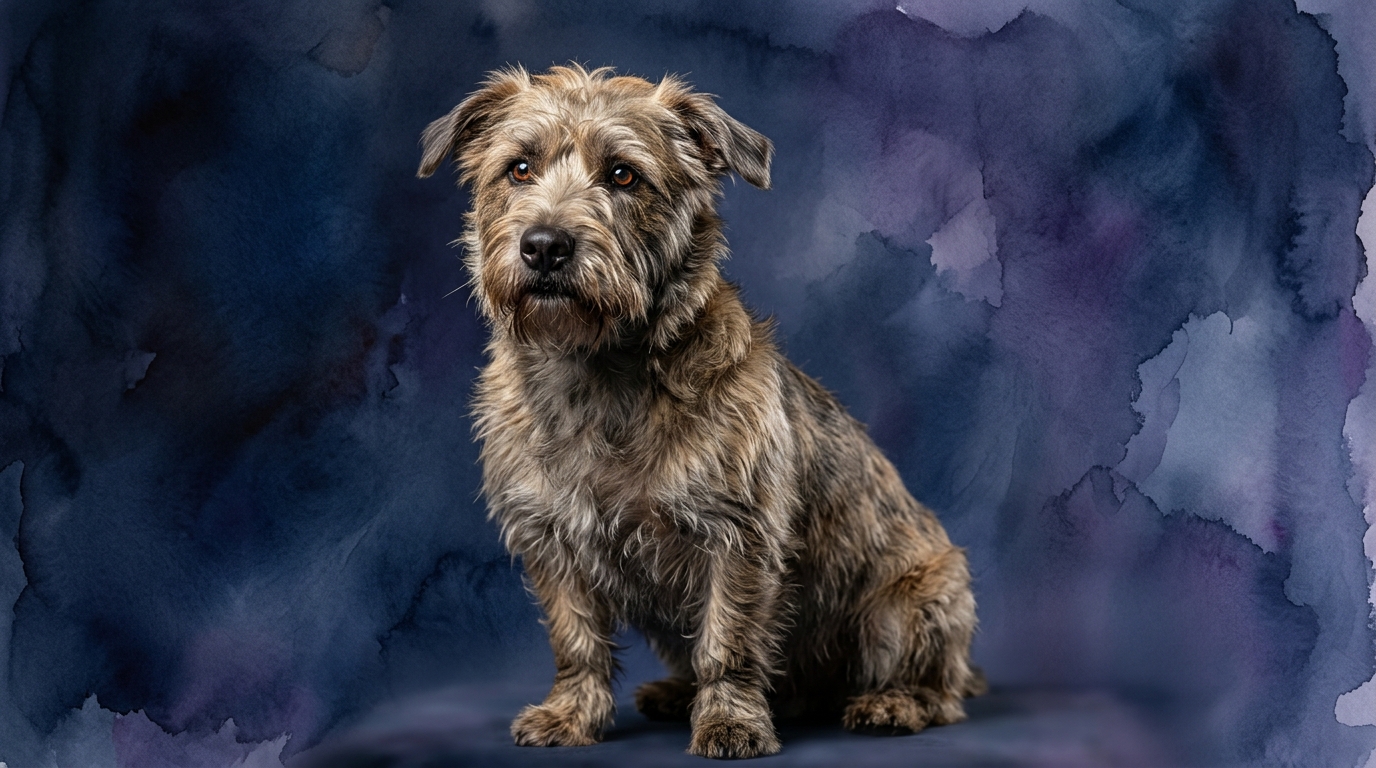
The Glen of Imaal Terrier, a tenacious member of the Terrier Group, also scores 3/5 in Problem Solving, but applies this ability with a different focus: persistent resourcefulness in confined spaces. Historically, this meant navigating burrows to flush out prey, requiring clever, sustained effort to overcome physical obstacles. Its Training Speed (3/5) indicates a capacity for quick learning when motivated, though its terrier tenacity means it can be selective about compliance, requiring engaging and consistent methods. The Glen's Social Intelligence (3/5) allows it to form strong, affectionate bonds with its family, observing and understanding household dynamics, often with a quiet, observant demeanor. Its Instinctive Drive (3/5) is characterized by a robust urge to dig, explore, and pursue scents, a direct legacy of its badger-hunting past. Its Memory (3/5) supports its ability to recall hunting routes, learned boundaries, and specific tasks, aiding its determined pursuit of objectives.
Where the Komondor Excels Cognitively
The Komondor, despite sharing a 3/5 in Problem Solving, demonstrates a unique cognitive strength in autonomous decision-making for protective duties. Its ability to process environmental information, weigh potential threats, and initiate a response without explicit human direction is a specific manifestation of its problem-solving capacity. This isn't about performing tricks; it's about making complex, real-time judgments in a dynamic, high-stakes environment. Its 3/5 Social Intelligence is uniquely applied to discerning genuine threats from harmless stimuli, a nuanced form of social processing that prioritizes the safety of its charges. The Komondor's 3/5 Instinctive Drive for guarding is not simply a reactive impulse; it's a deeply ingrained cognitive program that enables sustained, patient observation combined with decisive, appropriate action when necessary. This allows for a steady, unwavering presence that is constantly assessing its surroundings, a cognitive advantage for roles demanding self-reliance and protective judgment over immediate obedience.
Where the Glen of Imaal Terrier Excels Cognitively
The Glen of Imaal Terrier, with its identical 3/5 in Problem Solving, showcases a distinct cognitive advantage in tenacious, focused task completion, particularly in challenging physical contexts. Its historical role demanded not just identifying a problem, but devising and executing a sustained, often physical strategy to overcome obstacles, such as navigating complex underground networks. This involves a cognitive loop of trial-and-error, a remarkable memory for spatial layouts (3/5), and unwavering focus, a different kind of problem-solving than the Komondor's broad environmental assessment. Their 3/5 Training Speed, when combined with their natural determination, means they can become exceptionally proficient at specific, repetitive tasks once they grasp the goal and are motivated. This focused learning ability, paired with their 3/5 Instinctive Drive for digging and exploration, allows them to excel in activities that require sustained engagement with a specific objective, rather than broad, passive observation. They demonstrate a concentrated intellectual effort towards achieving a singular, often physical, goal, making them masters of persistent, targeted action.
Training Dynamics: Independence vs. Tenacity
Neither breed is typically described as 'easy' to train in the conventional sense, but the nature of their challenges stems directly from their respective 3/5 Training Speed scores and breed-specific temperaments. The Komondor’s 3/5 in Training Speed is profoundly influenced by its independence and its historical role of making autonomous decisions. While a Komondor can learn commands, it often evaluates the 'why' and 'when' before complying, rather than offering immediate deference. Training a Komondor demands immense patience, unwavering consistency, and a deep respect for their guardian mindset; they are not typically driven by an eagerness to please in the same way some obedience-focused breeds are. Their social intelligence, while strong for family, doesn't translate to automatic submission to every human instruction. Conversely, the Glen of Imaal Terrier’s 3/5 in Training Speed is complicated by its terrier tenacity and strong instinctive drive. While they can learn quickly, their powerful prey drive and single-minded focus on a scent or burrow can override commands if not carefully managed. They are less independent than the Komondor but more prone to 'tunnel vision' when their instincts are engaged. Training a Glen requires making tasks engaging and rewarding, channeling their determination rather than directly fighting against their innate drives. For a typical pet owner seeking basic obedience and tricks, the Glen might be perceived as more manageable, as their drives can often be redirected towards human-centric tasks more readily than the Komondor’s profound independence, which requires a trainer to adopt a partnership approach rather than a command-and-control one.
Lifestyle Match: Guardian Vigilance vs. Active Engagement
When considering an owner's lifestyle, the Komondor, despite its imposing size, might surprisingly suit a more 'relaxed' owner in terms of direct, high-energy physical activity, provided that owner can offer a secure, spacious property and acknowledges the Komondor's need for purpose. Their 3/5 Instinctive Drive is primarily for vigilant observation and protection, which is mentally demanding but doesn't translate to a need for daily marathon runs. They thrive on having a job, often fulfilled by guarding their property or family, and prefer patrolling their territory to endless games of fetch. They are unsuitable for small apartments or owners who envision only casual walks around the block. A 'relaxed' owner who appreciates a self-sufficient guardian and provides an appropriate environment for their innate drives could find a Komondor to be an excellent fit, understanding that 'relaxed' here means less direct, high-impact exercise and more consistent, purposeful supervision. The Glen of Imaal Terrier, with its 3/5 Instinctive Drive for hunting and exploration, is better suited for moderately active owners who enjoy engaging their dog's mind and body. While they don't require the extreme exercise of some working breeds, they thrive on varied walks, scent work, opportunities for digging (in designated areas), and challenging puzzle toys. Their problem-solving (3/5) is geared towards active engagement with their environment. A truly passive or sedentary owner might find a Glen becomes bored and potentially destructive, channeling its natural drives inappropriately. They need consistent mental stimulation and moderate physical activity to satisfy their terrier nature and prevent frustration.
The Verdict
Choose the Komondor if you seek a fiercely independent guardian for a secure, spacious property, valuing a dog whose cognitive strengths lie in autonomous protection and discerning judgment over eager obedience.
Opt for the Glen of Imaal Terrier if you desire a determined, resourceful companion for an active household, appreciating a dog whose cognitive drive focuses on persistent engagement and problem-solving through action.
🧠 Find Your Pet's IQ Score
Our Pet IQ Lab assessment covers 25+ tests across 5 cognitive dimensions — personalized to your breed.
Take the Full IQ Test →Frequently Asked Questions
Are Komondors good family dogs?
Komondors, with their 3/5 social intelligence, are deeply devoted to their immediate family, viewing them as their flock to protect. They can be reserved with strangers but are gentle and patient with children within their trusted circle, provided they are socialized early and boundaries are respected.
Do Glen of Imaal Terriers bark a lot?
Glen of Imaal Terriers are generally less vocal than many terrier breeds, earning them the nickname 'the barking terrier that doesn't bark.' However, their 3/5 instinctive drive means they will alert to perceived threats or interesting scents, often with a deep, resonant bark for their size, used discerningly rather than excessively.
How much exercise do these breeds need?
The Komondor, with its 3/5 instinctive drive for guarding, requires space to patrol and mental stimulation from its protective role, but not intense daily running; consistent property monitoring is its primary activity. The Glen of Imaal Terrier, with its 3/5 drive for exploration, benefits from moderate daily walks, playtime, and mental challenges like puzzle toys or scent work to prevent boredom and satisfy its active mind.