Side-by-Side Cognitive Profiles
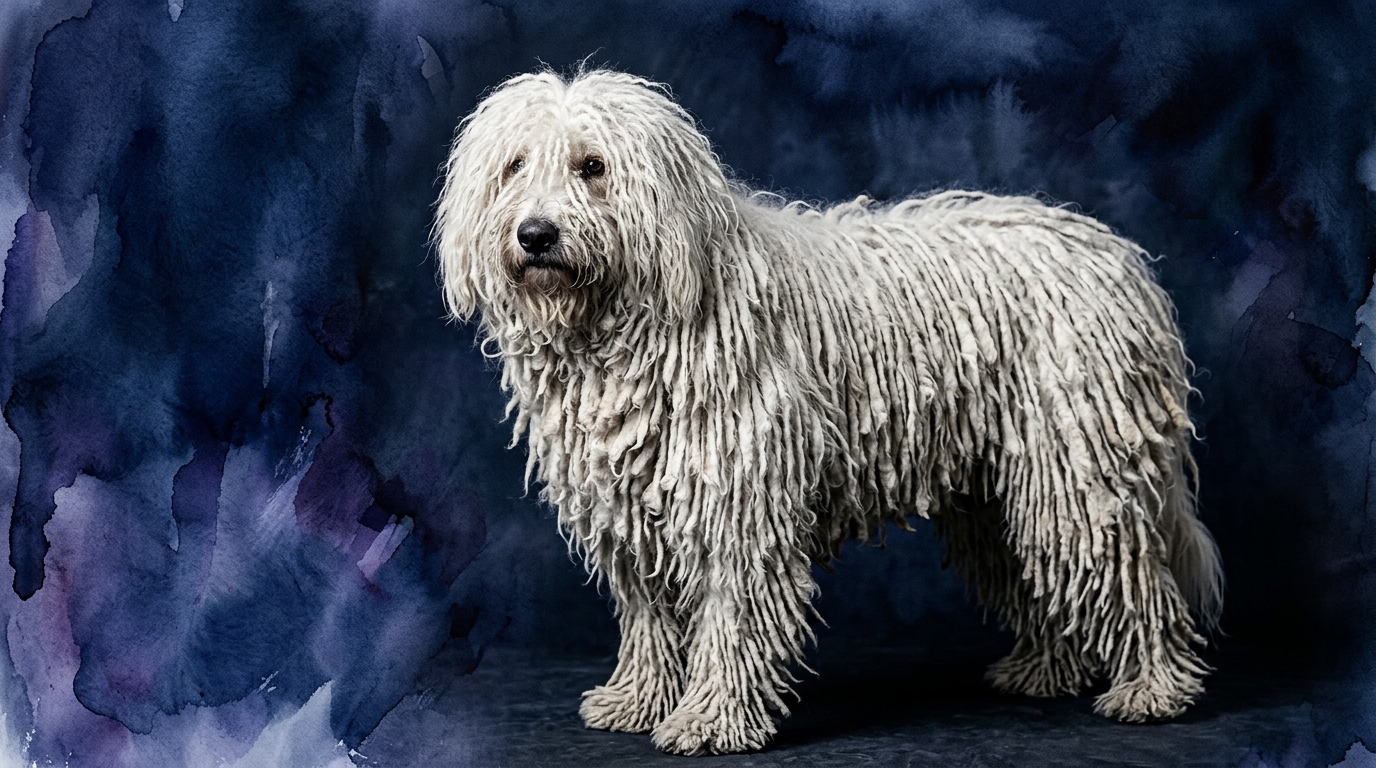
Komondor (Working, Coren rank #67): This ancient Hungarian livestock guardian dog possesses a distinctive cognitive framework shaped by centuries of independent duty. Its Problem Solving at 3/5 is not about retrieving items but about autonomously strategizing how to protect a flock from predators, often involving complex environmental assessment and proactive defense. Training Speed, also 3/5, reflects its capacity to learn but also its independent spirit; it absorbs lessons but often chooses to execute based on its own assessment of the situation, requiring consistent, patient guidance aligned with its protective instincts. Social Intelligence at 3/5 is deeply discerning, enabling it to accurately identify threats and understand the nuances of its 'flock's' safety, though it tends to be reserved with strangers. Its Instinctive Drive of 3/5 is powerfully directed towards vigilance and guardianship, a fundamental aspect of its psychological makeup. Finally, Memory at 3/5 ensures it retains critical information regarding its territory, routine, and past interactions, contributing to its unwavering protective role.
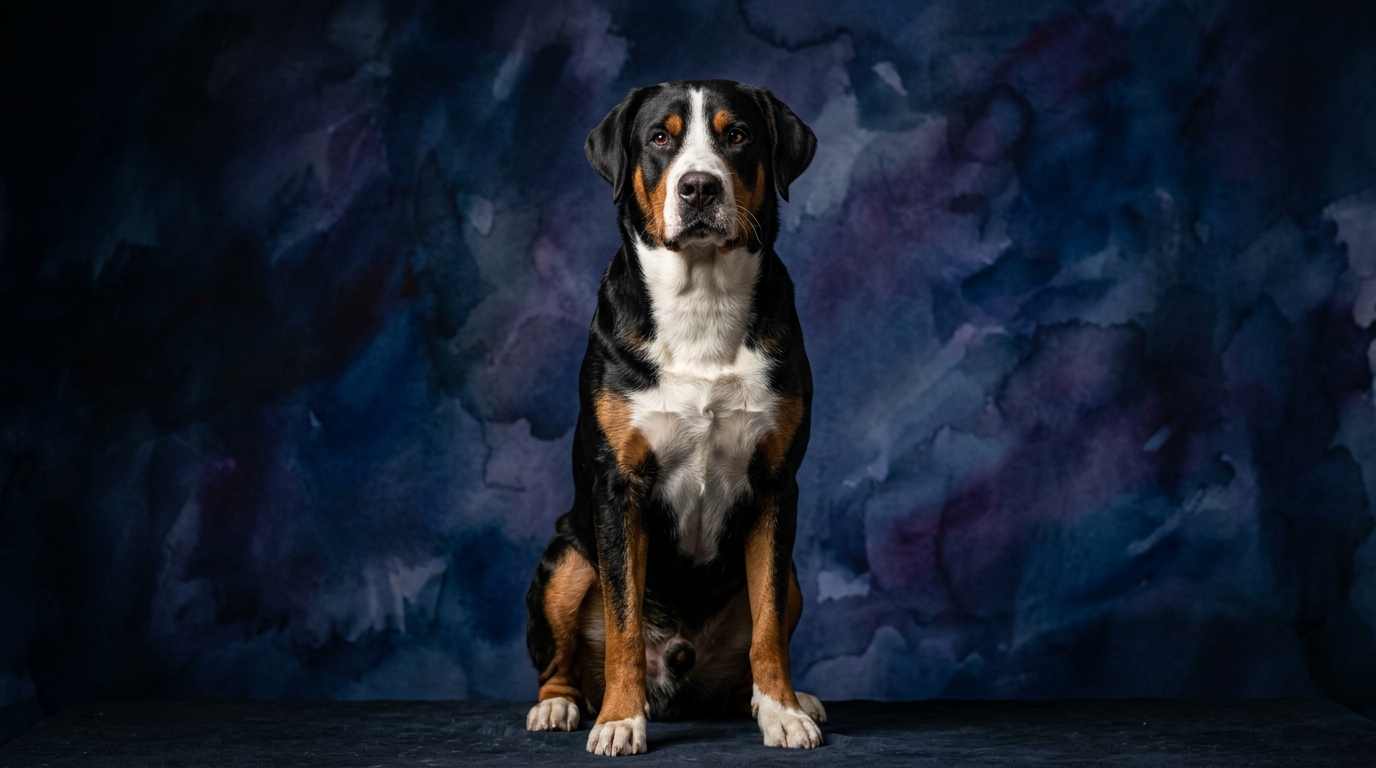
Greater Swiss Mountain Dog (Working, Not Coren-ranked): Originating from the Swiss Alps, the Greater Swiss Mountain Dog (GSMD) evolved as a versatile farm dog, pulling carts, driving livestock, and guarding property. Its Problem Solving at 3/5 manifests as a practical intelligence for understanding multi-step tasks, navigating complex environments with a cart, or adapting to various farm duties, often in cooperation with humans. Training Speed, also 3/5, indicates a good aptitude for learning commands and routines, often driven by a desire to please and engage with its family, though its strong will requires clear and consistent methods. Social Intelligence at 3/5 makes it highly attuned to family dynamics, capable of reading emotional cues and integrating smoothly into household life, generally exhibiting a confident yet friendly disposition with familiar individuals. Its Instinctive Drive of 3/5 is rooted in a strong work ethic, a desire to be useful, and a deeply ingrained need for companionship and participation in family activities. Memory at 3/5 allows it to recall a wide array of commands, routines, and experiences, making it reliable in performing learned tasks and remembering familiar faces.
Where the Komondor Excels Cognitively
The Komondor's cognitive strengths are profoundly tied to its heritage as an autonomous guardian. Its problem-solving ability shines brightest in scenarios requiring independent judgment and proactive defense, without direct human intervention. For instance, a Komondor will assess a perceived threat to its charges and devise a strategy to deter it, whether through a warning bark, a strategic placement between the threat and the flock, or a direct confrontation, all based on its own evaluation of the situation. This breed's social intelligence, while appearing reserved to outsiders, is exceptionally acute within its defined territory and 'flock,' allowing it to differentiate subtle shifts in behavior that might signal danger. Its memory is exceptional for remembering specific threats, safe boundaries, and the individual identities of those it protects, ensuring consistent vigilance. Essentially, the Komondor's cognitive framework is optimized for self-sufficiency and unwavering protection, making it a master of independent decision-making in a guardianship role.
Where the Greater Swiss Mountain Dog Excels Cognitively
The Greater Swiss Mountain Dog's cognitive advantages lie in its cooperative nature and adaptability to diverse tasks. Its problem-solving skills are particularly evident in its capacity to understand and execute complex, multi-stage commands, especially those involving physical work like pulling or navigating obstacles. Unlike the Komondor's independent decision-making, the GSMD excels at collaborative problem-solving, working in tandem with its human handler to achieve a common goal. Its social intelligence is geared towards seamless integration into a family unit, exhibiting a nuanced understanding of human emotions and household routines. This allows it to be a more intuitive companion, often anticipating needs or responding empathetically to family members. The GSMD's memory is robust for retaining a repertoire of learned behaviors and complex sequences, making it highly reliable in performing intricate tasks and remembering specific instructions over time. Its strength lies in its ability to learn and reliably apply a broad range of skills under human direction, making it an exceptionally versatile and dependable partner.
Which is Easier to Train and Why
While both breeds share a 3/5 training speed, their approaches to learning differ significantly, impacting the ease of training. The Greater Swiss Mountain Dog is generally considered easier to train for obedience and complex tasks due to its inherent desire to please its human companions and its strong work ethic. They tend to be more responsive to positive reinforcement and clear, consistent commands, often enjoying the process of learning and working alongside their owners. Their social intelligence fosters a collaborative learning environment. In contrast, the Komondor, with its deeply ingrained independence as a livestock guardian, approaches training with a more questioning mindset. It will learn, but often evaluates the necessity or relevance of a command through its own lens of utility and protection. Training a Komondor requires immense patience, understanding of its guardian instincts, and establishing a relationship built on mutual respect, where the dog perceives the human as a fair and competent leader. They are not typically motivated by a strong desire to please for its own sake, but rather by consistency, fairness, and commands that align with their protective nature.
Which Suits Active Owners vs. Relaxed Owners
Determining which breed suits active versus relaxed owners depends less on sheer physical exertion and more on the type of engagement required. The Greater Swiss Mountain Dog generally suits active owners who enjoy incorporating their dog into daily activities and structured adventures. They thrive with regular walks, hikes, and opportunities for mental stimulation like carting, obedience training, or participating in dog sports. Their desire for companionship means they want to be involved and engaged, requiring owners who are prepared for consistent interaction and activity. While not hyperactive, a GSMD needs purposeful activity to prevent boredom and destructive behaviors. The Komondor, conversely, might appeal more to owners who value a watchful presence and a dog that is content with patrolling its territory, requiring a different kind of 'active' ownership. While they need exercise, their activity often revolves around monitoring and guarding. They are not typically jogging partners or fetch enthusiasts in the same vein as a GSMD. Owners must be 'active' in managing their guarding instincts, socialization, and providing a secure, defined territory, rather than necessarily engaging in high-intensity physical output. A relaxed owner who appreciates a dog's independent nature and provides a large, secure space for patrolling might find a Komondor a better fit, understanding that 'active' for this breed means constant vigilance.
The Verdict
Choose the Komondor if you seek an independent, vigilant guardian with a profound sense of duty, understanding that its protective instincts and self-reliance require specific management and a unique training approach.
Opt for the Greater Swiss Mountain Dog if you desire a cooperative, versatile, and devoted companion eager to participate in family activities and structured work, thriving on consistent engagement and a clear partnership.
🧠 Find Your Pet's IQ Score
Our Pet IQ Lab assessment covers 25+ tests across 5 cognitive dimensions — personalized to your breed.
Take the Full IQ Test →Frequently Asked Questions
Are Komondors and Greater Swiss Mountain Dogs good with children?
Komondors can be good with children of their 'flock' but require careful socialization and supervision due to their protective instincts and potential wariness of strangers. Greater Swiss Mountain Dogs are generally known for being patient and gentle with children within their family, making them excellent family companions, though early socialization is always key.
Do these breeds require a lot of grooming?
The Komondor's unique corded coat demands specialized and time-consuming grooming to prevent matting and maintain hygiene, often requiring professional help or significant owner dedication. The Greater Swiss Mountain Dog has a short, dense double coat that requires much less intensive grooming, typically needing only regular brushing to manage shedding and keep it healthy.
What are the primary exercise needs for each breed?
Komondors require moderate, purposeful exercise, often satisfied by patrolling a large, secure yard or property, rather than intense, structured workouts. Greater Swiss Mountain Dogs need consistent moderate exercise, including daily walks, hikes, and opportunities for mental engagement through activities like carting or obedience, to keep them physically and mentally content.