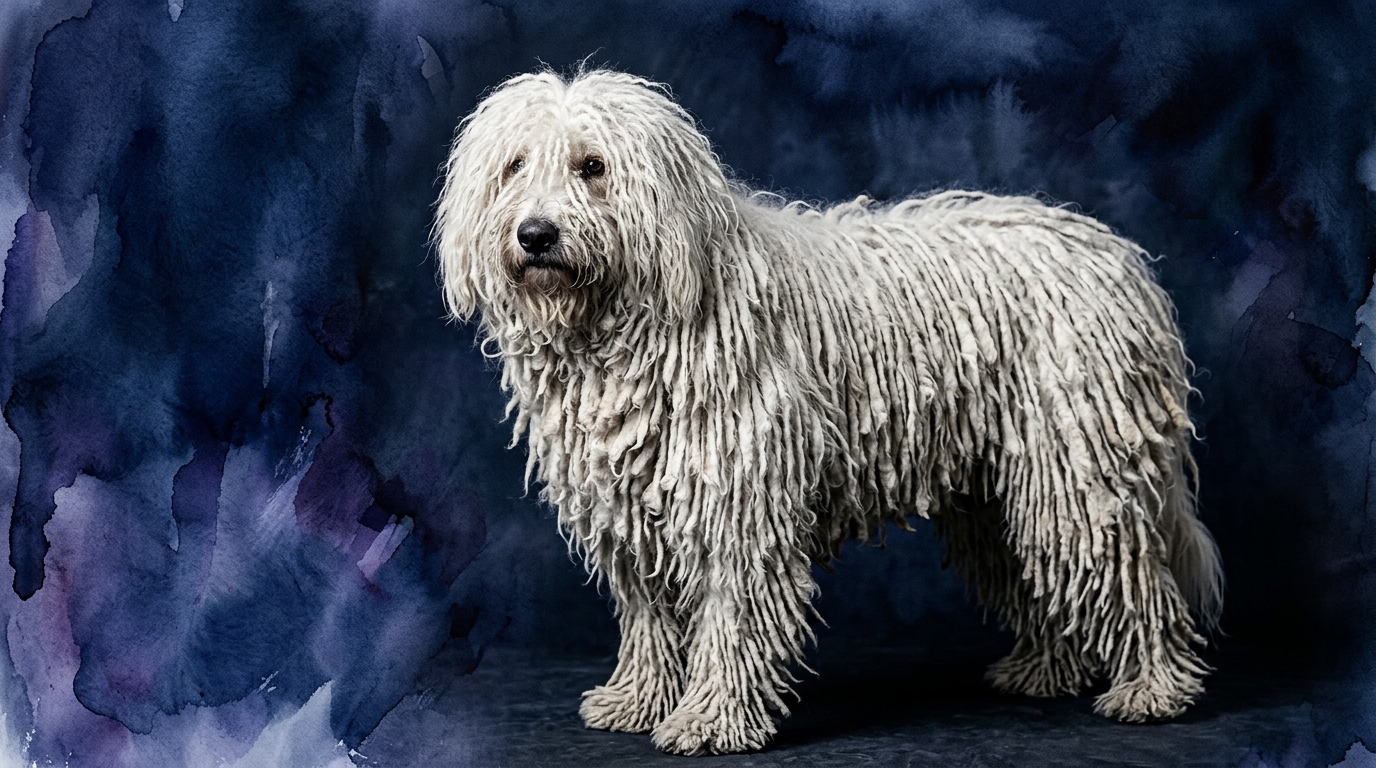

Side-by-Side IQ Profile: Komondor vs. Japanese Chin
For the Komondor, a 3/5 in Problem Solving reflects its capacity for independent decision-making when protecting its flock or family. This isn't about solving complex puzzles for entertainment, but rather assessing potential threats, determining appropriate responses, and acting autonomously in dynamic situations, often without direct human command. The Japanese Chin's 3/5 in Problem Solving, conversely, shines in its ability to navigate its domestic environment and social dynamics. This might involve figuring out how to get its human's attention, locating a favored napping spot, or subtly influencing household routines to its advantage, demonstrating a cleverness focused on comfort and companionship.
A 3/5 Training Speed for the Komondor signifies that while it is perfectly capable of learning, its independent and self-assured nature means it won't always be a quick study eager to please. Training requires immense patience, consistency, and establishing a relationship built on mutual respect, as the Komondor needs to understand the "why" behind a command to truly commit. The Japanese Chin, also at 3/5, learns at a moderate pace, but its sensitivity and desire for comfort mean training methods must be gentle, positive, and engaging. Repetitive drills might bore or overwhelm it, while short, fun sessions focused on praise and rewards will yield better results, though its independent streak can still emerge.
The Komondor's 3/5 Social Intelligence is deeply rooted in its protective instincts, enabling it to accurately discern friend from foe and understand the subtle social cues within its established "flock." It forms profound bonds with its family, demonstrating a keen awareness of their moods and needs, while often maintaining a reserved, watchful demeanor towards strangers. The Japanese Chin's 3/5 Social Intelligence manifests as a remarkable attunement to human emotion, allowing it to adapt its behavior to its owner's mood, offering comfort or initiating play as appropriate. It thrives on close human connection, often displaying an almost empathetic understanding of its preferred companions' feelings, though it can be selective in its affections.
A 3/5 Instinctive Drive in the Komondor is dominated by its inherent guarding nature, manifesting as a powerful territoriality and a strong protective impulse towards its family and property. This drive is not overwhelming to the point of being unmanageable, but it is a fundamental aspect of its being that requires appropriate channeling and management from an early age. The Japanese Chin's 3/5 Instinctive Drive is far removed from guarding, instead focusing on its companion roots. This might translate into a moderate desire to chase small, moving objects (like toys), a strong drive for comfort and warmth, or an instinct to be close to its chosen human, but not a drive that requires significant "work" or physical outlets in the traditional sense.
The Komondor's 3/5 Memory allows it to retain crucial information vital for its role, such as the boundaries of its territory, the faces of familiar people, and past encounters that might indicate a threat. This long-term recall contributes to its consistent guarding behavior and ability to learn complex routines over time. For the Japanese Chin, a 3/5 Memory means it easily remembers routines, preferred people, where treats are stored, and past interactions, both positive and negative. This memory aids its ability to integrate seamlessly into a household, anticipating events and reinforcing behaviors that lead to favorable outcomes, like affection or play.
Where the Komondor Wins Cognitively
The Komondor's cognitive strengths truly shine in its capacity for independent, strategic decision-making in high-stakes situations. Its Problem Solving at 3/5, combined with its profound 3/5 Instinctive Drive for protection, allows it to assess complex environmental cues and react appropriately to perceived threats without needing constant human direction. This breed excels at long-term memory for territory and distinguishing between routine and anomaly, a critical cognitive skill for a livestock guardian. Its social intelligence, while selective, enables a deep, unwavering understanding of its "flock's" safety and well-being, translating into a cognitive dedication to protective vigilance that few other breeds can match.
Where the Japanese Chin Wins Cognitively
The Japanese Chin's cognitive prowess is centered on its exquisite social attunement and ability to thrive within intricate human-centric environments. Its 3/5 Social Intelligence allows it to read subtle shifts in human mood and body language with remarkable accuracy, adapting its behavior to provide comfort or entertainment. This breed demonstrates a cleverness in domestic problem-solving, figuring out how to manipulate its environment for maximum comfort or how to effectively solicit attention from its owners. Its memory at 3/5 is adept at recalling preferred routines and positive interactions, making it an excellent companion that anticipates household rhythms and forms strong, nuanced bonds based on shared experiences.
Which is Easier to Train and Why
Assessing which is "easier" to train requires understanding their distinct motivations, despite both scoring 3/5 in Training Speed. The Komondor's inherent independence and guarding instincts mean it often requires a clear purpose or justification for commands; it's not simply eager to please. Training involves building a strong, respectful partnership where the Komondor understands its role, making the process more deliberate and requiring an owner with unwavering consistency and patience. Conversely, the Japanese Chin, while also 3/5, is often more responsive to positive reinforcement due to its desire for human companionship and comfort. However, its "cat-like" independence and potential for distraction mean training sessions must be kept short, engaging, and fun. While the Chin may pick up basic commands with less resistance, house-training can sometimes be a challenge due to its small size and preference for comfort, making persistent, gentle encouragement vital. In essence, the Chin might learn specific tricks faster due to its social motivation, but the Komondor, once committed, will demonstrate a more profound and reliable adherence to its learned duties within its understood framework.
Which Suits Active Owners vs. Relaxed Owners
The Komondor, despite its calm demeanor, is best suited for owners who are "active" in terms of their commitment to mental engagement, socialization, and managing a powerful, independent canine mind. Their cognitive needs demand consistent training, clear boundaries, and opportunities to fulfill their inherent guarding instincts, even if that means simply patrolling a secure yard. They are not a dog for relaxed owners seeking a low-maintenance pet, as their intelligence requires a dedicated owner willing to invest significant time into their development and integration. The Japanese Chin, on the other hand, is an ideal match for more "relaxed" owners who prioritize companionship and gentle interaction. Their cognitive stimulation comes from close social bonds, interactive games, and being an integral part of daily family life. While they enjoy short bursts of play, their physical and mental energy levels are perfectly aligned with an owner who appreciates a charming, sensitive, and less physically demanding companion, thriving on affection and comfort.
The Verdict
Choose the Komondor if you are an experienced owner seeking a formidable, independent guardian with a deep protective instinct, willing to dedicate extensive time to training, socialization, and providing a clear purpose for its profound cognitive abilities.
Choose the Japanese Chin if you desire a charming, sensitive companion dog that excels in social interaction and domestic harmony, offering delightful companionship and requiring mental engagement primarily through affection, gentle play, and being a cherished member of the household.
🧠 Find Your Pet's IQ Score
Our Pet IQ Lab assessment covers 25+ tests across 5 cognitive dimensions — personalized to your breed.
Take the Full IQ Test →Frequently Asked Questions
Are Komondors truly independent thinkers?
Yes, their 3/5 Problem Solving and Instinctive Drive mean they are bred to make autonomous decisions regarding the safety of their flock or family. This independence is a cognitive strength, allowing them to assess situations and act without constant human instruction, though it requires an owner who understands and respects this trait.
Is the Japanese Chin easily distracted during training?
While capable of learning (Training Speed 3/5), the Japanese Chin's sensitive nature and preference for comfort can lead to distractions. Short, positive, and engaging training sessions are most effective, as they respond best to methods that keep them interested and reinforce their bond with their owner.
How do both breeds typically interact with unfamiliar people?
The Komondor, with its strong guarding instincts, is naturally wary and reserved around strangers, often maintaining a watchful distance as part of its protective role. The Japanese Chin can be more variable; some are reserved or aloof with new people, while others might be politely curious, though they generally prefer the company of their chosen few.