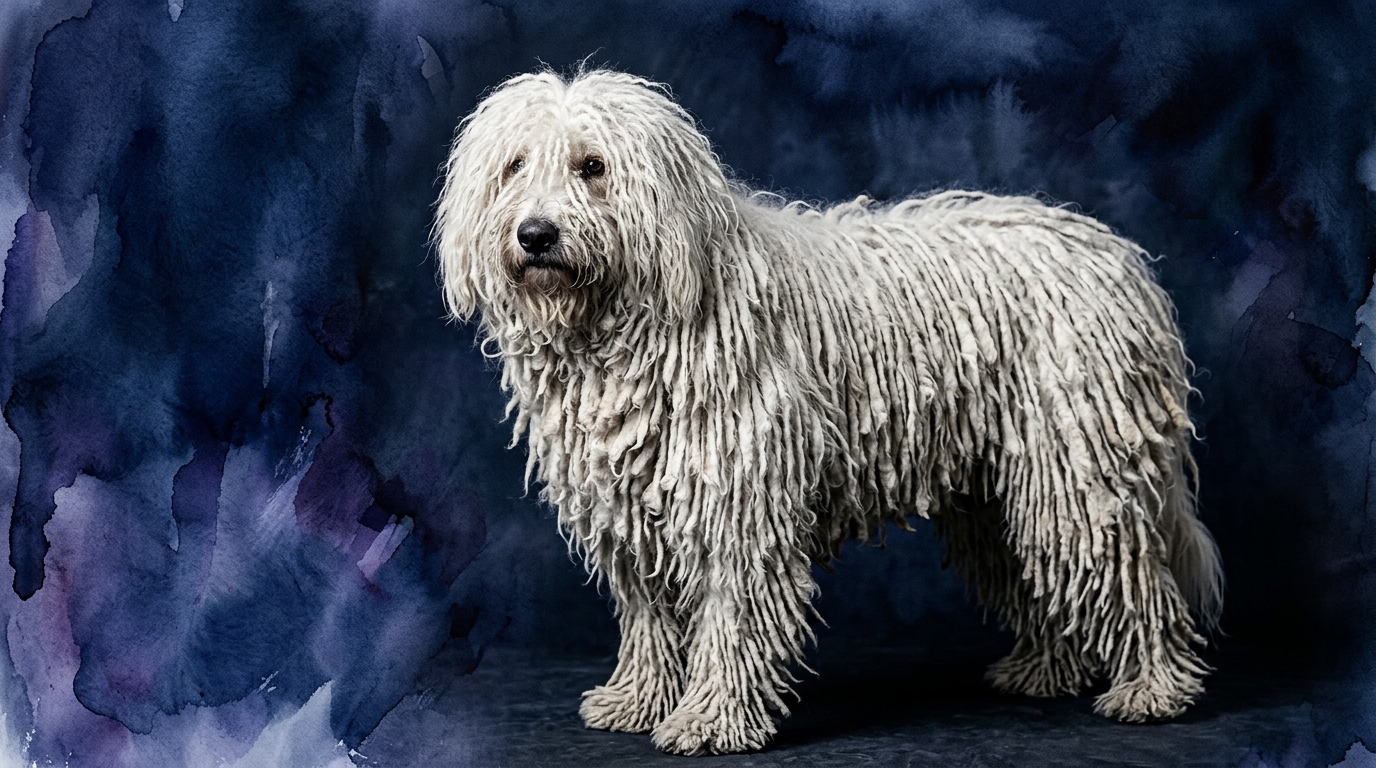
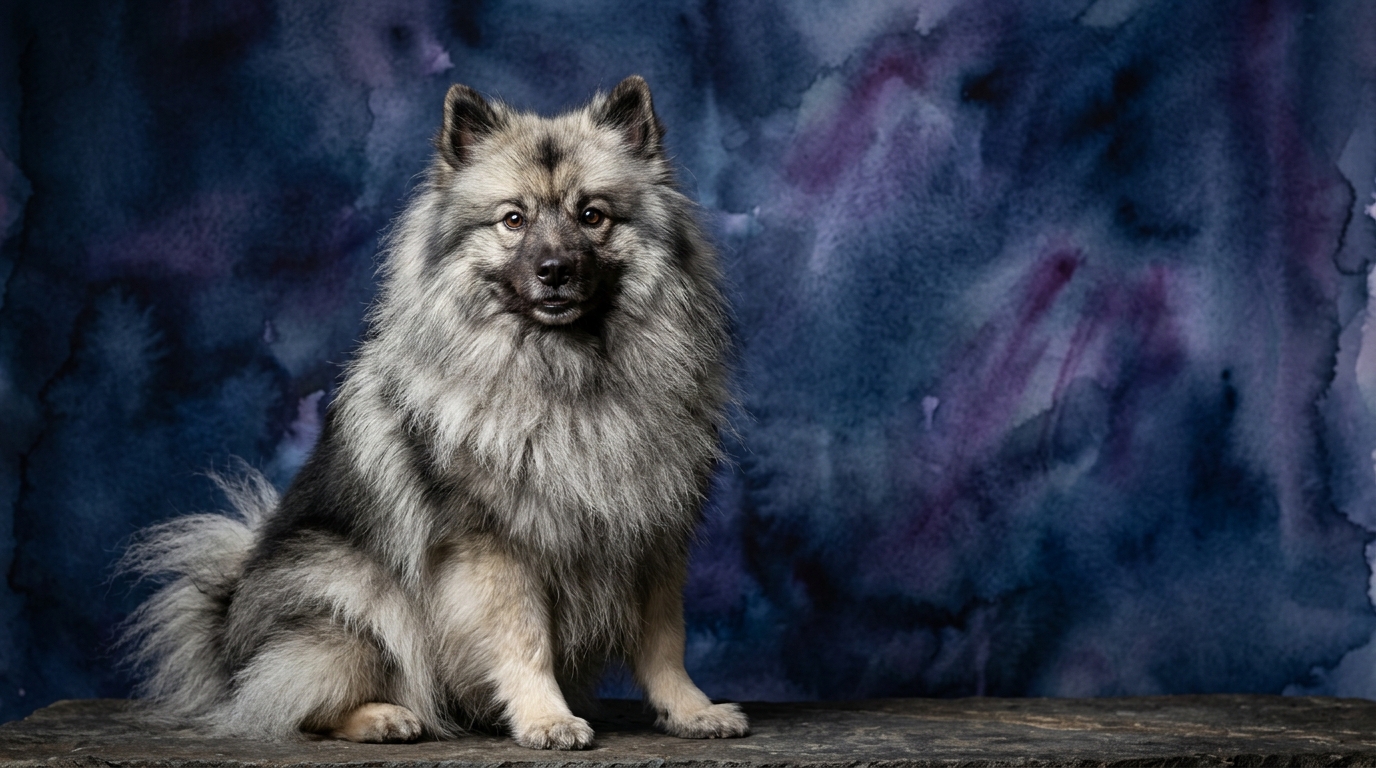
Side-by-Side Cognitive Profiles
This dimension gauges a dog's capacity to navigate novel situations and overcome obstacles without prior instruction, reflecting their ability to analyze and execute solutions. The Komondor, rated 3 out of 5, demonstrates functional problem-solving, often geared towards assessing threats and devising protective strategies for its flock or family, prioritizing practical, self-reliant solutions. In contrast, the Keeshond, scoring 4 out of 5, exhibits a more versatile and adaptable approach, showing ingenuity in figuring out how to manipulate objects or solve environmental puzzles, reflecting its curious and engaged nature.
Training speed measures how quickly a dog can learn and consistently perform new commands or tasks, combining focus, comprehension, and cooperation. The Komondor's 3 out of 5 rating indicates a steady, independent learning pace; while capable of understanding, its strong self-will requires more repetition for consistent compliance, as it often prefers making its own decisions. The Keeshond, with a 4 out of 5, typically picks up new commands with greater alacrity, showing eagerness to please and a keen attention span during structured learning, making it generally more responsive to traditional obedience training.
This facet explores a dog's ability to understand and appropriately respond to social cues from humans and other animals, including body language and emotional states. A Komondor's 3 out of 5 reflects a discerning social intelligence; it forms deep bonds with its inner circle but maintains a reserved, watchful demeanor towards strangers, interpreting interactions through a protective and loyal lens. The Keeshond also scores 3 out of 5, indicating a generally amiable and perceptive social understanding; it typically enjoys interaction and reads human moods effectively, though its social drive focuses on companionship and alert communication rather than guarding vigilance.
Instinctive drive refers to the innate, genetically programmed behaviors that motivate a dog, often tied to its breed's original purpose, encompassing tendencies like guarding or companionship. Both the Komondor and Keeshond receive a 3 out of 5, but their manifestations differ significantly. The Komondor's drive is powerfully anchored in livestock guarding, exhibiting a profound instinct to patrol, protect, and independently ward off perceived threats to its charges. The Keeshond’s drive leans towards alert companionship, possessing an inherent desire to be involved with its family, acting as a watchful “bark alarm” and a cheerful presence.
Memory assesses a dog's capacity to recall learned commands, experiences, and associations over time, including both short-term and long-term recall. The Komondor's 3 out of 5 memory rating suggests functional recall sufficient for its duties, remembering territory, charges, and routines, but perhaps not retaining complex obedience sequences with perfect fidelity. In stark contrast, the Keeshond excels with a perfect 5 out of 5 in memory, demonstrating an exceptional ability to recall past lessons, people, places, and specific events, contributing significantly to its trainability and lasting associations.
Where the Komondor Excels Cognitively
While the Komondor's raw IQ scores appear moderate compared to the Keeshond, its cognitive strengths lie in their highly specialized application, particularly in independent judgment and unwavering resolve. Its 3/5 problem-solving score is not about navigating complex agility courses, but rather about autonomously assessing threats to its flock or family and formulating defensive strategies without human intervention. This self-reliance, born from centuries of guarding livestock alone, means it can make critical decisions under pressure, relying on its own interpretation of danger. Furthermore, its 3/5 social intelligence, while not broadly gregarious, signifies a deep, discerning bond with its inner circle and a precise ability to identify outsiders or potential threats, filtering social interactions through a protective lens. This focused cognitive approach, coupled with its consistent instinctive drive for guardianship, allows it to excel in roles demanding vigilance and decisive action, where human direction might be delayed or absent.
Where the Keeshond Shines Cognitively
The Keeshond's cognitive profile reveals distinct advantages, particularly in areas facilitating companionship and adaptability. Its 4/5 problem-solving ability means it is more adept at understanding abstract concepts and navigating new environments, often figuring out how things work or how to achieve a desired outcome through observation and experimentation. This makes them engaging companions who can learn complex tricks or excel in dog sports requiring mental agility. The Keeshond truly shines with its 4/5 training speed, indicating a rapid grasp of new commands and a strong motivation to perform, driven by a desire to interact and please its humans. This responsiveness makes them highly trainable for a wide range of tasks and behaviors. However, its most striking cognitive strength is its perfect 5/5 memory score. This exceptional recall means Keeshonds retain learned information, routines, and associations with remarkable fidelity over long periods, making them reliable in their learned behaviors and quick to pick up where they left off, even after a break. This formidable memory contributes significantly to their overall trainability and their capacity for nuanced understanding of their environment.
Training: Ease and Behavioral Differences
Based on their respective IQ profiles, the Keeshond is generally easier to train than the Komondor. The Keeshond’s 4/5 training speed, coupled with its 5/5 memory, creates a highly receptive and retentive learner. They typically grasp new commands quickly and consistently remember them, eager to engage with their human trainers and perform tasks. This responsiveness stems from their historical role as companions, where cooperative interaction was paramount. In contrast, the Komondor's 3/5 training speed reflects its deeply ingrained independence. While capable of learning, its strong instinct for self-direction as a livestock guardian means it often prefers to evaluate situations and act according to its own judgment rather than simply complying with every command. Training a Komondor requires patience, understanding of its independent nature, and a focus on building a strong, respectful relationship rather than expecting immediate, eager obedience. Its cognitive strengths are geared towards autonomous decision-making in protection, not compliant performance in obedience.
Matching Breeds to Lifestyles: Active vs. Relaxed Owners
The Komondor generally suits owners who appreciate a dog with a profound sense of purpose and a more independent disposition, rather than those seeking a highly active playmate. While they require space to patrol and mental stimulation related to their guarding instincts, their activity is often measured and strategic, involving observation and vigilance rather than constant physical exertion like fetching or running. They are not typically suited for owners who desire a “relaxed” dog in the sense of one that requires minimal engagement, as their strong instincts demand a clear role and boundaries, but their exercise needs are moderate compared to some working breeds. Owners must be prepared for their strong will and need for mental engagement tailored to their protective nature. The Keeshond, on the other hand, is a more versatile fit for a range of owners. While not requiring extreme athleticism, they thrive on consistent interaction, moderate daily exercise, and mental enrichment through training and companionship. Their cheerful and alert nature makes them engaging partners for active walks, playful indoor sessions, and participation in dog sports. They are well-suited for owners who enjoy integrating their dog into daily life, providing consistent attention and mental stimulation, making them ideal for both moderately active and more relaxed owners who commit to regular engagement.
The Verdict
Choose a Komondor if you seek a fiercely loyal, independent guardian with a specialized cognitive focus on protection and self-reliance, and you are prepared for a dog that makes its own decisions.
Opt for a Keeshond if you desire an adaptable, highly trainable, and exceptionally perceptive companion who thrives on interaction and excels at retaining learned behaviors.
🧠 Find Your Pet's IQ Score
Our Pet IQ Lab assessment covers 25+ tests across 5 cognitive dimensions — personalized to your breed.
Take the Full IQ Test →Frequently Asked Questions
Does Coren's rank directly reflect a dog's overall intelligence?
Coren's ranking primarily assesses "working intelligence" or obedience, focusing on a dog's ability to learn and follow human commands. It doesn't encompass the full spectrum of cognitive abilities like problem-solving, social intelligence, or instinctive drives, which are crucial for understanding a breed's overall mental aptitude.
How does a Komondor's independence affect its problem-solving?
A Komondor's independence means its 3/5 problem-solving is often self-directed, focused on assessing and neutralizing threats to its charges without waiting for human input. This makes them highly effective in roles requiring autonomous decision-making in complex, dynamic environments, even if they don't solve human-centric puzzles as readily.
What makes the Keeshond's memory score of 5/5 significant?
A 5/5 memory score for the Keeshond signifies an exceptional capacity to recall commands, routines, and experiences over long periods. This greatly enhances their trainability, allows them to build complex associations, and makes them highly reliable in performing learned behaviors, contributing to their adaptability as companions.