Side-by-Side Cognitive Profiles: Decoding the 3/5 Score
At first glance, the Komondor and Scottish Terrier appear to share strikingly similar cognitive blueprints, each scoring 3/5 across all five dimensions of our Pet IQ Lab assessment. However, these identical numerical ratings mask profound differences in how their intelligence expresses itself, rooted deeply in their historical roles and breed-specific traits. Understanding these distinctions requires looking beyond the numbers to the behavioral manifestations of their minds.
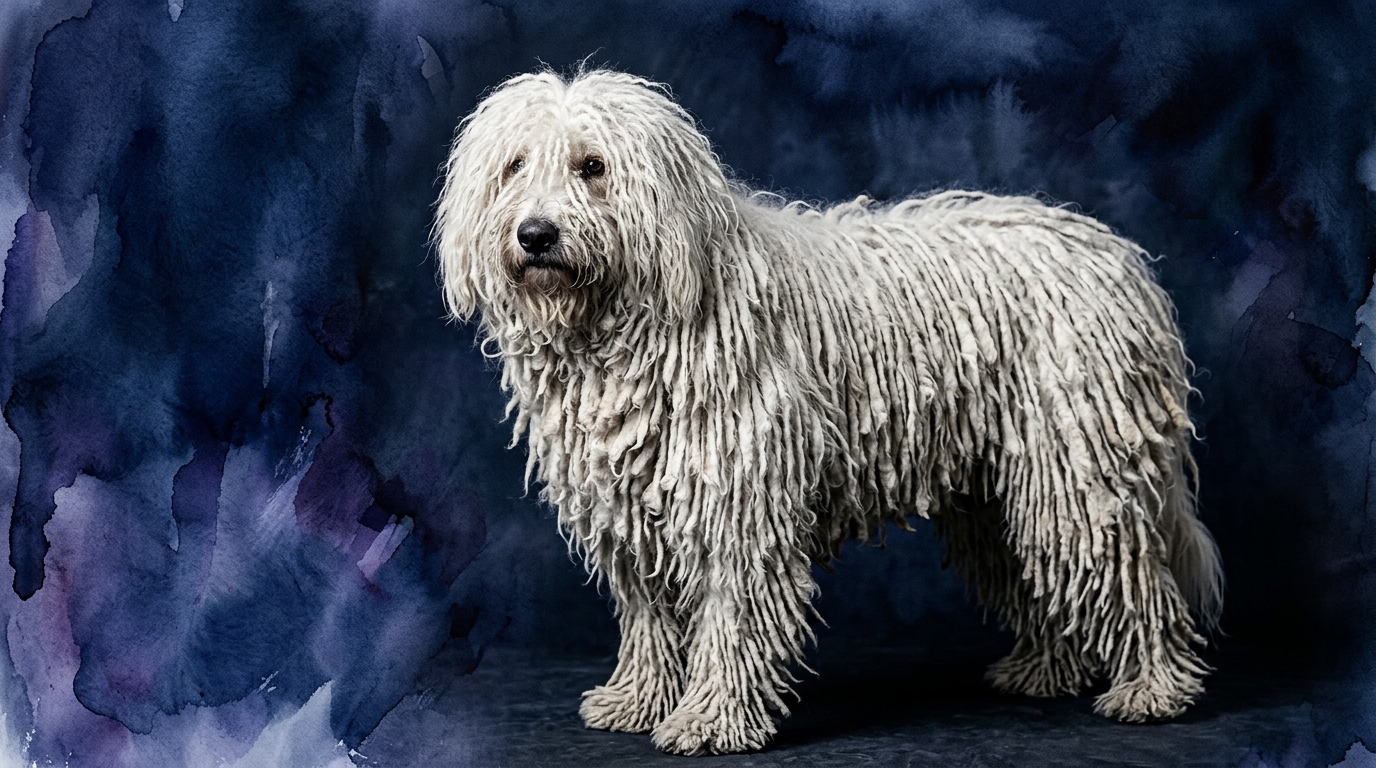
For the Komondor, a majestic guardian breed, its 3/5 in Problem Solving signifies a capacity for independent, strategic thought in complex, dynamic environments. This isn't about solving human-devised puzzles quickly, but rather evaluating threats, positioning itself effectively, and making autonomous decisions to protect its flock without direct human command. Its Training Speed, also 3/5, reflects a deliberate learning process; the Komondor absorbs information and commands, but often evaluates them based on perceived utility to its guarding role rather than eager compliance. Social Intelligence at 3/5 means a profound attunement to its immediate 'flock' (human family, livestock), understanding social hierarchies and boundaries, coupled with a cautious, discerning approach to strangers. Its Instinctive Drive of 3/5 is overwhelmingly geared towards protection, manifesting as an ever-present vigilance and a readiness to act decisively when its charge is perceived to be at risk. Finally, Memory, also 3/5, highlights an excellent recall for its territory, routines, and the individuals it considers part of its protected group, contributing to its sustained effectiveness as a guardian.
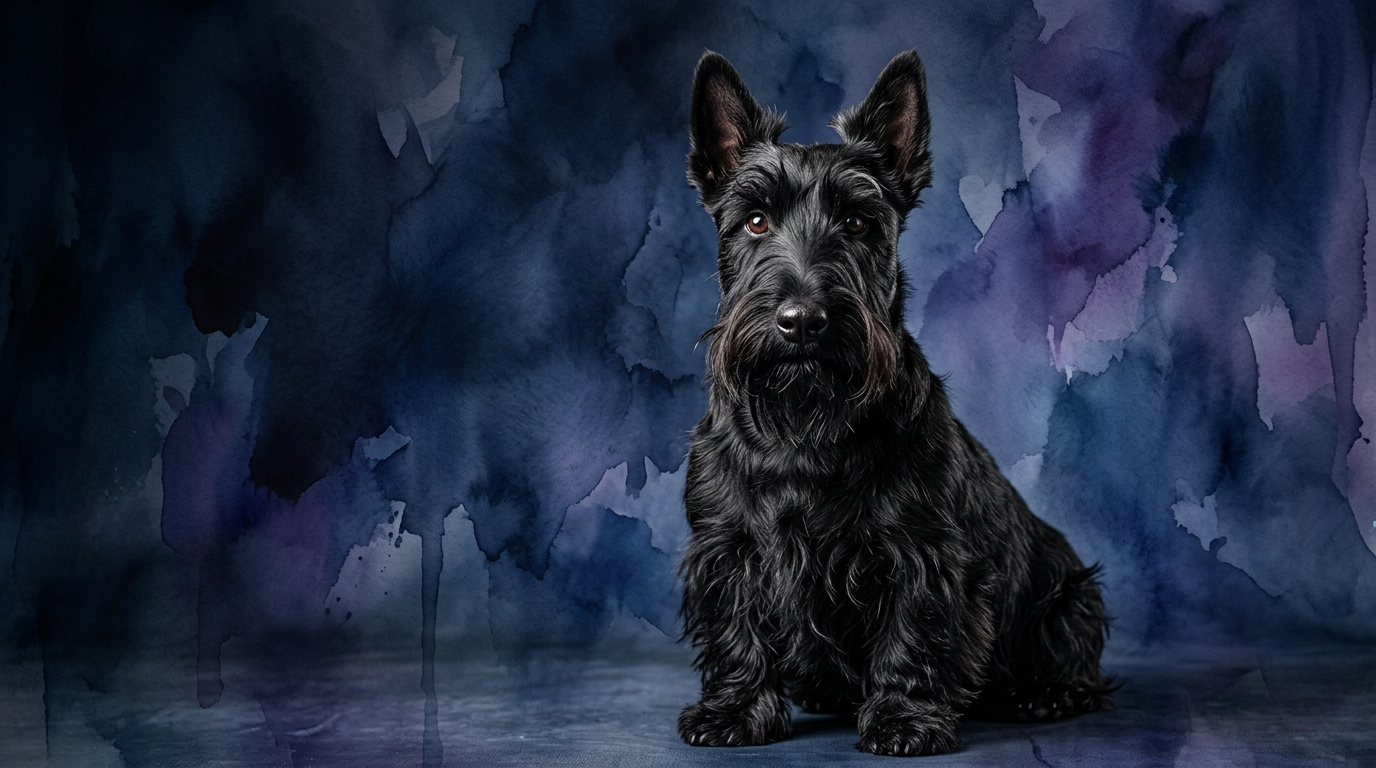
The Scottish Terrier, a tenacious terrier breed, interprets its 3/5 scores through a very different lens. Its Problem Solving at 3/5 is characterized by persistent, task-oriented thinking, often related to exploration, hunting, or overcoming physical obstacles. This might involve figuring out how to get to a perceived 'prey' (a toy, a scent) or navigating tight spaces with remarkable resourcefulness. Training Speed, also 3/5, indicates that while they can learn quickly, their independent and sometimes stubborn nature can make the training process feel slower; they learn best when highly motivated and when tasks align with their innate drives. Their Social Intelligence (3/5) is marked by keen observation of their human family and a discerning, sometimes reserved, demeanor with strangers, reading cues but often choosing to act on their own terms. The Scottish Terrier’s Instinctive Drive (3/5) is intensely focused on prey drive, digging, and exploring, a powerful motivator that shapes much of its interaction with the world. Lastly, Memory at 3/5 signifies a strong recall for commands, routines, and locations of interest, such as prime digging spots or pathways to exciting scents, influencing their future behaviors and choices.
Where the Komondor's Intellect Shines
The Komondor’s cognitive strengths are deeply intertwined with its heritage as a livestock guardian, making it a master of autonomous decision-making in complex, unsupervised environments. Its problem-solving prowess excels in real-world scenarios requiring strategic environmental awareness; it can effectively scan its territory, assess potential threats, and position itself optimally to deter predators, all without explicit human instruction. This breed’s social intelligence allows for a sophisticated understanding of 'flock' dynamics, enabling it to discern who belongs and who poses a threat, leading to highly specific and protective behaviors. Furthermore, the Komondor demonstrates an exceptional capacity for sustained focus and patience over long periods, a cognitive trait crucial for its guarding duties where vigilance is paramount, often without immediate gratification or reward.
Cognitive Edge of the Scottish Terrier
The Scottish Terrier’s intellect, conversely, is sharpened by its terrier instincts, granting it a distinct cognitive edge in areas requiring tenacity and resourcefulness. Its problem-solving excels in situations demanding persistent pursuit of a goal, such as tirelessly working to uncover a hidden object or navigating intricate pathways to reach a desired outcome. This breed displays remarkable ingenuity in confined or challenging spaces, a legacy of its burrow-hunting origins, allowing it to figure out how to squeeze into tight spots or retrieve items from under furniture. The Scottish Terrier also possesses a quick reaction time and agility in problem-solving tasks related to 'prey,' demonstrating sharp focus and swift execution when engaging with moving objects or scents. Their intense, focused attention on specific tasks they deem rewarding or instinctually relevant is a hallmark of their cognitive profile.
Training Dynamics: Independence vs. Willfulness
When it comes to training, neither the Komondor nor the Scottish Terrier can be described as inherently 'easy' in the conventional sense, as both possess strong independent streaks that influence their receptiveness. The Komondor learns, but its deliberate nature means it often evaluates commands based on its perceived utility for its primary guarding role. It’s not a breed that typically offers eager, reflexive obedience; instead, it learns to *do* a task once it understands the purpose and accepts the command as beneficial or necessary. Training a Komondor requires immense patience, consistency, and a deep understanding of its self-reliant mindset, establishing a relationship built on mutual respect rather than absolute dominance.
The Scottish Terrier, by contrast, can pick up specific commands and tricks quite quickly if highly motivated, often by high-value treats or engaging play. However, its independent and sometimes willful nature means it might choose *not* to comply if it has a more interesting idea or if the command doesn't align with its current desires. Their persistence, a cognitive strength in problem-solving, can translate into stubbornness during training sessions, making it challenging to maintain focus in stimulating environments. Successful training for a Scottie hinges on making the task inherently rewarding and engaging, often leveraging their innate drive for exploration and pursuit. While the Scottie might learn a trick faster, the Komondor, once convinced, might be more reliably consistent in performing tasks within its understood domain.
Matching Intellect to Lifestyle: Active vs. Relaxed Owners
Considering their distinct cognitive profiles, the Komondor and Scottish Terrier align with different owner lifestyles. The Komondor is best suited for owners who are 'active' in managing a large property or livestock, providing a clear 'job' that satisfies its profound guarding instincts. While not requiring constant running, it needs ample space and mental stimulation that channels its strategic thinking and vigilance. Owners must be actively involved in providing purpose and a secure environment where its protective nature can be expressed appropriately. This breed is less compatible with a truly 'relaxed' owner seeking a simple, low-maintenance companion in an urban setting, as its independent guardian intellect requires significant environmental and behavioral management.
The Scottish Terrier, while physically smaller, demands an owner who is mentally 'active' in engaging its curious and persistent mind. They thrive with owners who can provide regular walks, scent work, designated digging opportunities, and puzzle toys to satisfy their terrier drives. A 'relaxed' owner can certainly enjoy a Scottie, but only if they are prepared to provide consistent mental and physical stimulation to prevent boredom and destructive behaviors. While adaptable to various living situations, a Scottie is not a couch potato; its cognitive needs for exploration and problem-solving mean it requires an owner who actively participates in channeling its tenacious energy and sharp intellect, making it a lively and engaging companion for those who appreciate a dog with a strong, purposeful character.
The Verdict: Choosing Your Canine Companion
The Verdict
Choose the Komondor if you seek a dedicated, autonomous guardian for property or livestock, prepared to manage a dog with a profound sense of purpose and independent decision-making in a suitable rural or spacious environment.
Choose the Scottish Terrier if you appreciate a confident, tenacious companion with a distinctive personality, willing to engage its sharp mind in stimulating activities and manage its independent terrier spirit with consistent, rewarding training.
🧠 Find Your Pet's IQ Score
Our Pet IQ Lab assessment covers 25+ tests across 5 cognitive dimensions — personalized to your breed.
Take the Full IQ Test →Frequently Asked Questions
Are Komondors or Scottish Terriers good with children?
Komondors can be excellent with children within their own family, viewing them as part of their 'flock' to be protected, but their size and guarding instincts require careful supervision, especially with unfamiliar children. Scottish Terriers can be good with respectful children, often forming strong bonds, but their independent nature means they may not tolerate rough play and prefer interactions on their own terms, making supervision essential.
Do these breeds shed a lot?
The Komondor, with its corded coat, actually sheds very little once mature; instead, loose hair is trapped within the cords, requiring specific grooming to prevent matting. The Scottish Terrier has a wiry double coat that sheds minimally, but still requires regular brushing and professional stripping or clipping to maintain its texture and health.
What are the primary exercise needs for a Komondor vs. a Scottish Terrier?
A Komondor requires moderate exercise, often satisfied by patrolling its territory and engaging in purposeful activities, but also benefits from regular walks to prevent boredom. A Scottish Terrier, despite its smaller size, needs regular, vigorous exercise including daily walks, opportunities for off-leash exploration in secure areas, and engaging playtime to satisfy its tenacious terrier drives.