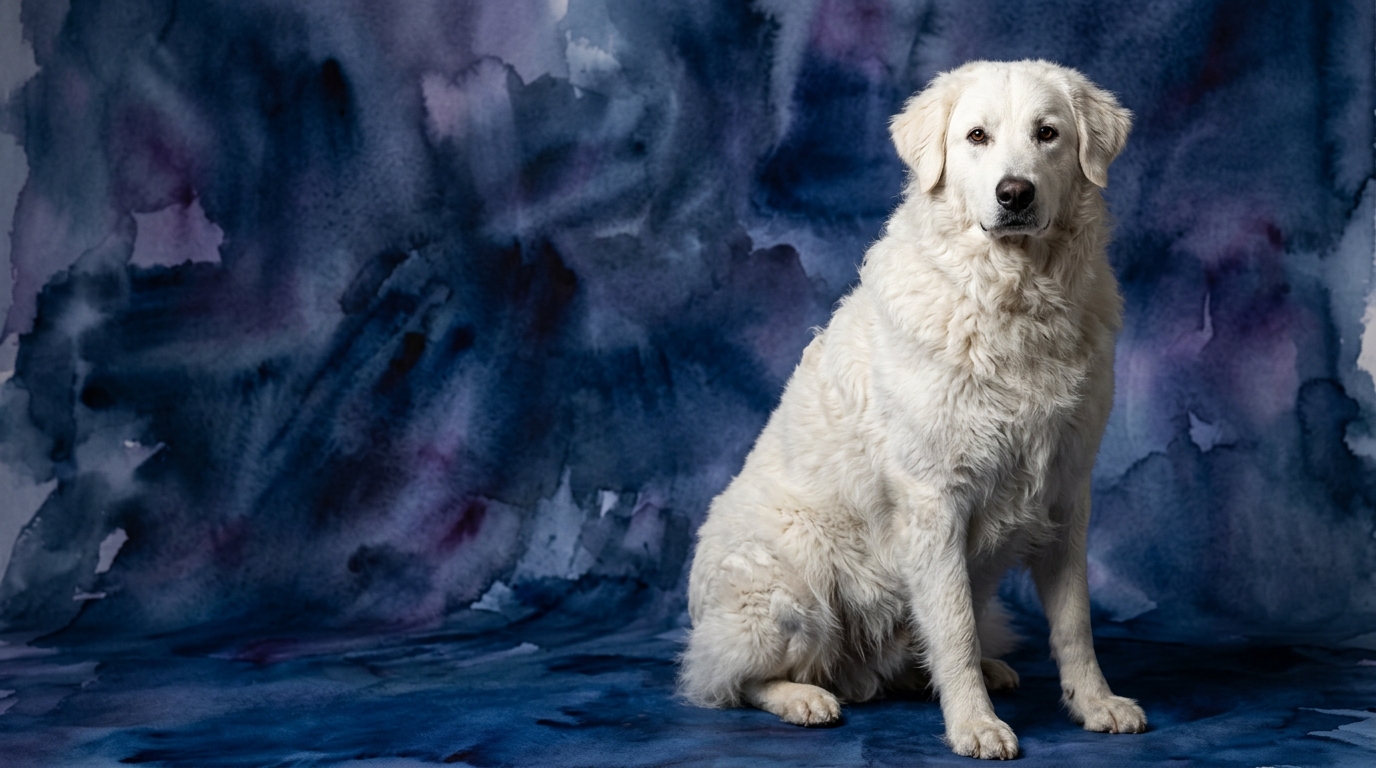
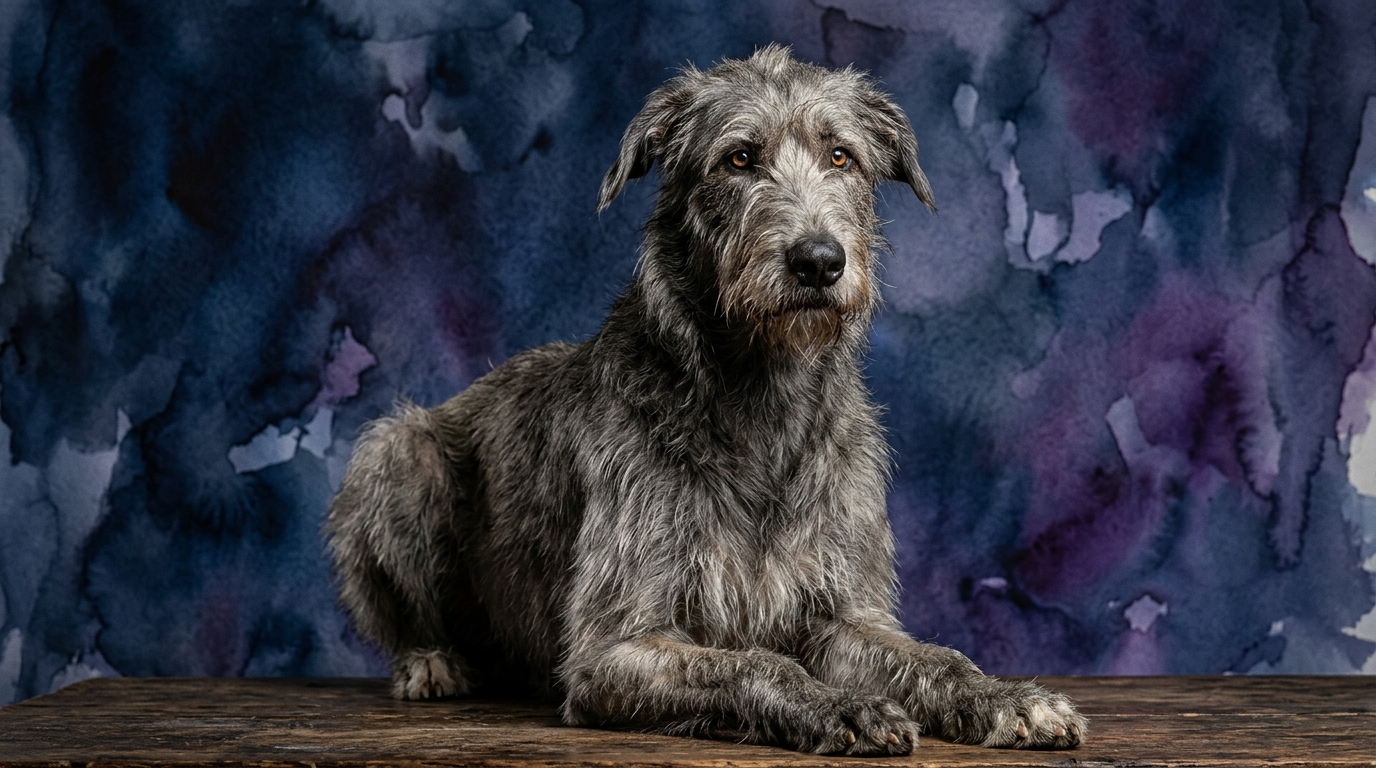
Side-by-Side IQ Profile: Guardianship vs. Gentle Giant
The Cosmic Pet Pet IQ Lab employs a five-dimensional framework to assess canine intelligence, offering a granular view of how breeds process information and interact with their world. For the Kuvasz, a formidable working dog, and the Irish Wolfhound, a dignified hound, these scores illuminate their inherent aptitudes.
The Kuvasz, ranked #42 by Coren, demonstrates a Problem Solving score of 3/5, indicating a capacity for independent thought in complex situations, often relating to their protective duties. Their Training Speed is 3/5, suggesting a moderate pace for learning new commands, requiring consistent and patient guidance. Social Intelligence, at 3/5, reflects their discerning nature, often reserved with strangers but deeply loyal to their family unit. An Instinctive Drive of 3/5 points to their strong inherent desire to guard livestock and property, a core aspect of their breed identity. Notably, the Kuvasz excels in Memory, scoring 4/5, which is critical for recalling boundaries, routines, and perceived threats within their territory.
The Irish Wolfhound, while not Coren-ranked, presents a unique cognitive profile shaped by its history as a sight hound. Its Problem Solving score also stands at 3/5, indicating a practical intelligence, perhaps more focused on navigating environments or understanding social cues rather than territorial defense. Training Speed matches the Kuvasz at 3/5, implying a similar moderate learning curve, though their motivations for compliance may differ. Social Intelligence is 3/5, reflecting their renowned gentle and tolerant disposition, particularly with their human families and often other animals. An Instinctive Drive of 3/5 is characteristic of a hound, driven by sight and pursuit, albeit often tempered by their calm nature. The Irish Wolfhound's Memory score is 3/5, solidifying their ability to recall familiar faces and routes, though perhaps not with the same depth of territorial detail as the Kuvasz.
Where the Kuvasz Wins Cognitively
The Kuvasz's distinct cognitive advantage lies in its superior Memory, scoring 4/5 compared to the Irish Wolfhound's 3/5. This enhanced recall is not merely about remembering commands, but profoundly impacts their effectiveness as guardians. A Kuvasz can more readily remember complex territorial layouts, the routines of family members, and patterns of potential intrusion, allowing them to anticipate and react with precision. This robust memory enables them to develop intricate mental maps of their domain, making them exceptionally reliable in their protective role. Their problem-solving, while matching the Wolfhound at 3/5, is often deployed with a deeper historical context based on past experiences, leading to more nuanced and independent decision-making when assessing threats.
Furthermore, the Kuvasz's combination of strong memory and instinctive drive (3/5) means they are adept at retaining and applying lessons related to vigilance and protection. This allows them to independently assess situations and act without constant human direction, a trait honed over centuries of working autonomously. Their cognitive strengths are geared towards environmental awareness and consistent, reliable guardianship.
Where the Irish Wolfhound Wins Cognitively
While many of their numerical scores align, the Irish Wolfhound's cognitive strengths manifest in specific applications of their intelligence, particularly in their social adaptability and unique problem-solving approaches. Their Social Intelligence score of 3/5, while numerically matching the Kuvasz, translates into a widely recognized gentleness and tolerance that is remarkable for a dog of its immense size. This specific manifestation of social acumen allows them to navigate diverse social settings with a calm, non-threatening demeanor, making them exceptionally good-natured companions in a family environment, often displaying a patient understanding with children and other pets.
The Irish Wolfhound's Problem Solving score of 3/5 often involves navigating complex social dynamics or physical spaces with grace. They are adept at finding comfortable resting spots, understanding subtle human cues, and adapting to new people or environments without the inherent suspicion of a guardian breed. Their instinctive drive (3/5), while rooted in pursuit, is often coupled with a profound sensitivity, leading to a dog that, while independent, is also highly responsive to the emotional state of its family. This blend of independence and emotional attunement offers a unique cognitive resilience in varied domestic situations, allowing them to 'win' in areas requiring broad acceptance and gentle interaction.
Which is Easier to Train and Why
Both the Kuvasz and the Irish Wolfhound share a Training Speed score of 3/5, suggesting that neither breed is inherently 'easy' to train in the manner of highly biddable breeds, but nor are they exceptionally challenging. The ease of training, however, is heavily influenced by their underlying breed-specific behavioral differences.
The Kuvasz, as a livestock guardian, possesses a strong independent streak and a deep-seated instinct to make its own decisions regarding its charges and territory. This means they are not typically eager to please in the same way a retriever might be; they often question commands and require a handler who can establish clear, consistent leadership without harshness. Training a Kuvasz requires patience, understanding of their guardian mindset, and leveraging their memory for routines and consistency. Their problem-solving (3/5) is often applied to assessing situations rather than simply following instructions, which can make training feel slower if the handler doesn't understand this intrinsic motivation.
The Irish Wolfhound, while also independent due to its hound heritage, tends to be more sensitive and less confrontational than the Kuvasz. They respond best to positive reinforcement, gentle methods, and short, engaging training sessions. While their problem-solving (3/5) might involve finding ways to entertain themselves, their social intelligence (3/5) means they generally desire to be part of the family and will cooperate for affection and treats. Distractibility, especially by sight or scent, can be a challenge, requiring focus training. Overall, while both require commitment, the Irish Wolfhound might be perceived as 'easier' for owners who prefer a more gentle and less challenging dynamic, provided they can manage the hound's occasional independent whims and distractibility.
Which Suits Active Owners vs. Relaxed Owners
Understanding the inherent drives and cognitive profiles of these breeds is crucial for matching them with the right lifestyle. The Kuvasz, with its strong instinctive drive (3/5) for guardianship and superior memory (4/5) for its domain, is best suited for active owners who can provide ample space, mental stimulation, and a 'job' that satisfies their protective instincts. An active owner for a Kuvasz means someone engaged in consistent training, providing opportunities for patrolling a secure yard, and understanding their need for purposeful activity. They thrive when they have a clear role, even if it's just 'guarding' the family. A relaxed owner might find themselves overwhelmed by a Kuvasz's independent decision-making and need for mental engagement, potentially leading to boredom-driven behaviors.
The Irish Wolfhound, despite its colossal size, can be surprisingly relaxed indoors, earning it the moniker 'gentle giant.' While they need regular exercise to maintain their health and musculature, including opportunities for full-speed gallops, they are often content to lounge around the house for much of the day. Their social intelligence (3/5) makes them excellent companions, often seeking to be near their family. Therefore, they can suit more relaxed owners who appreciate a calm, affectionate presence in the home, provided they are committed to daily walks, occasional bursts of intense exercise in a secure area, and have ample space for a large dog to stretch out. Their 'activity' often involves shorter, intense bursts rather than sustained, patrolling vigilance.
The Verdict
Choose the Kuvasz if you are an experienced, active owner seeking a truly independent, intelligent guardian with exceptional memory for their domain, willing to invest in consistent, patient training to guide their protective instincts.
Opt for the Irish Wolfhound if you desire a gentle, tolerant giant that is calm indoors, thrives on affection, and can navigate social settings with grace, provided you can accommodate their need for space and bursts of intense exercise.
🧠 Find Your Pet's IQ Score
Our Pet IQ Lab assessment covers 25+ tests across 5 cognitive dimensions — personalized to your breed.
Take the Full IQ Test →Frequently Asked Questions
Are Kuvasz dogs good with children?
Kuvasz dogs can be good with children, especially those they are raised with, due to their protective instincts. However, their discerning social intelligence means they may be reserved with unfamiliar children and require careful supervision and socialization from a young age to ensure appropriate interactions.
Do Irish Wolfhounds require a lot of exercise?
Irish Wolfhounds require moderate exercise, including daily walks and opportunities for off-leash running in a secure area to stretch their long legs. While they are not hyperactive, consistent exercise is vital for their physical health and mental well-being, despite their calm demeanor indoors.
Which breed is more prone to separation anxiety?
Neither breed is exceptionally prone to separation anxiety compared to some other breeds, but both can develop it if left alone for excessively long periods without proper training and enrichment. The Irish Wolfhound's strong social intelligence and desire for companionship might make them more prone to emotional distress if isolated, while the Kuvasz's independence can sometimes mask signs of stress.