
Unpacking Cognitive Blueprints: Labrador Retriever vs. Bedlington Terrier
At The Cosmic Pet Pet IQ Lab, we analyze canine intelligence across five critical dimensions, providing a granular view of each breed's mental prowess. The Labrador Retriever, a stalwart of the Sporting Group and Coren-ranked #7, presents a profile geared towards cooperative endeavors and rapid learning.
Their Problem Solving is rated 4/5, indicating an aptitude for navigating complex tasks, often demonstrating ingenuity in achieving goals like retrieving a hidden object. Training Speed is an impressive 5/5, reflecting their eagerness and capacity to quickly grasp new commands and routines. Social Intelligence also scores 5/5, highlighting their exceptional ability to read human cues, respond to social dynamics, and thrive in cooperative tasks. Their Instinctive Drive, at 4/5, is primarily channeled towards retrieving, swimming, and working closely with humans. Finally, their Memory, rated 4/5, allows them to retain learned behaviors and associations over extended periods, remembering people, places, and complex sequences effectively.
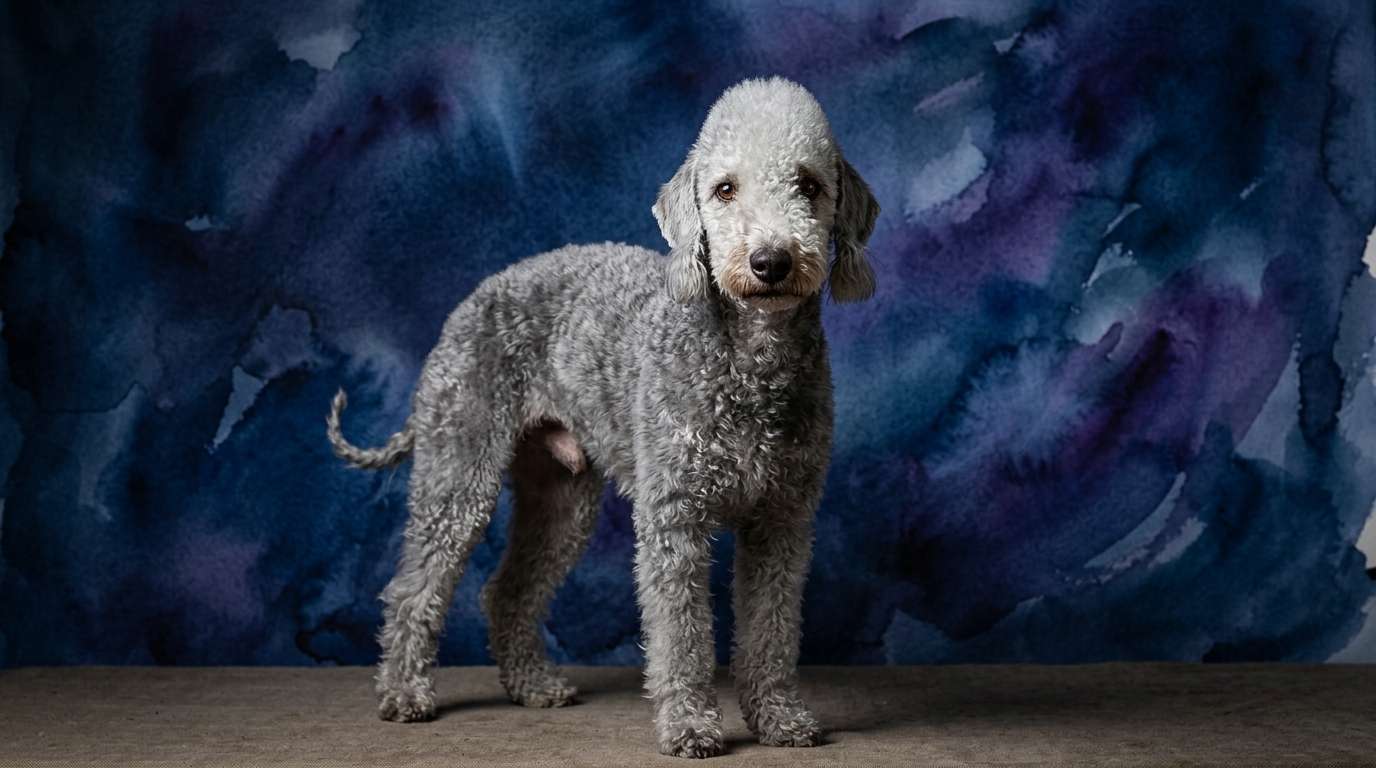
The Bedlington Terrier, a distinctive member of the Terrier Group and not Coren-ranked, showcases a cognitive profile shaped by its independent, tenacious heritage. Their Problem Solving rates 3/5; they are capable of practical solutions, especially those related to their prey drive, often employing persistence or trial-and-error to overcome obstacles. Training Speed is 3/5, meaning they can learn new commands but may require more repetition, patience, and creative motivation due to their independent streak. Social Intelligence, at 3/5, indicates they interact well with humans but their focus isn't always on direct human cooperation, often preferring to pursue their own interests. Their Instinctive Drive, also 3/5, is strongly oriented towards hunting small prey, expressed through digging, chasing, and independent exploration. Their Memory, at 3/5, provides a functional recall for routines and commands, but perhaps less comprehensive for intricate social cues or multi-step sequences compared to a Labrador.
Labrador Retriever's Cognitive Strengths: The Cooperative Genius
The Labrador Retriever's cognitive profile makes them particularly adept at tasks requiring close partnership and understanding human intent. Their 5/5 Social Intelligence is a cornerstone, enabling them to anticipate human desires and respond with remarkable empathy and precision. This translates directly into their success as service animals, guide dogs, and therapy companions, where reading subtle human signals is paramount.
Their 4/5 Problem Solving, coupled with their exceptional Social Intelligence, means Labradors excel at cooperative problem-solving. Whether it's navigating an obstacle course to retrieve an item or figuring out how to open a gate to follow their handler, their solutions are often aligned with human goals. This isn't just about following commands; it's about understanding the 'why' behind the task and working alongside their human counterpart.
Furthermore, the Labrador's 5/5 Training Speed and 4/5 Memory create a powerful learning engine. They acquire complex skills and sequences rapidly and retain them effectively, making them highly receptive to multi-step commands and intricate routines. This cognitive synergy allows them to master diverse roles, from detecting specific scents to performing elaborate obedience drills, with a consistent focus on their human partner.
Bedlington Terrier's Cognitive Edge: Independent Resourcefulness
While the Bedlington Terrier's IQ scores might appear lower in comparison, their cognitive strengths lie in areas distinct from the Labrador's cooperative focus. Their 3/5 Problem Solving, though not as high, is frequently directed towards independent, self-motivated tasks, particularly those involving their inherent prey drive. They demonstrate a tenacious resourcefulness in figuring out how to access tight spaces or overcome barriers in pursuit of a perceived 'quarry.'
The Bedlington's 3/5 Instinctive Drive fuels a specific type of cognitive engagement. This isn't about human-directed retrieval; it's about the innate drive to hunt and explore. They leverage their senses and intellect to track, dig, and navigate environments effectively for their own purposes. This independence, while sometimes perceived as stubbornness in training, is actually a cognitive strength when the task aligns with their intrinsic motivations, showcasing a persistent, self-reliant approach to problem-solving.
Their functional Memory (3/5) supports their independent endeavors, allowing them to remember locations where they've had success in hunting or specific routes for exploration. The Bedlington's intelligence is often characterized by cleverness and adaptability in achieving their own goals, a trait highly valued in a working terrier. They might not be looking to please, but they are certainly capable of finding creative solutions to satisfy their own curiosity and drives.
Ease of Training: Understanding Behavioral Differences
When it comes to ease of training, the differences between these two breeds are quite pronounced, stemming directly from their cognitive profiles. The Labrador Retriever is widely regarded as one of the most amenable dogs to training, reflected in their 5/5 Training Speed and 5/5 Social Intelligence. They possess an inherent desire to please their human companions, making them highly motivated by praise, positive reinforcement, and the opportunity to engage in cooperative activities. Their strong memory (4/5) ensures that lessons learned are retained efficiently, allowing for rapid progression through complex commands and routines. Labradors thrive on clear communication and consistent guidance, forming strong bonds with their trainers built on mutual understanding and cooperation. They are naturally attentive to their handlers, making them less prone to distraction in varied environments.
The Bedlington Terrier, by contrast, presents a more nuanced training experience, rating 3/5 for both Training Speed and Social Intelligence. While capable of learning, their independent nature and potent 3/5 Instinctive Drive, often focused on prey, mean they require a different approach. Bedlingtons can be more easily distracted by environmental stimuli that trigger their hunting instincts, and they may decide that their own pursuits are more interesting than human-initiated commands. Training a Bedlington requires significant patience, consistency, and a creative use of positive reinforcement to make lessons engaging enough to capture their attention. Handlers must understand that a Bedlington's compliance might not stem from a desire to please, but rather from finding the training itself rewarding or novel. Their memory (3/5) is sufficient for retaining commands, but the initial acquisition may take more repetition and effort to overcome their inherent self-direction.
Lifestyle Match: Finding the Right Companion
The cognitive and behavioral traits of these breeds also dictate their suitability for different owner lifestyles. The Labrador Retriever thrives with active owners who enjoy structured activities and seek a true canine partner for shared endeavors. Their high social intelligence and cooperative drive mean they flourish when given a 'job' – be it retrieving, hiking, swimming, or participating in dog sports like agility or obedience. An owner who provides consistent mental stimulation through training, puzzle toys, and interactive play will find their Labrador to be a joyful, engaged companion. A more relaxed owner who cannot commit to regular, purposeful engagement might find a Labrador's unmet cognitive needs manifesting as boredom-driven behaviors, emphasizing their need for mental and physical outlets tied to human interaction.
The Bedlington Terrier, while not a perpetual motion machine, benefits from owners who understand and respect their independent, terrier nature. They require mental stimulation that taps into their innate drives, such as structured scent work, earthdog trials, or walks where they can explore and satisfy their curiosity. Owners who appreciate a dog with a distinctive personality and are prepared for a more persistent, creative approach to training will find a Bedlington rewarding. They can be calm and charming indoors, provided their specific needs for exploration and mental engagement are met. A relaxed owner who expects constant cooperation or lacks the patience for a more self-directed dog might find a Bedlington's independent streak challenging, as their cognitive engagement often stems from their own intrinsic motivations rather than a constant desire to please.
The Verdict
Choose a Labrador Retriever if you seek a highly trainable, cooperative companion eager to work alongside you in varied tasks, excelling in social engagement and rapid learning.
Opt for a Bedlington Terrier if you appreciate an independent, resourceful companion with a unique personality, prepared for a more nuanced training approach that respects their intrinsic terrier drives.
🧠 Find Your Pet's IQ Score
Our Pet IQ Lab assessment covers 25+ tests across 5 cognitive dimensions — personalized to your breed.
Take the Full IQ Test →Frequently Asked Questions
Are Bedlington Terriers difficult to train?
Bedlington Terriers can present training challenges due to their independent nature and strong prey drive, rating 3/5 for training speed and social intelligence. They require consistent, patient, and creative methods to keep them engaged, often responding best to positive reinforcement tailored to their inquisitive spirit.
Do Labrador Retrievers make good service dogs?
Yes, Labrador Retrievers are frequently chosen as service dogs, largely due to their 5/5 social intelligence, 5/5 training speed, and 4/5 problem-solving abilities. Their cooperative nature and eagerness to please make them adept at understanding and performing complex tasks for human assistance.
How does a dog's Coren rank relate to its IQ scores?
Stanley Coren's ranking primarily measures 'working and obedience intelligence,' which aligns closely with our 'training speed' and 'social intelligence' dimensions. A high Coren rank, like the Labrador Retriever's #7, indicates a breed that excels at understanding and obeying human commands, reflecting their cooperative cognitive strengths.