
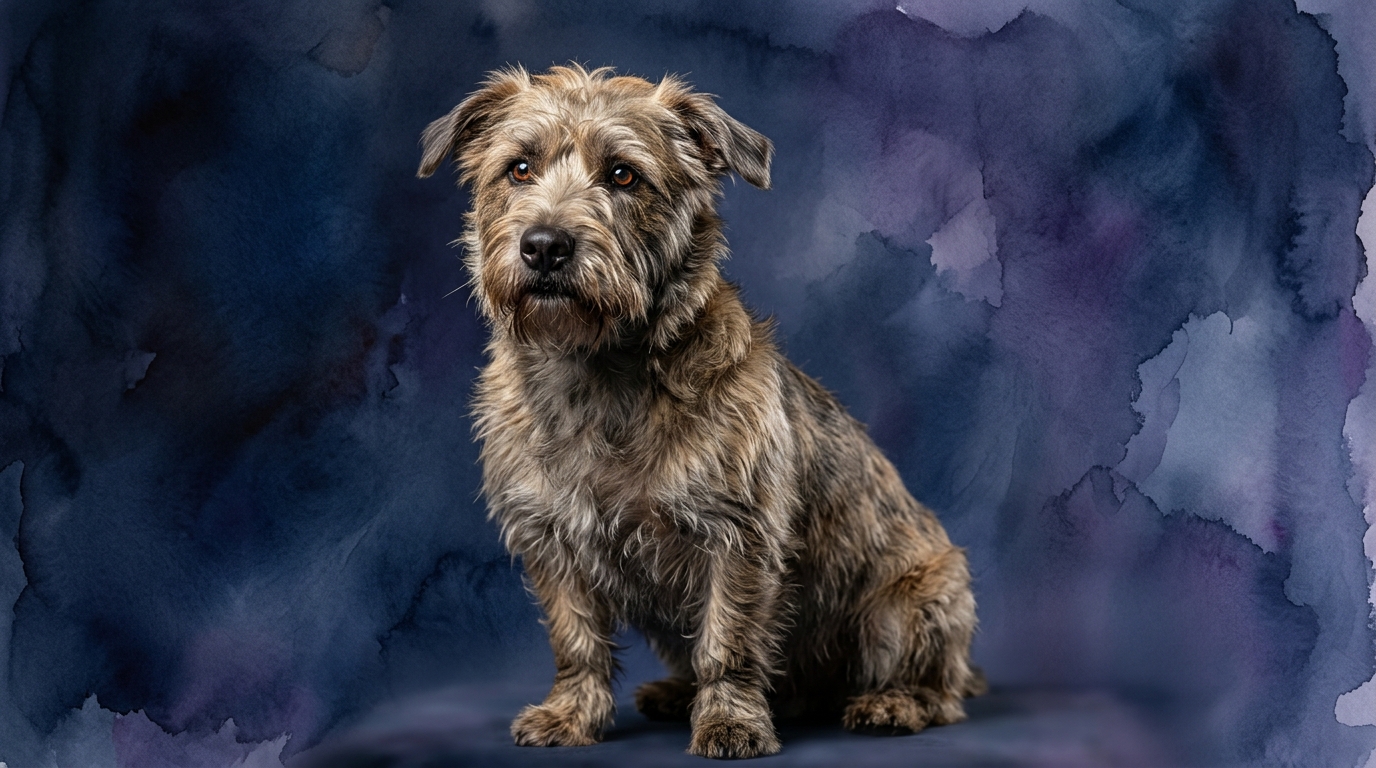
Side-by-Side IQ Profile: Labrador Retriever vs. Glen of Imaal Terrier
The Cosmic Pet Pet IQ Lab employs five critical dimensions to evaluate a dog's cognitive abilities, offering a nuanced perspective beyond simple "smartness." Understanding these scores helps prospective owners align their expectations with a breed's innate aptitudes. Let's break down how the Labrador Retriever, a Sporting Group stalwart, and the Glen of Imaal Terrier, a determined member of the Terrier Group, measure up.
**Labrador Retriever (Coren Rank #7):** This breed consistently demonstrates a remarkable capacity for learning and cooperation, hallmarks of its long history as a retrieving and assistance dog. Their scores reflect a balanced and adaptable intellect, geared towards partnership.
* **Problem Solving: 4/5** Labrador Retrievers exhibit strong abilities in figuring out novel situations, especially when the solution involves cooperation with a human or achieving a clear, rewarding outcome. They can quickly learn to manipulate objects, navigate complex environments, and adapt strategies in tasks like scent detection or agility courses, often showing persistence when motivated.
* **Training Speed: 5/5** This is where Labradors truly shine. They absorb new commands and routines with impressive alacrity, often requiring fewer repetitions than many other breeds. Their eagerness to please, coupled with their focus and food drive, makes them highly responsive to positive reinforcement training methods, allowing for the rapid acquisition of a broad behavioral repertoire.
* **Social Intelligence: 5/5** Labradors possess an exceptional understanding of human cues, emotions, and social structures. They are adept at reading body language, responding to tone of voice, and forming strong, empathetic bonds. This high social intelligence makes them excellent family companions, therapy dogs, and service animals, as they naturally seek to integrate and cooperate within their social group.
* **Instinctive Drive: 4/5** Their instinctive drive is profoundly expressed in their natural inclination to retrieve. This drive is not just about fetching a ball, but encompasses a strong desire to carry, hold, and return objects, often gently. This innate behavior is deeply ingrained and can be channeled effectively into various working roles, from hunting to search and rescue, demonstrating both focus and persistence.
* **Memory: 4/5** Labrador Retrievers exhibit robust memory capabilities, retaining commands, routines, and experiences over long periods. They remember specific locations for hidden objects, recall complex sequences of behaviors, and recognize people and places even after extended absences. This strong memory contributes significantly to their reliability in trained tasks and their ability to navigate familiar environments with ease.
**Glen of Imaal Terrier (Not Coren-Ranked):** Hailing from the rugged landscapes of Ireland, the Glen of Imaal Terrier was bred for a specific, independent task: hunting badger and fox. Their cognitive profile reflects this heritage, emphasizing tenacity and self-reliance over eager cooperation.
* **Problem Solving: 3/5** Glen of Imaal Terriers are capable problem solvers, particularly when the 'problem' involves their independent objectives, like figuring out how to access a perceived burrow or navigate a tricky terrain. Their problem-solving isn't always geared towards human-directed tasks but rather towards achieving their own goals, often with a determined, methodical approach.
* **Training Speed: 3/5** Compared to the rapid learning of a Labrador, the Glen of Imaal Terrier takes a more deliberate approach to training. They are capable of learning, but their independent spirit means they may require more patience, consistency, and motivation to master new commands. Repetition is often necessary, and their drive to comply is less inherent than their drive to explore or pursue.
* **Social Intelligence: 3/5** Glen of Imaal Terriers tend to be more reserved in their social interactions. While they form strong bonds with their immediate family, they are not typically effusive with strangers and may be selective in their canine friendships. Their understanding of human social cues is present but often filtered through an independent lens, making them less overtly people-pleasing than a Labrador.
* **Instinctive Drive: 3/5** Their instinctive drive is firmly rooted in their terrier heritage: a strong prey drive, a desire to dig, and an inclination to explore and hunt. This drive is powerful and focused, though perhaps less varied in its expression than a Labrador's retrieving instinct. It requires careful management and channeling to prevent unwanted behaviors like chasing or excessive digging.
* **Memory: 3/5** Glen of Imaal Terriers possess a functional memory for their environment, routines, and important people. They remember where they buried a toy or the layout of their territory. While perhaps not as adept at recalling complex, multi-step human commands as a Labrador, their memory serves their independent nature well, allowing them to navigate their world effectively and retain learned experiences relevant to their interests.
Where the Labrador Retriever Wins Cognitively
The Labrador Retriever's cognitive strengths lie squarely in their cooperative intelligence and adaptability, scoring higher in every dimension of the Pet IQ Lab assessment. Their superior training speed (5/5) means they grasp new concepts and commands with remarkable swiftness, making them exceptionally versatile for diverse roles, from complex service tasks to competitive dog sports. This rapid acquisition of skills is underpinned by their high social intelligence (5/5), which allows them to keenly observe and interpret human intentions, fostering a deep partnership in learning.
Their problem-solving ability (4/5) often manifests in a collaborative context; they excel at figuring out how to achieve a goal when working alongside a human, whether it's navigating an obstacle course or solving a puzzle toy designed for interaction. Furthermore, their strong memory (4/5) ensures that once a lesson is learned or a routine established, it is retained, contributing to their consistent performance and reliability in real-world applications. The Labrador's instinctive drive (4/5), primarily expressed as a desire to retrieve, is highly channelable and serves as a powerful motivator for training and engagement in human-directed activities.
Where the Glen of Imaal Terrier Wins Cognitively
While the Glen of Imaal Terrier's scores are consistently moderate compared to the Labrador's, their cognitive strengths are distinct and rooted in their independent, tenacious spirit. Their problem-solving (3/5), though not geared towards eager human cooperation, is highly effective in situations requiring self-reliance and persistence. A Glen might excel at figuring out how to dig under a fence to investigate an interesting scent or patiently work at dislodging a toy from a tight space, demonstrating a focused, goal-oriented determination that doesn't rely on human prompting.
Their instinctive drive (3/5) is a powerful asset for specific tasks. This breed's tenacity, often described as 'gameness,' means they will pursue a task with unyielding focus once engaged, particularly if it taps into their natural prey drive or desire to explore. This isn't a drive for retrieving, but rather for independent exploration and pursuit, which, when properly channeled through activities like earthdog trials, showcases a unique cognitive strength in sustained, self-motivated effort. Their moderate social intelligence (3/5) might be seen as a 'win' for owners seeking a companion that is devoted to their family but not overly demanding of attention or effusive with strangers, valuing a more independent canine presence.
Which is Easier to Train and Why
The Labrador Retriever is unequivocally easier to train, primarily due to its exceptional training speed (5/5) and high social intelligence (5/5). Labradors possess an inherent eagerness to please, making them highly receptive to instruction. They rapidly associate commands with actions and rewards, often requiring minimal repetitions to solidify a new behavior. Their strong social intelligence means they are attuned to human body language and vocal cues, allowing for nuanced communication during training sessions. Furthermore, their instinctive drive to retrieve provides a powerful, natural reinforcement mechanism that trainers can readily utilize, making recall and fetching exercises particularly straightforward.
In contrast, the Glen of Imaal Terrier, with a training speed of 3/5 and social intelligence of 3/5, presents a greater training challenge. Their independent nature and terrier tenacity mean they are less inclined to automatically comply and more likely to follow their own agenda. While capable of learning, they often require more patience, consistency, and creative motivation to engage in training. Their strong instinctive drives, such as digging and chasing, can be powerful distractions, demanding a trainer who understands how to manage and redirect these ingrained behaviors rather than expecting immediate obedience. Training a Glen often feels like a negotiation, requiring the owner to be more compelling than the surrounding environment.
Which Suits Active Owners vs. Relaxed Owners
The Labrador Retriever is an ideal match for active owners who enjoy engaging their dog in a variety of activities, both physical and mental. Their high energy levels, coupled with their eagerness to please and trainability, make them excellent companions for hiking, running, swimming, and participating in dog sports like agility, obedience, and dock diving. Their robust social intelligence and adaptable nature also mean they thrive in dynamic family environments, enjoying interaction with children and other pets. Owners who want a cooperative partner for outdoor adventures and structured training will find a Labrador highly rewarding.
The Glen of Imaal Terrier, while not a couch potato, is better suited for owners who appreciate a more moderately active but highly engaged companion. They require daily walks and opportunities to explore and sniff, satisfying their instinctive drives, but they are generally content with less sustained, high-impact exercise than a Labrador. Their independent problem-solving and tenacity mean they appreciate mental challenges that allow them to use their brains, such as scent work or puzzle toys, rather than constant human direction. Owners who value a dog with a strong personality, a quiet demeanor indoors, and a capacity for independent thought, and who are prepared to manage a terrier's specific drives, will find a Glen a charming and devoted companion. They are less suited for owners seeking a constantly effusive or overtly obedient dog, but thrive with those who appreciate their unique blend of loyalty and self-reliance.
The Verdict
Choose a Labrador Retriever if you seek a highly trainable, socially intelligent, and cooperative companion eager for diverse activities and a strong partnership in learning and life. They excel with active families and individuals who prioritize engagement and a dog that thrives on human interaction and direction.
Opt for a Glen of Imaal Terrier if you appreciate an independent, tenacious, and moderately active companion with a unique terrier spirit, and you are prepared for a more deliberate training approach. They suit owners who value loyalty, a quieter indoor presence, and a dog that excels at self-directed problem-solving and specific, instinct-driven tasks.
🧠 Find Your Pet's IQ Score
Our Pet IQ Lab assessment covers 25+ tests across 5 cognitive dimensions — personalized to your breed.
Take the Full IQ Test →Frequently Asked Questions
Do Glen of Imaal Terriers get along with other pets?
Glen of Imaal Terriers can coexist peacefully with other pets, especially if raised with them. However, due to their strong prey drive, careful introductions and supervision are crucial, particularly with smaller animals like cats or rodents, as their hunting instincts can be powerful.
Are Labradors prone to specific health issues?
Yes, Labradors are predisposed to certain health conditions, including hip and elbow dysplasia, eye conditions like progressive retinal atrophy, and exercise-induced collapse. Responsible breeders screen for these issues, and regular veterinary care helps manage potential concerns.
Can a Glen of Imaal Terrier live in an apartment?
Yes, a Glen of Imaal Terrier can adapt well to apartment living provided they receive adequate daily exercise and mental stimulation. Their moderate energy levels indoors and relatively quiet nature make them suitable, but access to a secure outdoor space for sniffing and exploration is highly beneficial for their well-reliance.