
Side-by-Side Cognitive Profile
At The Cosmic Pet Pet IQ Lab, we evaluate canine cognition across five key dimensions. For the Labrador Retriever, their Problem Solving is rated 4/5, reflecting a practical ability to navigate challenges, often driven by a clear goal or reward. Their Training Speed is an exceptional 5/5, indicating a profound eagerness to learn and respond to cues, making them highly receptive students. Social Intelligence stands at 5/5, highlighting their deep attunement to human emotional states and intentions, fostering strong cooperative bonds. An Instinctive Drive of 4/5 points to their inherent motivation for tasks such as retrieving, swimming, and scent work. Finally, their Memory is a reliable 4/5, ensuring they retain learned commands and complex routines over time.
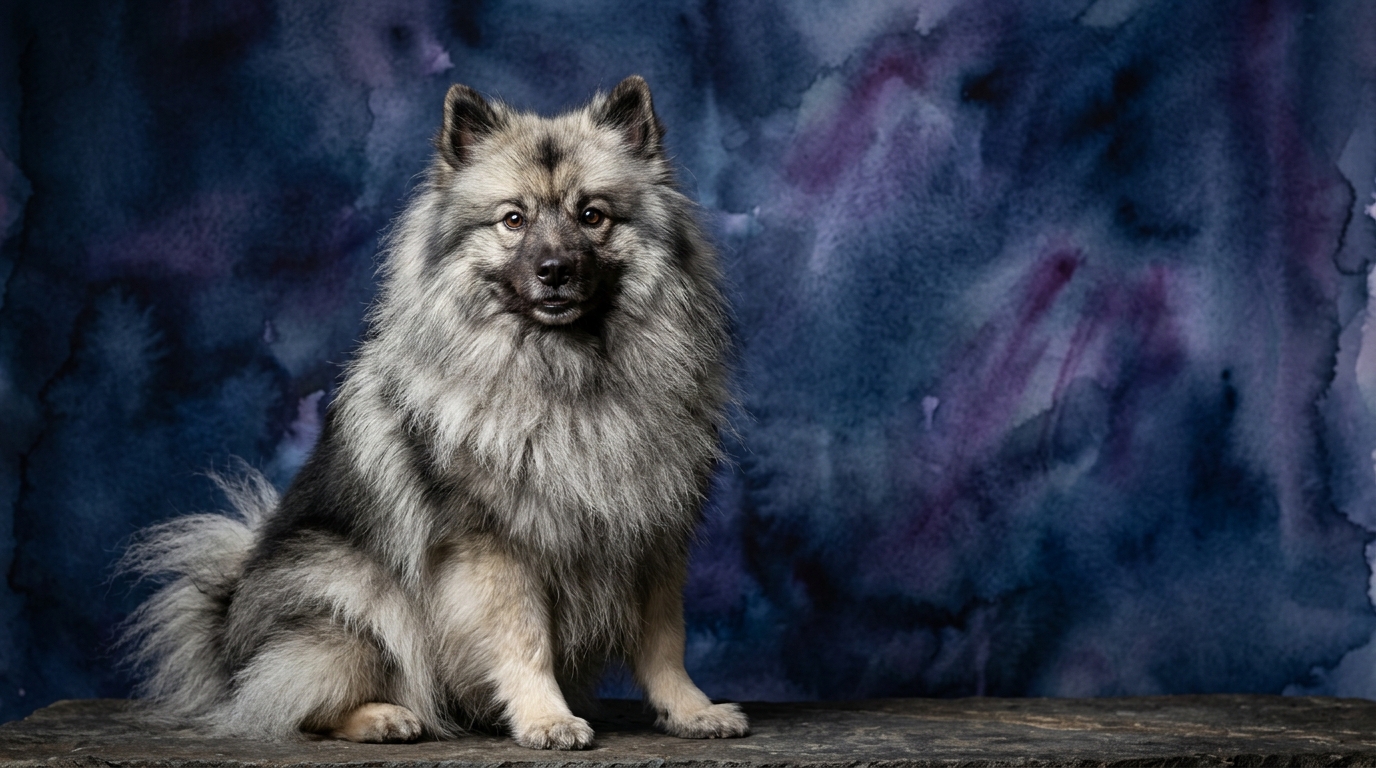
The Keeshond presents a distinct cognitive blueprint. Their Problem Solving also rates 4/5, showing a comparable capacity to navigate challenges, though often through observation and independent thought. Training Speed is a commendable 4/5, signifying a good learning aptitude, but they might require more motivational variety than a Labrador. Social Intelligence is 3/5, suggesting they are devoted to their inner circle but can be more reserved or less overtly people-pleasing with strangers or in new situations. An Instinctive Drive of 3/5 reflects their heritage as alert companions rather than active workers, with a moderate drive for specific tasks. Their standout trait is Memory, rated 5/5, allowing them to recall intricate details, past experiences, and routines with remarkable precision.
Where the Labrador Retriever Excels Cognitively
The Labrador Retriever's cognitive strengths truly shine in their cooperative spirit and rapid assimilation of new information. Their 5/5 Training Speed isn't just about quick learning; it’s intrinsically linked to their profound desire to engage and please their human partners. This makes them remarkably adaptable to complex roles, from assistance work to competitive obedience, where swift, precise responses are paramount. A Labrador will often try multiple approaches to a problem, keenly observing human reactions for guidance, eager to find the 'right' answer that earns approval.
Furthermore, their superior Social Intelligence (5/5) means they are exceptionally adept at reading human body language, vocal inflections, and subtle intent. This leads to fewer misunderstandings and a more fluid, intuitive partnership. They often anticipate needs and cues before they are even fully expressed, making them highly responsive companions and working dogs. Their 4/5 Instinctive Drive, particularly for retrieving and working alongside humans, provides a powerful internal motivator that can be channeled into training and tasks, making them self-starters in many cooperative ventures, always ready for a purpose-driven activity like fetching a thrown object or searching for a scent.
Where the Keeshond Demonstrates Cognitive Edge
The Keeshond's exceptional Memory (5/5) is a significant cognitive advantage, setting them apart. They retain complex sequences, past events, and subtle environmental cues with remarkable fidelity, allowing them to learn from prior experiences and anticipate future routines with striking precision. This can manifest as an uncanny ability to remember specific routes, the location of hidden treats, or even past training inconsistencies, which can both aid and challenge an owner. Their detailed recall allows them to build a comprehensive mental map of their world and its inhabitants.
While their Problem Solving score is equal to the Labrador's at 4/5, the Keeshond often approaches challenges with a more independent, observational style. They might not immediately try to 'work with' a human to solve a puzzle, but rather observe, ponder, and then execute a solution based on their detailed memory and independent thought. This often means they can be incredibly clever at figuring out how to open gates, navigate complex environments, or outsmart perceived restrictions. They excel at understanding cause-and-effect relationships and leveraging their environment to achieve their goals, sometimes displaying a shrewd wit that can be both endearing and exasperating.
Training: Which Breed is More Amenable?
When it comes to ease of training, the Labrador Retriever generally holds an advantage due to its unique cognitive blend. Their 5/5 Training Speed, combined with a 5/5 Social Intelligence and a strong 4/5 Instinctive Drive, makes them exceptionally tractable. Labradors are inherently eager to please, respond quickly to positive reinforcement, and actively seek to understand and comply with human directives. Their high social attunement means they pick up on subtle cues and are less likely to become bored or stubborn when engaged in consistent training. The retrieving drive provides a natural, powerful motivator that can be leveraged for various commands and activities, making them highly rewarding students.
The Keeshond, while certainly trainable, requires a different approach. Their 4/5 Training Speed and 3/5 Social Intelligence mean they learn well, but may not be as inherently driven to please or as quick to respond as a Labrador. They possess an independent streak, and their exceptional Memory (5/5) can sometimes work against you if they remember a past inconsistency or a way to 'outsmart' a command or boundary. Training Keeshonds needs to be varied, engaging, and consistently positive, as they can become bored with repetition and less forgiving of perceived unfairness. Their lower instinctive drive means primary motivators might need to be food, toys, or novel play, rather than an innate desire to work for work's sake. Patience and creativity are key to unlocking their learning potential.
Matching Canine Cognition to Owner Lifestyle
For owners with an active lifestyle, the Labrador Retriever is often the ideal cognitive match. Their 4/5 Instinctive Drive translates to a significant need for purpose and physical activity. They thrive on long walks, energetic runs, swimming, fetching games, and engaging in dog sports like agility, flyball, or dock diving. Owners who enjoy an active outdoor lifestyle and want a canine partner for adventures will find the Labrador’s energy, enthusiasm, and cooperative spirit a perfect pairing. Their high social intelligence also means they genuinely enjoy being included in all family activities, from hiking to simply spending time in a busy household.
Conversely, for owners who prefer a more relaxed pace, the Keeshond offers a wonderfully compatible cognitive profile. While they certainly enjoy walks and interactive playtime, their 3/5 Instinctive Drive and generally more moderate energy levels make them suitable for owners who prefer a less demanding daily exercise routine. They are content with regular walks and engaging mental stimulation within the home or yard, rather than requiring intense, prolonged physical exertion. Their social intelligence of 3/5 means they are deeply devoted to their family but don't constantly demand external stimulation or social engagement beyond their core group. They are often happy to be a watchful, affectionate presence, content to observe and participate in family life without needing to be the center of constant, high-energy activity.
The Verdict
If you seek a highly cooperative, eager-to-please canine partner for active pursuits, complex training, or roles requiring deep social attunement, the Labrador Retriever is an excellent fit.
If you value a devoted companion with an exceptional memory, independent problem-solving skills, and a moderate activity level, the Keeshond offers a charming and watchful presence.
🧠 Find Your Pet's IQ Score
Our Pet IQ Lab assessment covers 25+ tests across 5 cognitive dimensions — personalized to your breed.
Take the Full IQ Test →Frequently Asked Questions
Are Labrador Retrievers easy for first-time dog owners?
Yes, their high social intelligence and training speed make them very forgiving and responsive to new owners, provided their needs for exercise and mental stimulation are consistently met. They are generally eager to please and quick to learn household rules, making them a popular choice for those new to dog ownership.
Do Keeshonds bark a lot?
Keeshonds are known for being excellent watchdogs, often using their voice to alert their family to anything unusual or new in their environment. While not typically excessive if properly managed with training, their vocal nature is part of their inherent guarding instinct, so owners should be prepared for this characteristic.
Which breed is better with children?
Both breeds can be wonderful with children, though their approaches differ. Labrador Retrievers often excel due to their high social intelligence and patience, engaging readily in play. Keeshonds are generally affectionate and tolerant with their family, often forming strong, protective bonds with children within their inner circle, preferring to be a watchful companion.