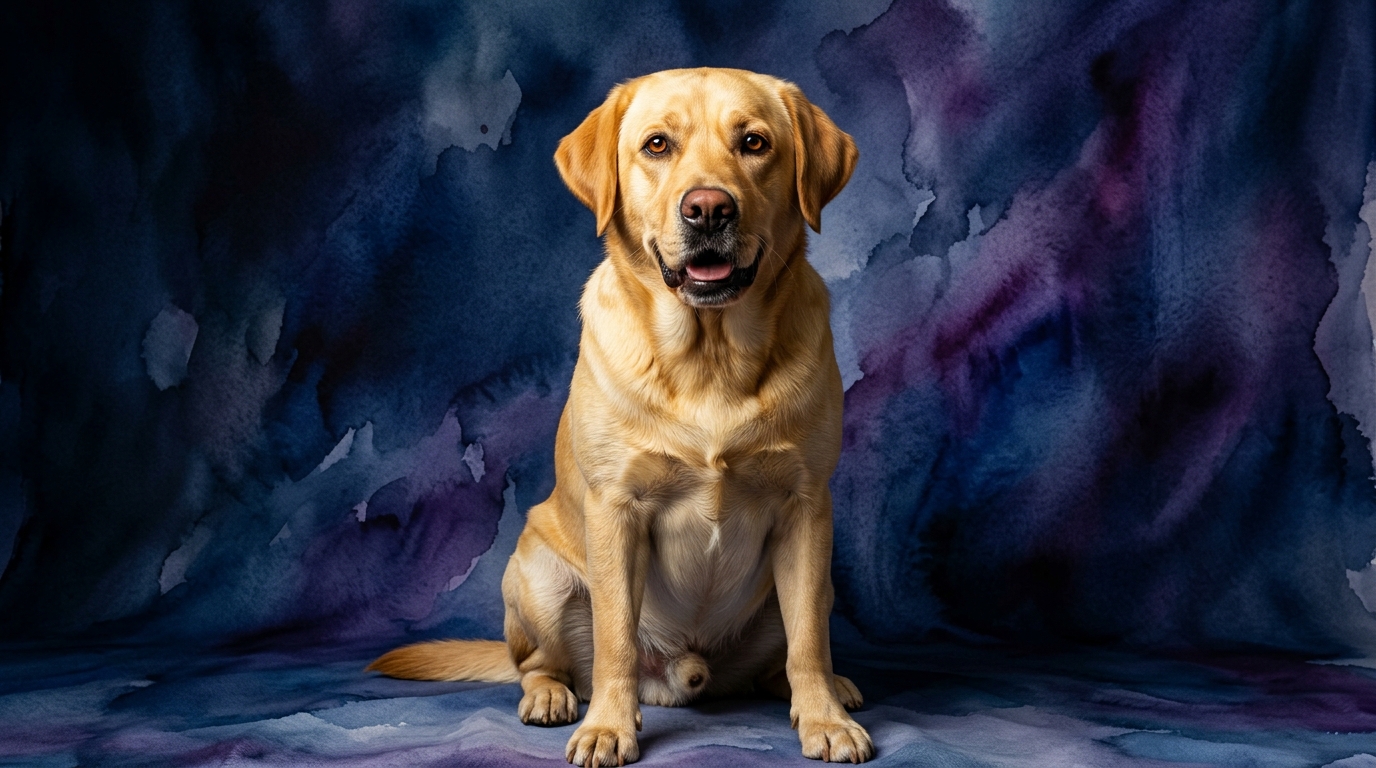
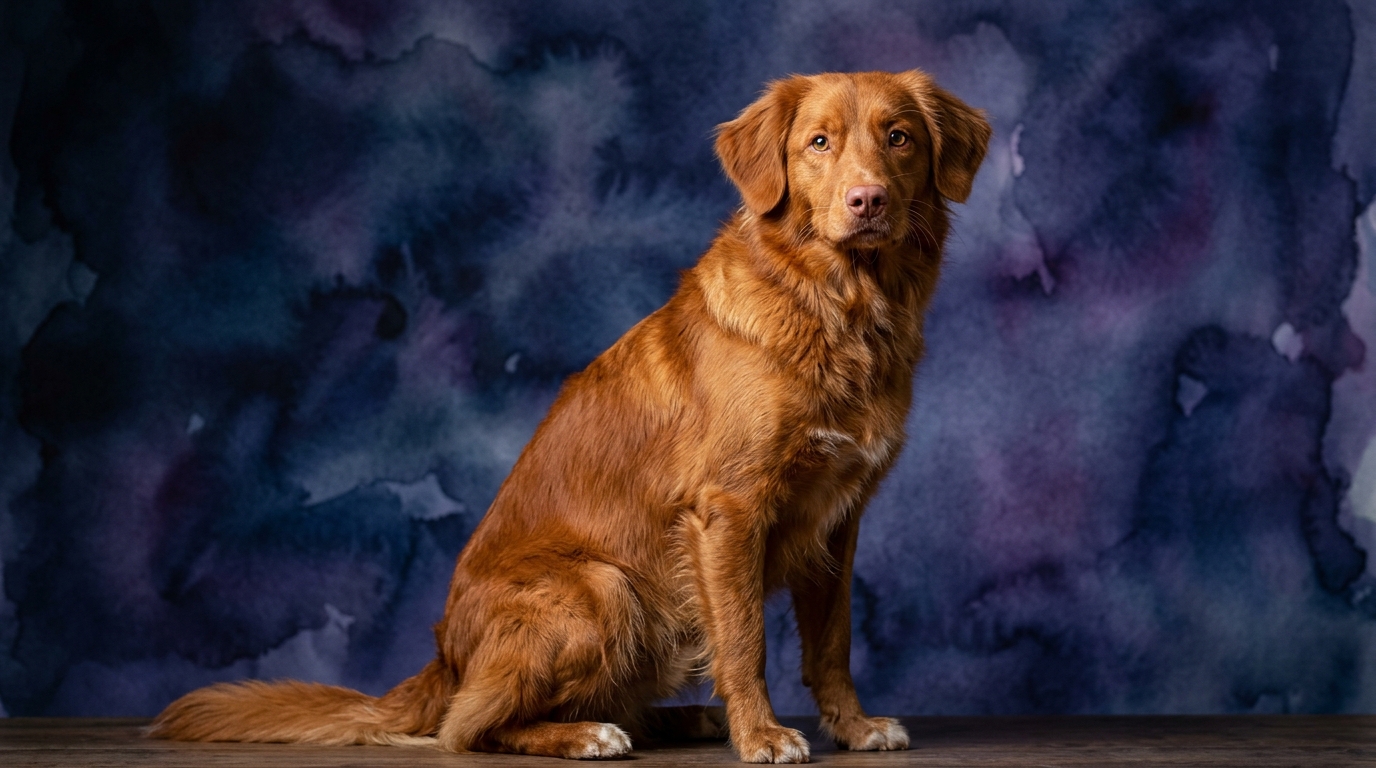
Side-by-Side IQ Profile: Labrador Retriever vs. Nova Scotia Duck Tolling Retriever
The Cosmic Pet Pet IQ Lab provides a comprehensive five-dimensional framework for understanding canine intelligence, and applying it to these two retrievers highlights their individual cognitive architectures. For the Labrador Retriever, we observe a Problem Solving score of 4/5, indicating a strong capacity for analytical thought and adapting strategies to new situations. Their Training Speed is exceptional at 5/5, reflecting a remarkable ability to grasp and retain new commands with minimal repetition. Social Intelligence also peaks at 5/5, showcasing their deep attunement to human cues and cooperative nature. Instinctive Drive stands at 4/5, signifying a robust natural inclination for retrieving and purposeful work, balanced with their trainability. Finally, their Memory is rated 4/5, ensuring consistent recall of learned behaviors and associations over time.
In contrast, the Nova Scotia Duck Tolling Retriever presents a different cognitive signature, with all dimensions rated at 3/5. Their Problem Solving ability (3/5) means they are capable of navigating practical challenges, though they might require more structured guidance or repetition compared to a Lab. A Training Speed of 3/5 suggests a steady learning pace, responding well to consistent positive reinforcement, but not with the rapid acquisition seen in the Labrador. Social Intelligence at 3/5 indicates a strong bond with their primary family unit and an observant nature, though they may not seek broad social interaction as readily. Their Instinctive Drive (3/5) is intensely focused on their unique 'tolling' and retrieving tasks, manifesting as a singular purposefulness. Lastly, Memory at 3/5 implies they retain information reliably, particularly with consistent reinforcement, ensuring specialized routines are solidified.
Where the Labrador Retriever Excels Cognitively
The Labrador Retriever's cognitive profile showcases several distinct advantages, particularly in areas demanding broad adaptability and rapid learning. With a Problem Solving score of 4/5, they demonstrate a superior capacity for analytical thought, readily dissecting new challenges and formulating effective solutions, whether it's figuring out a complex puzzle toy or navigating an unfamiliar environment. Their exceptional Training Speed, rated at 5/5, means they absorb new commands and routines with remarkable efficiency, often requiring fewer repetitions to achieve mastery. This rapid acquisition of skills makes them incredibly versatile for various roles, from assistance work to competitive obedience. Furthermore, their peak Social Intelligence (5/5) allows them to interpret human intentions and emotions with acute precision, fostering a deep, cooperative working relationship that few breeds can match. This profound understanding of human social cues translates into an unparalleled ability to collaborate and anticipate their owner's next move, making them incredibly intuitive partners. Finally, a robust Memory (4/5) ensures that these learned skills and social understandings are not fleeting, but deeply ingrained, allowing for consistent performance and reliable recall over their lifetime.
Where the Nova Scotia Duck Tolling Retriever Shines Cognitively
While the Nova Scotia Duck Tolling Retriever's overall scores are numerically lower, their cognitive strengths are profoundly tailored to their unique heritage, offering a different kind of 'win' in specific contexts. Their Instinctive Drive, rated 3/5, while not as broadly expressed as a Lab's, is intensely focused on the specific behaviors required for 'tolling' – luring waterfowl. This specialized drive manifests as a persistent, almost hypnotic engagement with tasks that mimic their historical role, demonstrating a singular purposefulness that can be incredibly effective in its niche. Their Problem Solving (3/5) and Training Speed (3/5) are not about generalist superiority but about efficient application within their specialized framework; they excel at learning and executing the specific sequences of actions vital to their work, demonstrating cognitive economy for their designed purpose. Their Social Intelligence (3/5) fosters a strong, devoted bond with their core family, making them excellent companions for those who appreciate a more discerning social circle. This means they are less likely to be distracted by external stimuli and more focused on their primary handler's cues during specific tasks, which can be an advantage in certain working scenarios where precise, handler-oriented focus is paramount. Their Memory (3/5) ensures that once these specialized routines are learned, they are retained, allowing for consistent performance in their dedicated roles.
Which is Easier to Train and Why?
When evaluating ease of training, the Labrador Retriever clearly holds an advantage, primarily due to their exceptional Training Speed (5/5) and superior Social Intelligence (5/5). A Labrador's rapid acquisition of commands means new behaviors are cemented quickly, making the training process feel highly rewarding and efficient. They possess an innate eagerness to please and an uncanny ability to read human body language and vocal inflections, allowing them to anticipate expectations and respond with remarkable precision. This inherent cooperativeness translates into fewer repetitions required for mastery and a smoother progression through complex sequences. For instance, a Lab will typically generalize a 'sit' command from multiple contexts much faster and more reliably than a Toller.
The Nova Scotia Duck Tolling Retriever, with Training Speed and Social Intelligence both at 3/5, requires a different approach. While certainly trainable, they learn at a more deliberate pace, necessitating greater consistency, patience, and positive reinforcement from their handler. Their social intelligence, while strong within their core family, isn't as broadly expressive, meaning they might not be as universally eager to please or as quick to pick up on subtle cues from various people. Tollers can be more independent thinkers, sometimes requiring more motivation to engage in repetitive drills, especially if the task doesn't immediately appeal to their innate drives. This isn't to say they are difficult, but rather that their learning curve is steadier, and trainers must be prepared for a more gradual, sustained effort, often needing to make training feel like a game to maintain engagement.
Suitability for Active vs. Relaxed Owners
Both the Labrador Retriever and the Nova Scotia Duck Tolling Retriever are sporting breeds, meaning neither is truly suited for a 'relaxed' owner in the sense of minimal exercise or mental engagement. However, their specific cognitive and physical needs differentiate them for various types of active lifestyles.
The Labrador Retriever, with its balanced Instinctive Drive (4/5) and high Social Intelligence (5/5), suits active owners seeking a versatile, eager partner for a wide range of activities. They thrive on diverse mental and physical stimulation, whether it’s long walks, retrieving games, swimming, or participating in dog sports. Their adaptability and eagerness to please make them excellent companions for families who enjoy varied outdoor adventures and want a dog that can easily switch between intense play and relaxed companionship. They require consistent engagement but are generally flexible in *how* that engagement is provided.
The Nova Scotia Duck Tolling Retriever, characterized by its focused Instinctive Drive (3/5), is best suited for active owners who appreciate a dog with intense purpose and are prepared to provide structured, high-energy outlets. Tollers excel in specific disciplines like advanced retrieving, flyball, or agility, where their focused energy and determination can be channeled effectively. They need significant daily exercise that often involves repetitive action and problem-solving within a task framework. While they enjoy family time, their cognitive satisfaction often comes from 'working' in a focused manner. Therefore, owners who are highly committed to specific dog sports or who can replicate the mental and physical demands of their original 'tolling' role will find a highly rewarding partner. A truly 'relaxed' owner who cannot provide consistent, purposeful activity would find either breed challenging, but the Toller's specific energy profile might be more demanding in its focus.
The Verdict
Choose a Labrador Retriever if you seek a highly adaptable, broadly intelligent companion eager for diverse activities and rapid learning, thriving on deep social connection and versatility.
Opt for a Nova Scotia Duck Tolling Retriever if you desire a focused, persistent partner for specific, high-energy tasks, appreciating a dog with a specialized drive and a more discerning social bond.
🧠 Find Your Pet's IQ Score
Our Pet IQ Lab assessment covers 25+ tests across 5 cognitive dimensions — personalized to your breed.
Take the Full IQ Test →Frequently Asked Questions
Is a Labrador or a Toller better for a first-time dog owner?
A Labrador Retriever is generally more forgiving for first-time owners due to their higher training speed and social intelligence, making them easier to guide and more adaptable to various household dynamics. Tollers require more consistent, focused training and a deeper understanding of their specialized drives, which can be challenging for novices.
Do Tollers need more exercise than Labradors?
Both breeds require substantial exercise, but Tollers often need it to be more focused and intense, mirroring their working heritage, while Labradors can thrive on a wider variety of activities. A Toller's exercise needs are often about channeling their specific drive, whereas a Lab's are about general physical and mental engagement.
How do their social behaviors differ with strangers?
Labradors typically exhibit higher social intelligence and are often more outgoing and friendly with strangers, eager to interact broadly. Tollers, while sociable with their family, tend to be more reserved or discerning with unfamiliar people, often preferring to observe before engaging directly.