
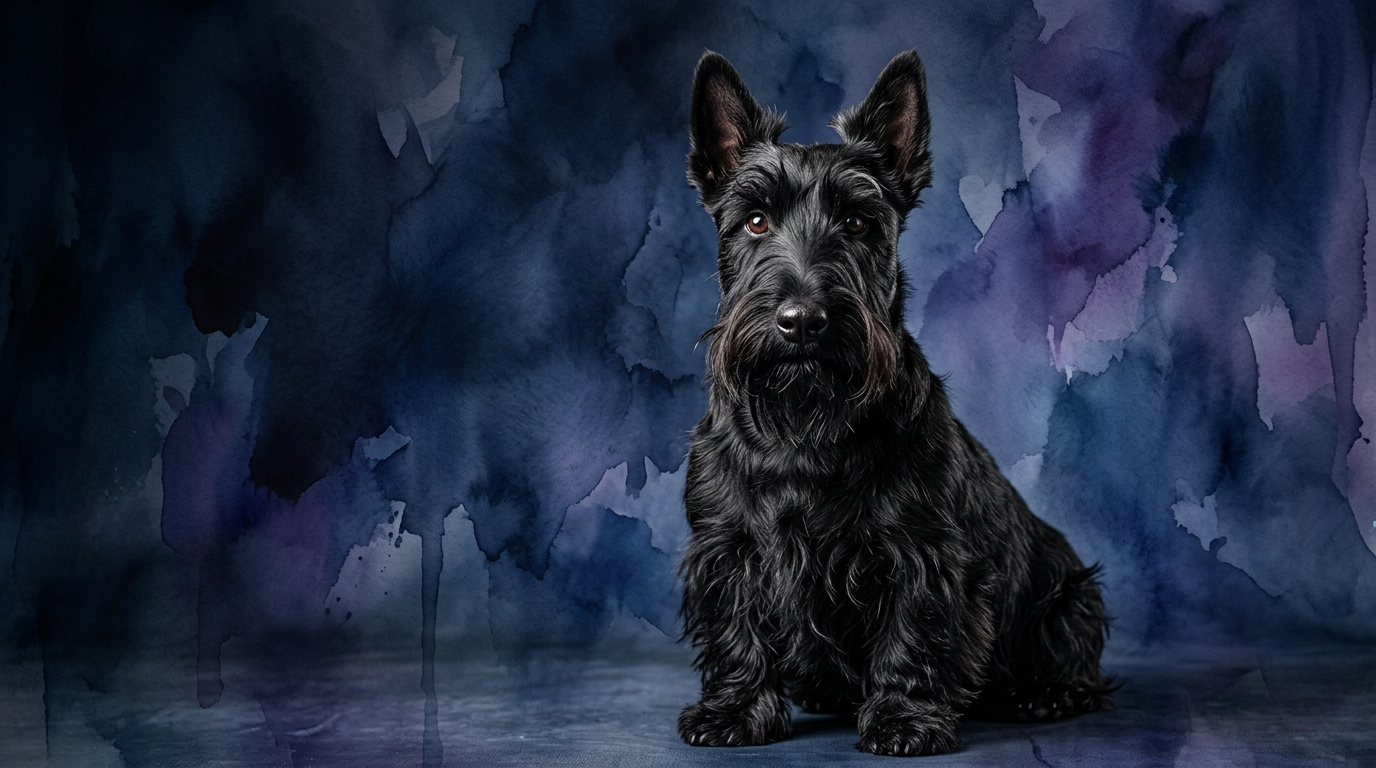
Side-by-Side IQ Profile: Labrador Retriever vs. Scottish Terrier
At The Cosmic Pet Pet IQ Lab, we evaluate canine cognition across five distinct dimensions, providing a nuanced understanding of each breed's mental makeup. The Labrador Retriever, ranking #7 on Coren's scale, demonstrates a remarkable aptitude for cooperative learning and engagement, while the Scottish Terrier, ranked #65, shows a capable but independent streak.
For Problem Solving, the Labrador Retriever scores 4/5, indicating a strong capacity to understand and resolve complex situations, often seeking human guidance in the process. The Scottish Terrier, with a score of 3/5, is a competent problem-solver too, but they tend to approach challenges with more self-reliance, sometimes preferring to figure things out on their own terms rather than immediately looking for direction.
Training Speed is where the Labrador Retriever truly shines, earning a perfect 5/5. This breed absorbs new commands and behaviors with impressive rapidity, driven by their eagerness to please and work alongside people. The Scottish Terrier scores 3/5 in this dimension, meaning they are perfectly capable of learning, but their training may require more repetition and patience due to their inherent independence and selective focus.
Social Intelligence for the Labrador Retriever is exceptional, rated at 5/5. They are attuned to human emotions and intentions, making them highly responsive companions and effective working partners. The Scottish Terrier's social intelligence, at 3/5, suggests they appreciate companionship but are less overtly driven by social cues from humans, often content with their own company or specific tasks rather than constant interaction.
Instinctive Drive in the Labrador Retriever is strong at 4/5, manifesting as a powerful retrieve drive, a desire to work, and an affinity for water. This drive is often channeled into cooperative activities. The Scottish Terrier also possesses a 3/5 instinctive drive, primarily focused on hunting small prey, digging, and patrolling, which translates into a persistent and sometimes single-minded pursuit of these innate behaviors.
Finally, Memory for the Labrador Retriever is robust at 4/5, allowing them to recall a vast array of commands, experiences, and locations, which is crucial for their roles in service and sport. The Scottish Terrier's memory also stands at 3/5, capable of retaining important information, especially related to their routines, territory, and preferred activities, though perhaps less focused on human-centric data recall compared to the Labrador.
Where the Labrador Retriever Excels Cognitively
The Labrador Retriever's cognitive strengths are profoundly rooted in their cooperative nature and capacity for rapid learning. Their 5/5 Training Speed means they pick up new skills almost effortlessly, responding to cues with remarkable consistency. This isn't just about obedience; it's about a deep understanding of human communication and a desire to align their actions with our expectations. Their superior 5/5 Social Intelligence allows them to anticipate needs, read body language, and integrate seamlessly into family dynamics, making them highly intuitive partners in various tasks, from assistance work to complex scent detection. Furthermore, their 4/5 Problem Solving, often guided by human input, enables them to navigate intricate scenarios effectively, demonstrating both adaptability and a willingness to collaborate on solutions. This blend of attributes means a Labrador can quickly learn multi-step commands, understand subtle environmental changes, and remember complex sequences of actions, making them highly versatile and responsive.
Where the Scottish Terrier Shows Unique Cognitive Prowess
While the Scottish Terrier may not match the Labrador's cooperative speed, their cognitive wins lie in their self-sufficiency and tenacious focus. Their 3/5 Problem Solving score reflects an independent approach; they are quite capable of figuring things out, often through persistence and trial-and-error, without constant human prompting. This can manifest as a cleverness in finding ways to reach coveted toys or outsmarting barriers in their environment. Their 3/5 Instinctive Drive, primarily centered around hunting and digging, fuels a focused determination that, while sometimes challenging to redirect, is a powerful cognitive asset for tasks requiring sustained effort and specific goal orientation. A Scottie's memory, also 3/5, is particularly strong for details pertinent to their territory, routines, and experiences relevant to their terrier instincts, making them astute observers of their immediate world, even if they aren't always looking to their human for every cue. This self-reliant intelligence allows them to excel in environments where their independent thought and drive are valued, rather than requiring constant direction.
Training Dynamics: Ease and Approach
When it comes to training, the Labrador Retriever is generally considered far easier to guide and shape. Their top scores in Training Speed (5/5) and Social Intelligence (5/5) mean they are inherently predisposed to learning from and working with humans. They often respond enthusiastically to positive reinforcement, eager to earn praise and continue the interactive experience. A Labrador's behavioral tendency is to seek connection and direction, making them highly receptive to structured lessons and consistent commands, and they thrive on having a 'job' to do alongside their person.
The Scottish Terrier, by contrast, presents a different training journey due to their 3/5 scores across most cognitive dimensions, particularly their lower Social Intelligence and Training Speed. They are certainly capable of learning, but their independent nature and strong instinctive drives mean they require a more patient, consistent, and creative approach. A Scottie might understand a command but choose not to execute it if it doesn't align with their current interest, such as pursuing a scent or investigating a sound. Training a Scottish Terrier often involves understanding their intrinsic motivations, using high-value rewards, and making training sessions engaging and fun to capture their attention, rather than relying solely on their desire to please.
Suitability for Active vs. Relaxed Owners
The Labrador Retriever is an ideal match for active owners who relish engaging their dog in structured activities, outdoor adventures, and consistent training. Their high energy, combined with their profound social intelligence and eagerness to learn, means they thrive when given regular mental and physical stimulation, such as retrieving games, agility, obedience classes, or long hikes. They are happiest when integrated into a family's active lifestyle, serving as a cooperative and enthusiastic companion for various endeavors. A relaxed owner might find themselves overwhelmed by the Labrador's need for consistent engagement.
The Scottish Terrier, while not a couch potato, can suit owners who appreciate a more independent companion and perhaps a slightly less demanding social presence, yet still provide consistent daily walks and mental enrichment. They enjoy their exercise but are often content to patrol their yard or engage in solo play after their needs are met, without requiring the same level of constant human-directed activity as a Labrador. A relaxed owner who values a dog with character and a certain self-possession, and is prepared for dedicated but perhaps less intense training sessions, would find a Scottie a rewarding companion.
The Verdict: When to Choose Each Companion
The Verdict
Choose a Labrador Retriever if you seek a highly cooperative, easily trainable companion eager to participate in your family's active life and structured activities.
Opt for a Scottish Terrier if you appreciate a tenacious, independent spirit, are prepared for patient, consistent training, and value a companion with a strong sense of self.
🧠 Find Your Pet's IQ Score
Our Pet IQ Lab assessment covers 25+ tests across 5 cognitive dimensions — personalized to your breed.
Take the Full IQ Test →Frequently Asked Questions
How can I best motivate a Scottish Terrier during training?
Motivating a Scottish Terrier often involves high-value treats, engaging play, and short, fun training sessions to keep their attention. Understanding their innate drives, like scent work or digging games, can also turn training into a rewarding experience they will enjoy.
What kind of mental stimulation is best for a Labrador Retriever?
Labrador Retrievers thrive on mental stimulation that involves problem-solving alongside their human, such as advanced obedience, puzzle toys, scent detection games, and learning new tricks. Their strong memory and desire to please make them excellent candidates for complex training sequences.
Do Scottish Terriers ever show problem-solving skills in everyday life?
Absolutely. Scottish Terriers often demonstrate their problem-solving skills by cleverly figuring out how to access forbidden areas, outsmarting gate latches, or finding creative ways to reach a favorite toy. Their persistence, fueled by their instinctive drive, makes them surprisingly resourceful in their daily environment.