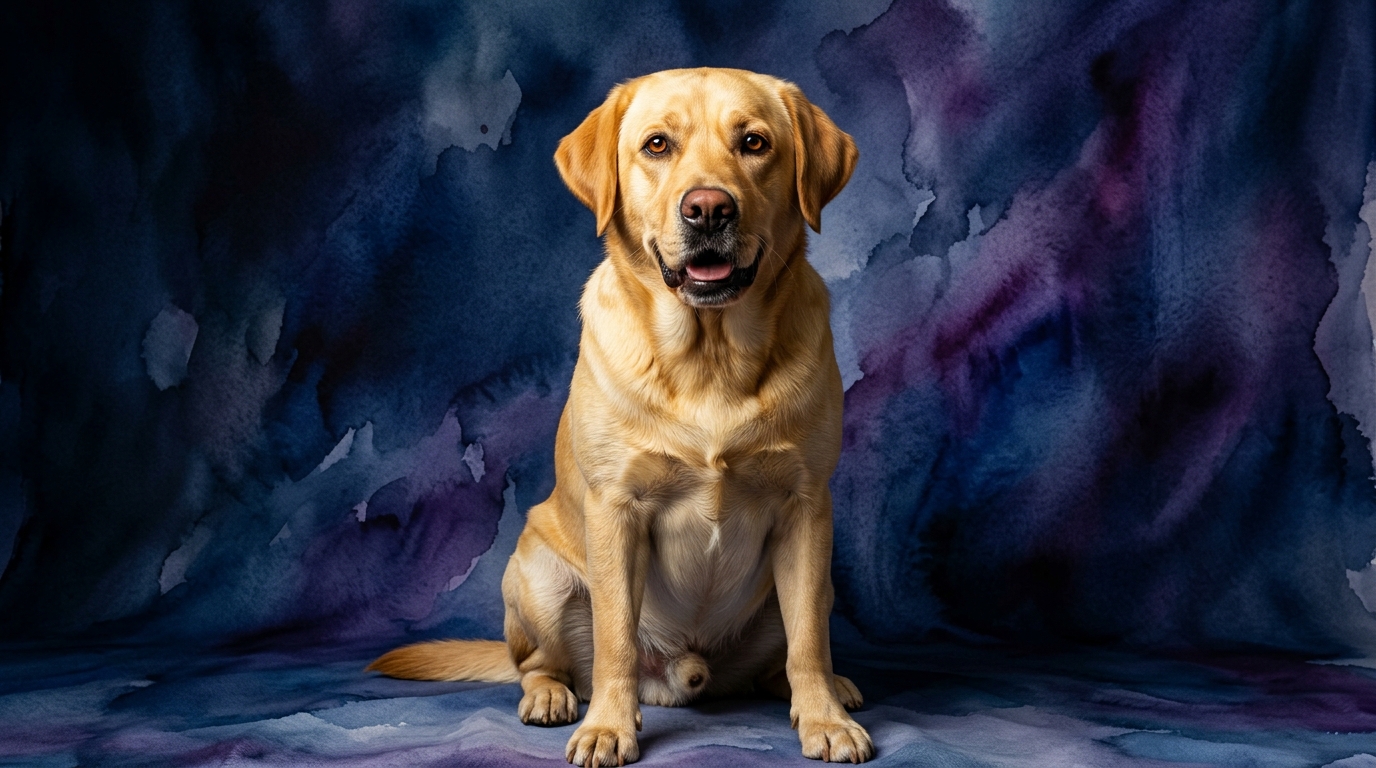
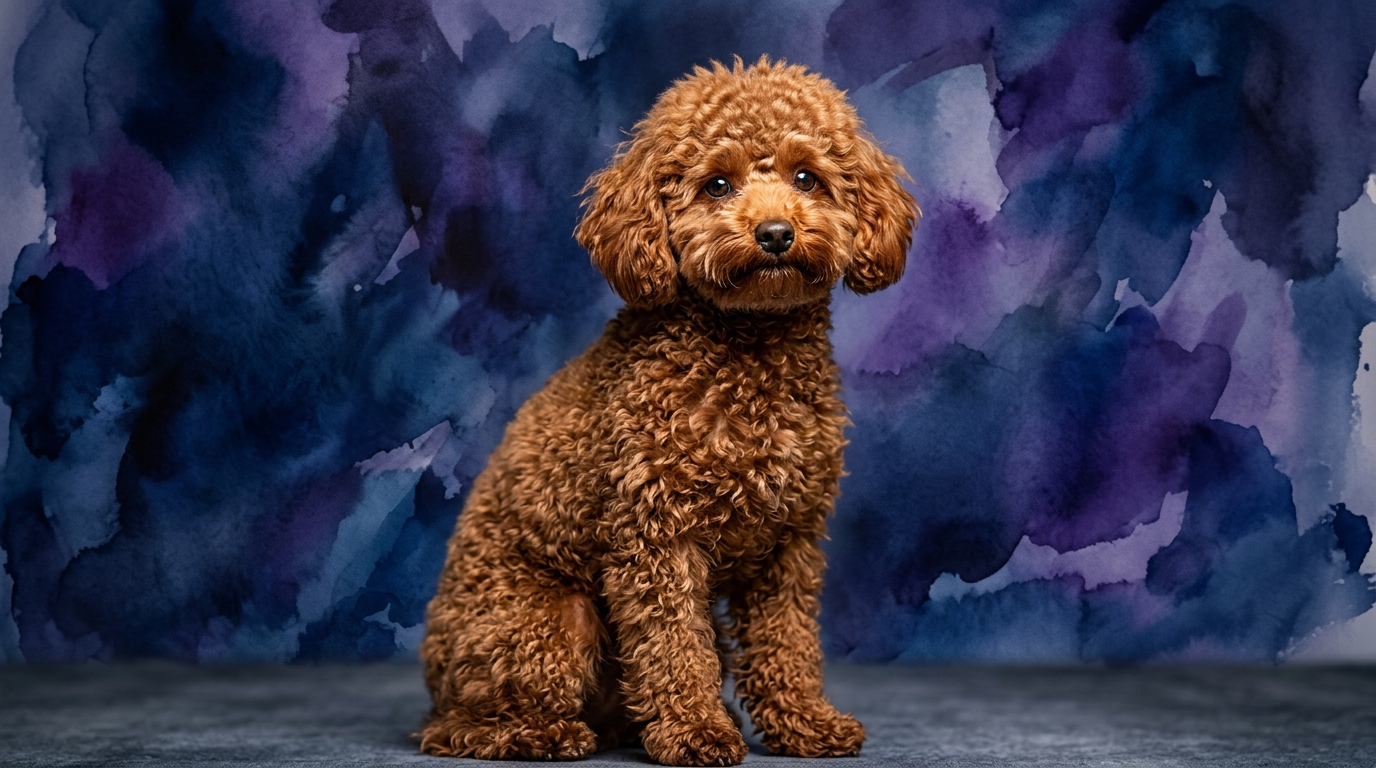
Side-by-Side IQ Profile: Labrador Retriever vs. Toy Poodle
Delving into the cognitive makeup of these two breeds reveals distinct strengths. The Labrador Retriever, a Sporting group dog with a Coren rank of #7, showcases practical brilliance, while the Toy Poodle, a Toy group dog with an impressive Coren rank of #2, demonstrates a different kind of mental agility.
For the Labrador Retriever, our IQ assessment shows: Problem Solving 4/5, indicating their strength in practical, task-oriented challenges like figuring out how to retrieve objects from complex environments, especially those involving scent work or physical manipulation rather than abstract puzzles. Their Training Speed is 5/5, reflecting their eager-to-please nature and rapid absorption of commands and routines, often requiring minimal repetitions. Social Intelligence scores 5/5, highlighting their exceptional ability to read human emotions, intentions, and social cues, making them unparalleled companions and service animals. Instinctive Drive is 4/5, rooted in their powerful urge to fetch, carry, and engage in work with their mouths, translating to high motivation for task completion. Memory is 4/5, signifying solid retention of learned commands, routines, and familiar associations over time.
The Toy Poodle’s IQ profile offers a contrasting picture: Problem Solving 5/5, showcasing their superior capacity for abstract challenges, strategizing, and devising novel solutions to intricate puzzles. Their Training Speed is also 5/5, as their sharp minds and desire for mental engagement allow them to master new skills, tricks, and complex sequences with remarkable quickness. Social Intelligence stands at 3/5; while deeply affectionate with their immediate family, they can be more reserved or discerning with strangers, focusing their social bonds on a select few. Instinctive Drive is 3/5, indicating a drive less about physical retrieval and more about mental stimulation, learning, and performance. Memory is 5/5, demonstrating an outstanding ability to recall vast amounts of information, from complex trick routines to intricate agility courses, with impressive precision and longevity.
Where the Labrador Retriever Excels Cognitively
The Labrador Retriever's cognitive strengths truly shine in areas demanding connection and purpose. Their Social Intelligence, rated 5/5 compared to the Toy Poodle's 3/5, makes them masters of the human-canine bond. They effortlessly read subtle human cues, anticipate needs, and offer comfort, making them exceptional as service animals or family companions who intuitively understand the emotional landscape of their home. This translates to an innate ability to integrate into diverse social settings with grace and enthusiasm, forming deep, intuitive connections.
Furthermore, their Instinctive Drive, at 4/5 against the Toy Poodle's 3/5, empowers them with a robust motivation for tasks involving fetching, carrying, and scent work. This isn't just about playful retrieving; it's a deep-seated desire to 'work' with their mouths, making them exceptional partners for hunting, search and rescue, or even just retrieving slippers with unwavering focus and joy. Their persistence in these tasks, driven by this innate urge, is a remarkable cognitive advantage in practical, real-world applications.
Where the Toy Poodle Demonstrates Superior Cognitive Abilities
The Toy Poodle's intellect shines brightest in areas of intricate mental gymnastics. With a Problem Solving score of 5/5 compared to the Labrador's 4/5, Toy Poodles demonstrate a superior capacity for abstract and novel problem-solving. They are adept at figuring out intricate puzzles, devising new strategies to overcome obstacles, and understanding complex sequences of events, often showing a creative spark in their solutions that goes beyond simple trial and error. This makes them excel in advanced cognitive games and challenges that require strategic thinking.
Their Memory, rated 5/5 against the Labrador's 4/5, is truly exceptional. Toy Poodles can retain vast amounts of detailed information, from complex trick routines to intricate agility courses, with remarkable precision and longevity. This deep recall enables them to master lengthy sequences and perform with a consistency that belies their small stature, making them formidable competitors in dog sports and performance activities where remembering multiple cues and actions is paramount.
Trainability: Nuances Beyond Speed
Both the Labrador Retriever and the Toy Poodle achieve a perfect 5/5 in Training Speed, indicating they absorb new commands and skills with impressive rapidity. However, the underlying drivers and practical implications of their trainability diverge significantly, offering different experiences for owners.
The Labrador Retriever's high social intelligence and strong instinctive drive, combined with an eager-to-please temperament, make them incredibly compliant and motivated by positive reinforcement, especially food or retrieving opportunities. They thrive on collaborative tasks and readily offer behaviors to earn rewards, making foundational obedience feel remarkably straightforward. Their focus is often on pleasing their handler and engaging in shared activities, which simplifies the training process for many.
Conversely, while equally fast learners, Toy Poodles are often driven more by the intellectual challenge itself and the desire to 'perform' or showcase their abilities. Their superior problem-solving and memory mean they can grasp complex concepts rapidly, but their comparatively lower social intelligence score suggests they might be less universally compliant and more selective about who they wish to impress. Training a Toy Poodle often involves more mental games, intricate sequences, and variety to keep their keen minds engaged, as they might become bored if tasks are too repetitive or simple. A trainer must be creative and stimulating to maintain their interest and leverage their full cognitive potential.
Matching Canine Cognition to Lifestyle
Understanding the cognitive profiles of these breeds helps align them with suitable owner lifestyles.
The Labrador Retriever, with its high instinctive drive (4/5) and exceptional social intelligence (5/5), is an ideal companion for active owners who relish outdoor adventures. They thrive when involved in activities like hiking, swimming, long walks, or dog sports such as retrieve trials and scent work. Labradors require a 'job' and consistent physical and social engagement to channel their robust energy constructively and prevent boredom. A relaxed owner might find their persistent need for interaction and robust physical outlets overwhelming, potentially leading to undesirable behaviors if their innate drives are not met.
The Toy Poodle, while possessing a lower instinctive drive (3/5), compensates with superior problem-solving (5/5) and memory (5/5), meaning they demand significant mental stimulation. They can adapt to less physically demanding lifestyles than a Labrador, making them suitable for owners who might be less active outdoors but are committed to engaging their dog's mind with puzzle toys, trick training, or indoor agility. They are well-suited for owners who enjoy teaching complex behaviors and engaging in mental 'work.' This makes them a good fit for both active minds and more relaxed physical routines, provided their intellectual needs are consistently and creatively met.
The Verdict
If you seek a universally friendly, highly collaborative companion who excels in social settings, thrives on physical activity, and has a strong desire to work alongside you on practical tasks, the Labrador Retriever is an exceptional choice.
Opt for the Toy Poodle if you are captivated by a dog with exceptional abstract problem-solving abilities, a prodigious memory for complex routines, and enjoy engaging in intricate mental challenges, even if it means a slightly more independent or discerning social approach.
🧠 Find Your Pet's IQ Score
Our Pet IQ Lab assessment covers 25+ tests across 5 cognitive dimensions — personalized to your breed.
Take the Full IQ Test →Frequently Asked Questions
Are Labradors and Toy Poodles equally good at learning tricks?
Both breeds are excellent at learning tricks, but their strengths differ. Labradors often excel at tricks involving fetching or physical collaboration due to their instinctive drive and social intelligence, while Toy Poodles shine with complex, multi-step tricks that leverage their superior problem-solving and memory.
Which breed is better for a first-time dog owner?
A Labrador's eager-to-please nature, high social intelligence, and straightforward motivation often make them more forgiving for a first-time owner learning the ropes of training and socialization. A Toy Poodle's sharp mind requires consistent, creative mental stimulation, which might be more challenging for someone new to dog ownership to provide effectively.
Does size impact their intelligence scores?
Our IQ metrics at The Cosmic Pet Pet IQ Lab are standardized across breeds, so size itself does not directly influence the scores. While physical attributes might dictate how a dog expresses its intelligence (e.g., retrieving vs. manipulating small objects), the cognitive capacity is measured independently of physical form, meaning a Toy Poodle's intellect is just as potent as a larger breed's.