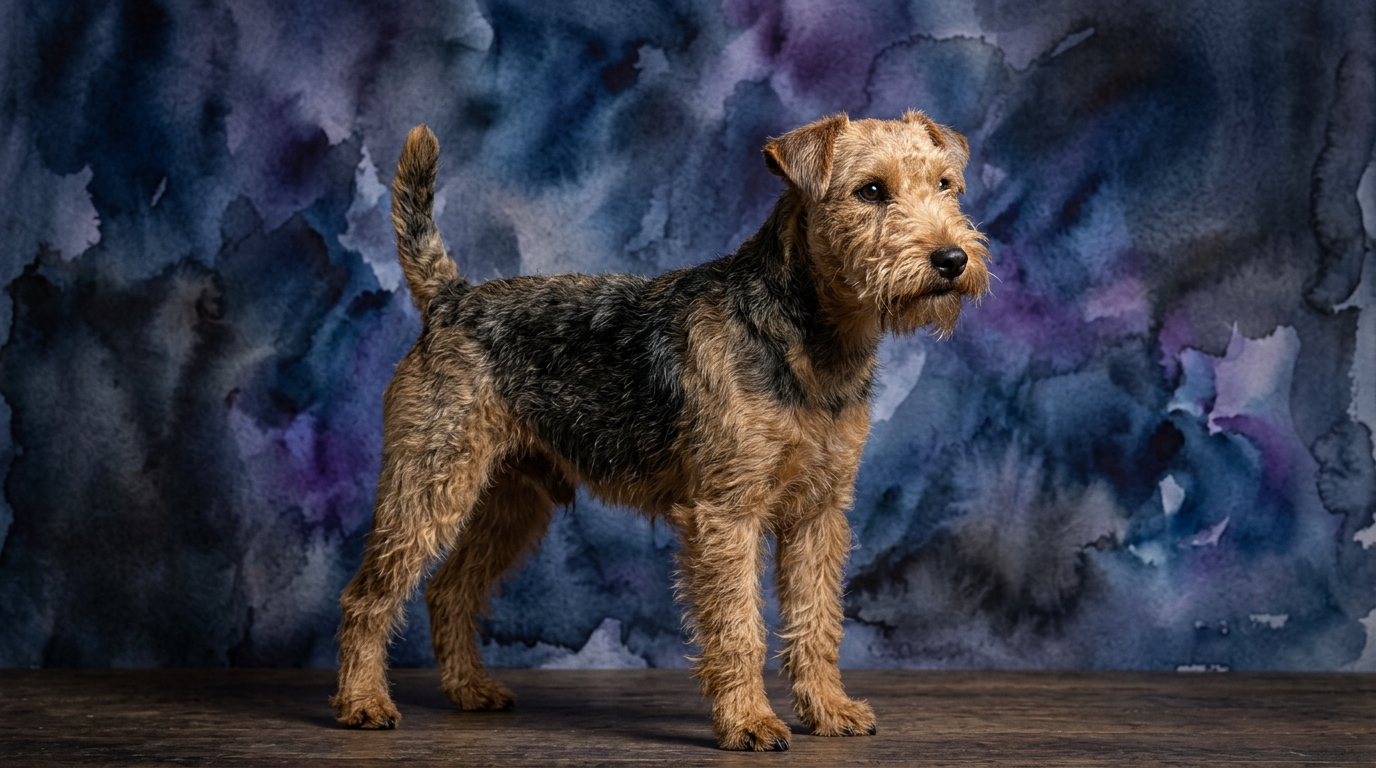

Side-by-Side Cognitive Profiles
In the Cosmic Pet Pet IQ Lab, both the Lakeland Terrier and the Japanese Chin achieve a consistent 3/5 across all five measured dimensions of intelligence. This uniform scoring, however, belies the distinct ways each breed manifests these cognitive strengths, shaped by centuries of selective breeding and purpose.
**Problem Solving (3/5):** For the Lakeland Terrier, a 3/5 in problem-solving reflects their innate ability to independently assess situations and devise solutions, often involving strategies to locate or pursue small prey. Their problem-solving leans towards practical, physical challenges, like navigating complex terrain or overcoming barriers to reach a perceived goal. Conversely, a 3/5 in problem-solving for the Japanese Chin often manifests in their social interactions, such as figuring out the most effective way to solicit attention or comfort from their human companions, or cleverly manipulating objects to get what they want, like nudging a toy closer or finding the warmest, most comfortable spot.
**Training Speed (3/5):** Lakeland Terriers learn new commands and routines at a moderate pace, but their independent nature means they require consistent, engaging methods to maintain focus. Their willingness to comply is often tied to their perception of the task's value or the trainer's ability to make it interesting. The Chin also learns at a moderate speed, but their motivation often stems from a desire for companionship and positive reinforcement; they can quickly pick up on household rules and routines, especially when rewarded with affection or treats, though their delicate nature means harsh methods are counterproductive.
**Social Intelligence (3/5):** The Lakeland's social intelligence is practical, allowing them to understand pack dynamics and human expectations within their working context. They can read moods and intentions but often prioritize their own objectives, showing a discerning rather than overtly compliant social nature. The Chin's social intelligence shines in their nuanced understanding of human emotions and household dynamics; they are adept at forming strong bonds and can be highly sensitive to their owner's feelings, often adjusting their behavior to provide comfort or solicit interaction.
**Instinctive Drive (3/5):** A 3/5 here for the Lakeland signifies a robust prey drive and a strong inclination towards digging and chasing, characteristic of their terrier heritage. This drive is a powerful motivator, directing much of their natural curiosity and energy towards exploration and 'hunting' activities. For the Chin, instinctive drive at 3/5 is less about predatory behaviors and more about their ingrained desire for companionship and comfort; they possess an instinct for self-preservation and an innate ability to seek out secure, warm environments, often exhibiting a keen awareness of their surroundings to ensure their safety and well-being.
**Memory (3/5):** Lakelands possess a good memory for commands, routines, and experiences, particularly those associated with positive or negative outcomes. They remember people, places, and learned tasks, which aids in their ability to navigate their environment and respond to training over time. The Chin's 3/5 memory allows them to recall social cues, routines, and the locations of favored people or objects; they quickly learn who provides what and remember past interactions, which contributes to their strong social bonds and adaptability within a household.
Where the Lakeland Terrier Excels Cognitively
The Lakeland Terrier's cognitive strengths truly emerge in scenarios demanding independent thought and physical tenacity. While both breeds score 3/5 in problem-solving, the Lakeland's historical role as a vermin hunter means their solutions often involve intricate physical navigation and persistent effort. They excel at deciphering how to access confined spaces or overcome obstacles to reach a goal, demonstrating a practical, hands-on intelligence. Their instinctive drive, also rated 3/5, fuels this persistence; a Lakeland will remember a scent trail or a hidden burrow for extended periods, applying their memory and problem-solving to complete a task they deem important. This breed exhibits a determined cognitive style, less concerned with human approval and more focused on achieving self-appointed objectives.
Where the Japanese Chin Excels Cognitively
Conversely, the Japanese Chin demonstrates a distinct cognitive advantage in the realm of social and emotional intelligence, despite also scoring 3/5 in this dimension. Their problem-solving often manifests as nuanced strategies to engage with humans, discerning subtle shifts in mood or body language to elicit desired responses, like a comforting lap or a gentle stroke. Their memory, a 3/5, is particularly adept at recalling complex social routines and the preferences of their human family members, allowing them to adapt seamlessly to household dynamics. This breed's instinctive drive, while not predatory, centers on securing comfort and companionship, leading to a keen awareness of their environment for optimal social positioning and emotional security. The Chin's cognitive prowess lies in their ability to thrive through sophisticated social interaction and adaptability to domestic life.
Training Dynamics: Independence vs. Companionship
Determining which breed is 'easier' to train is less about raw learning speed and more about motivation and temperament. Both the Lakeland Terrier and the Japanese Chin score 3/5 in training speed, meaning they learn at a moderate pace. However, their inherent drives dictate differing training experiences. The Lakeland Terrier, with its strong instinctive drive for independent action and a keen problem-solving mind geared towards physical tasks, often requires a trainer who can make learning feel like a collaborative hunt or a challenging puzzle. Their independent streak means they may question commands or prioritize their own perceived 'work,' making consistency and engaging, reward-based methods essential to prevent boredom or stubbornness. A Lakeland might learn a 'stay' command quickly but choose to break it if a squirrel appears.
The Japanese Chin, on the other hand, is motivated by companionship and a desire for harmonious living. While they also learn at a moderate pace, their social intelligence makes them highly receptive to positive reinforcement, especially praise and affection. They thrive on routines and enjoy being involved with their human family, making them generally more amenable to following commands that lead to social rewards. A Chin might learn 'stay' and adhere to it more reliably because it means pleasing their beloved human. Therefore, for an owner seeking a dog eager to please and integrate into a predictable household routine, the Japanese Chin might feel 'easier' to train, whereas an owner who enjoys shaping an independent, problem-solving mind will find the Lakeland Terrier a rewarding, albeit more demanding, training partner.
Matching Breeds to Owner Lifestyles
When considering an owner's lifestyle, the cognitive profiles of these breeds offer clear distinctions. The Lakeland Terrier, with its robust instinctive drive and problem-solving geared towards physical exploration, is an ideal match for active owners. They thrive on mental and physical challenges, enjoying activities like agility, earthdog trials, or long, exploratory hikes where their memory and independent problem-solving skills can be fully engaged. An active owner will appreciate the Lakeland's tenacity and the satisfaction of channeling their natural drives into constructive activities. Conversely, the Japanese Chin, whose cognitive strengths lean heavily into social intelligence and adaptability within a domestic setting, is better suited for more relaxed owners. Their instinctive drive is focused on companionship and comfort, making them content with gentle walks, indoor play, and extensive cuddle sessions. A relaxed owner will find joy in the Chin's nuanced social interactions and their ability to integrate seamlessly into a calm household, preferring the warmth of a lap to a rigorous outdoor adventure.
The Verdict
Opt for a Lakeland Terrier if you are an active, experienced owner who enjoys engaging with an independent, tenacious problem-solver and can provide consistent, stimulating mental and physical outlets for their strong instinctive drives.
Select a Japanese Chin if you seek a devoted companion who excels in social dynamics, thrives on close human interaction within a relaxed home environment, and rewards gentle, consistent training with affectionate compliance.
🧠 Find Your Pet's IQ Score
Our Pet IQ Lab assessment covers 25+ tests across 5 cognitive dimensions — personalized to your breed.
Take the Full IQ Test →Frequently Asked Questions
Are Lakeland Terriers difficult to train due to their independence?
While Lakelands score 3/5 in training speed, their independent nature and strong instinctive drives mean they respond best to engaging, consistent training that feels like a partnership. They aren't 'difficult' in the sense of lacking capacity, but rather require a trainer who understands their desire to think for themselves and can make compliance a rewarding choice.
How does the Japanese Chin's social intelligence manifest in daily life?
A Chin's 3/5 social intelligence allows them to be incredibly perceptive, often anticipating their owner's needs or moods and adjusting their behavior accordingly. They excel at subtle communication, using body language and vocalizations to express desires or offer comfort, making them highly attuned and responsive companions.
Given both have 3/5 memory, do they remember the same things equally well?
While both breeds possess a good memory, what they prioritize remembering often differs due to their inherent drives. A Lakeland might recall the exact spot of a hidden scent or a successful escape route, whereas a Chin is more likely to remember specific routines, preferred cuddle spots, and the nuances of their human's emotional states.