
Side-by-Side Cognitive Profiles
The Cosmic Pet Pet IQ Lab employs a five-dimensional framework to assess canine intelligence, moving beyond simple obedience to encompass a broader spectrum of cognitive functions. For the Leonberger, a Working group dog not ranked by Coren, we observe consistent scores across the board: Problem Solving 3/5, Training Speed 3/5, Social Intelligence 3/5, Instinctive Drive 3/5, and Memory 3/5. This profile suggests a steady, thoughtful learner who processes information at a moderate pace, demonstrating reliable but not overtly flashy cognitive abilities.
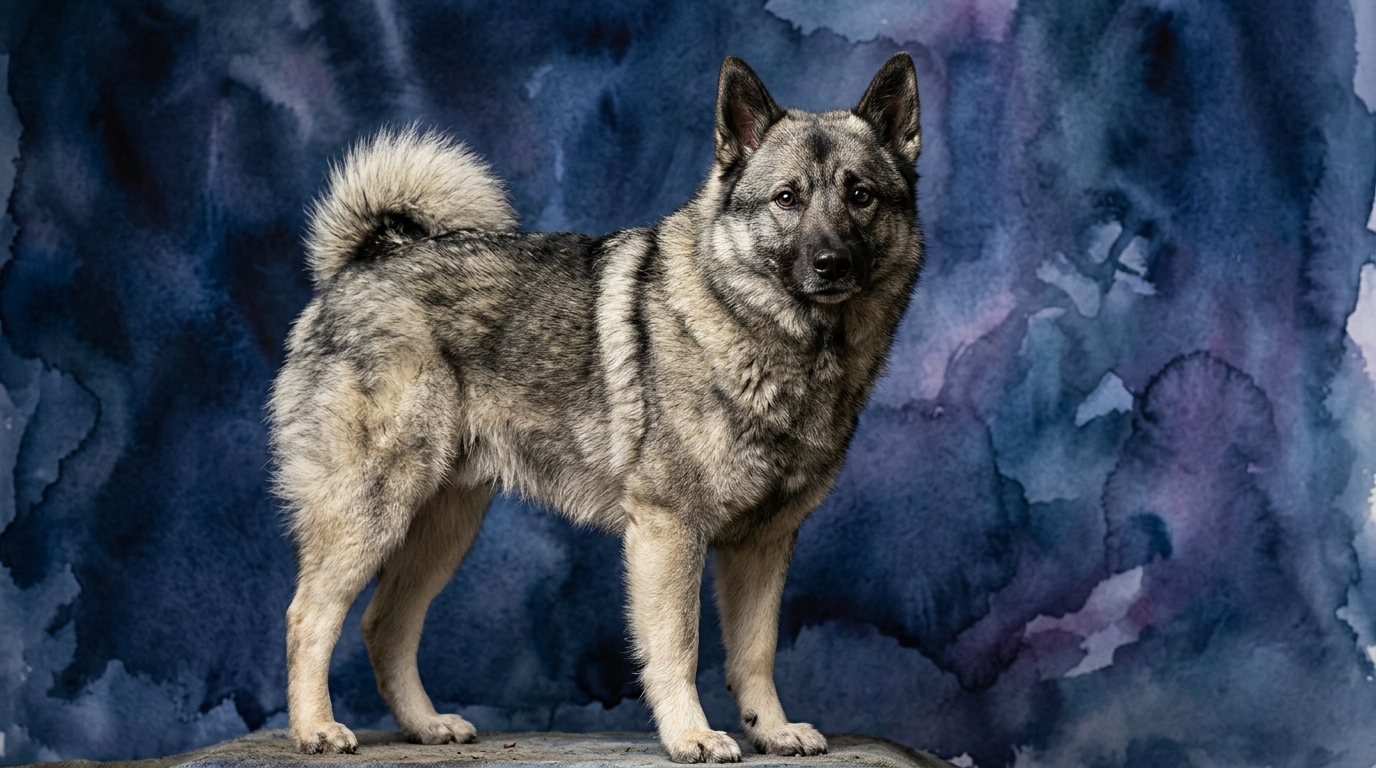
In contrast, the Norwegian Elkhound, a Hound group member with a Coren rank of #36, presents a profile indicating sharper cognitive edges in specific areas. Its Problem Solving is rated 4/5, Training Speed 4/5, and Memory 4/5. Social Intelligence and Instinctive Drive, however, mirror the Leonberger at 3/5. This higher scoring in key learning metrics suggests an Elkhound generally processes new information more quickly, retains it better, and exhibits a more independent approach to figuring out novel challenges.
Where the Leonberger Excels Cognitively
While the Leonberger's scores are consistently 3/5, this doesn't signify a cognitive deficit; rather, it indicates a particular style of mental operation that can be highly advantageous. Their 3/5 in Social Intelligence, coupled with their calm demeanor, often translates into a profound, patient understanding of human emotions and household dynamics. This breed is often noted for its empathetic presence, reading subtle cues and responding with a gentle, reassuring presence, a form of social problem-solving that prioritizes connection and stability over rapid, independent action. Their steady 3/5 in Instinctive Drive means they possess a moderate, controllable urge to engage with their environment, making them less prone to impulsivity than some breeds with higher, less directed drives.
The Leonberger's 3/5 in Training Speed and Memory reflects a learning process that thrives on consistency and positive reinforcement rather than quick repetition. They may take a few more repetitions to grasp a new command, but once learned, their understanding is often deep and reliable, ingrained through patient, respectful interaction. This deliberate learning style can foster a strong, trust-based bond with their handler, where mutual understanding builds over time. Their problem-solving at 3/5 means they are perfectly capable of navigating complex situations, especially when given clear guidance or when the solution involves their natural protective instincts and social awareness within their family unit.
Where the Norwegian Elkhound Stands Out Cognitively
The Norwegian Elkhound's cognitive strengths are evident in its higher scores for Problem Solving (4/5), Training Speed (4/5), and Memory (4/5). This combination makes them exceptionally quick learners, capable of picking up new commands and routines with fewer repetitions. Their superior memory ensures that once a concept is learned, it is retained effectively over time, reducing the need for constant refreshers. This mental acuity is a hallmark of their Coren ranking, underscoring their capacity for complex learning and adaptability.
Their 4/5 in Problem Solving indicates a breed that enjoys mental challenges and is adept at figuring things out independently. Whether it's navigating a puzzle toy, finding a hidden treat, or devising a strategy to reach a desired object, Elkhounds often display ingenuity and persistence. This independent problem-solving capacity, rooted in their hound heritage, means they are often self-directed in their pursuits. While their Social Intelligence and Instinctive Drive are 3/5, similar to the Leonberger, their higher cognitive processing speed and memory mean these drives can be channeled and refined through training more rapidly, making them capable of sophisticated work when properly engaged.
Which is Easier to Train and Why
Based on their cognitive profiles, the Norwegian Elkhound generally presents as an easier breed to train for foundational obedience and complex tasks. Their 4/5 in Training Speed signifies that they pick up new commands and behaviors more rapidly, often requiring fewer repetitions to achieve proficiency. This quick uptake, coupled with their 4/5 Memory, means they retain what they've learned with impressive consistency, leading to more reliable command responses over time. Their higher Problem Solving score also means they can often generalize learned behaviors to new situations more readily, adapting to variations in commands or environments.
The Leonberger, with its 3/5 in Training Speed and Memory, requires a more patient and consistent approach to training. They are certainly trainable, but they learn at a more measured pace, necessitating more repetitions and a longer period of reinforcement to solidify new behaviors. Their training journey is often characterized by steady progress rather than rapid leaps, emphasizing the importance of consistent daily practice and a calm, reassuring training environment. While both breeds benefit from positive reinforcement, the Elkhound's natural mental agility may make the training process feel more dynamic and responsive, while the Leonberger's requires a deeper commitment to methodical, gentle guidance.
Suitability for Active vs. Relaxed Owners
The Norwegian Elkhound's cognitive profile, particularly its higher Problem Solving and Memory, suggests a breed that thrives with active owners who can provide consistent mental stimulation alongside physical exercise. Their keen minds require engagement to prevent boredom and potential undesirable behaviors. Owners who enjoy dog sports, advanced obedience, scent work, or regular training sessions that challenge their dog's intellect will find the Elkhound a willing and capable partner. Their inherent drive and quick learning make them excellent companions for those who lead an active, mentally stimulating lifestyle and are prepared to channel their hound's independent spirit.
The Leonberger, while still a large working breed requiring substantial exercise, often suits owners who appreciate a more relaxed, but deeply committed, approach to companionship. Their steady 3/5 across cognitive dimensions means they are less prone to frantic energy or constant demands for novel mental challenges. They excel in environments where their social intelligence and calm presence are valued, often forming strong, empathetic bonds within a family unit. Owners who prioritize a gentle giant companion, are prepared for consistent yet unhurried training, and can provide ample space and a predictable routine, will find a Leonberger a fulfilling match. While they need walks and play, their mental engagement often centers more on companionship and monitoring their human family than on solving complex puzzles independently.
The Verdict
Choose the Leonberger if you seek a patient, empathetic companion who learns steadily and offers a calm, reassuring presence, thriving on consistent, gentle guidance within a stable family environment.
Opt for the Norwegian Elkhound if you desire a quick-witted, independent thinker eager for mental challenges and rapid learning, suiting an active owner who can provide consistent stimulation and channel their sharp intellect.
🧠 Find Your Pet's IQ Score
Our Pet IQ Lab assessment covers 25+ tests across 5 cognitive dimensions — personalized to your breed.
Take the Full IQ Test →Frequently Asked Questions
Do Leonbergers need a lot of mental stimulation?
Leonbergers benefit from consistent mental engagement, but their 3/5 in Problem Solving and Training Speed suggests they thrive on routine and gentle, repetitive training rather than constant novel challenges. They appreciate activities that reinforce their bond with their family, such as consistent obedience practice and interactive play.
Are Norwegian Elkhounds good with children?
Norwegian Elkhounds, with their 3/5 Social Intelligence, can be very good with children, especially when properly socialized from a young age. Their quick learning and memory (4/5) mean they can learn appropriate interactions quickly, but supervision is always recommended due to their independent and sometimes boisterous nature.
Which breed is better for first-time dog owners?
For first-time owners, the Norwegian Elkhound's higher training speed and memory (4/5) might make the initial training process feel more rewarding, though their independent problem-solving requires a confident handler. The Leonberger's steady 3/5 in training might demand more patience, but their generally calmer temperament can be forgiving for those committed to consistent, gentle methods.