
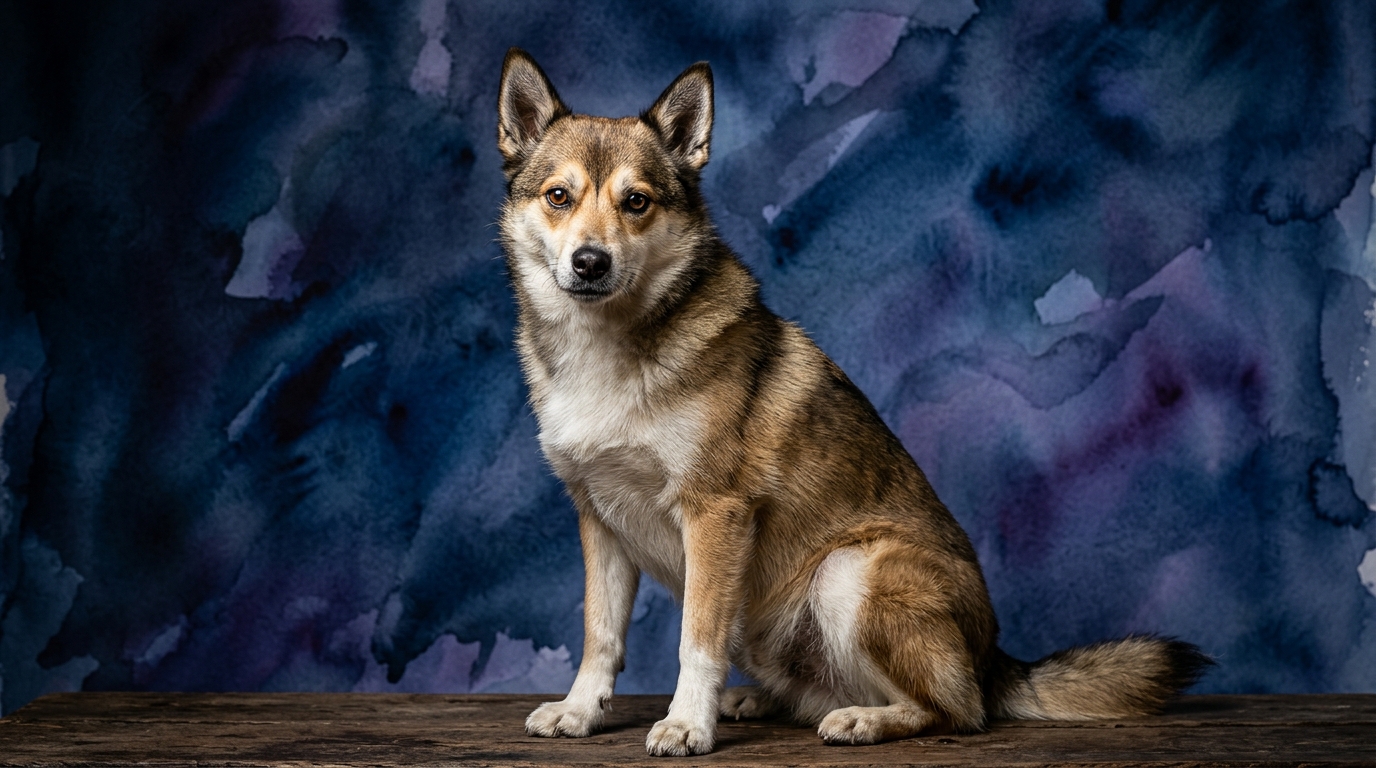
Side-by-Side IQ Profile: Unpacking Canine Cognition
While both the Leonberger and the Norwegian Lundehund share identical scores across our five cognitive dimensions, their expressions of these capacities diverge significantly, shaped by centuries of selective breeding for specific roles. Understanding these nuances is key to appreciating their individual brilliance.
The Leonberger, a majestic Working dog, exhibits a Problem Solving capacity (3/5) that manifests as a methodical approach to tasks, capable of understanding multi-step commands like those involved in drafting or water rescue. Their cognitive strength lies in processing and executing known routines with steady persistence rather than quick, intuitive leaps. Their Training Speed (3/5) is characterized by a consistent learning curve; they absorb information reliably, benefiting from clear, positive reinforcement and repetition. The Leonberger’s willingness to cooperate often makes the training process smooth, though not exceptionally rapid. Their Social Intelligence (3/5) is expressed through a profound connection to their human family, often attuned to subtle emotional cues and capable of providing comfort. They understand household dynamics, contributing to a harmonious environment. Instinctive Drive (3/5) in a Leonberger primarily involves a protective instinct towards their family and home, coupled with a strong desire for companionship, leaning towards cooperative tasks rather than independent hunting or herding. Finally, their Memory (3/5) is solid for commands, routines, and experiences, retaining training well over time and remembering specific interactions, which underpins their reliable nature.
In contrast, the Norwegian Lundehund, a unique Non-Sporting breed, showcases its Problem Solving (3/5) primarily in navigating complex physical environments. Their historical role as puffin hunters in treacherous cliffs demanded clever, independent approaches to overcoming obstacles, often leveraging their unique physical adaptations. Their Training Speed (3/5), while capable, is influenced by an independent nature; they grasp concepts but may require strong motivation or find their own interpretation of commands. Consistency and engaging methods are crucial to overcoming their inherent self-reliance. The Lundehund’s Social Intelligence (3/5) is expressed through an awareness of their human companions, though often with a more independent streak. They form strong bonds but might not be as overtly 'people-pleasing,' preferring to engage on their own terms. Their Instinctive Drive (3/5) is dominated by a strong prey drive, particularly for small, fast-moving objects, reflecting their puffin-hunting heritage. They also possess a keen exploratory drive, fueled by curiosity and a need to investigate their surroundings. Their Memory (3/5) is effective for routines and learned behaviors, especially those that align with their natural instincts, and they can recall specific locations or successful hunting strategies, which aids their independent exploration.
Where the Leonberger's Mind Shines Brightest
The Leonberger’s cognitive strengths are deeply rooted in their capacity for cooperative intelligence and their methodical approach to tasks that benefit a family unit. Their mental framework allows them to understand complex social structures within a household, making them exceptional at integrating into daily family life. This breed excels at tasks requiring patience, loyalty, and a predictable, gentle interaction style. For instance, their aptitude for therapy work or water rescue isn't just about physical capability; it demands a nuanced social intelligence to perceive human distress and respond appropriately, coupled with a memory for successful interventions. Their large size and strength necessitate a thoughtful, measured cognitive process for safe and harmonious interaction, ensuring they are gentle giants rather than clumsy behemoths. Their ability to remain calm and focused in various situations, even amidst chaos, demonstrates a particular cognitive resilience that is invaluable in their companionship roles. This focus on cooperative problem-solving and emotional attunement distinguishes their cognitive profile.
The Unique Cognitive Edge of the Norwegian Lundehund
The Norwegian Lundehund possesses a distinct cognitive advantage rooted in its ancestral role: independent hunting in unforgiving terrain. Their problem-solving prowess is most evident in their ability to navigate treacherous environments, squeezing into tight crevices and scaling cliffs with remarkable agility and foresight. This speaks to a specialized form of spatial reasoning and autonomous decision-making, where quick, on-the-spot assessments are critical for survival and success. Their cognitive strength lies in their adaptability and resourcefulness in unpredictable situations, a legacy of centuries spent hunting puffins in their natural habitat. This isn't just about physical dexterity; it involves a remarkable memory for complex routes, an innate understanding of physics (like leverage and balance), and the ability to strategize independently without direct human command. Their drive to explore and investigate every nook and cranny is a direct manifestation of this unique cognitive makeup, making them adept at tasks requiring ingenuity and self-reliance rather than strict obedience to human directives.
Training Dynamics: Leonberger vs. Norwegian Lundehund
Despite sharing a 3/5 Training Speed score, the practical experience of training a Leonberger versus a Norwegian Lundehund can differ significantly due to their underlying behavioral traits. The Leonberger, with its desire to please and cooperative nature, generally proves more amenable to training. They thrive on positive reinforcement and clear, consistent commands, viewing training as a shared activity that strengthens their bond with their human. Their social intelligence aids them in understanding expectations and responding predictably, making the learning process a steady and rewarding endeavor. However, their immense size necessitates early and consistent training to ensure they are manageable and well-mannered as adults.
The Norwegian Lundehund, on the other hand, can present a more challenging training experience due to its independent streak and deep-seated hunting instincts. While capable of learning quickly, their motivation might differ; they learn best when they perceive value in the task or if it aligns with their inherent curiosity and exploratory drives. They can be stubborn if a command doesn't make immediate sense to them or if their independent nature takes precedence. Effective training for a Lundehund requires engaging, varied methods that leverage their problem-solving abilities and natural curiosity, rather than relying solely on compliance. Their problem-solving might lead them to find loopholes if training isn't precise and consistent, demanding a trainer who is patient, creative, and understands their unique, self-reliant cognitive style.
Matching Minds to Lifestyles: Active vs. Relaxed Owners
When considering which breed aligns with a particular lifestyle, their cognitive profiles offer clear guidance. The Norwegian Lundehund is a natural fit for active owners who enjoy extensive hiking, exploring new environments, and engaging in mentally stimulating activities. Their need for independent exploration, coupled with a high level of physical agility and problem-solving, makes them ideal companions for those who spend significant time outdoors and appreciate a dog that can navigate challenging terrains. Their unique physical capabilities also lend themselves well to canine sports like agility, scent work, or barn hunt, which tap into their instinctive drive and cleverness.
Conversely, the Leonberger, while needing regular exercise, is more suited for owners seeking a calm, gentle, and profoundly loyal presence in the home. Their social intelligence and deep desire for companionship mean they thrive in an environment where they are fully integrated into daily family life, enjoying leisurely walks, ample cuddle time, and being a steady, comforting presence. Their cognitive makeup leans towards being a stable and reassuring companion rather than a constantly seeking adventurer. They require owners who can provide consistent, gentle guidance and appreciate a dog whose primary joy comes from close interaction and being a cherished family member.
The Verdict: Choosing Your Canine Companion
The Verdict
If you seek a gentle, cooperative companion who thrives on social connection and consistent routines, offering a steady and comforting presence in a family setting, the Leonberger is an excellent choice.
If you value an independent, clever companion with a strong exploratory drive, capable of navigating complex environments and engaging in unique, stimulating activities, the Norwegian Lundehund might be your ideal partner.
🧠 Find Your Pet's IQ Score
Our Pet IQ Lab assessment covers 25+ tests across 5 cognitive dimensions — personalized to your breed.
Take the Full IQ Test →Frequently Asked Questions
Are Leonbergers good with children?
Yes, Leonbergers are generally known for their gentle and patient nature, making them suitable companions for families with children. Their social intelligence allows them to be very tolerant and protective, though their large size requires supervision to prevent accidental bumps.
Do Norwegian Lundehunds require a lot of exercise?
Norwegian Lundehunds have moderate to high energy levels and require regular physical and mental stimulation. Daily walks, playtime, and opportunities for exploration are essential to satisfy their instinctive drives and keep them content.
What are common behavioral traits for each breed?
Leonbergers are typically calm, confident, and eager to please, forming strong bonds with their families and often acting as gentle guardians. Norwegian Lundehunds are characterized by their independence, curiosity, and a strong prey drive, often displaying a playful and sometimes mischievous demeanor.