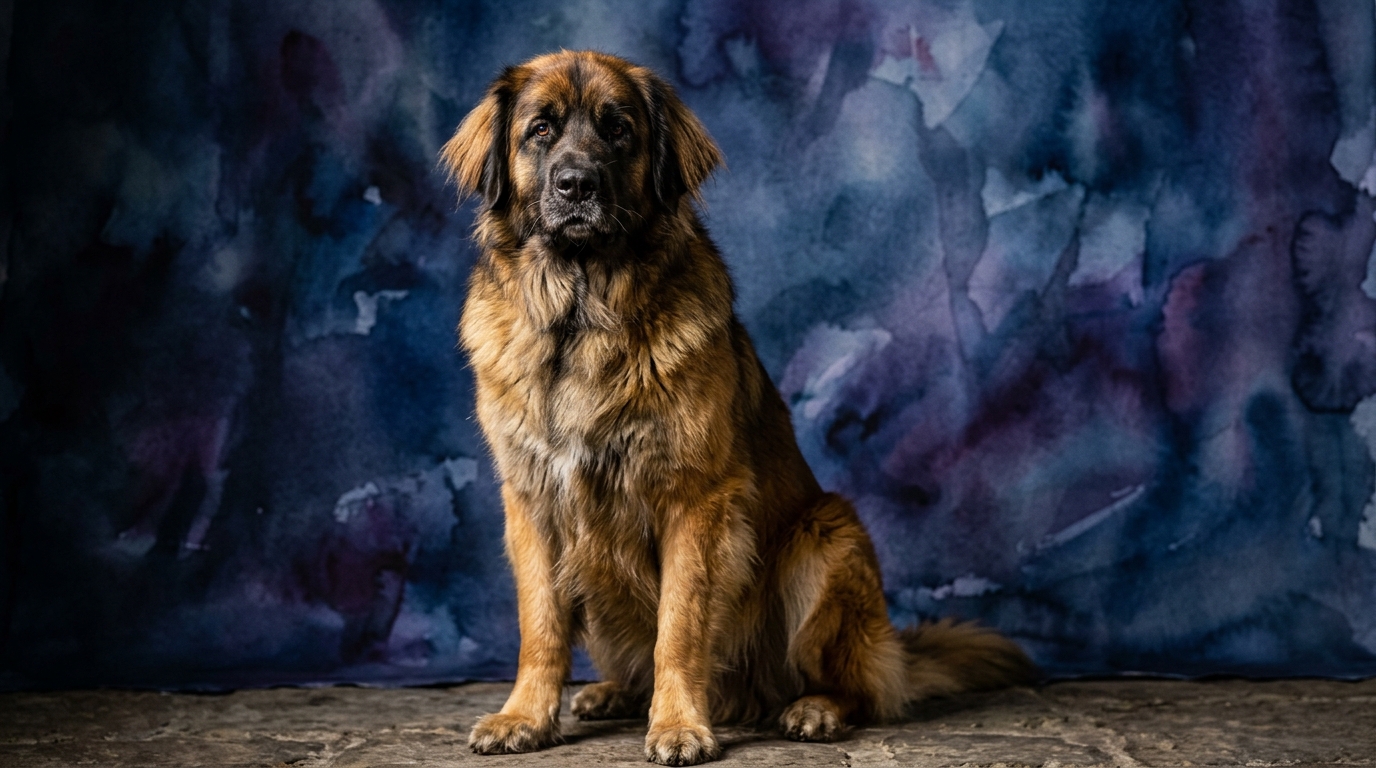
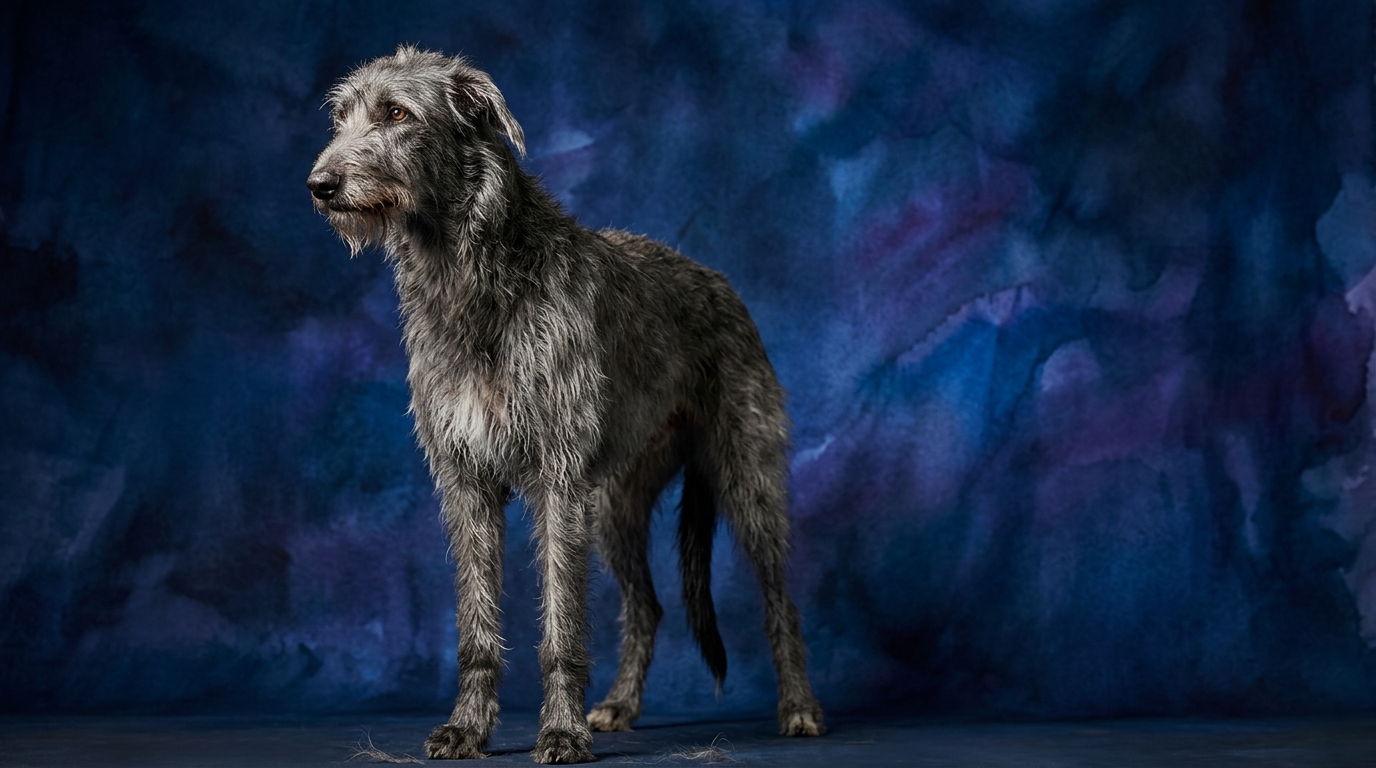
Side-by-Side IQ Profile: Leonberger vs. Scottish Deerhound
The Cosmic Pet Pet IQ Lab assesses canine intelligence across five key dimensions, and interestingly, both the Leonberger and the Scottish Deerhound score a balanced 3/5 in each category, indicating a moderate and well-rounded cognitive capacity. However, how these scores manifest in their everyday behavior and breed-specific aptitudes is where the true distinction lies.
For the **Leonberger**, a quintessential working dog, their 3/5 in problem-solving is often expressed in understanding complex human requests or navigating environmental challenges when assisting their owners, such as retrieving specific items or alerting to particular situations. Their training speed (3/5) indicates a responsive learner, eager to engage but requiring consistent, positive reinforcement to solidify commands and routines. Social intelligence (3/5) shines through their empathetic nature and strong desire to be an integral family member, often anticipating needs or reacting sensitively to emotional cues from their humans. Instinctive drive (3/5) in a Leonberger encompasses a protective nature, a desire to guard their family and property, and an inclination towards tasks involving strength and companionship. Their memory (3/5) allows them to retain a vast repertoire of commands and routines, making them reliable companions in structured, cooperative environments.
The **Scottish Deerhound**, a sighthound developed for the independent pursuit of deer, also presents a balanced cognitive profile with 3/5 in each IQ dimension, yet its manifestation is distinctly different. Their problem-solving (3/5) is less about human-directed tasks and more about strategic thinking in pursuit—calculating angles, anticipating prey movements, and navigating complex terrain independently. Training speed (3/5) reflects a moderate willingness to learn, but often on their own terms; they are capable of understanding, but their inherent independence means compliance isn't always immediate or enthusiastically offered. Social intelligence (3/5) is expressed through a quiet, observant nature; they are gentle and sensitive companions who form deep bonds, often reading subtle cues without being overtly demonstrative or "people-pleasing." Their instinctive drive (3/5) is powerfully focused on sight, chase, and capture, an ancient impulse that defines much of their behavior outdoors. Memory (3/5) in a Deerhound is particularly adept at recalling spatial layouts, tracking routes, and recognizing specific sights or sounds associated with their natural instincts, crucial for successful hunting.
Where the Leonberger Wins Cognitively
Despite identical numerical scores, the Leonberger's cognitive strengths manifest uniquely, particularly when considering their historical role as a multi-purpose farm and family dog. Their 3/5 in problem-solving often translates into a superior capacity for understanding and executing complex, multi-step tasks that directly involve human collaboration. Unlike the Deerhound's independent problem-solving, the Leonberger excels at deciphering human intent and applying their intellect to serve a shared goal, whether it's pulling a cart, carrying a pack, or acting as a vigilant guardian. This cooperative approach is profoundly supported by their 3/5 social intelligence, which fosters a deep empathy and responsiveness to human emotional states and commands. They are more likely to proactively offer comfort or assistance, demonstrating a nuanced understanding of their family's dynamics. Furthermore, their 3/5 instinctive drive, while protective, is also channeled into a desire to be useful and engaged in family life, making them exceptional at learning and applying practical skills that integrate them seamlessly into a human household. Their memory (3/5) is particularly strong for routines and expected behaviors within a family structure, making them highly predictable and reliable once trained, especially in cooperative tasks.
Where the Scottish Deerhound Wins Cognitively
The Scottish Deerhound's cognitive strengths, though numerically identical to the Leonberger, shine brightly in areas that reflect their specialized heritage as a hunter of large game. Their 3/5 in problem-solving is unparalleled in scenarios requiring independent thought and swift decision-making in pursuit. This isn't about solving a puzzle box, but about instinctively calculating the fastest route across varied terrain to intercept a moving target, or strategically maneuvering during a chase. Their 3/5 instinctive drive is a powerful, finely tuned instrument, manifesting as an acute visual acuity and an explosive, unmatched acceleration, which is a cognitive 'win' in the context of their historical function. This drive is not easily overridden, making them supremely efficient at what they were bred to do. Their social intelligence (3/5), while not overtly demonstrative, allows them to be incredibly perceptive observers of their environment and family, often sensing moods and situations with a quiet dignity. They don't seek constant validation but rather offer a calm, steady presence. The Deerhound's memory (3/5) is particularly impressive for recalling specific locations, scent trails, and visual cues related to their environment and potential prey, allowing them to navigate and operate effectively over large areas with minimal human direction. This independence of thought and action is a core cognitive advantage for their breed purpose.
Which is Easier to Train and Why?
Both breeds score 3/5 in training speed, implying moderate responsiveness, but their underlying motivations and behavioral tendencies create a significant difference in ease of training. The Leonberger, with its working dog background, generally exhibits a greater eagerness to please and work *with* their human. Their strong social intelligence and cooperative drive mean they often find satisfaction in performing tasks and receiving positive reinforcement from their owners. They thrive on having a 'job,' whether it's formal obedience, canine sports, or helping around the house. This inherent desire for partnership makes them generally more amenable to structured obedience training, responding well to clear communication, consistency, and reward-based methods.
The Scottish Deerhound, on the other hand, presents a different training dynamic due to their sighthound independence and powerful instinctive drive for pursuit. While intelligent, their training speed (3/5) is often tempered by a tendency to prioritize their own interests, particularly the thrill of the chase, over human directives. They are not as inherently motivated by pleasing humans as working breeds, requiring immense patience and creativity from their trainers. Training a Deerhound involves understanding and managing their deep-seated prey drive, making training feel like a game or a worthwhile endeavor for *them*. Recalling a Deerhound from a full-speed chase, where their instinctive drive is fully engaged, can be a monumental challenge, often requiring secure, fenced areas for off-leash exercise and extensive recall training from a young age. Their independence means they might understand a command but choose not to execute it if something more interesting captures their attention.
Which Suits Active Owners vs. Relaxed Owners?
The activity requirements for these two breeds, despite their shared large size, cater to different types of owners. A Leonberger needs regular, moderate activity to thrive. This typically includes daily walks, active playtime in a secure yard, and perhaps engagement in dog sports like obedience, drafting, or tracking. They enjoy being involved in family activities and appreciate having a 'job' to do, even if it's just carrying the newspaper. While they certainly enjoy lounging with their family indoors, they are not content to be couch potatoes without sufficient mental and physical stimulation. They are best suited for owners who enjoy consistent engagement, outdoor activities, and can provide a structured routine that incorporates both exercise and companionship.
The Scottish Deerhound, conversely, presents a unique blend of high-intensity activity and profound relaxation. They require significant bursts of high-speed exercise in a safe, securely fenced area where they can stretch their long legs and run at full gallop. They are sprinters, not endurance runners, and these intense bursts are crucial for their physical and mental well-being. Outside of these required sprints, Deerhounds are remarkably relaxed, often described as 'couch potatoes' indoors, enjoying long naps and a calm environment. They are not typically suited for owners who want a constant playmate or a dog for long-distance jogging. Instead, they are ideal for owners who can provide ample, secure space for their unique exercise needs and are content with a largely tranquil, independent companion indoors, appreciating their quiet dignity and affectionate but not overly demanding nature.
The Verdict
Choose the Leonberger if you are seeking a versatile, cooperative companion eager to participate in family activities, offering a blend of affectionate guardianship and practical problem-solving. They thrive on partnership and consistent engagement, excelling in roles that involve human collaboration.
Opt for the Scottish Deerhound if you appreciate an independent, gentle giant with a powerful prey drive, capable of bursts of intense activity followed by calm repose. They are best for owners who can provide secure off-leash running opportunities and value a quiet, dignified companion who forms deep, subtle bonds.
🧠 Find Your Pet's IQ Score
Our Pet IQ Lab assessment covers 25+ tests across 5 cognitive dimensions — personalized to your breed.
Take the Full IQ Test →Frequently Asked Questions
Are Leonbergers good with children?
Yes, Leonbergers typically possess a gentle and patient temperament, making them suitable family companions. Their social intelligence (3/5) means they often form strong bonds with children and are generally tolerant, though supervision is always advised with any large breed to ensure respectful interactions.
Do Scottish Deerhounds require a lot of grooming?
Scottish Deerhounds have a relatively low-maintenance, wiry coat that requires weekly brushing to remove loose hair and prevent mats. Their coat sheds moderately, but regular care keeps them tidy; professional grooming is usually not necessary beyond occasional hand-stripping.
How do these breeds handle being left alone?
Leonbergers, with their strong social intelligence and cooperative nature, generally prefer companionship and can become anxious or destructive if left alone for extended periods without proper training and enrichment. Scottish Deerhounds are more independent and can tolerate being alone for moderate durations, but like all dogs, they benefit from mental stimulation and appropriate exercise before being left to prevent boredom.