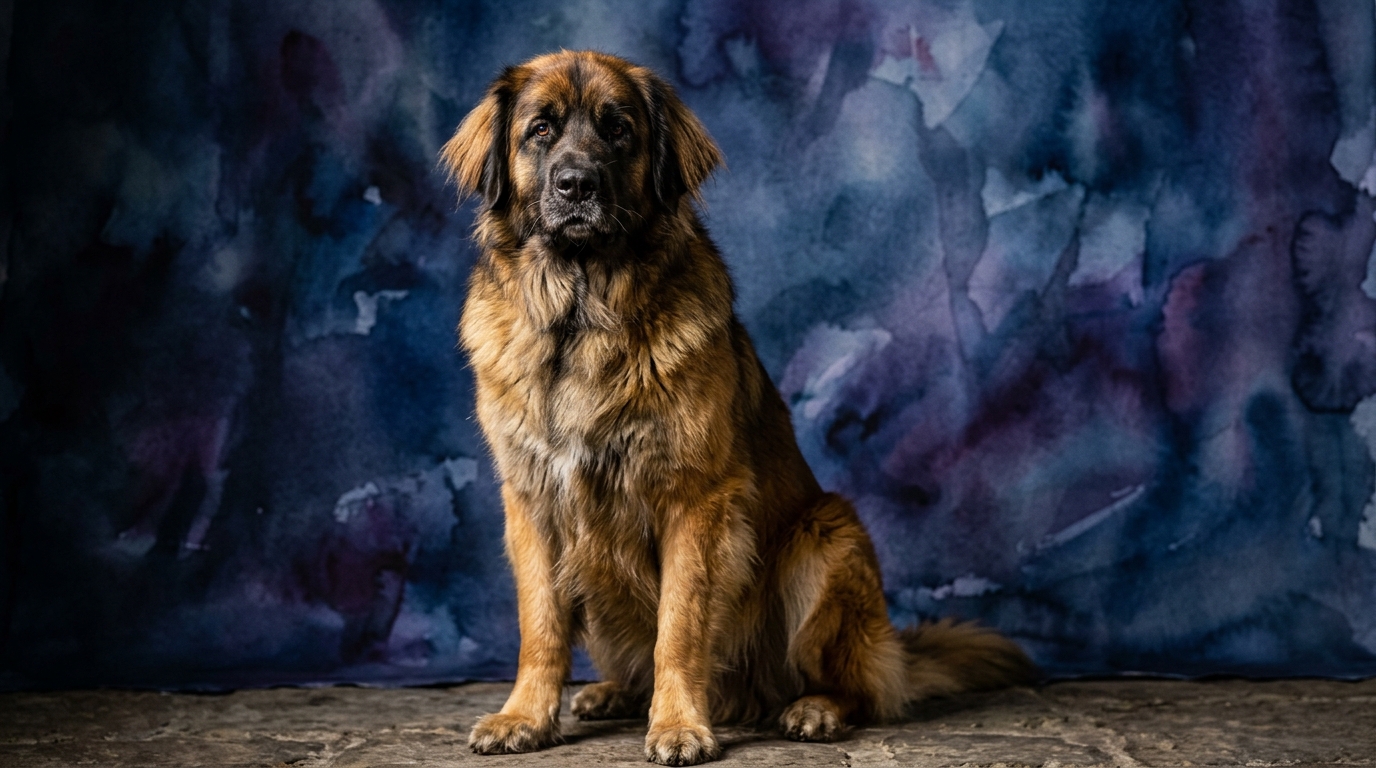
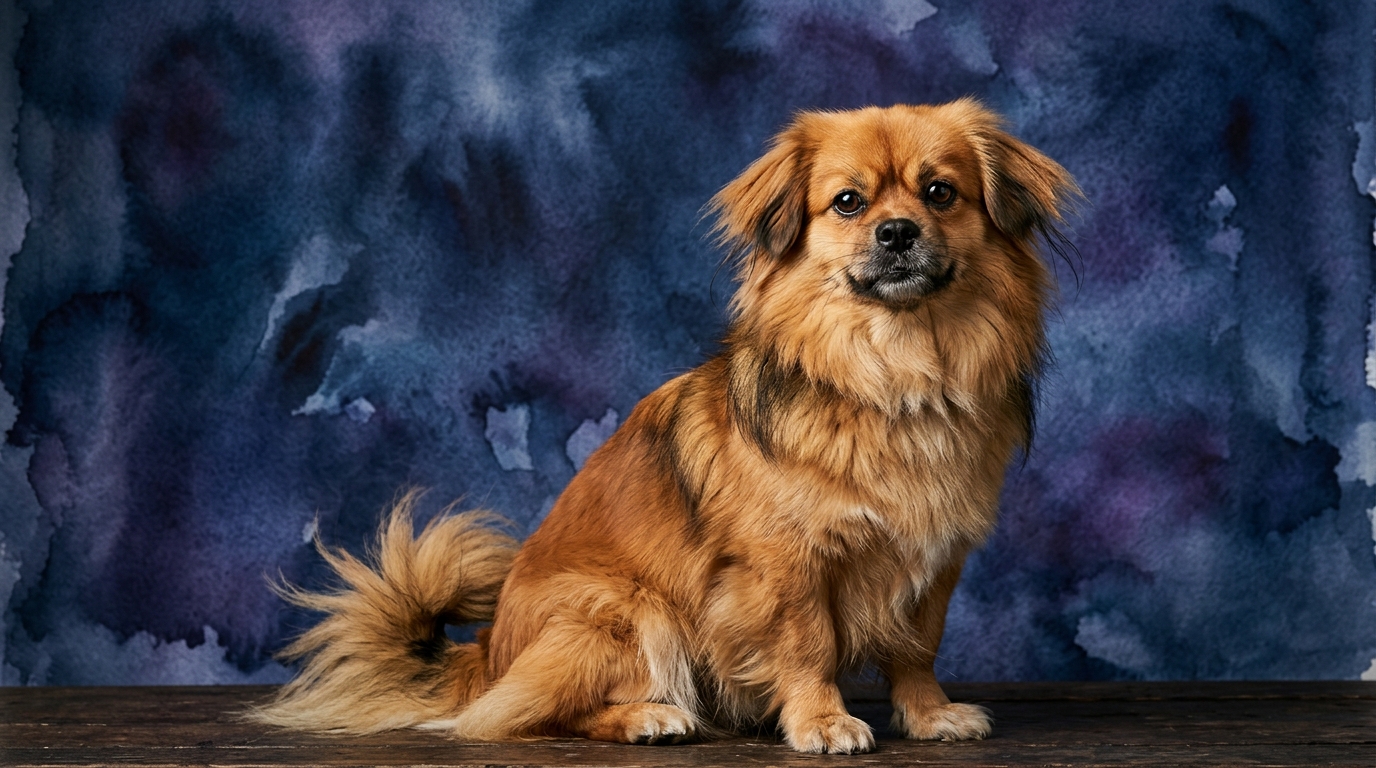
Side-by-Side IQ Profile: Interpreting the 3/5 Score
A 3/5 rating in The Cosmic Pet IQ Lab signifies a solid, competent level of cognitive function across all measured dimensions. It suggests a dog that is neither a lightning-fast learner nor particularly slow, capable of understanding complex tasks with consistent effort, and possessing a balanced set of intellectual tools. For both the imposing Leonberger and the compact Tibetan Spaniel, this identical baseline score hints at a fundamental cognitive parity, though their expressions of these capabilities diverge significantly due to their distinct breed histories and physical attributes.
In **Problem Solving (3/5 for both)**, the Leonberger, with its working and guarding heritage, often approaches challenges with a deliberate, calm, and sometimes independent thought process. Its solutions might involve assessing and navigating its environment or social situations with a measured pace, focusing on safety and family well-being. The Tibetan Spaniel, conversely, might use its keen observation and opportunistic nature to solve problems, often related to gaining access to resources or attention. Its problem-solving can be agile and adaptable, reflecting its history as an alert companion.
Regarding **Training Speed (3/5 for both)**, both breeds are capable of learning new commands and routines at a steady pace. For the Leonberger, consistency and positive reinforcement are crucial; its sheer size means early and thorough training is non-negotiable, and once concepts are grasped, retention is typically strong. The Tibetan Spaniel, while also learning steadily, might appear quicker to pick up simple tricks due to its desire for interaction, but its independent streak means complex obedience may require creative motivation and patience.
Their **Social Intelligence (3/5 for both)** manifests differently yet competently. The Leonberger exhibits a nuanced understanding of human emotions and family dynamics, often acting as a gentle, empathetic presence and discerning protector. Its social awareness is geared towards loyalty and maintaining harmony within its family unit. The Tibetan Spaniel is highly attuned to its human companions' moods and social cues, acting as a charming and intuitive companion. Its social intelligence is finely tuned for close human bonds and communication within a family setting.
The **Instinctive Drive (3/5 for both)** in a Leonberger is deeply rooted in guarding, protection, and companionship. They possess a natural inclination to be watchful and protective of their family and territory, demonstrating a calm vigilance without being overly aggressive. The Tibetan Spaniel’s instinctive drives include alertness, watchdog behavior (often expressed through barking at perceived intruders), and a strong desire for companionship. They retain some of their historical 'lion dog' traits, being self-assured and ever-vigilant.
Finally, for **Memory (3/5 for both)**, both breeds possess a reliable capacity. The Leonberger remembers learned commands, routines, and experiences well, particularly concerning people and places. Its memory is often linked to the safety and well-being of its family and territory. The Tibetan Spaniel also has a good memory, especially for routines, preferred people, and locations of interest (like treat stashes). They are adept at remembering social cues and patterns of interaction, often using this to their advantage in seeking attention or comfort.
Where the Leonberger Wins Cognitively
While both breeds achieve a 3/5 in problem-solving, the Leonberger’s approach often carries a deliberate, methodical quality, particularly when assessing environmental safety or social dynamics within its family unit. Its sheer physical presence and natural inclination for guardianship mean its problem-solving might involve carefully navigating potential hazards for younger family members or strategically positioning itself to observe and manage group interactions, a nuanced application of its 3/5 social intelligence. This translates into a dog that often thinks before acting, making considered decisions that prioritize the well-being of its household. Its memory, also rated 3/5, excels in retaining extensive territorial boundaries or complex multi-step tasks related to assistance roles, where consistency and reliability are paramount.
Where the Tibetan Spaniel Wins Cognitively
Conversely, the Tibetan Spaniel’s 3/5 cognitive profile often shines in scenarios demanding agile, often charming, manipulation of its environment or human companions. Its problem-solving might involve cleverly figuring out how to access a desired toy or treat, or employing a range of vocalizations and body language to communicate its needs or desires with remarkable precision. This resourceful application of its social intelligence, though rated 3/5, is finely tuned for close companion living, allowing it to adapt its behavior based on subtle human cues. Its memory is particularly strong for intricate social rituals and anticipating human schedules, often remembering exactly which actions elicit desired responses, which can be both endearing and a little mischievous.
Which is Easier to Train and Why
Given their identical 3/5 rating for training speed, neither the Leonberger nor the Tibetan Spaniel is inherently 'easier' to train in terms of raw learning pace; rather, the *approach* required differs significantly. Training a Leonberger demands consistency, patience, and an understanding of their independent, sometimes stoic nature. They respond best to positive reinforcement and clear, calm expectations. Their substantial size means early and thorough socialization and obedience training are critical for managing their strength and ensuring they are well-mannered gentle giants. Their motivation often stems from a desire to please their beloved owners and fulfill their role within the family, leading to strong retention once a task is mastered.
The Tibetan Spaniel, while also rated 3/5, can present a different set of training considerations. Their desire for interaction can make them engaging students, but their independent, sometimes 'cat-like' personality means they can be selective learners. They might pick up commands quickly if highly motivated by food, play, or attention, but can also exhibit a stubborn streak, choosing to ignore commands if they don't see an immediate benefit or if the training isn't fun. House training can sometimes be a particular challenge for this smaller breed, requiring extra patience and consistency. Effective training for a Tibetan Spaniel often requires creativity, high-value rewards, and making the learning process feel like a fun game rather than a chore.
Which Suits Active Owners vs Relaxed Owners
When considering lifestyle, the differences between these two breeds become more apparent despite their cognitive parity. For **active owners** seeking a substantial canine companion, the Leonberger is a suitable choice. While not hyperactive, they require regular, purposeful exercise, such as long walks, hiking, or engaging in canine sports like drafting or obedience. Their large size necessitates ample space and mental stimulation to prevent boredom and ensure physical well-being. A truly active owner will appreciate a dog that can keep pace on adventures, then settle calmly indoors.
For **relaxed owners**, the Tibetan Spaniel often presents a more adaptable option. They are content with moderate daily walks and indoor play, thriving on being an integral part of family life. Their smaller size makes them suitable for various living situations, including apartments, provided they receive sufficient mental engagement and opportunities for moderate physical activity. While they enjoy a good romp, they are equally happy to curl up on the couch for a cuddle session. However, 'relaxed' does not mean 'inactive' for a Tibetan Spaniel; they still require regular interaction and mental stimulation to prevent boredom and express their alert, companionable nature.
The Leonberger, despite its calm indoor demeanor, requires a dedicated owner committed to substantial daily care and engagement beyond just a 'relaxed' approach due to its size and working heritage. Therefore, owners who enjoy a moderate pace of life but still desire an interactive, adaptable companion might find the Tibetan Spaniel a better fit, while truly active owners seeking a large, capable partner will gravitate towards the Leonberger.
The Verdict
Choose the Leonberger if you seek a large, devoted, protective companion with a calm demeanor, possess the space and commitment for consistent training, and appreciate a dog that thinks deliberately and acts as a gentle guardian.
Choose the Tibetan Spaniel if you desire a smaller, spirited, and highly attuned companion, appreciate a dog with an independent streak and a charming personality, and can provide engaging mental stimulation and moderate physical activity.
🧠 Find Your Pet's IQ Score
Our Pet IQ Lab assessment covers 25+ tests across 5 cognitive dimensions — personalized to your breed.
Take the Full IQ Test →Frequently Asked Questions
Do Leonbergers or Tibetan Spaniels make better family pets?
Both breeds can be excellent family pets, though their suitability depends on the family's lifestyle and dynamics. Leonbergers are often very patient and gentle with children, acting as devoted guardians, while Tibetan Spaniels are playful, highly social, and thrive on consistent interaction within the family unit, adapting well to various home environments.
Are Leonbergers difficult to train due to their size?
Leonbergers are not inherently difficult to train, but their size necessitates early and consistent training in manners and obedience to ensure they are well-behaved. Their 3/5 training speed means they learn steadily, and their desire to please their family makes them responsive to positive reinforcement and clear, calm expectations.
How do Tibetan Spaniels compare to other small companion breeds in terms of intelligence?
With a 3/5 across all IQ dimensions, the Tibetan Spaniel demonstrates solid cognitive capabilities comparable to many small companion breeds. They possess competent problem-solving, learn at a steady pace, and exhibit strong social intelligence, making them engaging, perceptive, and adaptable companions who often use their intellect to charm their way into hearts and laps.