Side-by-Side IQ Profile: Decoding Identical Scores
At The Cosmic Pet Pet IQ Lab, both the Lhasa Apso and the Coton de Tuléar score a consistent 3 out of 5 across all five measured intelligence dimensions: Problem Solving, Training Speed, Social Intelligence, Instinctive Drive, and Memory. While these numerical equivalencies might suggest identical cognitive abilities, understanding their breed-specific applications of these scores is crucial. A '3/5' indicates a moderate level of aptitude, meaning they are capable learners and thinkers, but perhaps not as quick to grasp complex concepts as some working breeds, nor as challenged as some breeds with very low scores.
For Problem Solving (3/5), both breeds demonstrate a capacity to navigate their environment and overcome obstacles to achieve desired outcomes, whether it's reaching a favorite toy or manipulating a gate. Training Speed (3/5) indicates they learn new commands and routines at a moderate pace, typically requiring consistent, positive reinforcement over several repetitions. Social Intelligence (3/5) reflects their ability to interpret and respond to human cues and social situations, forming bonds and understanding household dynamics. Their Instinctive Drive (3/5) encompasses their inherent motivations, such as guarding, companionship, or play, which are moderately present. Finally, Memory (3/5) shows they retain learned information and experiences for a moderate duration, remembering routines, commands, and people.
Where the Lhasa Apso Wins Cognitively
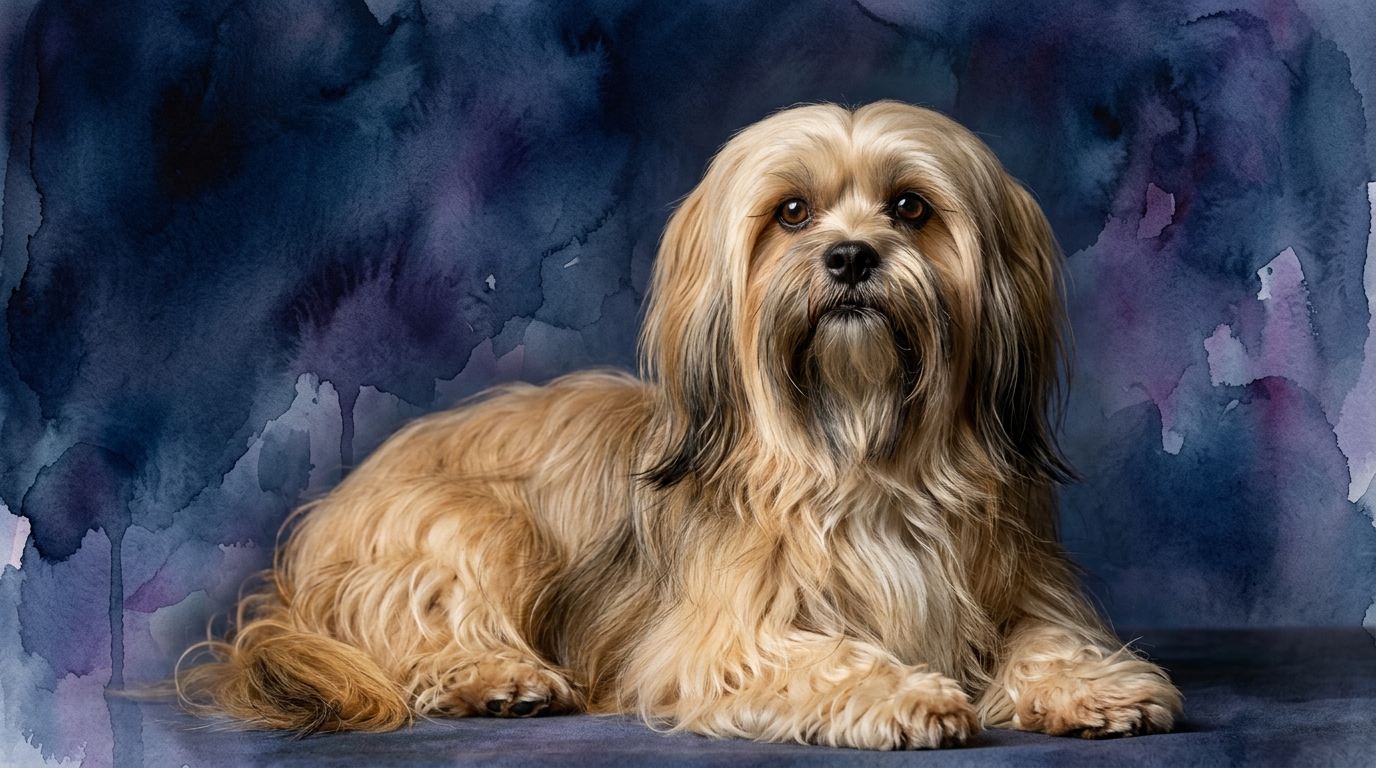
Despite sharing the same numerical IQ scores, the Lhasa Apso often exhibits a cognitive edge in areas tied to their historical role as sentinels in Tibetan monasteries. Their Problem Solving (3/5) frequently manifests as resourceful independence; a Lhasa Apso might ingeniously figure out how to access a forbidden couch or find a hidden treat, not necessarily to please, but to satisfy their own desires. This independent problem-solving is coupled with a discerning Social Intelligence (3/5), allowing them to quickly assess new people and situations, distinguishing friend from potential intruder with an astute, watchful gaze. They excel at reading the nuances of their immediate family's moods and intentions, often choosing to interact on their own terms.
The Lhasa Apso's Instinctive Drive (3/5) is strongly oriented towards vigilance and territoriality. This means they are adept at identifying and alerting their owners to anything perceived as unusual, whether it's a leaf blowing past the window or a distant doorbell. Their Memory (3/5) serves this purpose well, enabling them to recall past perceived threats or unusual occurrences, contributing to their consistent watchfulness. While they learn at a moderate Training Speed (3/5), their cognitive strength lies in their self-assured application of these learned behaviors within their established territory, making them excellent, albeit sometimes stubborn, small guardians.
Where the Coton de Tuléar Wins Cognitively
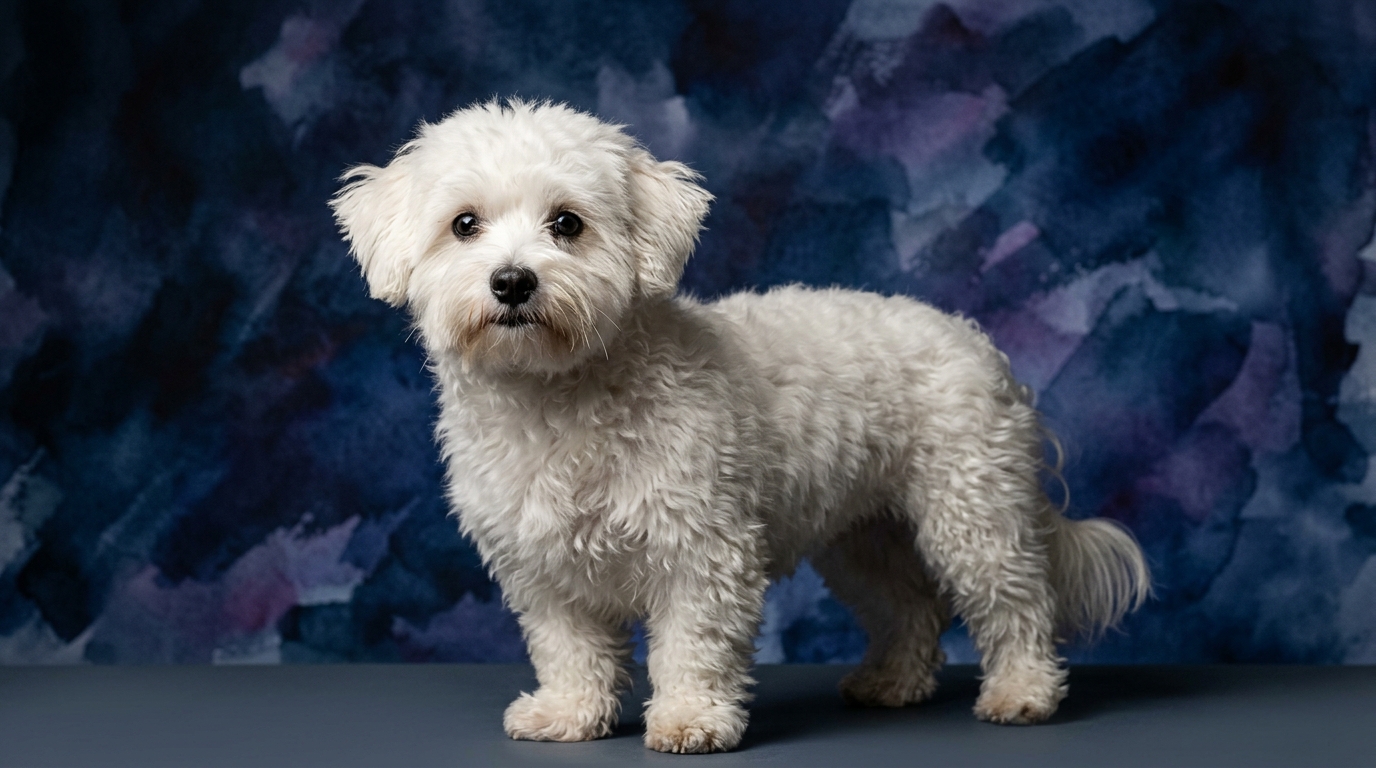
The Coton de Tuléar, bred purely for companionship, showcases its cognitive strengths through a profound eagerness to engage and interact. Their Problem Solving (3/5) is often directed towards social goals; a Coton might figure out how to open a cabinet to retrieve a toy for shared play or employ clever tactics to garner attention and affection from their human family. This social problem-solving highlights their innate desire to be involved and to please, a stark contrast to the Lhasa's more independent approach.
The Coton's Social Intelligence (3/5) is particularly strong in its adaptability and charm. They tend to be more universally friendly and can quickly adjust to new people and environments, making friends effortlessly. This social acumen, combined with their moderate Training Speed (3/5), means they often appear quicker to learn because they are highly motivated by positive interaction and praise. Their Instinctive Drive (3/5) is primarily focused on forming strong bonds and being a cheerful, engaged family member, leading them to be highly attuned to their owners' emotional states. Their Memory (3/5) supports this by helping them remember preferred games, routines, and the individuals who provide positive reinforcement, making them delightful and consistent companions.
Which is Easier to Train and Why
When it comes to ease of training, the Coton de Tuléar generally presents a smoother experience for most owners, despite both breeds sharing a 3/5 Training Speed score. This difference stems not from raw learning capacity, but from their intrinsic motivations and temperaments. The Coton de Tuléar's core behavioral driver is companionship and a strong desire to please their human family. They thrive on positive reinforcement, praise, and the joyful interaction that training provides. This inherent eagerness makes them more cooperative and consistent in applying what they've learned, often appearing to grasp commands more readily because they are keen to perform them for their beloved people.
The Lhasa Apso, while equally capable of learning at a moderate pace (3/5 Training Speed), possesses a more independent and sometimes stubborn streak, rooted in their historical role as a discerning guard dog. A Lhasa Apso may understand a command perfectly but choose not to execute it if they don't perceive a compelling reason or if their independent nature takes precedence. Training a Lhasa requires immense patience, consistency, and a deep understanding of their self-reliant character. Owners often need to make training feel like the Lhasa's idea or provide extremely high-value rewards to maintain their engagement, as their motivation is less about pleasing and more about what benefits them directly.
Which Suits Active Owners vs. Relaxed Owners
The Coton de Tuléar is typically a better fit for owners who desire an actively engaged and relatively more 'active' small companion, even if that activity is primarily indoor play or neighborhood strolls. Their moderate Instinctive Drive (3/5) is channeled into playful antics, a love for games, and a strong desire to be included in all family activities. They thrive on consistent interaction, short bursts of fetch, and learning new tricks, making them suitable for owners who enjoy daily mental and physical engagement with their dog. While not needing marathon runs, they appreciate regular stimulation and companionship, making them a joyful presence for owners who are home often and enjoy interactive play.
The Lhasa Apso, with its distinct cognitive leanings, often aligns better with more relaxed owners who appreciate an independent, watchful, and somewhat less demanding companion. Their Instinctive Drive (3/5) is more about observation and security than constant play, and while they enjoy walks and attention, they are often content to supervise their domain from a comfortable perch. They require less constant interactive stimulation than a Coton and are often more self-sufficient, making them suitable for individuals who enjoy a dog's presence but don't necessarily want a constant shadow. However, 'relaxed' does not mean absent – they still require consistent training and socialization to channel their independence constructively.
The Verdict
Choose a Lhasa Apso if you appreciate an independent, watchful companion with a discerning personality, and are prepared for a training journey that respects their self-assured nature.
Opt for a Coton de Tuléar if you desire an outgoing, charming, and highly interactive companion who thrives on social engagement and generally makes training a more cooperative experience.
🧠 Find Your Pet's IQ Score
Our Pet IQ Lab assessment covers 25+ tests across 5 cognitive dimensions — personalized to your breed.
Take the Full IQ Test →Frequently Asked Questions
Do Lhasa Apsos and Cotons have similar energy levels?
While both are small breeds, Cotons generally have a more consistently playful and interactive energy level, thriving on engagement. Lhasa Apsos can be playful, but often have periods of independent relaxation and watchful quiet, needing less constant interactive stimulation.
Are Lhasa Apsos or Cotons better with strangers?
Cotons typically exhibit higher social adaptability and are more universally friendly towards strangers, quickly making new acquaintances. Lhasa Apsos are more discerning; they can be reserved or aloof with new people, preferring to assess before offering their trust or affection.
Which breed is more prone to separation anxiety?
The Coton de Tuléar, with its strong companion drive and desire for constant interaction, can be more prone to separation anxiety if left alone for extended periods. Lhasa Apsos, being more independent, tend to tolerate solitude better, though no dog should be left alone excessively.