
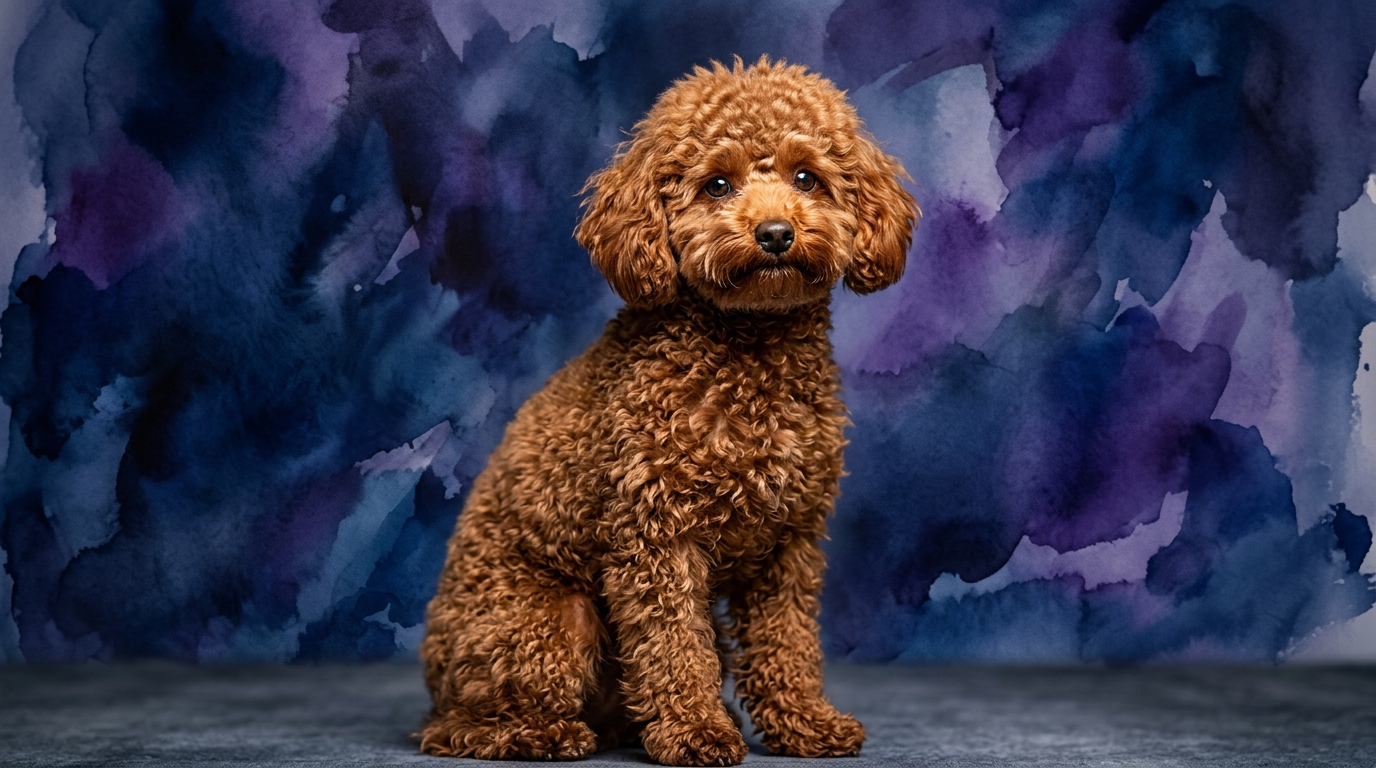
Side-by-Side Cognitive Profile: Lhasa Apso vs. Toy Poodle
The Cosmic Pet Pet IQ Lab employs a five-dimensional framework to assess canine intelligence, providing a nuanced understanding beyond simple obedience. Let's examine how the Lhasa Apso and Toy Poodle stack up across these critical cognitive areas.
The Lhasa Apso, with a Coren ranking of #68, presents a balanced yet distinctly independent cognitive profile. Their Problem Solving is rated 3/5, indicating an ability to navigate familiar environments and routines effectively, though they may not always seek novel solutions to new puzzles. Training Speed is also 3/5, suggesting they can learn, but require patience and consistent motivation, often prioritizing their own agenda over immediate compliance. In Social Intelligence, they score 3/5, forming strong bonds with their family while often being reserved or discerning with strangers, interpreting social cues within their trusted circle. Their Instinctive Drive is 3/5, reflecting a protective alertness without strong prey or herding impulses. Finally, their Memory is 3/5, meaning they retain routines and commands, though perhaps not with the immediate recall or cumulative capacity of more cognitively agile breeds.
In stark contrast, the Toy Poodle, holding an impressive Coren ranking of #2, demonstrates a cognitive prowess that places them among the most mentally capable breeds. Their Problem Solving is a stellar 5/5, showcasing a remarkable capacity for understanding complex tasks, devising solutions, and adapting quickly to new challenges. Training Speed matches this at 5/5, signifying their impressive rapidity in absorbing new commands and concepts, often with an eager-to-please attitude. Their Social Intelligence is 3/5, similar to the Lhasa Apso, indicating they enjoy interaction and form strong attachments, but this isn't their standout cognitive trait. Instinctive Drive is 3/5, reflecting a moderate drive often expressed in curiosity or play, rather than intense guarding or hunting behaviors. Crucially, their Memory is 5/5, exhibiting exceptional recall for commands, routines, and experiences, which facilitates continuous, advanced learning.
Where the Lhasa Apso Excels Cognitively
While the Toy Poodle boasts higher raw scores in several cognitive dimensions, the Lhasa Apso possesses a practical, self-reliant intelligence that serves its historical role as a watchful, independent companion. Their 3/5 in Social Intelligence, for instance, translates into a discerning approach to new people and situations; they are not easily swayed or universally eager to please. This particular manifestation of social cognition can be a strength for owners seeking a dog with a distinct individual personality rather than a universal pleaser, as it allows them to form deep, selective bonds and exhibit a nuanced understanding of their immediate family's emotional landscape.
Furthermore, the Lhasa Apso's 3/5 Instinctive Drive, coupled with their natural alertness, means they possess an inherent ability to detect anomalies in their environment without being prone to excessive reactivity. This makes them effective, low-key guardians who rely on observation and a calm assessment of their surroundings rather than impulsive action. Their Problem Solving at 3/5 suggests they are adept at applying learned patterns to navigate their world efficiently, rather than constantly seeking novel solutions, which can be a valuable trait for a dog content with established routines and a predictable home environment.
Where the Toy Poodle Demonstrates Cognitive Superiority
The Toy Poodle’s cognitive profile shines with exceptional scores in Problem Solving (5/5), Training Speed (5/5), and Memory (5/5), positioning them as one of the most adaptable and quick-witted canine companions. Their superior Problem Solving means they can rapidly grasp complex sequences, figure out how to manipulate objects to achieve a goal, or even invent new strategies when faced with novel puzzles. This mental agility makes them highly adept at learning advanced tricks, participating in dog sports, or understanding intricate routines.
Coupled with their lightning-fast Training Speed, Toy Poodles absorb new commands and concepts almost effortlessly, often requiring fewer repetitions than many other breeds. Their remarkable Memory ensures that once a lesson is learned, it is retained, allowing for a continuous building of their knowledge base and a consistent application of learned behaviors over time. This trifecta of cognitive strengths makes the Toy Poodle an unparalleled candidate for owners who enjoy engaging their dog's mind with consistent, stimulating challenges, as they thrive on intellectual engagement and excel in environments where their cognitive capacities are regularly utilized.
Training Dynamics: Effort and Engagement
When it comes to ease of training, the Toy Poodle stands out significantly. Their exceptional Training Speed (5/5) and Memory (5/5) mean they pick up new commands and routines with impressive swiftness, often eager to engage and please their human companions. They form strong associations between commands and actions quickly, and their excellent recall ensures these lessons stick. For instance, teaching a Toy Poodle a multi-step fetch game or a complex agility sequence will likely progress rapidly due to their ability to process information and retain it efficiently, making training a rewarding and often swift experience.
In contrast, the Lhasa Apso, with a Training Speed of 3/5 and Memory of 3/5, requires a more patient, consistent, and reward-based approach. While capable of learning, their independent nature often means they are less motivated by the sheer act of pleasing and more by what benefits them directly. They might take longer to grasp new concepts and may test boundaries more frequently, requiring owners to be particularly firm yet gentle in their methods. A Lhasa Apso might learn 'sit' effectively but might 'forget' it when a more interesting scent or sight distracts them, demonstrating their selective application of learned behaviors. This doesn't imply a lack of capacity, but rather a different motivational drive that owners must understand and work with.
Matching Canine Cognition to Owner Lifestyle
The choice between a Lhasa Apso and a Toy Poodle significantly depends on an owner's lifestyle and their preferred level of daily engagement. For active owners who thrive on mental stimulation and enjoy participating in dog sports, advanced obedience, or even just consistent, engaging training sessions, the Toy Poodle is an ideal match. Their high scores in Problem Solving, Training Speed, and Memory mean they genuinely benefit from and enjoy tasks that challenge their intellect, making them excellent partners for agility, rally, or complex trick training. They are not content to simply exist; their minds need regular workouts to prevent boredom and potential behavioral issues, thus suiting owners who can commit to consistent intellectual interaction.
Conversely, the Lhasa Apso is often a better fit for more relaxed owners. While they still require regular walks and playtime, their cognitive profile suggests they are more content with a stable routine and less demanding mental challenges. Their independent streak means they can entertain themselves for periods, and their social discernment means they are not constantly seeking external validation or instruction. They appreciate companionship and a comfortable home environment, making them suitable for individuals or families who prefer a dog that is present and affectionate but doesn't require constant, high-intensity mental engagement, thriving in a calm, predictable setting.
The Verdict
Select a Lhasa Apso if you appreciate a self-reliant companion with a discerning personality, who offers quiet companionship and a subtle protective instinct without demanding constant mental gymnastics.
Opt for a Toy Poodle if you seek an eager, quick-witted partner for training, dog sports, and intellectual games, providing endless opportunities for shared learning and engagement.
🧠 Find Your Pet's IQ Score
Our Pet IQ Lab assessment covers 25+ tests across 5 cognitive dimensions — personalized to your breed.
Take the Full IQ Test →Frequently Asked Questions
Are Lhasa Apsos difficult to train?
Lhasa Apsos are not inherently difficult, but their independent nature and moderate training speed mean they require consistent, patient, and reward-based methods. Owners should focus on positive reinforcement and understand that progress might be slower than with more eager-to-please breeds.
Do Toy Poodles need a lot of exercise?
While Toy Poodles are physically small, their keen minds and moderate energy levels mean they benefit from regular physical activity combined with significant mental stimulation. Daily walks, playtime, and puzzle toys are essential to keep them happy and prevent boredom.
Which breed is better for apartment living?
Both breeds can adapt well to apartment living. The Lhasa Apso's moderate exercise needs and independent nature make them comfortable in smaller spaces, while the Toy Poodle's size and adaptability also suit apartments, provided their mental stimulation needs are consistently met.