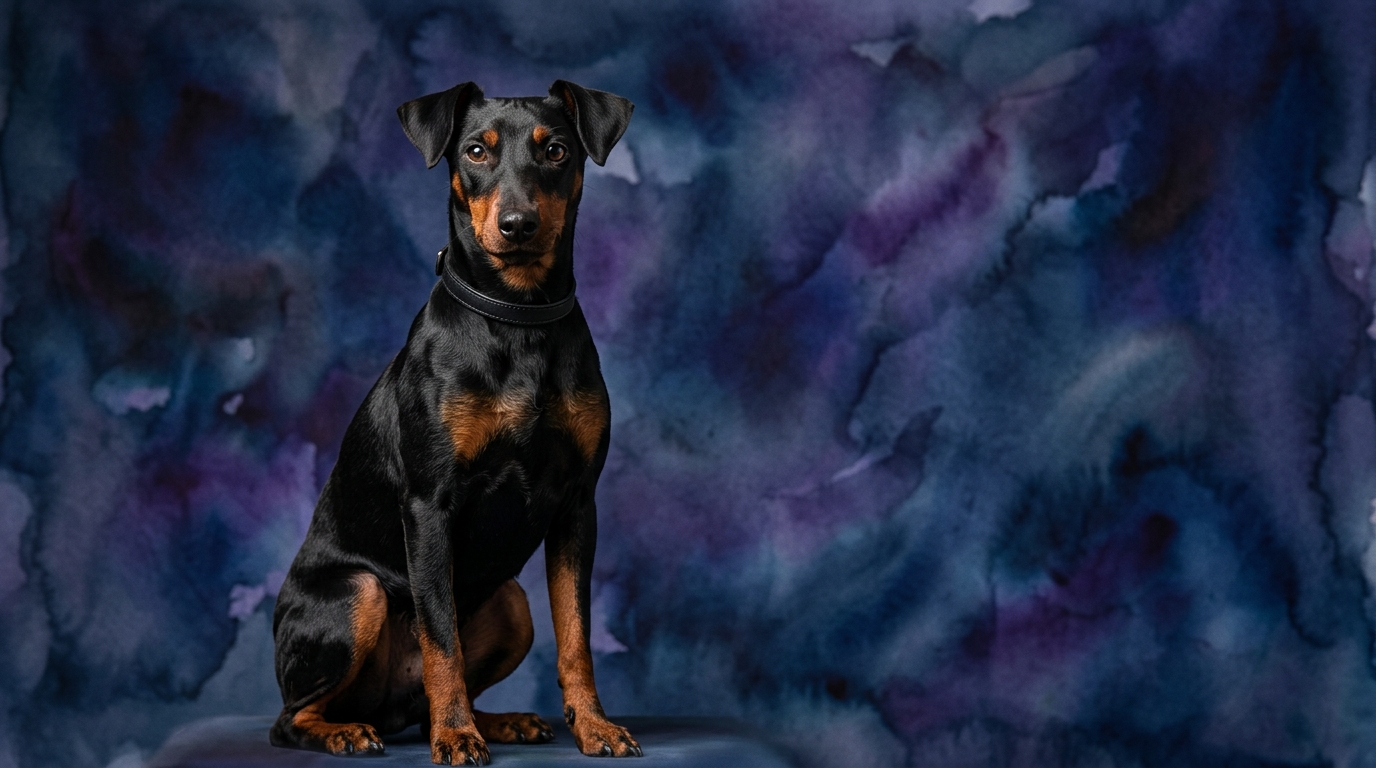
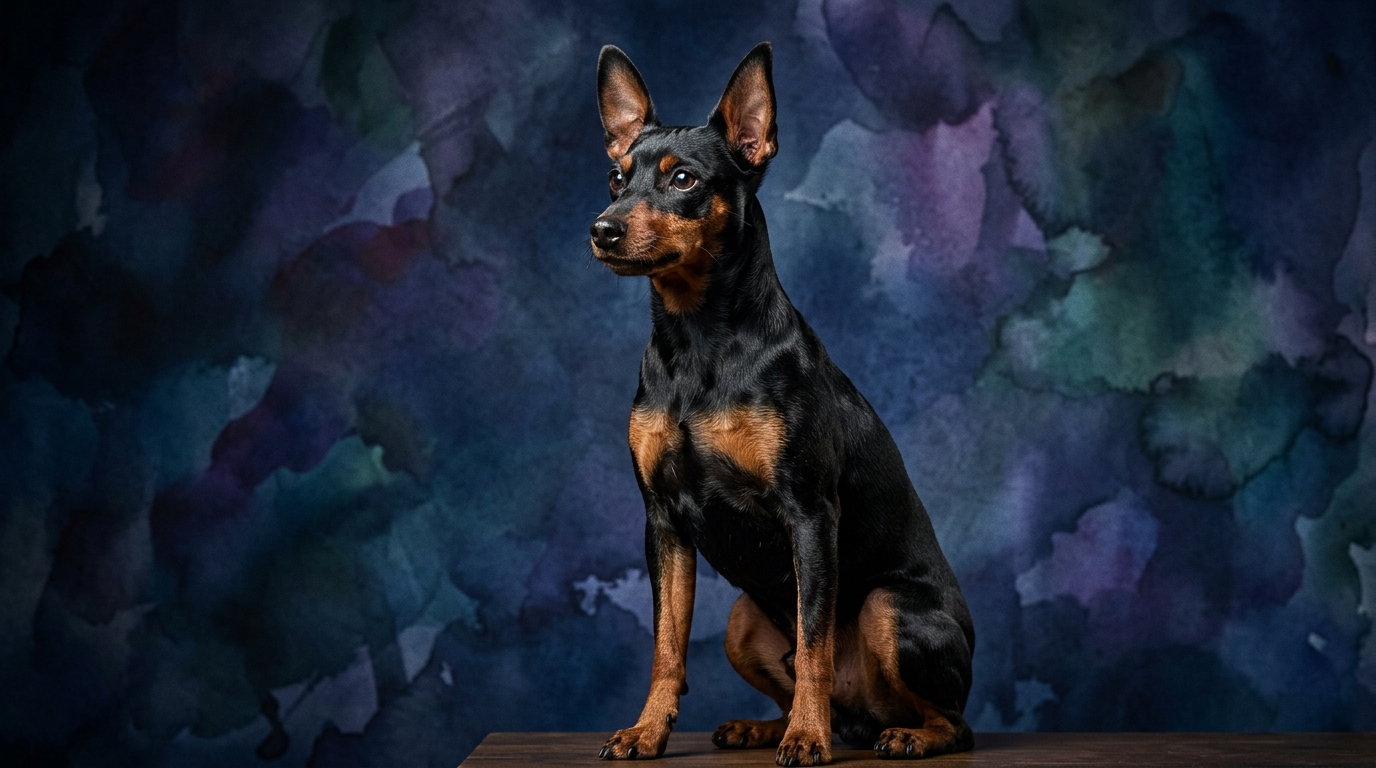
Side-by-Side IQ Profile: Manchester Terrier vs. Miniature Pinscher
The Cosmic Pet Pet IQ Lab assesses canine intelligence across five key dimensions, assigning a score of 3/5 to both the Manchester Terrier and the Miniature Pinscher in each category. This identical numerical rating, however, hints at nuanced expressions of their cognitive faculties, reflecting their distinct historical roles and temperaments. Understanding these interpretations is crucial for appreciating their individual intellectual styles.
For Problem Solving (3/5), the Manchester Terrier, rooted in its terrier heritage, often demonstrates its capabilities through independent thought, creatively navigating obstacles or devising ways to reach desired objects. The Miniature Pinscher, conversely, applies its problem-solving acumen more often in social contexts, cleverly manipulating environmental cues or human companions to achieve comfort, attention, or specific desires through observation.
In Training Speed (3/5), Manchester Terriers absorb new commands quickly, but their independent nature means training must be consistently engaging and rewarding, often requiring a handler who appreciates their self-directed approach. Miniature Pinschers also learn rapidly, often eager to engage for compelling rewards, yet their vibrant personality and potential for distraction necessitate equally consistent and stimulating training methods to maintain focus and prevent selective hearing.
Social Intelligence (3/5) sees Manchester Terriers forging deep connections with immediate family, exhibiting a keen awareness of household routines and trusted human emotions, though typically reserved with strangers. Miniature Pinschers are exceptionally attuned to their human companions, adept at interpreting subtle cues and emotional shifts, often leveraging this understanding to communicate their own needs and integrate seamlessly into family dynamics.
Regarding Instinctive Drive (3/5), the Manchester Terrier, a true working terrier, possesses a pronounced prey drive, manifesting as an intense urge to chase, dig, and investigate small creatures, directly linked to its historical role in vermin control. The Miniature Pinscher, despite its 'toy' classification, retains a robust instinctive drive, particularly a strong prey instinct towards smaller animals and a vigilant, assertive territoriality, often patrolling its perceived domain with spirited determination and vocal alerts.
Finally, Memory (3/5) is robust for both. Manchester Terriers exhibit strong recall for learned commands, established routines, and familiar individuals, contributing to their reliable adherence to household norms once established. Miniature Pinschers possess a robust memory for routines, specific cues, and strategies that yield positive outcomes, quickly recalling the location of preferred toys or behaviors that elicit desired human responses.
Where the Manchester Terrier Wins Cognitively
The Manchester Terrier often excels in cognitive scenarios demanding independent thought and sustained focus on a specific task. Their terrier origins instilled a tenacity to pursue and overcome, translating into mental persistence when faced with a challenge. In activities like scent work or agility, where a dog must independently navigate and problem-solve to achieve a goal, the Manchester Terrier's inherent drive and capacity for self-directed action give them an advantage. This breed is less likely to be swayed by social distractions when engaged in a perceived 'job,' allowing for a more singularly focused cognitive effort.
Where the Miniature Pinscher Wins Cognitively
Conversely, the Miniature Pinscher tends to shine in cognitive areas involving social acuity, rapid adaptation, and leveraging human interaction to their benefit. Their 'King of Toys' persona means they are often adept at reading and responding to human emotions and intentions with remarkable speed, allowing them to anticipate and influence their environment. This social intelligence makes them particularly skillful at navigating complex household dynamics, quickly learning which behaviors elicit attention, affection, or desired resources. Their problem-solving often leans towards observational learning and applying social pressure, making them effective at getting their way through charm or vocal communication.
Which is Easier to Train and Why
While both breeds score 3/5 in Training Speed, the 'ease' of training them often hinges on the trainer's approach. The Manchester Terrier, with its independent streak, requires a trainer who makes learning feel like a collaborative game or a challenging task, rather than a command to be blindly followed. They respond best to positive reinforcement and engaging activities, but their innate terrier drive means they might occasionally prioritize an interesting scent over a recall. Training involves channeling their considerable energy and focus into productive outlets, requiring patience and consistency.
The Miniature Pinscher can appear quicker to learn due to their eagerness for attention and treats, but their spirited nature and potential for mischief demand equally rigorous and consistent training. Their smaller size might lead some owners to underestimate their need for structure, but without clear leadership, a Min Pin can quickly become 'bossy,' using their keen social intelligence to manipulate situations. They might try to 'negotiate' commands if not firmly guided, requiring continuous engagement and a strong understanding of their assertive personality.
Which Suits Active Owners vs. Relaxed Owners
Neither the Manchester Terrier nor the Miniature Pinscher is suited for truly 'relaxed' or sedentary owners, as both possess significant energy and require mental stimulation. However, their activity preferences differ. The Manchester Terrier thrives with owners who enjoy structured, vigorous activities and outdoor adventures. They are excellent companions for long, brisk walks, hiking, agility, or earthdog trials, satisfying their instinctive drives. Their stamina is considerable, and they require consistent outlets for their physical and mental energy to prevent boredom.
The Miniature Pinscher, while also active, might be a better fit for owners who prefer shorter, more frequent bursts of activity, often interspersed with ample indoor play and human interaction. They enjoy vigorous games of fetch in the yard or spirited walks, but their smaller stature means exercise needs can often be met in smaller spaces. They are intensely people-oriented and thrive on being involved in daily family life, often preferring to be a constant, vocal companion indoors, making them suitable for owners who appreciate a dog with a big personality in a compact package.
The Verdict
For those seeking a companion with a strong independent spirit, a drive for problem-solving challenges, and a preference for structured, task-oriented activities, the Manchester Terrier is an excellent choice.
If you value a highly socially intelligent companion adept at reading human cues, thrives on constant interaction, and possesses a spirited, assertive personality in a compact form, the Miniature Pinscher will likely be a more fitting match.
🧠 Find Your Pet's IQ Score
Our Pet IQ Lab assessment covers 25+ tests across 5 cognitive dimensions — personalized to your breed.
Take the Full IQ Test →Frequently Asked Questions
Are Manchester Terriers stubborn during training?
Manchester Terriers aren't inherently stubborn, but their independent nature means they prefer to understand the purpose of a command and may choose to comply based on their assessment of the situation. Consistent, positive, and engaging training that feels like a shared activity yields the best results.
Do Miniature Pinschers bark excessively?
Miniature Pinschers can be prone to barking due to their strong territorial instincts and vigilant nature, often alerting their owners to anything perceived as unusual. Early training and socialization are crucial to manage this tendency, teaching them appropriate times to vocalize and when to settle.
Are these breeds suitable for first-time dog owners?
Both breeds can be challenging for first-time dog owners due to their strong personalities and specific training needs. Manchester Terriers require an owner who understands terrier independence, while Miniature Pinschers need someone who can provide firm, consistent leadership to manage their assertive nature.