
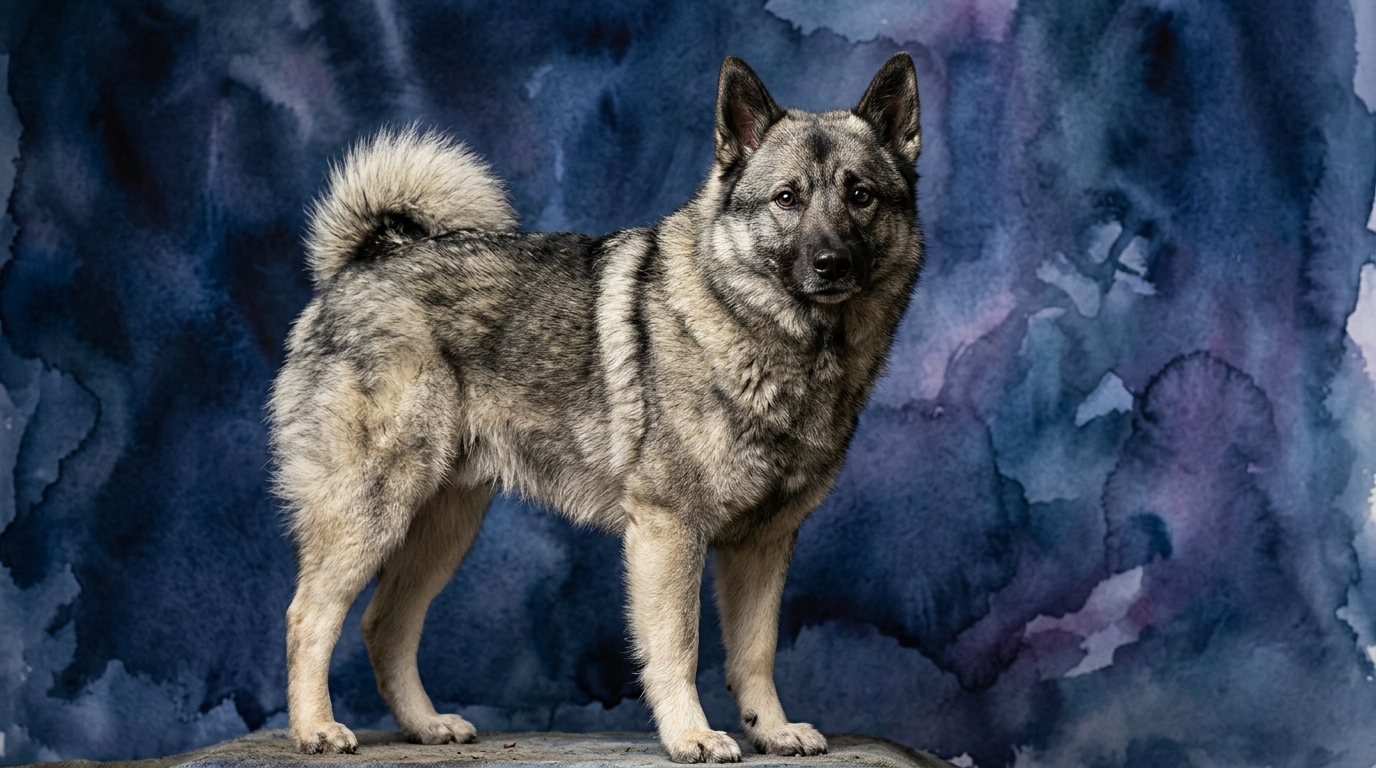
Side-by-Side IQ Profile: Manchester Terrier vs. Norwegian Elkhound
**Manchester Terrier (MT):** With a Problem Solving score of 3/5, this breed demonstrates moderate capacity for independent thought. Their terrier heritage means they can figure out how to get to a perceived 'prey' or hidden treat through persistence. Complex, multi-step puzzles might require more guidance, as their focus can be singular rather than broadly analytical. Their Training Speed of 3/5 means Manchester Terriers learn new commands at a steady pace. Their intelligence allows them to grasp concepts, but their independent streak means they might occasionally question a command's necessity, making consistency and positive reinforcement key. Social Intelligence, also 3/5, indicates they exhibit balanced understanding of social cues, forming strong bonds with primary human companions and discerning moods, though they can be reserved with strangers. The Manchester Terrier carries a moderate but distinct Instinctive Drive of 3/5, rooted in their rat-catching ancestry, manifesting as keen interest in small, fast-moving objects and exploring confined spaces, which requires thoughtful channeling. Finally, their Memory of 3/5 serves them well for routines, learned commands, and familiar faces; they recall past training and favored toy locations, but might not retain every detail of complex sequences without reinforcement.
**Norwegian Elkhound (NE):** Scoring 4/5 in Problem Solving, the Elkhound shows higher aptitude for independent problem-solving, honed by centuries of working in challenging environments. They are adept at overcoming obstacles and locating hidden items, often approaching new situations with a thoughtful, strategic mindset. Their Training Speed of 4/5 means Elkhounds typically pick up new commands and routines quickly; their capacity for rapid learning allows efficient progression through various tasks. While possessing an independent spirit, they generally enjoy engaging in structured activities with humans. Social Intelligence, at 3/5, demonstrates a solid grasp of social dynamics, forming deep attachments to family members and reading human emotions, though they tend to be reserved with strangers. Elkhounds possess a moderate Instinctive Drive of 3/5, primarily expressed as strong scent drive and inclination to track; their hunting history means they are motivated by exploration and interesting smells, requiring outlets like scent work. Their Memory, a robust 4/5, indicates they exhibit strong recall, retaining learned behaviors, commands, and experiences over extended periods, meaning complex information is remembered with minimal refreshers, indicating an enduring cognitive map.
Where the Manchester Terrier Excels Cognitively
While the Elkhound generally scores higher, the Manchester Terrier's specific cognitive profile offers certain advantages, particularly in environments where quick, decisive action from a compact form is valued. Their 3/5 in Problem Solving, combined with terrier tenacity, makes them exceptional at tasks requiring immediate, persistent engagement with a singular objective, like navigating a tight agility course or extracting a toy from a difficult spot. They excel in situations where physical agility and nimble intellect can be applied to discrete, manageable challenges that don't demand extensive foresight. Their moderate instinctive drive, being less pervasive than a deep scent hound's, means they are often more readily redirectable from environmental distractions, making them quicker to re-engage with a handler's immediate command in a dynamic setting. This isn't about raw intellectual capacity as much as it is about *application* of their mental skills: fast, focused, and adaptable to handler input in the moment.
Where the Norwegian Elkhound Shows Cognitive Strength
The Norwegian Elkhound’s cognitive strengths, particularly its 4/5 in Problem Solving, Training Speed, and Memory, indicate a more independently capable and enduring learner. Their superior problem-solving is evident in their capacity to evaluate complex situations and devise effective solutions without constant human intervention, a trait vital for a hunting dog in challenging terrain. This translates into a dog that can often "think for itself" in novel situations, adapting and strategizing. Their stronger memory allows them to build a comprehensive mental model of their environment and learned behaviors, making complex sequences and nuanced cues easier to recall over time. This enduring recall means less frequent refreshing of advanced training. Furthermore, their quicker training speed allows them to master new tasks with fewer repetitions, making them highly efficient students for multi-stage activities like advanced obedience or tracking.
Training Dynamics: Which is Easier to Guide?
When evaluating ease of training, the Norwegian Elkhound holds a distinct advantage, primarily due to its 4/5 scores in both Training Speed and Memory. Elkhounds typically grasp new commands and concepts with fewer repetitions, meaning an owner can progress through training stages more efficiently. Their strong memory further supports this, as once an Elkhound learns a routine, they tend to retain it reliably, requiring less frequent refreshing. While Elkhounds possess an independent streak, their historical role as cooperative hunting partners means they are generally keen to work *with* their human, finding satisfaction in shared tasks. This inherent cooperation makes them responsive students.
The Manchester Terrier, with its 3/5 in Training Speed and Memory, requires a more patient and consistent approach. Their terrier independence means they might pause to assess a command's value or offer an alternative behavior. They learn, but often at a pace demanding more repetition and creative motivation. For instance, achieving reliable recall with a Manchester Terrier might require more diverse training scenarios and higher-value rewards to overcome their natural inclination to investigate, compared to an Elkhound. This isn't to say the Manchester Terrier is difficult, but its learning style benefits from an adaptive and persistent trainer understanding terrier motivations.
Companionship: Active vs. Relaxed Owners
For the active owner seeking a canine companion for structured activities and intellectual challenges, the Norwegian Elkhound presents a compelling match. Their higher problem-solving and memory scores mean they thrive on engaging, multi-faceted tasks like advanced obedience, agility, tracking, or search and rescue. An Elkhound enjoys having a "job" and will eagerly participate in long hikes, scent work, or brain games that leverage their independent thinking and strong recall. They are robust dogs built for endurance and mental engagement, ideal for owners who enjoy significant outdoor time and intellectually stimulating pursuits with their pet.
The Manchester Terrier, while energetic and playful, might be a better fit for an owner who is active but appreciates a dog that can transition more readily to a relaxed indoor setting. Their moderate instinctive drive and problem-solving capabilities mean they enjoy walks, play sessions, and basic obedience, but may not demand the same level of intense, sustained mental "work." They are excellent companions for urban living or for owners who enjoy regular, moderate exercise like brisk walks and interactive games, followed by cozy evenings. Mental stimulation can often be satisfied with puzzle toys, short training sessions, and interactive play rather than extensive fieldwork.
The Verdict
Opt for the Manchester Terrier if you appreciate a spirited, agile companion for moderate activity, valuing their focused tenacity in short, engaging tasks and their ability to transition smoothly between play and relaxed home life.
Select the Norwegian Elkhound if you are an active individual seeking a thoughtful, independent partner for sustained outdoor adventures, advanced training, and complex problem-solving challenges.
🧠 Find Your Pet's IQ Score
Our Pet IQ Lab assessment covers 25+ tests across 5 cognitive dimensions — personalized to your breed.
Take the Full IQ Test →Frequently Asked Questions
Are Manchester Terriers good for apartment living?
Yes, Manchester Terriers can adapt well to apartment living provided they receive adequate daily exercise and mental stimulation. Their moderate energy levels mean regular walks and indoor play are usually sufficient to keep them content in smaller spaces.
Do Norwegian Elkhounds bark a lot?
Norwegian Elkhounds can be vocal, often using their distinctive bark to alert their owners to new arrivals or perceived threats, a trait stemming from their watch dog history. Consistent training from a young age can help manage their vocal tendencies, but owners should expect some level of barking.
Which breed is better with children?
Both breeds can be good with children, but their approaches differ. Manchester Terriers are generally playful and robust enough for supervised interaction, while Norwegian Elkhounds are often patient and watchful, forming strong bonds with their family children. Proper socialization and respectful interaction from both dog and child are crucial for either breed.