
Side-by-Side IQ Profile: Interpreting Identical Scores
At first glance, the identical 3 out of 5 ratings across all five cognitive dimensions for both the Manchester Terrier and the Scottish Deerhound might suggest a shared mental landscape. However, The Cosmic Pet Pet IQ Lab delves deeper, understanding that a numerical score represents a spectrum of expression depending on a breed’s innate characteristics and historical purpose. Here, we unpack what each 3/5 rating signifies for these distinct breeds.
For the **Manchester Terrier**, a breed forged for ratting and companionship, their cognitive dimensions are interpreted through the lens of a spirited, agile, and often self-reliant terrier:
**Problem Solving (3/5):** This score for a Manchester Terrier speaks to their inherent terrier tenacity, a mental grit that propels them to pursue solutions with unwavering determination. They might not devise complex, multi-step strategies in the way a border collie might, but their problem-solving manifests as a persistent, trial-and-error approach, especially when a perceived 'prey' object or an interesting scent is involved. Whether it's figuring out how to bypass a barrier to reach a valued toy or systematically investigating every corner of a room for a hidden treat, their solutions are often direct and physical, relying on their agility and keen senses rather than abstract reasoning. This persistence, combined with a quick recovery from setbacks, defines their cognitive approach to challenges.
**Training Speed (3/5):** Manchester Terriers are capable learners, absorbing commands with moderate repetition, yet their 3/5 rating hints at their independent streak. They are neither sluggish nor instant prodigies; instead, they require engaging, consistent training that keeps their sharp minds stimulated and prevents boredom, which can lead to selective hearing. Their capacity to learn quickly is often paired with a discerning nature, meaning they learn quickly but might choose when to apply that learning based on their own motivations or the perceived value of the reward.
**Social Intelligence (3/5):** A 3/5 in social intelligence suggests the Manchester Terrier is capable of forming strong bonds and understanding human cues, but perhaps with a slightly reserved or selective approach. They are generally loyal to their family and can read their primary caregivers well, often displaying a keen awareness of household dynamics. While they might be less overtly demonstrative or immediately friendly with strangers, their awareness of their surroundings and the emotional states of their trusted humans is quite sharp, contributing to their ability to gauge social situations and react appropriately within their established social circle.
**Instinctive Drive (3/5):** This score reflects a moderate yet distinct prey drive, characteristic of their ratting heritage. While not as overwhelming as some working breeds, their instinct to chase small, fast-moving objects is undeniable and deeply ingrained. This drive manifests as a keen interest in movement, a readiness to engage with perceived 'pests' or exciting stimuli, and a propensity to investigate interesting scents. This requires consistent management in environments with small animals or where off-leash safety is paramount.
**Memory (3/5):** Manchester Terriers demonstrate a solid memory, retaining learned commands, routines, and experiences effectively. A 3/5 indicates they won't forget training overnight, nor will they recall every minute detail of every interaction. They consistently remember boundaries, preferred routes, and the location of favored toys or treats, contributing to their ability to adapt to established household rules and schedules, especially when those routines are consistently reinforced.
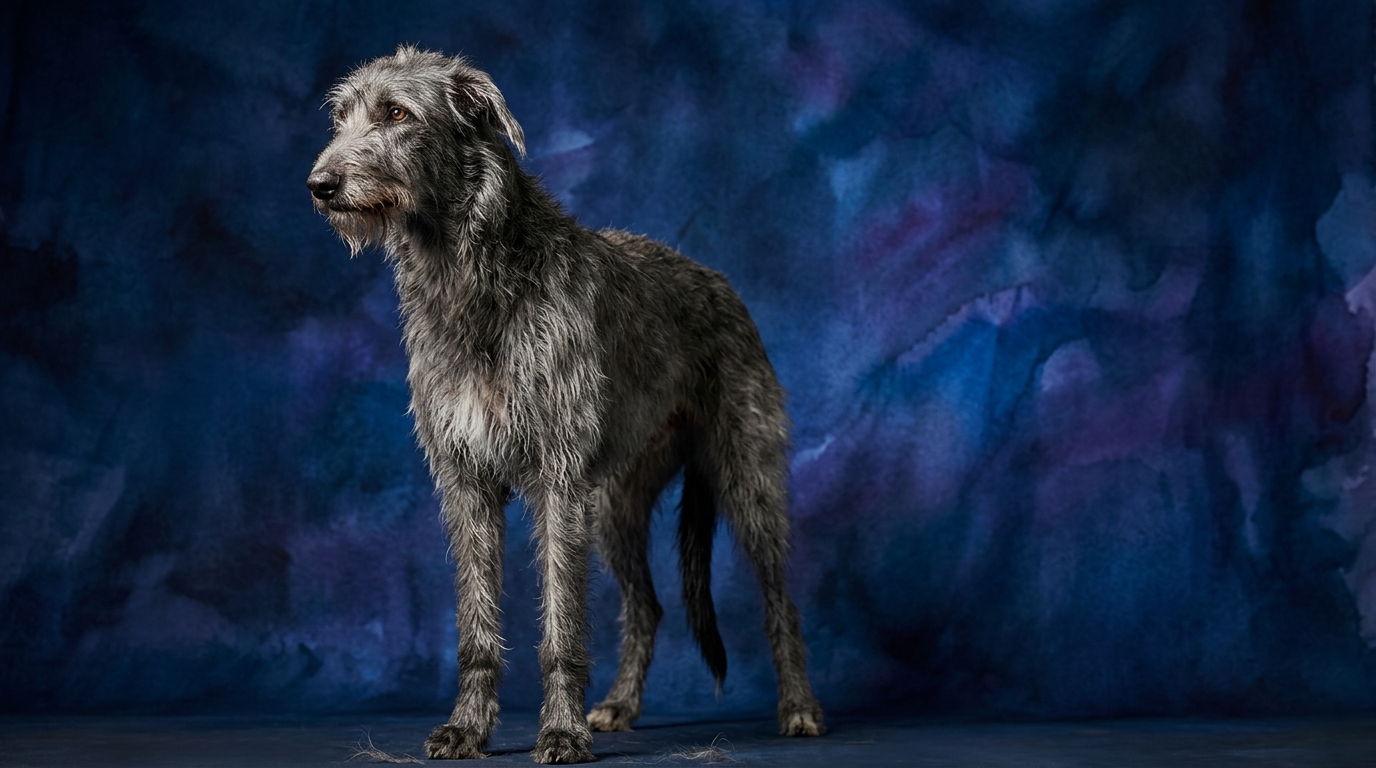
Conversely, the **Scottish Deerhound**, a majestic sighthound bred for hunting large game, interprets these same cognitive scores through their unique blend of athleticism, sensitivity, and ancient hunting instincts:
**Problem Solving (3/5):** For a Scottish Deerhound, a 3/5 in problem-solving often relates more to their intuitive ability to navigate complex environments during a high-speed chase rather than intricate puzzle-solving in a domestic setting. They are not typically analytical in a human-centric way, but on the open field, they demonstrate an innate understanding of terrain, obstacle avoidance, and efficient movement to maintain pursuit. Their solutions tend to be practical, immediate, and focused on physical efficiency and agility rather than abstract thought.
**Training Speed (3/5):** Scottish Deerhounds are receptive to training but are not known for lightning-fast obedience or eager-to-please enthusiasm in the same vein as some working breeds. Their 3/5 reflects a capacity to learn at a steady, thoughtful pace, provided the training is gentle, positive, and respects their sensitive nature. They can grasp commands, but their independent sighthound spirit means they may require more patient repetition and motivation, as their attention can easily be diverted by visual stimuli or their own introspective thoughts.
**Social Intelligence (3/5):** This score for a Scottish Deerhound highlights their gentle and often reserved social demeanor. They are deeply devoted to their families, forming strong, empathetic bonds and often displaying a quiet understanding of human emotions. While not overtly demonstrative or boisterous with everyone, they are keenly aware of their social environment, preferring calm, respectful interactions and often choosing to observe rather than actively participate in high-energy social gatherings. Their sensitivity allows them to pick up on subtle cues from their trusted companions.
**Instinctive Drive (3/5):** The Scottish Deerhound's 3/5 instinctive drive is almost entirely centered on their powerful sighthound heritage. Their drive to chase anything that moves quickly and at a distance is pronounced and primal. This isn't a 'digging' or 'herding' drive, but an intense, visually triggered pursuit instinct that, while rated 3/5, is a defining and dominant aspect of their cognitive makeup. This requires careful management, especially off-leash, to ensure their safety and prevent them from acting on this powerful impulse.
**Memory (3/5):** Scottish Deerhounds possess a good memory for routines, specific individuals, and both positive and negative experiences. Their 3/5 indicates they will recall their training and familiar environments, but their recall might be more associated with comfort, consistency, and the people they trust. They remember kindness and gentle handling, which is crucial for building a strong, lasting training relationship, and they are adept at remembering the paths and landmarks of their preferred exercise areas.
Where the Manchester Terrier Excels Cognitively
Despite identical numerical scores, the Manchester Terrier's cognitive strengths often shine in scenarios demanding persistent, focused interaction with smaller-scale, immediate problems. Their problem-solving at 3/5, for instance, is characterized by a tenacious approach to overcoming obstacles in their direct environment, such as figuring out how to retrieve a toy from under furniture, persistently working at a complex puzzle feeder, or systematically exploring every nook for a hidden treat. This terrier grit translates into an adaptive capacity to navigate complex domestic situations with a determined, self-reliant mindset, often demonstrating a cleverness in manipulating their surroundings to achieve a desired outcome.
Furthermore, their social intelligence, also rated 3/5, often manifests as a keen awareness of household dynamics and a quick ability to discern who is 'in charge' or who might offer the best play opportunity. This allows them to subtly influence situations to their advantage within the family unit, often with a charming assertiveness. This active engagement with their human environment, coupled with their robust memory for routines and consequences, means they quickly learn the nuances of household rules and are adept at exploiting any inconsistencies with charming persistence, making them perceptive observers of their human companions' habits.
Where the Scottish Deerhound Excels Cognitively
The Scottish Deerhound, while sharing the same 3/5 cognitive ratings, excels in a different sphere of mental acuity, particularly in areas tied to their sighthound heritage and their sensitive nature. Their problem-solving, though rated equally, is less about intricate manipulation of objects and more about intuitive spatial reasoning and efficient movement across varied terrains. On a large property or during a structured run, a Deerhound's ability to quickly assess and navigate obstacles, choosing the most efficient path to maintain speed and pursuit, showcases a unique form of practical, environmental intelligence.
Their social intelligence, also 3/5, is marked by a profound, gentle empathy that sets them apart. They are often acutely sensitive to the moods and emotional states of their human companions, offering quiet comfort and understanding without requiring overt interaction. This subtle emotional intelligence, combined with their excellent memory for positive interactions and consistent routines, allows them to build incredibly deep, trusting relationships based on mutual respect and quiet companionship. They are adept at discerning the subtle cues of their beloved humans, often anticipating needs or moods with a quiet dignity.
Which is Easier to Train and Why?
When it comes to ease of training, both breeds present unique considerations despite their identical 3/5 training speed rating, highlighting that 'speed' can be influenced by inherent temperament. The Manchester Terrier's training journey is often characterized by spirited engagement and a need for mental stimulation. They learn quickly but possess a typical terrier independence and a keen sense of their own agenda. Their sharp minds demand variety and positive reinforcement to prevent boredom and stubbornness; they might challenge commands if they don't see the immediate benefit, requiring an owner with patience and a firm yet fair approach to channel their quick wit and energy. Consistency is key, coupled with making training feel like a fun, rewarding game to keep their attention.
The Scottish Deerhound, conversely, approaches training with a gentle sensitivity and an independent sighthound spirit. Their 3/5 training speed is less about rapid-fire repetition and more about building a strong, trusting relationship. They are easily discouraged by harsh methods and respond best to calm, positive reinforcement and a patient, understanding hand, often thriving on quiet praise and gentle encouragement. While they grasp commands, their sighthound instincts mean they can be easily distracted by visual stimuli, requiring a quiet environment for initial learning. Their independent nature means they might not always execute commands with immediate enthusiasm, preferring to weigh the request, but once a bond of trust and mutual respect is established, they are willing and eager to please their beloved human, albeit at their own thoughtful pace.
Suiting Active vs. Relaxed Owners
Choosing between a Manchester Terrier and a Scottish Deerhound largely depends on an owner's lifestyle and what kind of cognitive and physical engagement they seek. The Manchester Terrier is an ideal companion for active owners who relish interactive play, consistent training, and mental challenges. Their moderate instinctive drive and persistent problem-solving mean they thrive when given tasks, puzzle toys, or opportunities to learn new tricks and engage in agility or obedience. They require regular, stimulating outings and active participation from their humans to keep their keen minds and agile bodies content. An owner who enjoys dog sports, brisk daily walks, and consistent training sessions will find a Manchester Terrier a rewarding and engaging partner, thriving on shared activities.
The Scottish Deerhound, despite their capacity for incredible speed, often appeals to owners who appreciate a more relaxed indoor temperament combined with the ability to provide bursts of intense, safe exercise. Their 3/5 instinctive drive, being primarily visual, means they require secure, expansive areas for running to satisfy their primal need to stretch out and gallop. However, indoors, they are often known as 'gentle giants,' content to lounge quietly by their owner's side, observing the household with a calm demeanor. They suit owners who can provide a calm, structured home environment and understand the need for specific outlets for their unique physical and cognitive needs, but who don't necessarily seek constant, high-energy interaction throughout the day, valuing quiet companionship and a majestic presence.
The Verdict
Opt for the Manchester Terrier if you seek an agile, sharp-witted companion eager to engage in persistent problem-solving and spirited training, thriving on consistent mental and physical interaction.
Select the Scottish Deerhound if you desire a gentle, empathetic companion who offers quiet devotion and requires ample space for majestic sprints, valuing calm companionship indoors.
🧠 Find Your Pet's IQ Score
Our Pet IQ Lab assessment covers 25+ tests across 5 cognitive dimensions — personalized to your breed.
Take the Full IQ Test →Frequently Asked Questions
Are Manchester Terriers difficult to train due to their independence?
Manchester Terriers possess a moderate training speed (3/5) but are known for their independent terrier spirit. They learn quickly with consistent, positive reinforcement and engaging methods, but can become stubborn if bored or if training isn't stimulating. Patience and variety are key to success with their clever minds.
How does a Scottish Deerhound's sighthound drive impact their daily life?
A Scottish Deerhound's instinctive drive (3/5) is predominantly visual, meaning they have a strong urge to chase moving objects at a distance. This necessitates secure, fenced areas for off-leash exercise and careful management on walks to prevent them from pursuing perceived prey, ensuring their safety and the safety of wildlife. Their keen eyesight makes them excellent guardians of their surroundings.
Which of these breeds is more adaptable to apartment living?
The Manchester Terrier, being smaller and more adaptable to indoor activity, can thrive in an apartment with sufficient mental stimulation and daily walks. The Scottish Deerhound, despite being calm indoors, requires significant space for running to satisfy their physical needs, making a home with a large, securely fenced yard more suitable for their majestic strides.