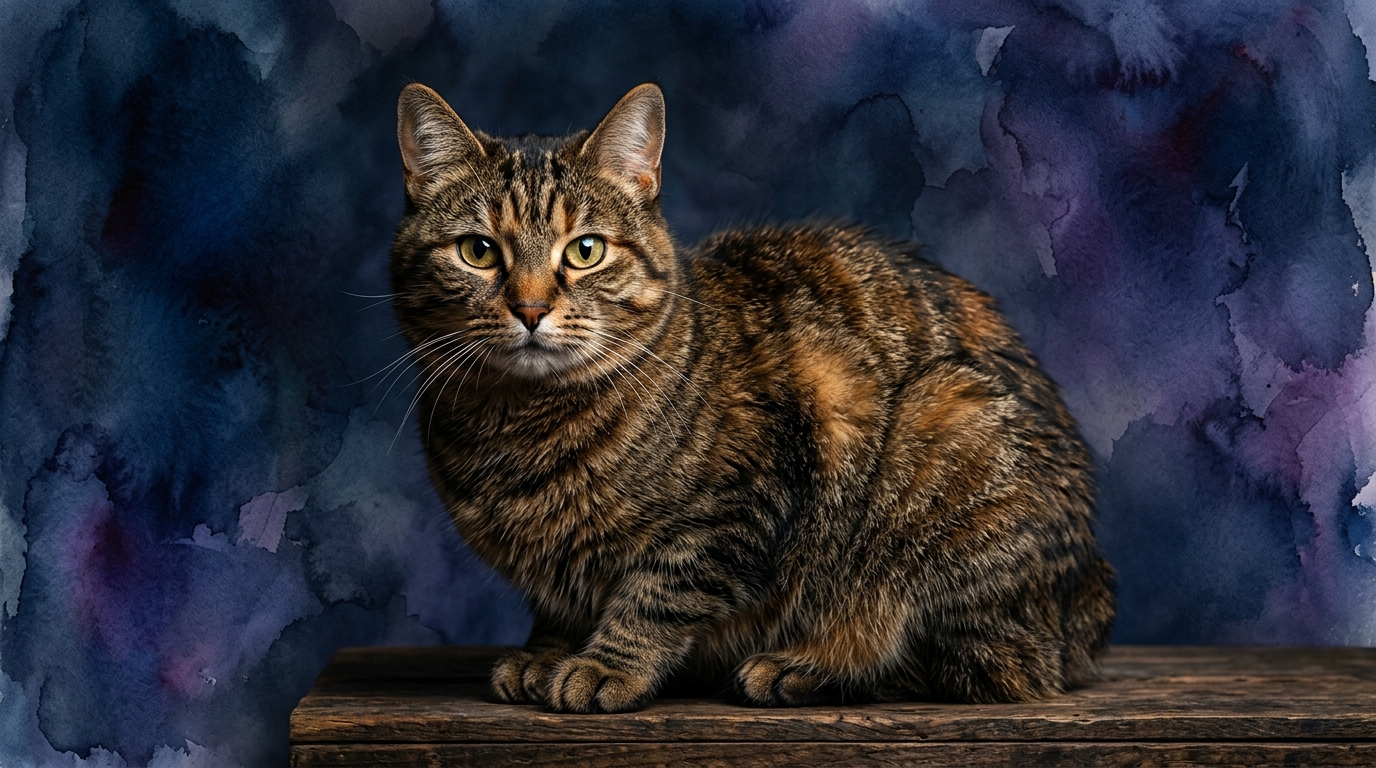
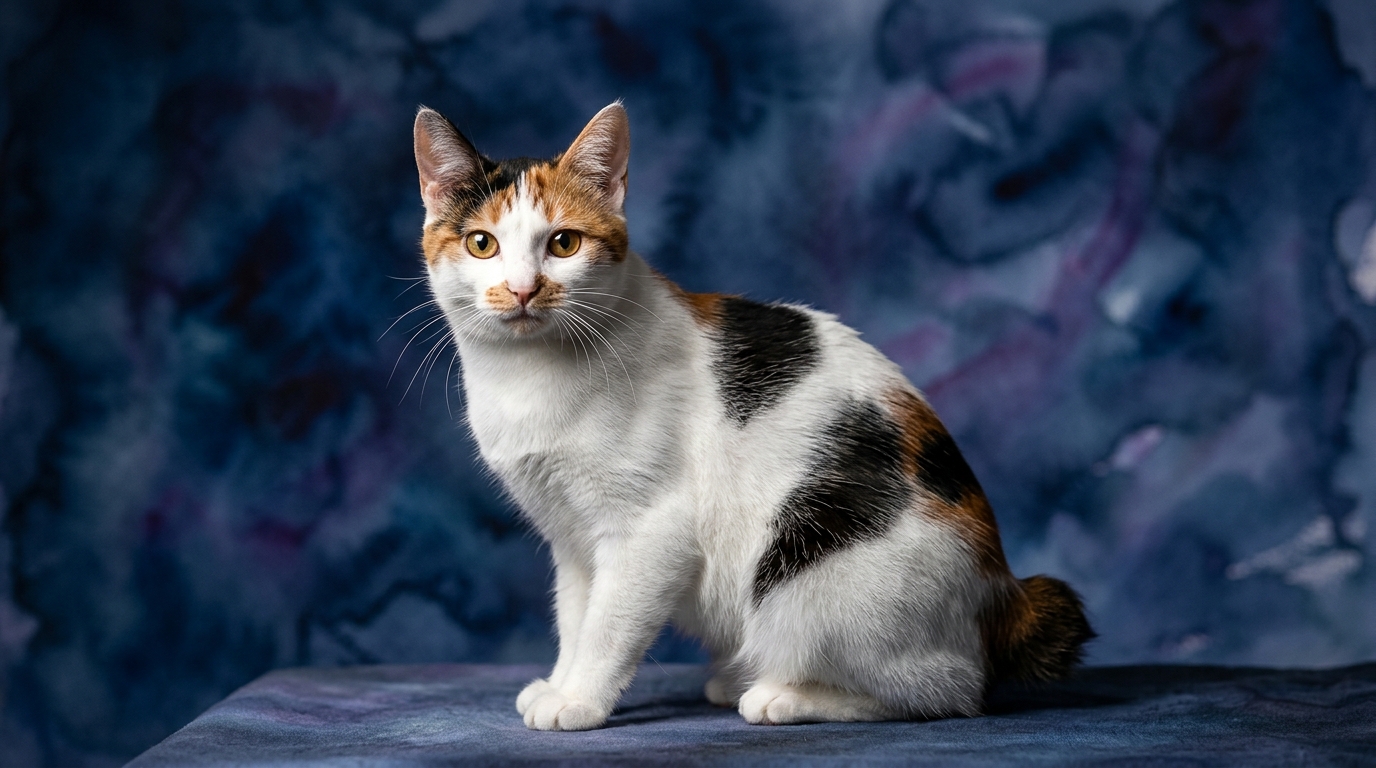
Side-by-Side Cognitive Profiles: Manx vs. Japanese Bobtail
At The Cosmic Pet Pet IQ Lab, both the Manx and the Japanese Bobtail register a consistent 3/5 across all five core intelligence dimensions. This numerical parity doesn't suggest an absence of individual cognitive flair, but rather that their intellectual capacities, while robust, are expressed through their breed-specific temperaments and behaviors. Understanding these nuances provides a richer picture than the numbers alone.
For the Manx, their 'Problem Solving 3/5' typically manifests as a practical, hands-on approach to obstacles. They often demonstrate a persistent determination to manipulate their physical environment, such as figuring out how to open a cupboard or navigate complex spaces to reach a desired spot. Their 'Training Speed 3/5' indicates a capability for learning basic commands and routines with consistent, positive reinforcement, grasping concepts like coming when called or using a scratching post reliably, showing a steady learning curve rather than instant mastery. Their 'Social Intelligence 3/5' is evident in the deep bonds they form with chosen humans, often displaying a keen awareness of their owner's mood and routines, communicating their needs effectively through vocalizations and body language within their immediate family unit. The 'Instinctive Drive 3/5' of the Manx is robust, making them adept hunters of small critters and highly engaged in interactive play that simulates hunting, contributing to their playful yet purposeful demeanor. Finally, their 'Memory 3/5' allows for good recall of people, places, and routines, remembering where treats are stored, specific playtimes, and the schedule of their favored human, demonstrating a reliable ability to retain relevant information over time.
The Japanese Bobtail, also scoring 3/5 across the board, approaches intelligence with a distinct style. Their 'Problem Solving 3/5' is often characterized by curiosity and a methodical, exploratory nature. They might figure out how to retrieve a toy from a tight space through patient manipulation rather than brute force, showcasing a thoughtful problem-solving style that prioritizes examination. 'Training Speed 3/5' for the Bobtail means they respond well to reward-based training, picking up tricks and routines with enthusiasm. Their engagement in the learning process allows them to acquire new behaviors steadily, making them receptive to varied training exercises. Their 'Social Intelligence 3/5' shines through their highly communicative and expressive nature, often 'talking' to their owners with a wide range of chirps and meows. They actively seek interaction and seem to understand human intentions, demonstrating a strong capacity for social engagement and responsiveness. The 'Instinctive Drive 3/5' displays as a playful and energetic hunting instinct, often seen in their vigorous pursuit of feather wands or laser pointers. While effective, their drive often manifests more as joyful play than a stark, survival-oriented focus. Lastly, their 'Memory 3/5' retains an impressive recall for preferred play objects, favored interaction methods, and the identities of family members, easily remembering specific games and the locations of comfort zones, indicating a good capacity for associative and spatial memory.
Where the Manx Cognitively Excels
While both breeds share a 3/5 rating across the board, the Manx often exhibits a particular edge in its practical application of problem-solving, especially when it involves manipulating the physical environment. Their 'Problem Solving 3/5' tends to lean towards a persistent, almost dog-like determination to overcome physical barriers, whether it's learning to open a specific door or figuring out how to access a high shelf. This often manifests as a focused, goal-oriented approach where they will systematically try different methods until they achieve their objective. Their memory, also rated 3/5, often seems particularly tuned to routines and the specific actions required to achieve a desired outcome, making them highly predictable and efficient within their established environment. This practical intelligence makes them adept at navigating and mastering their immediate surroundings with a purposeful efficiency that is distinctive.
Where the Japanese Bobtail Cognitively Excels
The Japanese Bobtail's cognitive strengths, while numerically equivalent, often shine in areas requiring nuanced communication and social adaptability. Their 'Social Intelligence 3/5' is often expressed through a broader, more varied vocal repertoire and an apparent eagerness to engage in two-way communication with their human companions. They seem to excel at interpreting subtle human cues and responding in kind, fostering a deeply interactive relationship where they are active participants in conversations. Furthermore, their 'Instinctive Drive 3/5' frequently intertwines with their social nature, manifesting as a highly interactive and playful hunting style, where the joy of the 'chase' and the shared activity with their owner often takes precedence. This suggests a cognitive flexibility that integrates play with instinct, making them highly engaging partners in games and interactions.
Training Aptitude: Manx vs. Japanese Bobtail
Given their identical 'Training Speed 3/5' scores, the perceived ease of training can often come down to behavioral nuances and owner preference. The Manx, with its focused determination and often singular attachment to one or two individuals, might be seen as easier to train for specific, routine-based tasks. Their strong memory for processes means once they learn a command or a routine, they tend to stick with it reliably, provided the motivation is consistent. They often respond well to object-based rewards and clear, consistent boundaries, making them excellent candidates for leash training or learning boundaries within the home. In contrast, the Japanese Bobtail, with its more vocal and highly social nature, might appear easier to train for tricks or interactive games. Their eagerness to engage and communicate, coupled with their playful instinctive drive, makes them highly receptive to positive reinforcement that involves social interaction and novel challenges. Their responsiveness to human vocalizations can make verbal cues particularly effective, allowing for a more dynamic and engaging training experience where the process itself is part of the reward.
Ideal Companions: Active vs. Relaxed Owners
For active owners seeking an interactive companion, the Japanese Bobtail often proves an ideal match. Their playful 'Instinctive Drive 3/5' combined with their highly communicative 'Social Intelligence 3/5' means they thrive on engagement, interactive play, and even learning tricks. They enjoy being involved in household activities and can adapt well to varied environments, making them suitable for owners who enjoy consistent interaction and dynamic play sessions, perhaps even taking their cat on adventures. Conversely, the Manx, while certainly playful, often suits owners who appreciate a companion with a strong sense of routine and a more independent streak, yet still deeply attached. Their 'Problem Solving 3/5' often manifests in self-directed exploration and mastery of their immediate territory, and while they enjoy interaction, they may also be content observing or engaging in quieter forms of companionship. They are excellent for owners who value a loyal, steady presence and appreciate a cat that can entertain itself within a structured, predictable environment, offering moments of affection without constant demand for interaction.
The Verdict: When to Choose Each Feline Companion
Choosing between a Manx and a Japanese Bobtail hinges on the specific nuances of companionship an owner seeks, rather than a definitive cognitive hierarchy. Both offer a rich tapestry of feline intelligence, expressed in distinct ways that can perfectly complement different lifestyles and preferences.
The Verdict
Opt for a Manx if you value a determined, loyal companion who excels at practical problem-solving within a consistent routine and forms deep, often singular, bonds with their chosen humans, offering a steady and observant presence.
Select a Japanese Bobtail if you desire a highly communicative, playful, and socially interactive cat that thrives on dynamic engagement, enjoys learning new tricks, and readily integrates into a bustling household with its expressive personality.
🧠 Find Your Pet's IQ Score
Our Pet IQ Lab assessment covers 25+ tests across 5 cognitive dimensions — personalized to your breed.
Take the Full IQ Test →Frequently Asked Questions
Do Manx cats really act like dogs?
Manx cats often exhibit dog-like traits such as loyalty, following their owners around, and even playing fetch, which stems from their strong social intelligence and memory for routines. Their focused determination in problem-solving also contributes to this perception, making them feel like a more interactive companion.
Are Japanese Bobtails good with children and other pets?
Yes, Japanese Bobtails are generally known for their adaptable and social nature, making them well-suited for families with children and other pets. Their high social intelligence and playful instinctive drive allow them to integrate smoothly and enjoy varied interactions, often becoming an active and vocal participant in family life.
Do Manx and Japanese Bobtail cats require much mental stimulation?
Both breeds benefit from regular mental stimulation to satisfy their 'Problem Solving 3/5' and 'Instinctive Drive 3/5' scores. Puzzle toys, interactive play sessions, and opportunities for exploration are important to keep them engaged, prevent boredom, and allow them to express their natural cognitive abilities in healthy ways.