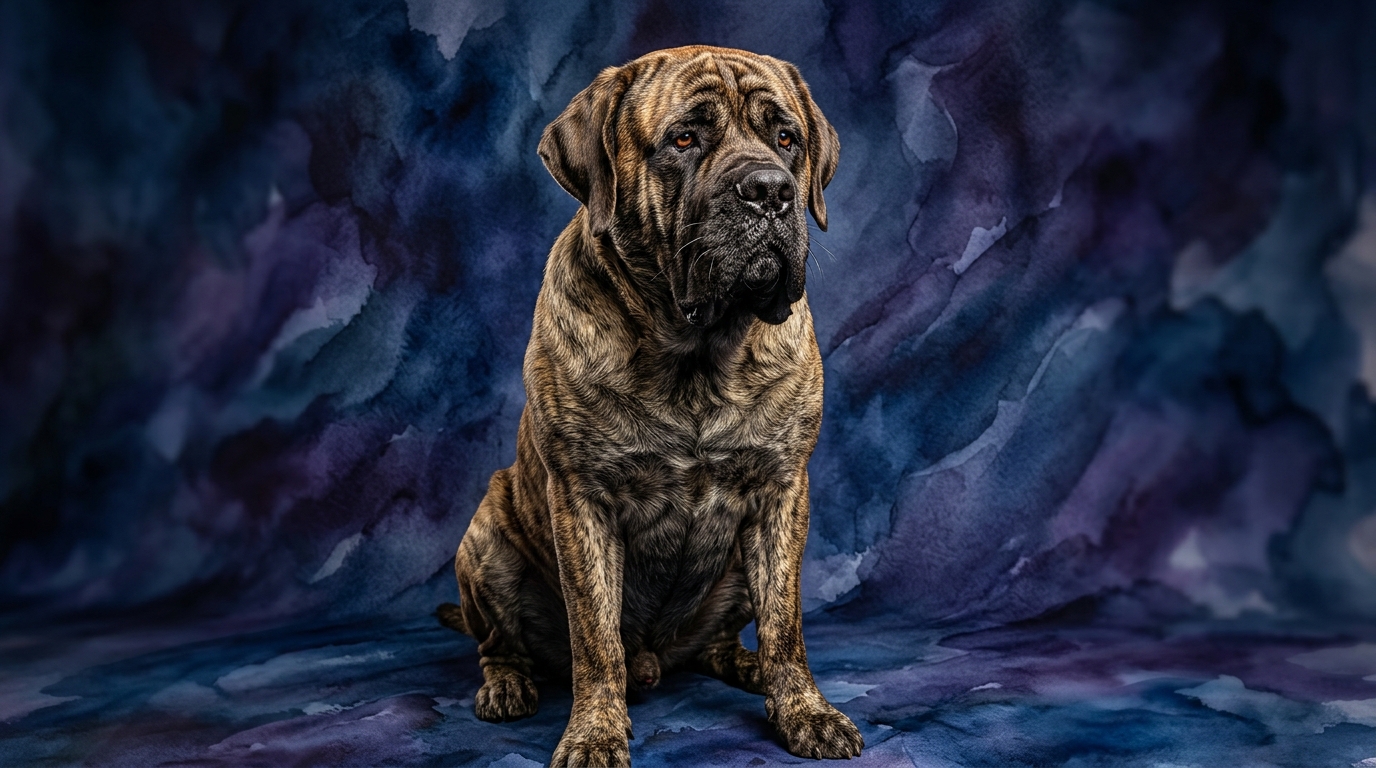
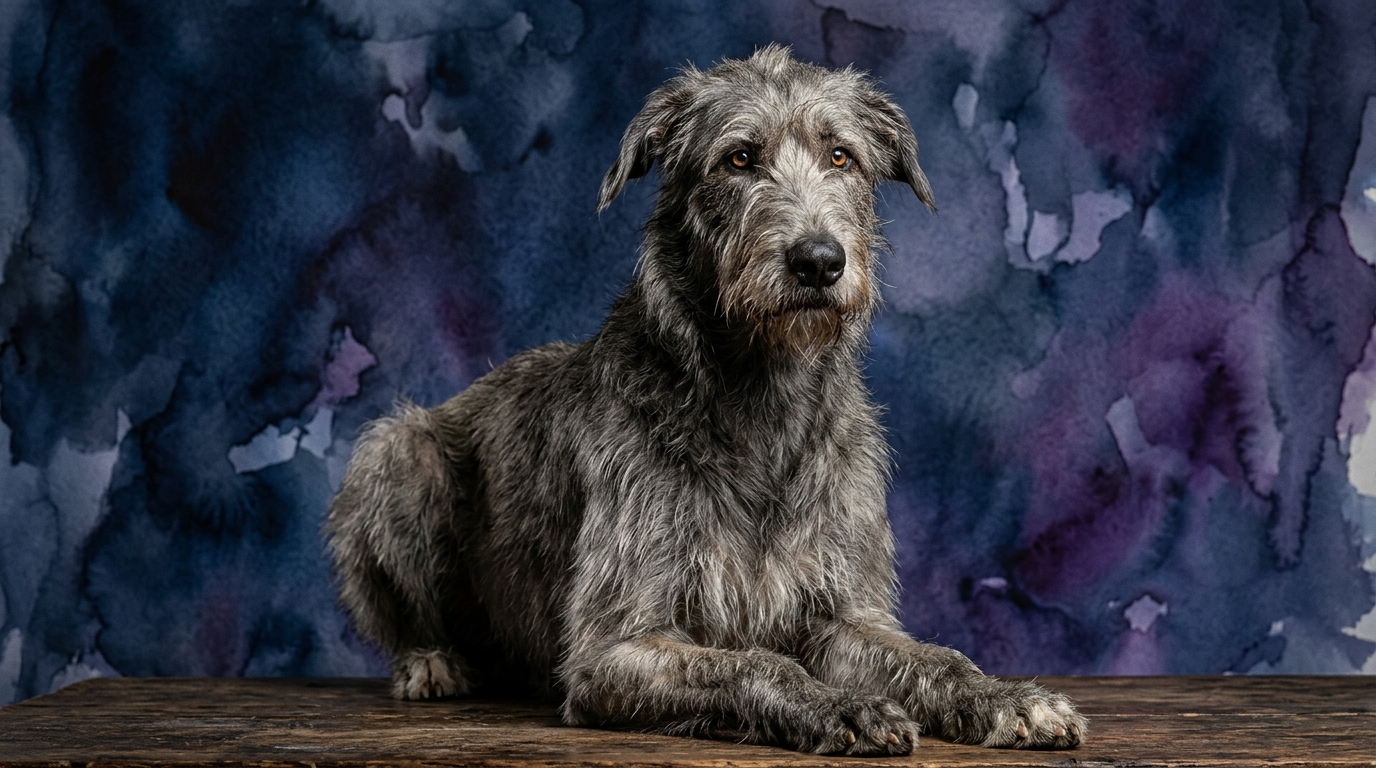
Side-by-Side IQ Profile: Gentle Giants Under the Lens
The Cosmic Pet Pet IQ Lab assesses canine intelligence across five key dimensions, providing a nuanced view beyond simple obedience. Both the Mastiff, a member of the Working Group and Coren-ranked #72, and the Irish Wolfhound, from the Hound Group and not Coren-ranked, share an identical 3/5 rating across all five cognitive categories. While the numerical score is the same, the manifestation of these abilities differs significantly due to their distinct breed histories and inherent traits.
For Problem Solving (3/5), the Mastiff demonstrates a capacity for understanding complex household routines and anticipating family needs based on established habits. They can navigate familiar environments with a thoughtful deliberation, often employing their imposing presence to 'solve' perceived territorial infringements by simply being present. The Irish Wolfhound, also at 3/5, applies its problem-solving skills to tasks requiring independent thought, such as figuring out how to reach a desired location or using its keen senses to locate objects. Their hound heritage means they might devise strategies for tracking or surveying their surroundings, often relying on their own initiative.
Training Speed (3/5) for the Mastiff suggests they respond well to consistent, positive reinforcement, though their deliberate nature can mean they take a moment to process before acting. Once a command is learned, it is typically retained effectively. The Irish Wolfhound, similarly rated, can learn commands at a respectable pace, particularly if the training is engaging and rewards-based. However, their independent hound spirit might lead to moments where their focus drifts, requiring patient and persistent reinforcement to solidify behaviors.
In Social Intelligence (3/5), Mastiffs excel at interpreting subtle cues from their family, displaying a deep, protective empathy and understanding of their human companions' moods and needs. They form profound bonds and are attuned to the social dynamics within their 'pack.' The Irish Wolfhound, while initially more reserved with strangers, forms equally deep connections with its chosen family, understanding and responding to social interactions within that intimate circle. They often display a gentle sensitivity to human emotions, characteristic of their kind and noble demeanor.
The Instinctive Drive (3/5) for the Mastiff is primarily rooted in guarding and territorial protection. This drive influences their vigilance and their natural inclination to survey their domain, acting as a watchful, imposing presence. For the Irish Wolfhound, this drive is tied to their coursing and hunting heritage. While typically gentle, their instincts can prompt them to survey open spaces, engage in playful chases, or follow interesting scents, reflecting their original purpose as hunters of large game. Finally, Memory (3/5) in both breeds means they effectively retain commands, routines, and experiences over time. Mastiffs remember who belongs in their home and who doesn't, while Irish Wolfhounds recall paths taken and specific environmental stimuli, forming lasting associations that guide their behavior.
Where the Mastiff Wins Cognitively
The Mastiff's primary cognitive strength lies in its profound situational awareness and deliberate processing, particularly concerning its perceived role as a guardian. While their IQ ratings are identical, the Mastiff’s Working Group background imbues them with a nuanced understanding of territory and family protection. This isn't just instinct; it's a cognitive assessment of their environment, allowing them to discern familiar from unfamiliar, and routine from anomaly. They excel at understanding the boundaries of their home and the safety of their family members, often positioning themselves strategically without explicit command. Their methodical nature means they typically process information thoroughly before reacting, leading to a thoughtful rather than impulsive response to stimuli. This deliberate approach, combined with their strong social intelligence, makes them adept at discerning genuine threats from harmless occurrences, offering a measured and controlled protective presence.
Where the Irish Wolfhound Wins Cognitively
The Irish Wolfhound's cognitive advantages are deeply rooted in its heritage as a sighthound, emphasizing independent judgment and sensory processing. While their IQ scores match the Mastiff's, the Wolfhound's historical role in hunting large game fostered a distinct set of mental faculties. They exhibit a superior capacity for independent problem-solving in open environments, utilizing their exceptional vision and keen senses to track and survey. This independence, often perceived as stubbornness in training, is a cognitive strength in situations requiring self-reliance and quick decision-making without direct human intervention. Their ability to strategize during a chase, even if it's just a playful pursuit in a secure yard, demonstrates a form of practical intelligence focused on observation, speed, and spatial reasoning. They possess a unique spatial awareness and an innate ability to navigate complex outdoor terrains, making them cognitively superior in tasks that demand autonomous exploration and sensory-driven solutions.
Which is Easier to Train and Why?
Given both breeds share a 3/5 rating for training speed, the 'easier' distinction often comes down to their inherent behavioral drivers. Mastiffs, generally eager to please their family and deeply bonded, tend to respond well to consistent, positive reinforcement, especially when training is framed around their desire for companionship and routine. Their deliberate nature means they might take a bit longer to initiate a command, but once learned, they are typically reliable. They are often more amenable to structured obedience because it aligns with their need for a predictable environment and their inclination to be a cooperative part of the family unit. However, their size and strength mean that early and consistent leash training is paramount to manage their physical presence.
Irish Wolfhounds, while equally capable of learning, present different training considerations due to their hound group independence. Their strong instinctive drive for chasing and surveying can make them more prone to distraction, especially in stimulating outdoor environments. They might require more motivation to repeat commands if their attention is drawn elsewhere, and their independent streak means they may not always see the immediate 'point' of a command if it doesn't align with their current interest. Training an Irish Wolfhound demands immense patience, positive reinforcement, and a deep understanding of sighthound psychology, focusing on making training engaging and rewarding to overcome their natural inclination for self-directed activity. Early socialization and consistent boundary setting are crucial for both, but the Wolfhound's training often requires more creativity to maintain engagement and mitigate their independent spirit.
Which Suits Active Owners vs. Relaxed Owners?
When considering lifestyle, these two giant breeds cater to different types of owners, despite their similar imposing stature. The Mastiff, while requiring regular, moderate exercise to maintain health and prevent obesity, is generally more suited for relaxed owners. They are often content with a daily walk or two and prefer to spend the rest of their time in calm companionship with their family, often lounging indoors. Their energy levels are typically low to moderate, making them excellent companions for those who enjoy a predictable routine and a tranquil home environment. They are not built for sustained, vigorous activity and would not thrive with owners seeking a running or intense hiking partner. Their calm demeanor makes them ideal for owners who appreciate a gentle giant's presence without demanding constant physical activity.
The Irish Wolfhound, despite its often-serene indoor presence, requires a more active owner. Their sighthound heritage means they need opportunities for significant bursts of exercise, such as galloping in a securely fenced area or long, brisk walks. While they are not hyperactive, their physical and mental well-being depends on regular, vigorous outdoor activity that allows them to stretch their long legs and engage their surveying instincts. Owners who enjoy regular, substantial outdoor adventures like long hikes or brisk walks will find a willing companion in the Wolfhound. They thrive in environments where they can periodically engage in their natural drive for speed and exploration, making them less suitable for purely sedentary lifestyles or owners unable to provide ample space and consistent exercise.
The Verdict
Choose the Mastiff if you seek a devoted, protective companion who thrives on routine, enjoys calm indoor companionship, and requires moderate, consistent exercise.
Opt for the Irish Wolfhound if you appreciate an independent, gentle giant with a playful side, and are committed to providing significant daily exercise and patient, engaging training to channel their hound instincts.
🧠 Find Your Pet's IQ Score
Our Pet IQ Lab assessment covers 25+ tests across 5 cognitive dimensions — personalized to your breed.
Take the Full IQ Test →Frequently Asked Questions
Are Mastiffs good family dogs?
Yes, Mastiffs are generally excellent family dogs, known for their gentle and patient nature with children and their deep loyalty to their human companions. Their protective instincts make them vigilant guardians, but they are typically calm and affectionate within the family circle.
Do Irish Wolfhounds need a lot of space?
Irish Wolfhounds, due to their immense size and need for vigorous exercise, do require a good amount of space, ideally a securely fenced yard where they can run freely. While they are calm indoors, access to ample outdoor space is crucial for their physical and mental health.
What are the biggest training challenges for each breed?
For Mastiffs, managing their sheer size and strength during leash training can be a challenge, along with overcoming their deliberate nature when learning new commands. For Irish Wolfhounds, their independent sighthound nature and strong chase drive can make consistent recall and focus training more demanding, requiring extra patience and engaging methods.