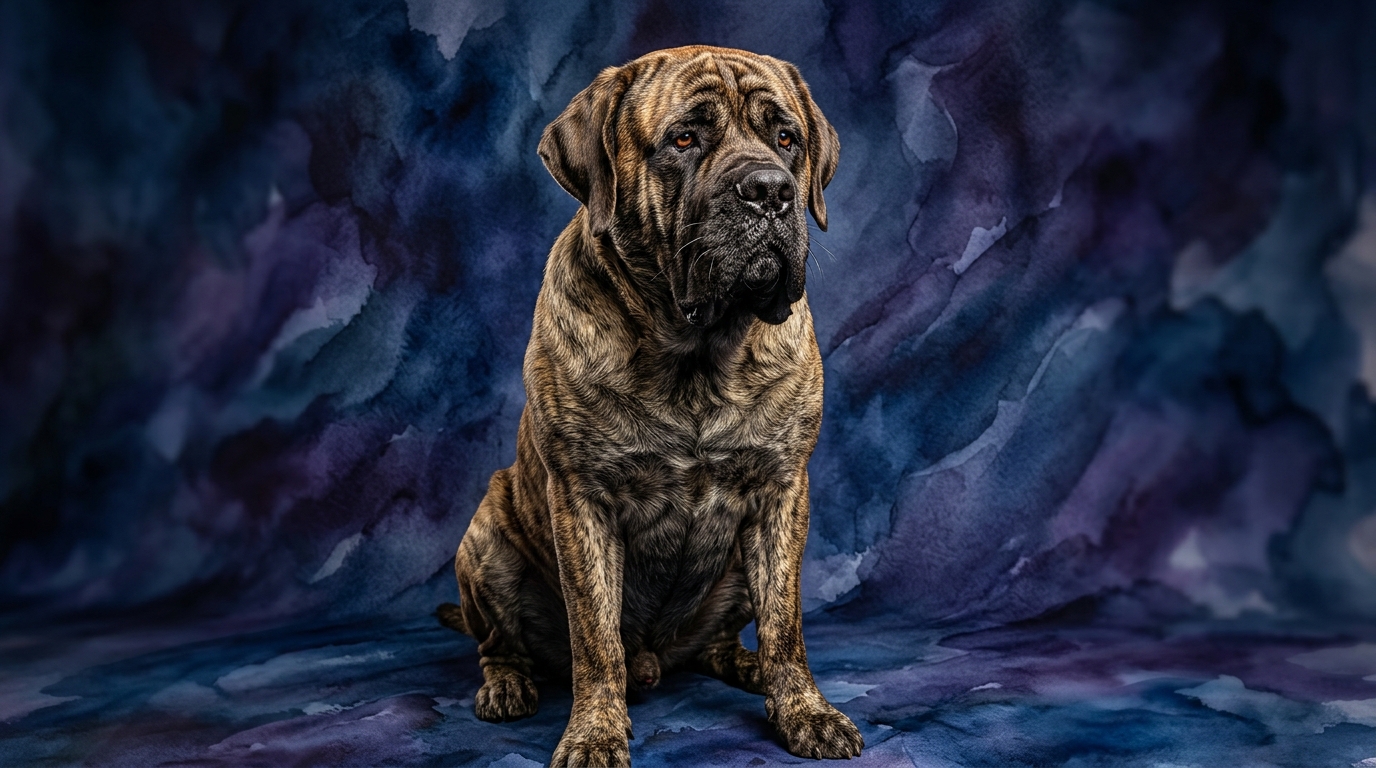
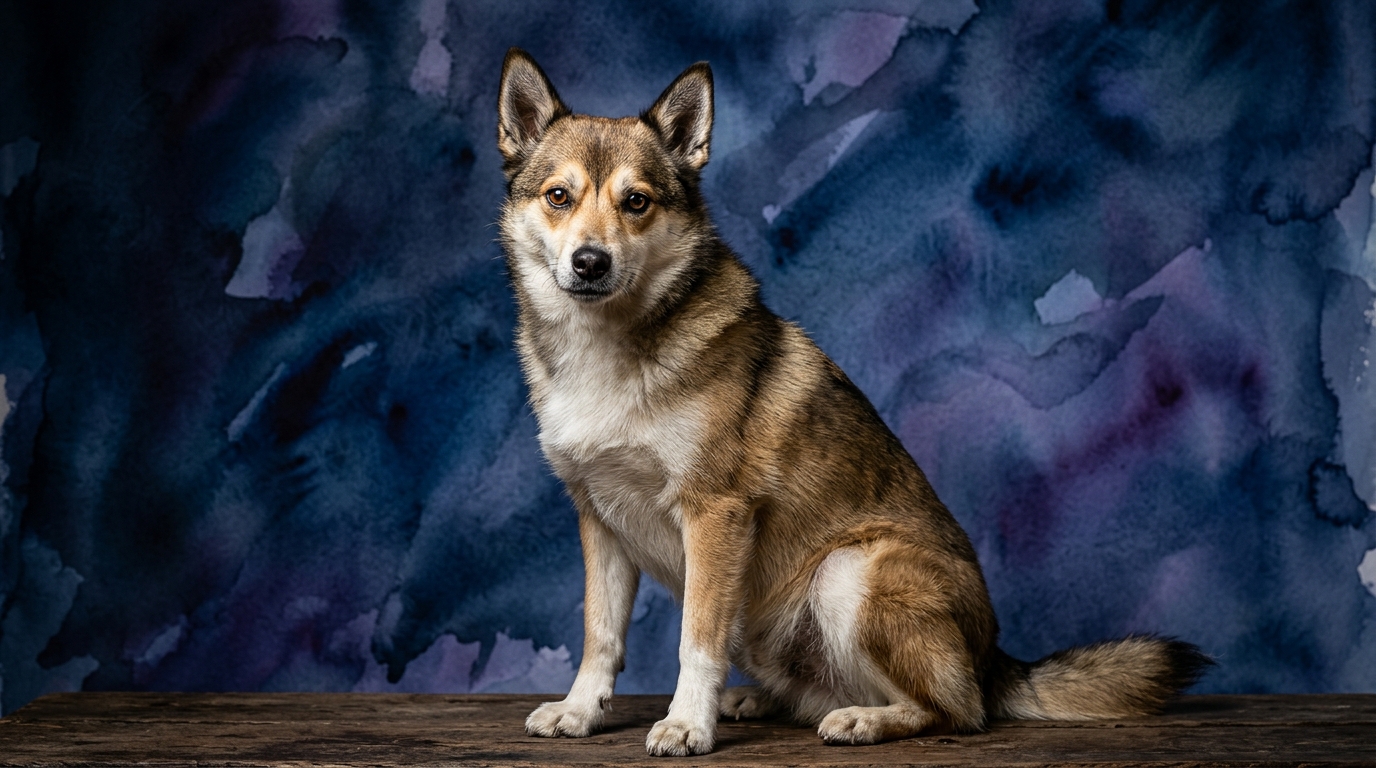
Side-by-Side IQ Profile: Mastiff vs. Norwegian Lundehund
The Cosmic Pet Pet IQ Lab scores provide a baseline for understanding each breed's cognitive strengths. Both the Mastiff and the Norwegian Lundehund achieve a consistent 3/5 across all five measured dimensions: Problem Solving, Training Speed, Social Intelligence, Instinctive Drive, and Memory. While the numbers are identical, the *manifestation* of these cognitive traits in each breed's unique context offers a rich comparison.
**Mastiff (Working Group, Coren Rank #72):**
**Problem Solving (3/5):** The Mastiff's problem-solving often manifests practically, centered on routines and navigating their immediate, familiar environment. They adeptly figure out comfortable resting spots or efficient paths around household obstacles, providing direct, common-sense solutions rather than abstract ones.
**Training Speed (3/5):** Mastiffs learn at a steady pace. Their large size and deliberate nature mean consistent, positive reinforcement is key. They are trainable, but owners should expect a measured learning curve, emphasizing clarity and patience to solidify new behaviors.
**Social Intelligence (3/5):** Mastiffs show deep understanding of their human family, attuned to moods and routines. Their social IQ focuses on loyalty and guardianship, recognizing familiar faces and perceiving household changes, forming strong bonds within their established “pack.”
**Instinctive Drive (3/5):** Their drive is primarily for protection and companionship. Ancestrally guarding estates, they exhibit natural vigilance and a strong desire to be near family. Their instincts lean towards monitoring and a formidable presence against perceived intrusions.
**Memory (3/5):** Mastiffs possess good memory for routines, learned commands, and familiar people and places. They reliably retain training cues, daily schedules, and home boundaries, making them consistent companions once trained.
**Norwegian Lundehund (Non-Sporting, Not Coren-Ranked):**
**Problem Solving (3/5):** The Lundehund's 3/5 problem-solving is specialized for their history: hunting puffins in treacherous cliff environments. Their cognition is honed for spatial reasoning, navigating complex physical terrain, and executing creative maneuvers to overcome environmental challenges.
**Training Speed (3/5):** Known for independence, stemming from their self-reliant hunting past, Lundehunds learn with engagement. Their 3/5 suggests they are capable, but may require varied, interesting methods to maintain focus, as they often choose when to comply.
**Social Intelligence (3/5):** Shaped by a history of working semi-independently, Lundehunds form strong family bonds but can be reserved with strangers. Their social IQ reflects an ability to understand and interact within their trusted circle, balanced with self-sufficiency.
**Instinctive Drive (3/5):** The Lundehund's drive is unique, centered on their original purpose: climbing, exploring small spaces, and persistent curiosity. This 3/5 highlights an intrinsic motivation for physical activity, exploration, and unique “scavenging” behaviors like digging.
**Memory (3/5):** Lundehunds have solid memory for complex routes, specific locations, and tasks related to exploration and their unique physical capabilities. They recall intricate paths and environmental details, especially for activities engaging their instincts.
Where the Mastiff Wins Cognitively
Despite identical numerical scores, the Mastiff’s cognitive strengths manifest as dependable stability and a nuanced understanding of domestic peace. Their problem-solving excels in predicting household patterns and adapting to predictable environments, such as finding the optimal family monitoring spot. The Mastiff's social intelligence, while 3/5, translates into profound, unwavering loyalty and sensitivity to their human family’s emotional states, acting as a calming presence. Their memory for established rules and routines is particularly robust, fostering a stable home life where expected behaviors are reliably recalled without constant reminders. This deliberate cognitive pace is ideal for guardians seeking a steadfast companion who integrates seamlessly into a structured, harmonious household.
Where the Norwegian Lundehund Wins Cognitively
The Norwegian Lundehund, while numerically similar, boasts cognitive strengths rooted in specialized physical and environmental mastery. Their problem-solving, a 3/5, is exceptional in its application to navigating intricate physical spaces, dislodging objects, and utilizing unique anatomical features like extra toes and flexible joints. This demonstrates keen spatial awareness and a creative, physical approach to obstacles. Their instinctive drive, also 3/5, fuels persistent exploration and independent investigation, making them adept at uncovering hidden items and probing novel environments. The Lundehund's memory, rated 3/5, is particularly strong for recalling complex physical routes and environmental intricacies, essential for their puffin hunting heritage. Their cognition is thus geared towards agile, independent thought and unique physical adaptability.
Which is Easier to Train and Why
“Easier” in training is subjective here. The Mastiff, with a 3/5 training speed, typically responds well to consistent, calm, and positive reinforcement. Their inherent steadiness and desire to please mean they absorb commands and routines effectively over time, though their sheer size requires mindful physical handling during training. Their progress, while not rapid, is usually reliable and enduring, thriving on clear structure.
The Norwegian Lundehund, also 3/5 for training speed, presents a different challenge due to its independent nature, a legacy of its self-reliant hunting past. They often prefer to think for themselves, requiring creative, engaging, and varied methods to maintain focus and cooperation, as repetition can lead to boredom. Their unique physical attributes might also lead them to approach tasks unconventionally, demanding an adaptable trainer. For straightforward obedience, the Mastiff offers a more direct path, while the Lundehund appeals to those who enjoy a cognitive puzzle and a dog with a distinctive, independent mind.
Which Suits Active Owners vs. Relaxed Owners
For relaxed owners desiring a calm, dignified companion, the Mastiff is generally the more suitable choice. They require regular, moderate exercise for health but possess lower energy levels than many breeds, content with leisurely walks and lounging with family. Their protective instincts make them watchful but not overly demanding, preferring to be a quiet, comforting presence in a predictable home.
Conversely, the Norwegian Lundehund thrives with active, engaged owners. Despite their small size, their history demands significant physical and mental stamina. They have high energy and a strong drive for exploration, climbing, and digging. Daily vigorous exercise, puzzle toys, and activities stimulating their problem-solving instincts are essential. An owner who enjoys hiking, dog sports, or has a secure, varied outdoor space will find the Lundehund a fulfilling companion, as they need outlets for their unique capabilities to prevent boredom.
The Verdict
Choose the Mastiff if you desire a steadfast, calm, and loyal companion who thrives on routine and offers a reassuring presence in a relatively relaxed home environment, appreciating their deliberate pace of learning and profound family bonds.
Opt for the Norwegian Lundehund if you are an active, adventurous owner who embraces a dog's independent spirit and unique physical prowess, willing to provide consistent mental and physical challenges for a curious, agile, and distinctive companion.
🧠 Find Your Pet's IQ Score
Our Pet IQ Lab assessment covers 25+ tests across 5 cognitive dimensions — personalized to your breed.
Take the Full IQ Test →Frequently Asked Questions
Do Mastiffs need extensive training due to their size?
While Mastiffs are large, their 3/5 training speed suggests they learn at a steady pace with consistent, positive methods. Early socialization and obedience training are crucial for managing their strength and ensuring they are well-mannered companions, but they are generally eager to please their guardians.
Is the Norwegian Lundehund difficult to train because of its independence?
The Norwegian Lundehund's 3/5 training speed is influenced by their independent nature, requiring creative and engaging training approaches. They are capable learners but respond best to varied, positive reinforcement techniques that make training feel like a game, rather than repetitive drills.
How do their problem-solving skills differ despite having the same IQ score?
Although both score 3/5 in problem-solving, the Mastiff's manifests in practical, routine-based solutions within a domestic setting, while the Lundehund's is geared towards complex physical navigation and agile environmental manipulation, reflecting their distinct historical purposes.