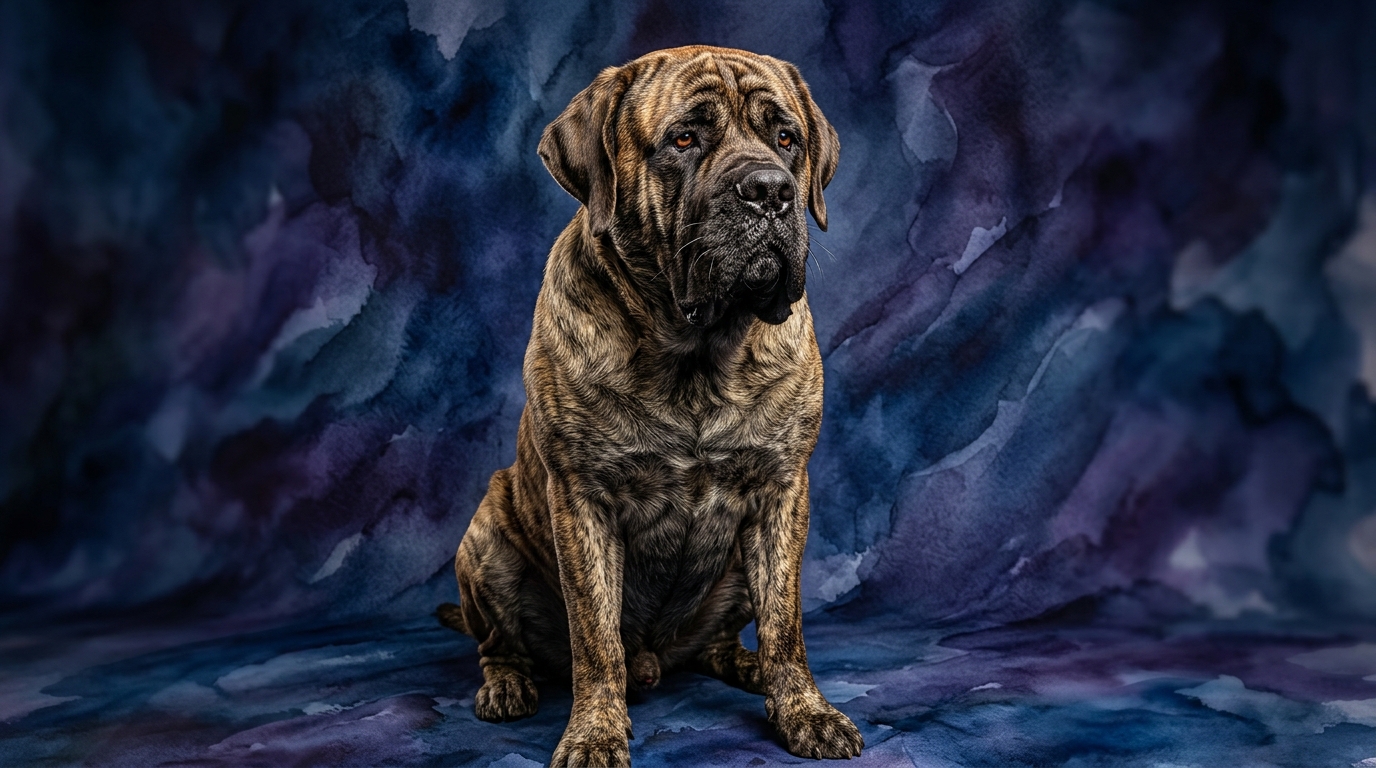
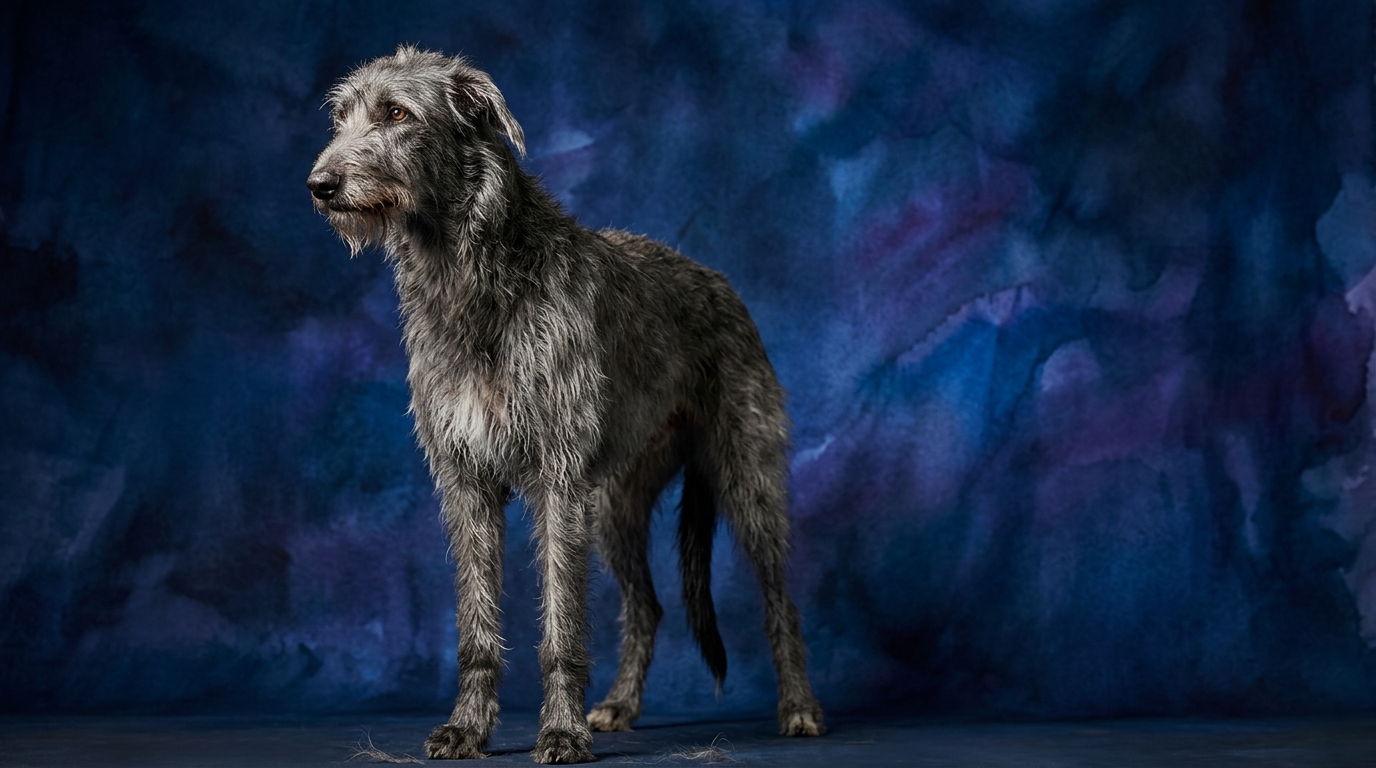
Side-by-Side IQ Profile: Mastiff vs. Scottish Deerhound
The Cosmic Pet Pet IQ Lab employs a five-dimensional framework to illuminate the nuanced cognitive abilities of our canine companions. For both the Mastiff and the Scottish Deerhound, these dimensions register identical scores of 3 out of 5, suggesting a baseline of functional intelligence, yet the *expression* of these scores differs significantly due to their breed-specific histories and inherent temperaments. Let's explore what a 3/5 truly signifies for each.
For the **Mastiff**, a venerable member of the Working Group, their Coren ranking at #72 places them in the category of fair working intelligence. Their **Problem Solving (3/5)** typically involves a deliberate, observational approach. They are less prone to frantic trial-and-error, instead taking time to assess a situation, perhaps leveraging their formidable size and presence rather than intricate manipulation to resolve an issue. Their **Training Speed (3/5)** indicates they require consistent, patient repetition to master new commands, but once learned, these behaviors are usually deeply ingrained and reliable. The Mastiff's **Social Intelligence (3/5)** shines in their discerning nature; they are deeply devoted to their family, often reading human moods with surprising accuracy, yet can be reserved and watchful with strangers, assessing intentions carefully. Their **Instinctive Drive (3/5)** is rooted in protection and guardianship, manifesting as a watchful territoriality and a calm readiness to defend their loved ones. Finally, their **Memory (3/5)** is robust for routines, people, and boundaries, remembering past interactions and learned rules with impressive longevity, contributing to their steady demeanor.
The **Scottish Deerhound**, a distinguished member of the Hound Group and not specifically Coren-ranked, presents a fascinating contrast in how their 3/5 scores play out. Their **Problem Solving (3/5)** is often geared towards their sighthound heritage: quick spatial reasoning, route finding, and the rapid assessment of moving targets. This is less about complex manipulation and more about efficient navigation and pursuit in open environments. **Training Speed (3/5)** for a Deerhound suggests they can grasp concepts quickly, especially if motivated by play or positive reinforcement, but their independent sighthound spirit means they may choose *when* to comply, requiring engaging and varied training methods to maintain interest. Their **Social Intelligence (3/5)** is characterized by a gentle sensitivity and deep affection for their inner circle, often forming strong, quiet bonds. They are typically polite, if reserved, with strangers. The Deerhound's **Instinctive Drive (3/5)** is powerfully expressed as a prey drive, an innate urge to spot and pursue, demanding secure environments for off-leash exercise. Their **Memory (3/5)** is excellent for remembering people, places, and particularly the nuances of their hunting grounds or familiar outdoor spaces, allowing them to navigate with a confident sense of direction and recall positive or negative experiences vividly.
Where Mastiff Wins Cognitively
The Mastiff's cognitive strengths distinctly align with their historical role as guardians and companions. Their 'win' lies in their measured, almost philosophical approach to their environment. A Mastiff excels in situations demanding unwavering loyalty and a calm, authoritative presence. Their problem-solving, though not rapid, is often characterized by a thorough assessment of potential threats or changes in their domain, leading to well-considered, rather than impulsive, reactions. This deliberate thought process, combined with their strong memory for past events and learned boundaries, makes them exceptionally reliable within their established routines.
Furthermore, the Mastiff's social intelligence, while reserved, allows for a profound understanding of their human family's emotional states. They possess an uncanny ability to offer comforting presence when needed, demonstrating a deep empathetic connection. Their instinctual drive for protection is not a reactive aggression, but a thoughtful, watchful vigilance, where their cognitive processing allows them to differentiate between genuine threats and harmless stimuli, a nuance that requires significant discernment.
Where Scottish Deerhound Wins Cognitively
The Scottish Deerhound's cognitive advantages are deeply intertwined with their heritage as swift, independent hunters. Their 'win' is evident in their remarkable agility of thought, particularly in dynamic, open environments. Their problem-solving, while scoring the same 3/5, is optimized for rapid visual processing and spatial awareness, allowing them to quickly assess distances, trajectories, and potential obstacles during a high-speed chase. This mental quickness is vital for their traditional work and sets them apart.
Moreover, the Deerhound exhibits a unique blend of sensitivity and independence. Their social intelligence enables them to form deep, gentle bonds, often intuiting their owner's moods without overt displays. This sensitivity, combined with their excellent memory for experiences and individuals, makes them highly responsive to positive reinforcement and fosters a strong partnership built on mutual respect. Their instinctive drive, while strong, is also coupled with an observational keenness, allowing them to survey their surroundings with an almost poetic focus, absorbing details that might escape other breeds.
Which Is Easier to Train and Why?
When considering ease of training, both the Mastiff and the Scottish Deerhound receive a 3/5 for Training Speed, indicating that neither is a 'plug-and-play' breed, but their challenges stem from different behavioral roots. The Mastiff, with its Coren rank of #72, suggests that they require a higher number of repetitions (around 40-80) to achieve a reliable understanding of new commands. Their large size necessitates early and consistent training to manage their physical presence effectively. While they are often eager to please their family, their thought process can be slower and more deliberate. Training a Mastiff requires immense patience, consistency, and a calm, confident handler who can establish clear expectations without harshness. They respond best to positive reinforcement, especially food rewards and praise, but their sheer physical bulk and thoughtful nature mean that learning new behaviors can be a gradual process, though once learned, they tend to be very reliable.
The Scottish Deerhound, despite also scoring 3/5 for Training Speed, presents a different training dynamic. As a sighthound, independence is a hallmark of their temperament, a trait developed for making swift decisions during a chase without human intervention. This means they can be quick to grasp commands but may choose to obey only if they perceive value in it, or if there are no more compelling distractions (like a distant squirrel). Their sensitivity means they do not respond well to harsh corrections; positive, reward-based methods are essential to build trust and cooperation. Their strong prey drive also means off-leash reliability can be a significant challenge, requiring extensive proofing in various environments. Training a Deerhound is less about brute force and more about engaging their intelligence, making it fun, and consistently reinforcing desired behaviors while managing their intrinsic desire for independent action.
Which Suits Active Owners vs. Relaxed Owners?
The choice between a Mastiff and a Scottish Deerhound also hinges significantly on an owner's lifestyle and activity level. For the more relaxed owner, the Mastiff often presents a more suitable companion. Despite their immense size, Mastiffs are not high-energy dogs. They require moderate daily exercise, such as a leisurely walk, but are largely content to spend their downtime lounging near their family. Their ideal owner appreciates a calm, steady presence and is prepared for the significant commitment of managing a very large, though relatively sedate, dog. Their mental stimulation often comes from observation and interaction within the home environment, rather than intense physical or mental tasks.
Conversely, the Scottish Deerhound is better suited for active owners or families who can accommodate their unique exercise requirements. While they enjoy their indoor comforts and can be quite relaxed indoors, Deerhounds need regular, significant bursts of running. Their sighthound heritage demands access to securely fenced, expansive areas where they can gallop freely at top speed. They thrive with owners who enjoy long walks, hikes, or even participate in lure coursing, providing outlets for their powerful instinctive drive and physical capabilities. Without adequate exercise, a Deerhound can become restless or bored, making an active lifestyle a prerequisite for their well-being.
The Verdict
Choose a Mastiff if you seek a calm, thoughtful companion with a protective streak, valuing a steady presence over intense activity. They thrive in homes that appreciate their discerning nature and provide consistent, patient guidance.
Opt for a Scottish Deerhound if you are an active individual or family who can provide ample space for their bursts of energy and appreciates a sensitive, independent, and graceful partner for outdoor adventures.
🧠 Find Your Pet's IQ Score
Our Pet IQ Lab assessment covers 25+ tests across 5 cognitive dimensions — personalized to your breed.
Take the Full IQ Test →Frequently Asked Questions
Are Mastiffs difficult to train?
Mastiffs require consistent, patient training from a young age due to their size and thoughtful nature. While they may not learn commands as rapidly as some breeds, their desire to please their family, once a bond is established, aids in their eventual compliance.
Do Scottish Deerhounds have a strong prey drive?
Yes, Scottish Deerhounds possess a significant prey drive, a remnant of their hunting heritage. This means they are often compelled to chase moving objects and require secure, fenced areas for off-leash exercise to prevent them from pursuing perceived quarry.
Which breed is better with children?
Both breeds can be gentle with children, but their suitability depends on individual temperament and proper socialization. Mastiffs are often naturally patient and protective, while Scottish Deerhounds are sensitive and can be good with respectful children, though their size means supervision is always key.