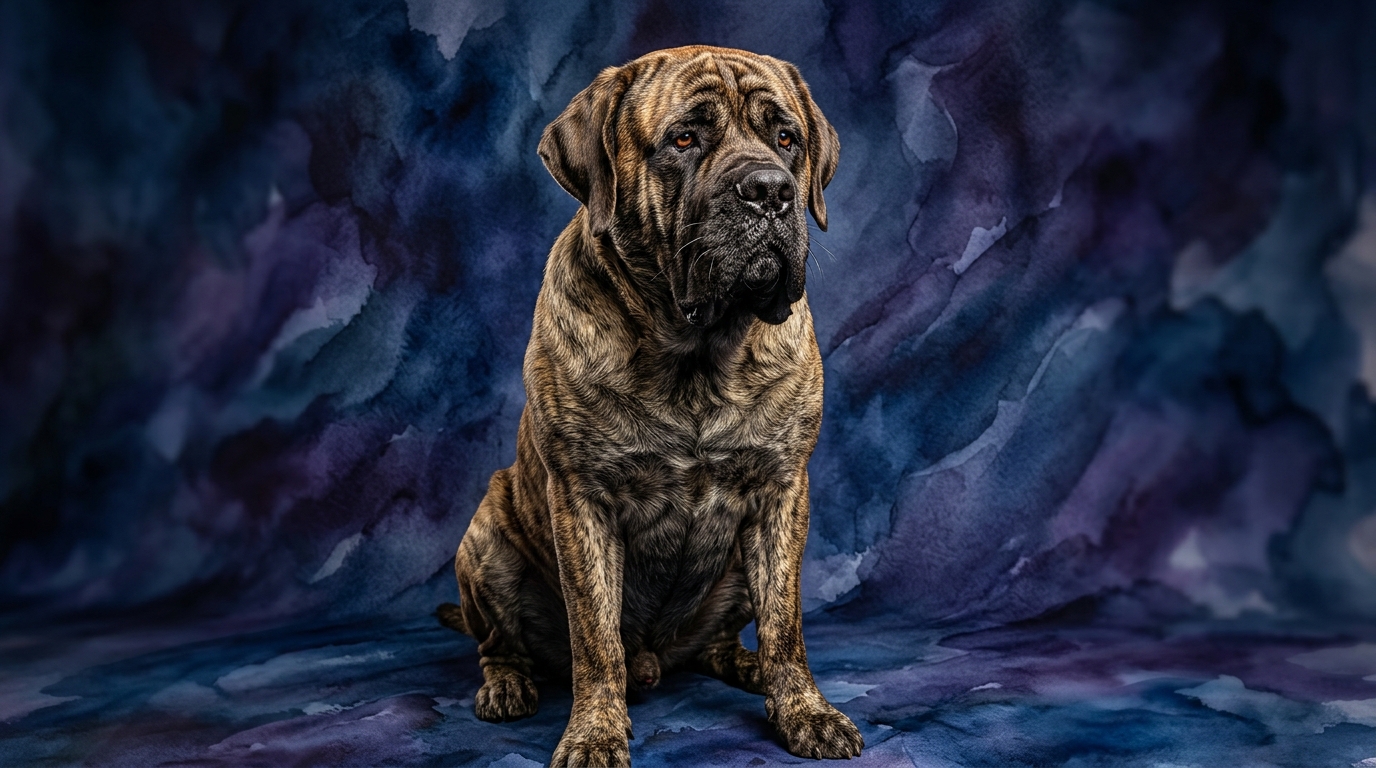
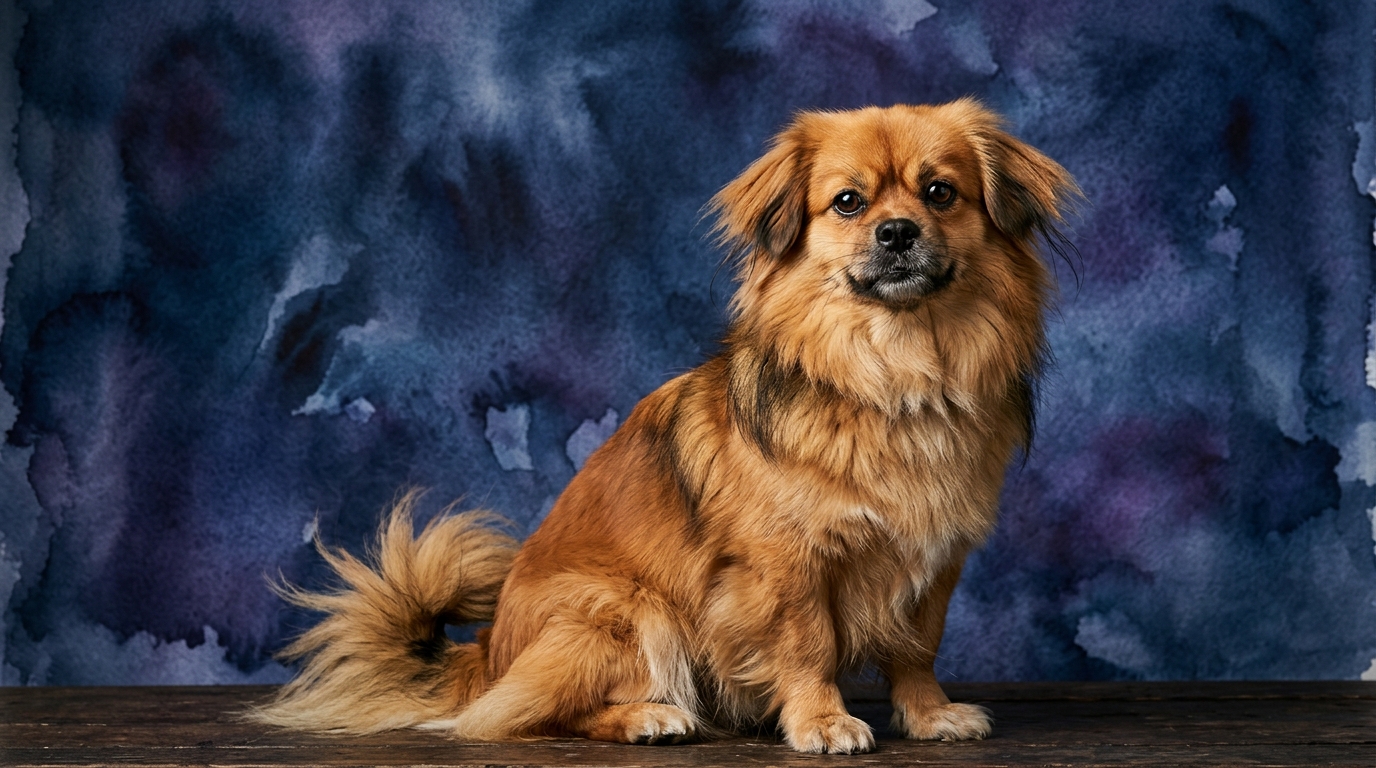
Side-by-Side IQ Profile: Mastiff vs. Tibetan Spaniel
At The Cosmic Pet Pet IQ Lab, we assess canine intelligence across five critical dimensions: Problem Solving, Training Speed, Social Intelligence, Instinctive Drive, and Memory. Intriguingly, both the Mastiff and the Tibetan Spaniel score a consistent 3/5 across all these categories. While these numerical scores are identical, their practical application and manifestation in each breed's daily life are profoundly distinct, shaped by their historical roles and inherent temperaments.
A Mastiff's problem-solving skills are practical, focusing on navigating their environment and assessing immediate challenges. They methodically figure out how to position themselves for optimal surveillance or how to bypass a simple obstacle, reflecting a deliberate, physically-oriented approach rather than complex strategic thinking. This capacity serves their guardian role by allowing them to respond effectively to real-world scenarios. Training a Mastiff demands consistency and patience due to their moderate learning speed. They require several repetitions to solidify new commands or routines, but once learned, their reliable memory ensures high retention. Their training progress is steady and enduring, indicative of a breed that thrives on predictable structure and consistent reinforcement. Mastiffs exhibit a deep social intelligence centered on their core family, adept at reading owner moods and intentions. They respond with comforting presence to distress and are reserved with outsiders, reflecting their guardian instincts. This demonstrates a clear capacity for empathy and attachment within their chosen human pack. The Mastiff's instinctive drive is rooted in protection and guardianship, manifesting as strong territorial awareness and vigilance over their home. While calm, their natural inclination to deter threats is palpable, coupled with a desire for routine and purpose. A Mastiff's memory is robust for routines, familiar individuals, and territory boundaries. They consistently recall learned commands and apply past interactions to future encounters, underpinning their dependability as companions and guardians who thrive on predictability.
Tibetan Spaniels apply problem-solving to their domestic environment, often resourcefully achieving desires like reaching a high perch or manipulating a toy for treats. Their solutions are clever and self-serving, driven by comfort or attention, reflecting their historical role as alert, companionable monastery dogs. Training a Tibetan Spaniel proceeds at a moderate pace, as they learn commands but their independent spirit requires engaging, positive reinforcement. They evaluate compliance against their own agenda, yet once a behavior is learned, they retain it well, especially if it leads to desired outcomes. Tibetan Spaniels possess keen social intelligence, highly attuned to human companions and emotional states. They adapt their behavior to household moods and charmingly manipulate for attention, demonstrating a clear understanding of family dynamics and their place within them. The Tibetan Spaniel's instinctive drive is characterized by their “little lion” role, with strong observational skills from high vantage points. This manifests as alert barking at novelties, reflecting their historical warning purpose, alongside a strong companion drive for human proximity. Tibetan Spaniels have solid memory for routines, favored people, and past experiences. They recall toy locations, schedules, and behaviors that elicit positive owner responses, ensuring learned tricks and commands are retained with consistent reinforcement.
Where the Mastiff Wins Cognitively
The Mastiff's cognitive strengths truly shine in areas demanding steadfastness, territorial awareness, and a calm, deliberate assessment of their environment. Their social intelligence (3/5), while not outwardly effusive, is profoundly focused on the security and well-being of their core family. They excel at discerning genuine threats from benign visitors, relying on a sophisticated understanding of subtle human cues and patterns. This critical assessment skill is a cognitive triumph, allowing them to remain composed where other breeds might react impulsively. Furthermore, their instinctive drive (3/5) for guardianship translates into an unparalleled memory for territory and routines, making them highly reliable sentinels. They remember precisely who belongs and where boundaries lie, rarely making mistakes in their protective duties. This deep-seated cognitive mapping of their environment, coupled with their unwavering focus, gives them an edge in situations requiring a stable, protective presence. Their moderate problem-solving is often applied to complex spatial reasoning within their known environment, such as navigating tight spaces or large objects, showcasing a methodical rather than impulsive approach.
Where the Tibetan Spaniel Wins Cognitively
The Tibetan Spaniel, despite its smaller stature, possesses distinct cognitive advantages rooted in adaptability and subtle social navigation. Their problem-solving (3/5) is often employed with a charming resourcefulness, especially when it comes to influencing human behavior or manipulating their environment for comfort. They are adept at figuring out how to get onto a coveted lap, access a treat, or find the warmest sunbeam, demonstrating a practical and self-serving cognitive flexibility. Their social intelligence (3/5) is particularly acute in reading human emotions and anticipating needs, making them exceptionally empathetic companions. They excel at understanding the nuances of household dynamics and can skillfully “work the room” to ensure they are at the center of attention. This ability to integrate seamlessly into varied social settings, coupled with their memory (3/5) for successful social strategies, gives them a cognitive edge in domestic environments where charm and adaptability are highly valued. Their alert instinctive drive (3/5) also makes them superior in detecting novel sounds or sights, acting as an early warning system.
Training Dynamics: Which is Easier and Why?
Despite both breeds holding a 3/5 in Training Speed, the practical experience of training them diverges due to their underlying motivations and physical attributes. The Mastiff, with its massive size and deliberate nature, might appear slower to train simply because its physical responses are less agile. However, their social intelligence (3/5) fosters a strong desire to please their primary caregiver, and their memory (3/5) ensures that once a command is learned, it is deeply ingrained and consistently executed. Training a Mastiff is about patience and repetition, leveraging their bond and their preference for routine. They respond well to calm, consistent methods, and once they understand a command, their sheer physical presence reinforces its importance.
The Tibetan Spaniel, while physically quicker and more agile, presents a different training challenge. Their instinctive drive (3/5) often includes a streak of independence and a “what's in it for me?” attitude, which can make them less biddable. Their problem-solving (3/5) might be applied to figuring out how to avoid a command rather than comply with it, especially if a more appealing alternative exists. While they learn quickly when motivated, maintaining their focus requires engaging, positive reinforcement techniques that make training feel like a game. Their social intelligence (3/5) allows them to understand human expectations, but their independent spirit means they might choose to ignore them if not sufficiently incentivized. Therefore, while both learn at a moderate pace, the Mastiff generally offers more straightforward compliance once trained, whereas the Tibetan Spaniel requires more creative and persistent engagement to maintain consistent responsiveness.
Lifestyle Match: Active vs. Relaxed Owners
The Mastiff, despite its imposing size, is surprisingly suited for more relaxed owners in terms of physical activity. Their instinctive drive (3/5) for guarding is primarily observational, and their problem-solving (3/5) often involves mental assessment rather than strenuous physical exertion. While they require consistent, moderate walks to maintain health, they are not high-energy dogs. Their social intelligence (3/5) thrives on a calm, predictable household where they can be a steady, comforting presence. Owners who appreciate a dignified, low-key companion who enjoys quiet companionship and doesn't demand constant physical engagement will find a Mastiff a perfect fit. They are content with a few short strolls and ample time relaxing with their family.
Conversely, the Tibetan Spaniel, with its moderate instinctive drive (3/5) for alertness and its resourceful problem-solving (3/5), can adapt to a wider range of owner activity levels, though they often lean towards owners who enjoy more interactive engagement. Their smaller size makes them suitable for apartment living, but their keen senses and alert nature mean they benefit from mental stimulation and opportunities to survey their surroundings. While not requiring marathon runs, they appreciate regular walks, play sessions, and opportunities to use their cleverness. Owners who enjoy teaching tricks, engaging in puzzle toys, or simply having a highly interactive and observant companion will find the Tibetan Spaniel a rewarding partner. They can certainly be relaxed companions, but their independent streak and desire for engagement mean that a completely passive owner might find them prone to inventing their own “entertainment.”
The Verdict
Choose a Mastiff if you seek a calm, steadfast guardian who excels in territorial awareness and provides a deeply loyal, stable presence in a predictable home.
Opt for a Tibetan Spaniel if you desire a clever, adaptable companion who thrives on social interaction and brings resourceful charm to an engaging, dynamic household.
🧠 Find Your Pet's IQ Score
Our Pet IQ Lab assessment covers 25+ tests across 5 cognitive dimensions — personalized to your breed.
Take the Full IQ Test →Frequently Asked Questions
Are Mastiffs easy to train despite their size?
Mastiffs possess moderate training speed, requiring patience and consistent repetition. Their deep bond with owners and reliable memory make them highly compliant once commands are firmly established, making them straightforward to train for a dedicated owner.
Do Tibetan Spaniels bark a lot due to their 'alert' instincts?
Yes, Tibetan Spaniels have a moderate instinctive drive for alertness, often manifesting as vigilant barking at novel sounds or sights. This is a natural carryover from their historical role as monastery sentinels, making them effective early warning systems for their families.
How does similar IQ translate to different daily behaviors for these breeds?
Despite identical IQ scores, their daily behaviors differ significantly due to their breed-specific roles and physical traits. A Mastiff's problem-solving might involve assessing territory, while a Tibetan Spaniel might use theirs to strategically gain attention, showcasing how the same cognitive score manifests uniquely.