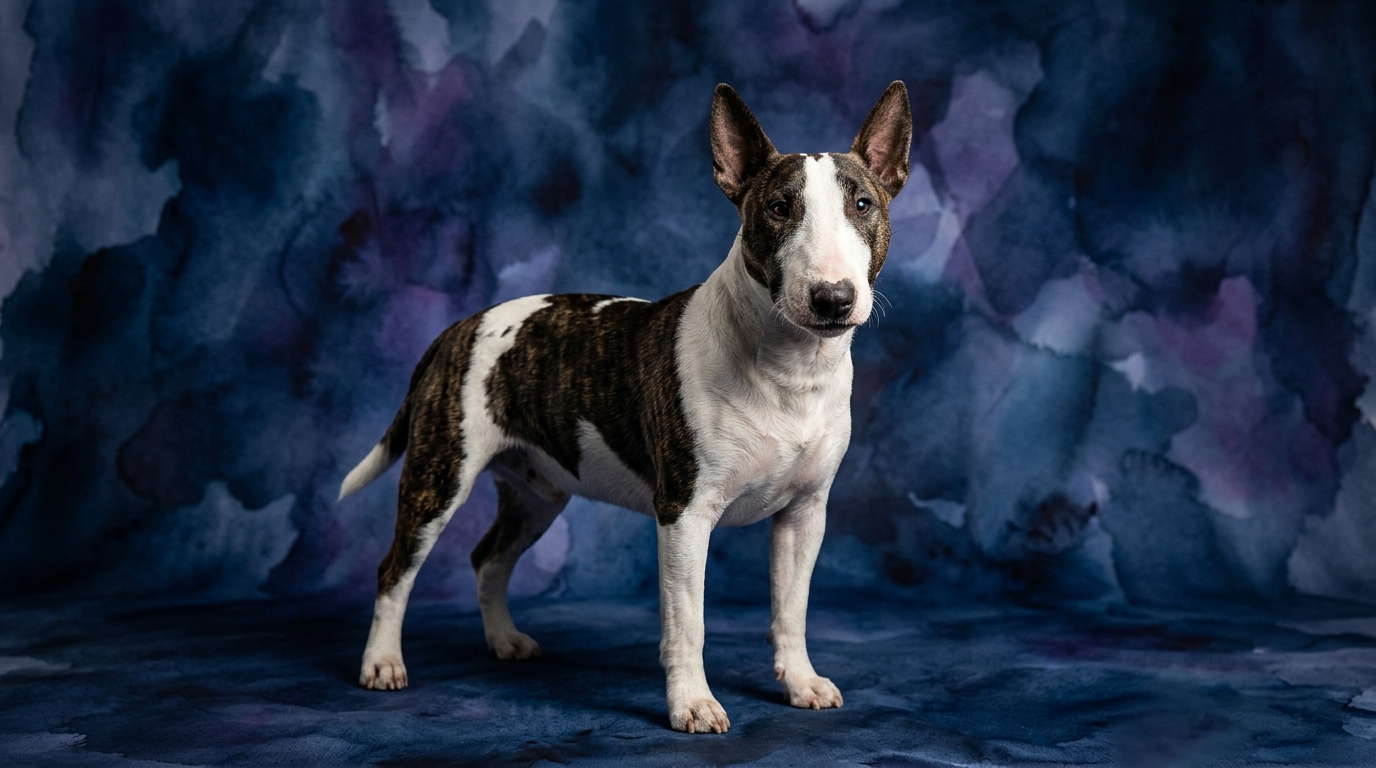
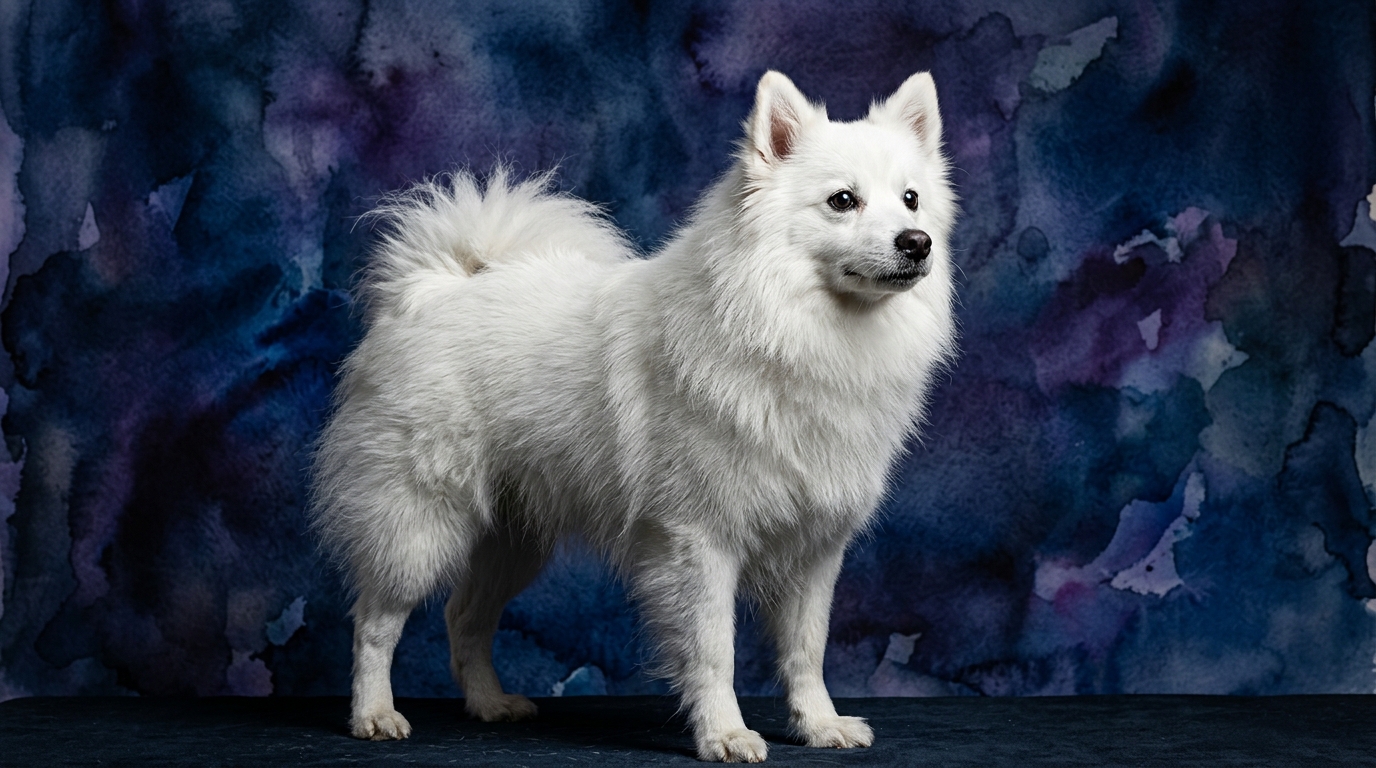
Side-by-Side IQ Profile: Miniature Bull Terrier vs. American Eskimo Dog
While both the Miniature Bull Terrier and the American Eskimo Dog share a consistent 3/5 rating across all five cognitive dimensions in The Cosmic Pet Pet IQ Lab, the *expression* of these scores is uniquely shaped by their breed heritage and typical temperaments. This section details what a 3/5 rating signifies for each breed, highlighting how similar scores can translate into distinct behavioral and cognitive styles.
For the **Miniature Bull Terrier**, a member of the Terrier group, a **Problem Solving (3/5)** score suggests a moderate ability to navigate novel situations and figure things out. This often translates to a tenacious, sometimes independent, approach to challenges, driven by their inherent terrier spirit to pursue and overcome obstacles. They won't give up easily on a puzzle, even if their method is unconventional. Their **Training Speed (3/5)** indicates they can learn new commands and routines, but it might require patience and consistent, engaging methods; their independent streak means they might not always see the immediate value in compliance, requiring a trainer to make learning feel like a rewarding game. **Social Intelligence (3/5)** means they can form strong bonds and understand pack dynamics, but their sometimes-strong opinions mean they might not always defer socially, preferring to express their own preferences. A **Instinctive Drive (3/5)** for this breed likely encompasses their natural prey drive, desire to dig, and protective instincts, present enough to be channeled but not overwhelming. Finally, their **Memory (3/5)** implies they retain learned behaviors and past experiences reasonably well, influencing their future interactions and learning capacity.
The **American Eskimo Dog**, from the Non-Sporting group, also registers a **Problem Solving (3/5)** capacity, indicating a moderate ability for logical thought and adapting to new scenarios. However, their solutions often lean towards cooperation with their human partner, utilizing their keen observation skills rather than pure independent brute force. Their **Training Speed (3/5)** means they are capable learners, often eager to please their human companions, which can make training sessions productive with positive reinforcement; they thrive on engagement and can pick up cues with consistent, clear instruction. **Social Intelligence (3/5)** is often expressed through their close bond with family and sensitivity to emotional nuances, adept at reading human moods and intentions, though they can be reserved with strangers. Their **Instinctive Drive (3/5)** often manifests in vigilance, a desire to bark and alert, and their history as working companions; their instinct to communicate and guard their territory is present. A **Memory (3/5)** means they will reliably recall commands, training, and the positive or negative associations with various experiences, aiding in building consistent routines and reinforcing bonds.
Where the Miniature Bull Terrier Wins Cognitively
Despite identical raw scores, the Miniature Bull Terrier's cognitive strengths often lie in areas demanding a particular blend of persistence and self-reliance, characteristics deeply rooted in its terrier lineage. One distinct advantage is their **Tenacious Problem Solving**. While both breeds score 3/5, the Miniature Bull Terrier's approach to puzzles is often marked by an unwavering, sometimes stubborn, determination. They are less likely to wait for human direction and more inclined to experiment with various solutions independently, a cognitive drive that, while occasionally challenging in training, equips them to overcome obstacles through sheer willpower and creative self-direction.
Another nuanced win for the Miniature Bull Terrier is their **Independent Decision-Making**. Their 3/5 social intelligence, combined with a strong sense of self, means they are capable of assessing situations and acting without constant human input. This isn't a lack of desire to please, but rather a cognitive bent towards autonomy. In scenarios where a dog needs to navigate a complex environment, follow a scent trail, or simply entertain themselves, the Miniature Bull Terrier’s capacity for self-initiated action and less reliance on external cues can be a valuable cognitive asset, fostering a resilient and self-assured temperament.
Where the American Eskimo Dog Wins Cognitively
The American Eskimo Dog's cognitive strengths, while also rated 3/5 across the board, shine brightest in contexts that leverage their cooperative spirit and keen observational skills. A significant win for the American Eskimo Dog is their **Cooperative Problem Solving**. Unlike the Miniature Bull Terrier’s independent drive, the Eskie often excels at tasks that involve working in tandem with their human partner. Their strong desire to please and their social intelligence (3/5) mean they are adept at observing subtle human cues and adjusting their approach to solve tasks collaboratively. This makes them particularly effective in activities like obedience, agility, or therapy work, where partnership and responsiveness are paramount.
Furthermore, the American Eskimo Dog possesses a distinct advantage in **Emotional Acuity and Responsiveness**. Their 3/5 social intelligence manifests as a heightened sensitivity to human emotions and intentions. They possess a subtle ability to read shifts in tone, body language, and general mood, responding empathetically. This makes them exceptionally attuned companions, able to offer comfort or adjust their behavior based on their owner's emotional state, a nuanced cognitive strength that fosters deep, communicative bonds and makes them wonderful emotional support animals or family companions.
Which is Easier to Train and Why
When considering ease of training, the behavioral differences stemming from their breed groups, despite identical 3/5 training speed scores, become apparent. The **American Eskimo Dog** generally tends to be perceived as easier to train for foundational obedience. Their strong desire to please, combined with their cooperative nature and keen social intelligence (3/5), means they thrive on positive reinforcement and clear guidance. They are often eager to engage in activities that strengthen their bond with their human, finding motivation in praise and connection. They are less likely to challenge commands and more inclined to follow through once they understand the expectation, making consistent, upbeat training sessions highly productive.
The **Miniature Bull Terrier**, while equally capable of learning with a 3/5 training speed, brings a different dynamic to the training arena. Their terrier independence and strong-willed nature mean that while they are certainly able to learn, they might require more creative, engaging, and patient methods to maintain focus and motivation. Training often needs to feel like a stimulating game or a challenge they can 'win,' rather than a strict command-and-response exercise. Their 3/5 problem-solving often applies to figuring out how to get *their* way, which can be perceived as stubbornness but is actually a manifestation of their cognitive drive to pursue their own interests. Trainers must be consistent, firm yet fair, and adept at making learning irresistible to effectively harness their moderate training capacity.
Which Suits Active Owners vs. Relaxed Owners
Matching a dog's energy and lifestyle needs to an owner's routine is crucial for a harmonious household. The **Miniature Bull Terrier** generally suits active owners who appreciate a robust companion with a playful, sometimes boisterous, spirit. Their moderate instinctive drive and problem-solving skills mean they require consistent physical exercise and ample mental stimulation to prevent boredom and channel their energy constructively. Owners who enjoy engaging in structured play, puzzle toys, and varied outdoor adventures will find their Miniature Bull Terrier a willing and enthusiastic participant. Their strong personalities thrive with owners who can provide clear leadership and consistent boundaries, transforming their independent streak into confident cooperation.
The **American Eskimo Dog** is well-suited for owners who enjoy a moderately active lifestyle and desire a highly interactive, communicative companion. While they benefit from regular walks and play, their energy levels are often more manageable than some high-drive breeds. Their 3/5 social intelligence and cooperative nature make them excellent partners for activities like trick training, agility, or even just long walks in the park followed by cuddle sessions. They thrive on companionship and mental engagement within the family unit, making them a good fit for owners who are present and willing to involve their dog in daily life, whether that involves a hike or a quiet evening at home.
The Verdict
Opt for a Miniature Bull Terrier if you seek an independent, tenacious companion who thrives on challenging mental games and enjoys a robust, active lifestyle with an owner who appreciates a strong-willed personality.
Select an American Eskimo Dog if you desire a highly communicative, cooperative partner for moderate activity, valuing a strong emotional bond and a dog eager to engage in shared learning experiences.
🧠 Find Your Pet's IQ Score
Our Pet IQ Lab assessment covers 25+ tests across 5 cognitive dimensions — personalized to your breed.
Take the Full IQ Test →Frequently Asked Questions
Do Miniature Bull Terriers bark a lot?
Miniature Bull Terriers are not typically known for excessive barking, but like any dog, they can use their voice for communication or if bored. Their 3/5 instinctive drive might prompt barks when alerting to new sounds or expressing excitement during play. Consistent training can help manage vocalizations effectively.
Are American Eskimo Dogs good with children?
American Eskimo Dogs can be excellent family dogs, often forming strong bonds with children due to their 3/5 social intelligence and cooperative nature. Supervision is always recommended, but their desire to be part of the family and their generally gentle disposition make them suitable companions for respectful children.
How much exercise do these breeds need daily?
Both breeds require moderate daily exercise; approximately 30-60 minutes of active engagement, like brisk walks or play, is typically sufficient. The Miniature Bull Terrier might appreciate more intense bursts of activity, while the American Eskimo Dog values consistent, interactive outings that combine physical and mental stimulation.