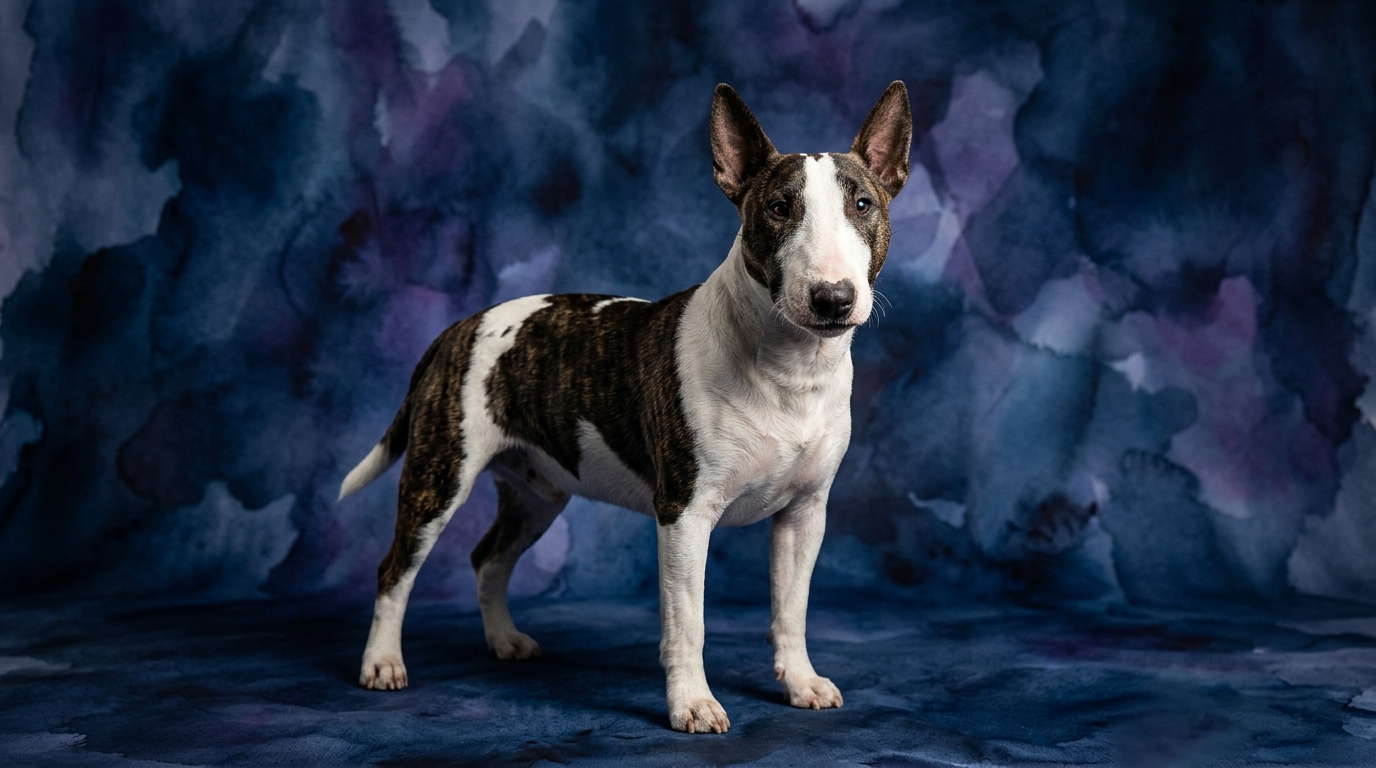
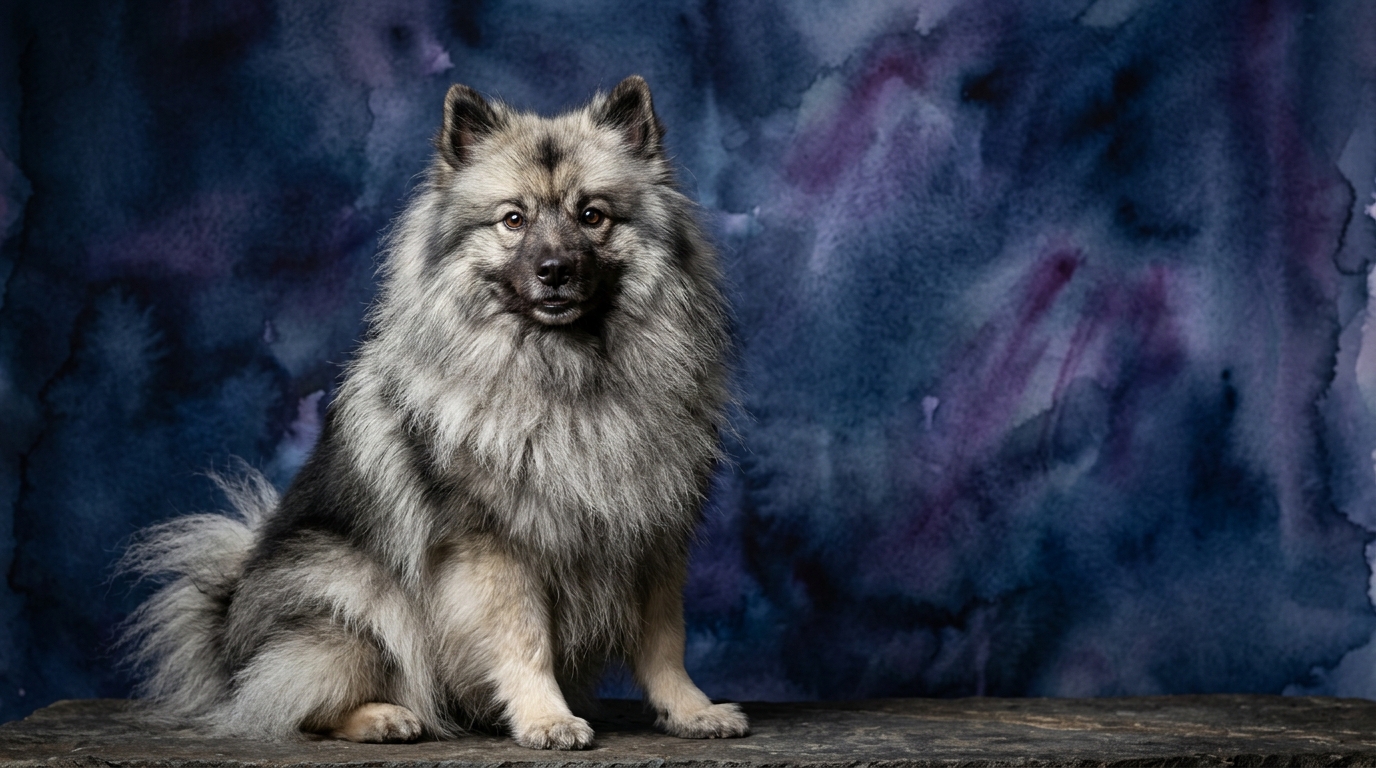
Side-by-Side IQ Profile: Miniature Bull Terrier vs. Keeshond
The Cosmic Pet Pet IQ Lab employs a five-dimensional framework to assess canine intelligence, offering a nuanced view beyond simplistic rankings. For the Miniature Bull Terrier, a breed known for its robust spirit and distinctive appearance, all five dimensions register a consistent 3/5. This indicates a moderate aptitude across the board: a solid capacity for problem-solving, a reasonable pace for training, an adaptable level of social intelligence, a steady instinctive drive, and an average ability to retain information. This uniformity suggests a dog that is neither exceptionally quick nor particularly slow in any single cognitive area, but rather possesses a balanced, perhaps resilient, mental profile.
In contrast, the Keeshond presents a more varied and, in some aspects, elevated cognitive profile, reflected in its #16 ranking on the Coren intelligence scale. This spitz-type dog scores an impressive 4/5 in Problem Solving, indicating a quicker grasp of new concepts and an ability to navigate complex situations. Its Training Speed also stands at a strong 4/5, suggesting a readiness to learn and a responsiveness to instruction. Social Intelligence and Instinctive Drive are both rated 3/5, aligning with the Miniature Bull Terrier in these areas and suggesting a moderate adaptability in social settings and a balanced desire for activity or specific tasks. However, where the Keeshond truly distinguishes itself is in Memory, earning a perfect 5/5, which points to an exceptional capacity for recall and retention of learned behaviors and experiences over time.
Where the Miniature Bull Terrier Wins Cognitively
While the Keeshond boasts higher scores in several areas, the Miniature Bull Terrier's cognitive strengths lie in its distinct terrier tenacity and independence, which can be a win in certain contexts. Its 3/5 in Problem Solving, combined with a persistent nature, means that while it might not grasp solutions instantly, it possesses the grit to keep trying until a challenge is overcome. This isn't about rapid insight but rather about sustained effort and a refusal to give up, a valuable trait for tasks requiring stubborn determination rather than immediate strategic thinking. An owner seeking a dog that can work through puzzles with singular focus, even if it takes time, might appreciate this aspect of the Mini Bull Terrier's intellect.
Furthermore, the Miniature Bull Terrier's balanced 3/5 in Social Intelligence and Instinctive Drive, coupled with its overall independent streak, means it can often be content and self-sufficient. This self-reliance can be a cognitive advantage for owners who appreciate a dog that doesn't constantly demand direction or interaction, fostering a sense of autonomy. It suggests a dog capable of making its own decisions in certain situations, perhaps relying on its inherent confidence rather than always deferring to human guidance. This self-directed problem-solving, even if slower, offers a unique kind of cognitive resilience.
Where the Keeshond Wins Cognitively
The Keeshond's cognitive profile clearly shines in areas demanding quick learning, adaptability, and exceptional recall. Its 4/5 in Problem Solving indicates a dog that can quickly assess new situations and devise effective strategies, often with less trial-and-error than other breeds. This makes them adept at navigating complex environments or understanding intricate routines. Coupled with a 4/5 in Training Speed, the Keeshond demonstrates a significant capacity for absorbing new commands and behaviors rapidly, making them highly receptive to structured training and mental enrichment activities. Owners interested in dog sports or complex trick training will find this responsiveness a distinct advantage.
The Keeshond's most prominent cognitive strength, however, is its perfect 5/5 in Memory. This superior recall means they retain commands, routines, and experiences with remarkable fidelity. An owner can expect a Keeshond to remember lessons learned months ago, making reinforcement efficient and long-lasting. This exceptional memory contributes significantly to their overall trainability and reliability, allowing them to build a vast repertoire of understood cues and respond consistently over their lifetime. It also suggests a dog that can remember specific people, places, and situations, contributing to their adaptability and social interactions.
Which is Easier to Train and Why
Based on their respective IQ profiles, the Keeshond is generally easier to train than the Miniature Bull Terrier. The Keeshond's Training Speed of 4/5, combined with its 5/5 Memory, means it picks up new commands quickly and retains them exceptionally well. This breed often exhibits a strong desire to please and a natural attentiveness to its handler, making it highly responsive to positive reinforcement. They thrive on consistency and clear communication, quickly associating actions with consequences and cementing learned behaviors into their long-term memory. This efficiency in learning minimizes repetition and accelerates the training process, often leading to a more cooperative and predictable training experience.
In contrast, the Miniature Bull Terrier's 3/5 Training Speed suggests a more moderate pace of learning. While certainly trainable, they possess a more independent and sometimes stubborn terrier temperament. This means that while they can learn, they may require more consistent, patient, and engaging training methods to keep them focused and motivated. Their independent streak can manifest as a tendency to 'think for themselves,' occasionally choosing to ignore a command if they perceive something more interesting. Training a Miniature Bull Terrier often requires an owner who understands how to make training feel like a game and is prepared for persistent effort to overcome their natural strong-willed nature, rather than expecting immediate, eager compliance.
Which Suits Active Owners vs. Relaxed Owners
When considering suitability for active versus relaxed owners, both breeds share a 3/5 Instinctive Drive, suggesting moderate energy levels that can adapt to various lifestyles, but their cognitive styles create distinct preferences. The Keeshond, with its higher scores in Problem Solving (4/5) and Training Speed (4/5), typically thrives with owners who are keen on engaging them mentally. This breed benefits from structured activities like obedience training, agility, or puzzle toys that challenge their intellect and utilize their excellent memory. An active owner for a Keeshond might enjoy teaching new tricks, participating in dog sports, or engaging in regular, mentally stimulating walks where the dog is encouraged to 'work' its brain, making them ideal for those who want a true partnership in learning and activity.
The Miniature Bull Terrier, while also requiring regular exercise, might appeal to owners who appreciate a dog with a more independent approach to activity. Its balanced 3/5 scores across the board mean it's not typically driven by an intense need for constant mental tasks or intricate training routines, though it certainly enjoys engagement. An 'active' owner for a Miniature Bull Terrier might be one who enjoys long walks, adventurous hikes, or robust play sessions that cater to their physical stamina and curious nature, without necessarily demanding complex cognitive engagement throughout. Conversely, a more 'relaxed' owner might find the Mini Bull Terrier's self-reliance appealing, provided they can still commit to consistent exercise and firm, patient handling to manage their independent spirit and ensure good manners.
The Verdict: When to Choose Each Breed
The Verdict
Choose the Miniature Bull Terrier if you appreciate a tenacious, independent canine companion with a resilient spirit and are prepared for patient, consistent training to channel its strong will.
Opt for the Keeshond if you desire a highly responsive, quick-learning dog with exceptional memory, eager to engage in structured training and mental challenges.
🧠 Find Your Pet's IQ Score
Our Pet IQ Lab assessment covers 25+ tests across 5 cognitive dimensions — personalized to your breed.
Take the Full IQ Test →Frequently Asked Questions
Is the Miniature Bull Terrier difficult to train due to its independence?
The Miniature Bull Terrier's 3/5 Training Speed indicates it's trainable, but its independent nature means it may require more patience, consistency, and creative motivation than some other breeds. Owners should focus on making training fun and rewarding to keep their attention.
What practical benefits come from the Keeshond's 5/5 memory score?
A Keeshond's perfect 5/5 memory means they retain commands and routines exceptionally well, making training more efficient and long-lasting. This leads to reliable recall, consistent behavior, and the ability to learn a wide array of complex tasks or tricks over their lifetime.
Are both breeds generally good with families, considering their social intelligence?
Both the Miniature Bull Terrier and Keeshond score 3/5 in Social Intelligence, suggesting a moderate adaptability to social environments. They can be good family dogs, but may benefit from early socialization and consistent positive interactions to thrive in diverse household settings.