Side-by-Side Cognitive Profiles
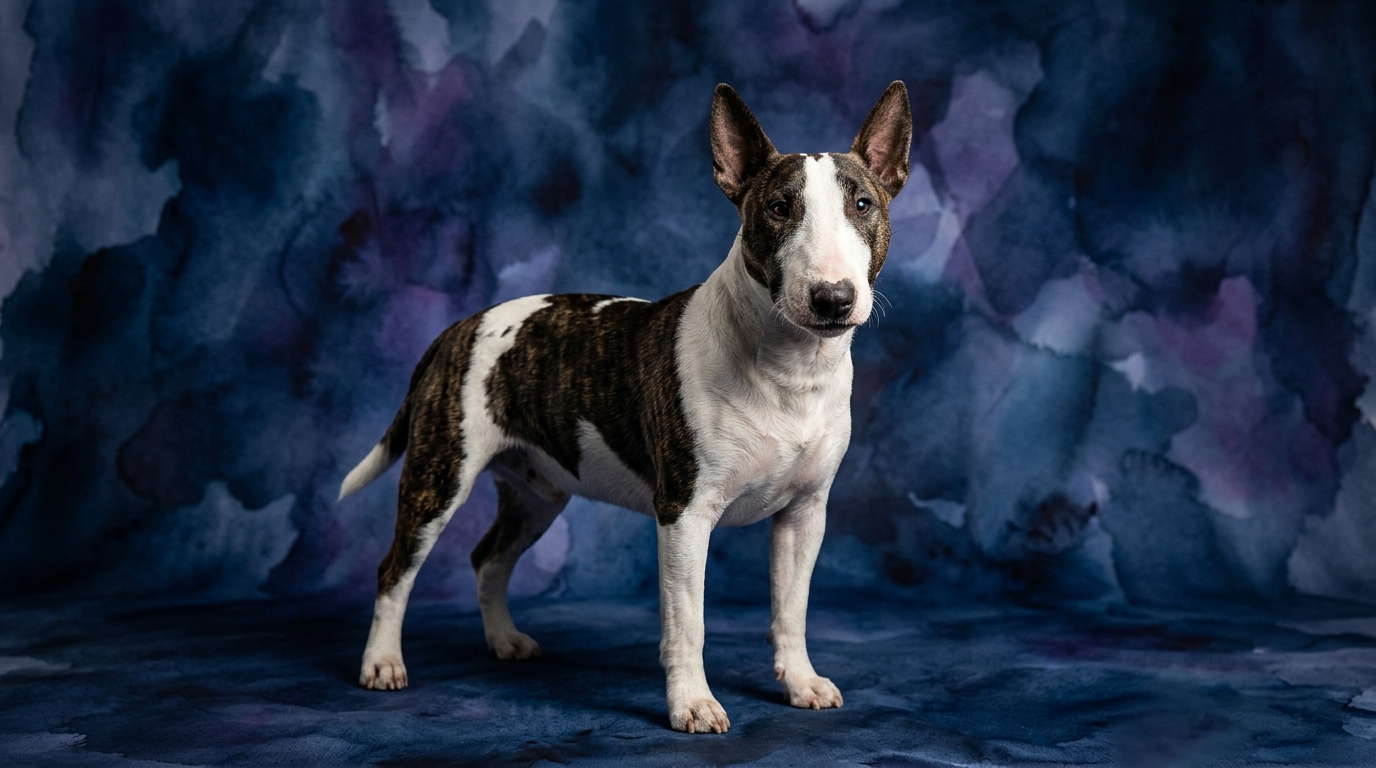
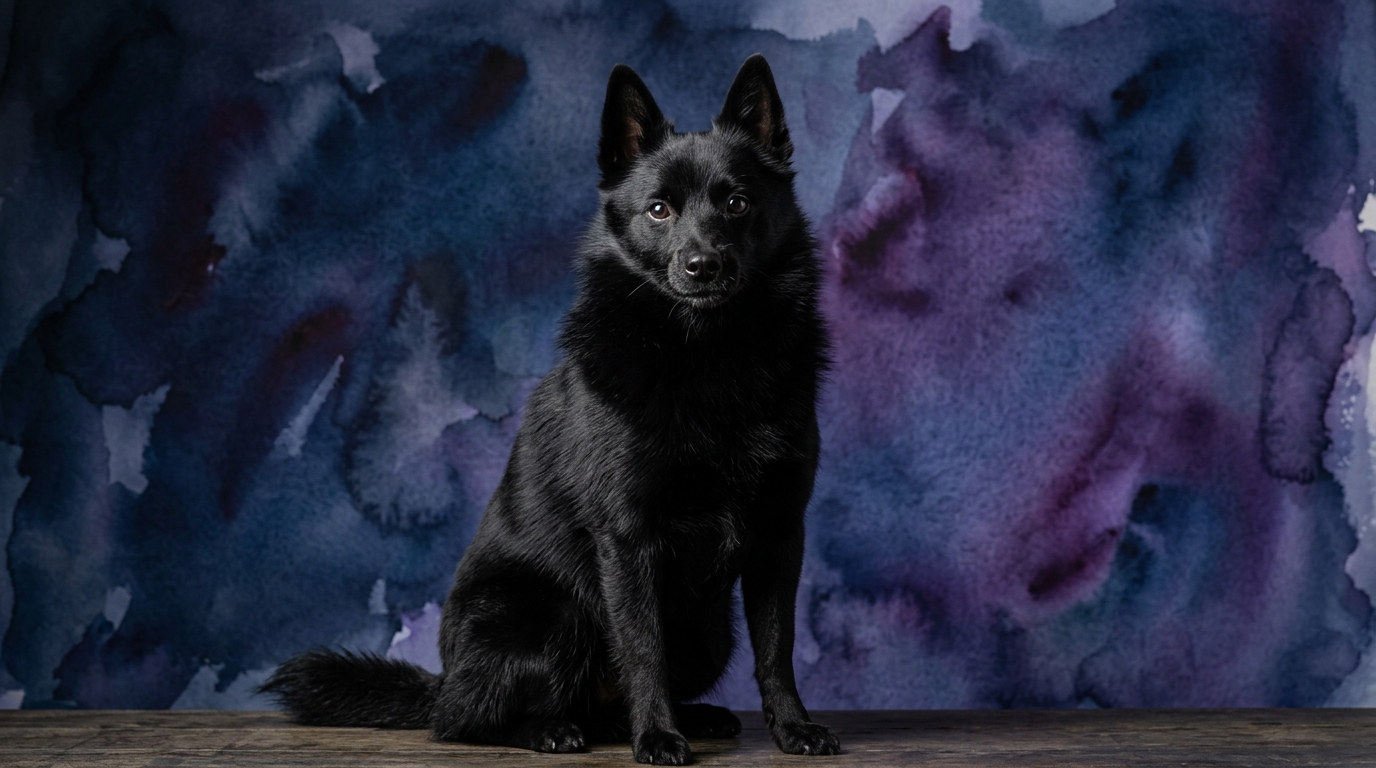
The Cosmic Pet Pet IQ Lab assesses canine intelligence across five key dimensions, offering a nuanced look beyond simple obedience. For the Miniature Bull Terrier, we observe a consistent cognitive baseline across the board, reflecting a steady and predictable mental approach. The Schipperke, however, presents a profile marked by specific areas of exceptional mental acuity, contrasting with more moderate social and instinctive drives.
Miniature Bull Terrier IQ Profile:
Problem Solving (3/5): Capable of navigating simple obstacles or basic puzzle toys, their approach is typically direct rather than analytically complex. They will find solutions but rarely devise intricate strategies.
Training Speed (3/5): Requires consistent, patient repetition to solidify new commands. They learn at a moderate pace, often needing several sessions to master a skill, reflecting a steady acquisition rate.
Social Intelligence (3/5): Interprets human cues and other animal behaviors with reasonable accuracy, forming bonds and understanding social hierarchies. They are good companions, though not noted for exceptional emotional nuance.
Instinctive Drive (3/5): Possesses a moderate drive for typical dog behaviors like chasing, digging, or guarding. These urges are present but generally manageable and can be channeled into appropriate activities.
Memory (3/5): Retains learned behaviors and associations over time, but might require occasional refreshers for less frequently practiced skills. Their recall is reliable for core commands.
Schipperke IQ Profile:
Problem Solving (5/5): Demonstrates exceptional capacity to analyze situations, adapt strategies, and overcome complex challenges. They often find novel solutions and thrive on mental engagement.
Training Speed (5/5): Absorbs new commands and routines with remarkable speed, often grasping concepts in just a few repetitions. This quick assimilation makes them eager and rewarding to teach.
Social Intelligence (3/5): Interprets social signals and group dynamics with moderate understanding, capable of forming attachments and recognizing familiar faces. They are not noted for exceptional empathy or highly nuanced social interactions.
Instinctive Drive (3/5): Exhibits a moderate level of inherent drives such as territoriality or prey drive. These drives are consistent aspects of their character but can be managed with training.
Memory (5/5): Possesses an outstanding ability to recall commands, experiences, and associations over extended periods. Learned behaviors are durable and accessible even after long breaks.
Where the Miniature Bull Terrier Wins Cognitively
The Miniature Bull Terrier, with its balanced cognitive profile, offers a unique kind of strength. Their steady 3/5 across all dimensions implies a robust, predictable mental landscape, which can be advantageous for owners who appreciate reliable cognitive output. For instance, their problem-solving at 3/5 means they are less likely to devise elaborate schemes to counter owner rules or outsmart child-proof barriers, approaching challenges with directness.
Furthermore, their moderate instinctive drive (3/5) ensures inherent urges like chasing or guarding are present but generally more manageable than breeds with extreme drives. This allows for a more relaxed integration into family life without constant redirection of intense predispositions. This solid, all-around cognitive footing provides a dependable companionship that prioritizes steadfastness over flash.
Where the Schipperke Wins Cognitively
The Schipperke's cognitive profile showcases exceptional mental agility, particularly evident in its 5/5 scores for Problem Solving, Training Speed, and Memory. This breed genuinely excels at independent thought and strategizing. Their superior problem-solving capability means they quickly assess novel situations, like a new puzzle toy, and devise effective solutions, often surprising owners with their ingenuity.
Their rapid training speed (5/5) is another significant cognitive advantage, as Schipperkes absorb new commands with remarkable efficiency, often requiring only a handful of repetitions. Coupled with outstanding memory (5/5), once a Schipperke learns something, it tends to stick. This means less need for constant refreshers, making them incredibly reliable once trained and formidable learners ready for intellectual challenges.
Which is Easier to Train and Why
When evaluating ease of training, the Schipperke undeniably holds an advantage due to its exceptional Training Speed (5/5) and Memory (5/5). A Schipperke typically grasps new commands within a few repetitions, making training sessions efficient and often enjoyable. Their ability to quickly associate a cue with an action, and then remember it long-term, means they build a robust behavioral repertoire swiftly.
In contrast, the Miniature Bull Terrier, with moderate Training Speed (3/5) and Memory (3/5), requires a more patient and consistent approach. While capable of learning, they need more repetitions and a longer period to solidify new behaviors. Their training success hinges on the owner's commitment to consistent, positive reinforcement, acknowledging their learning curve is more gradual and they may exhibit terrier stubbornness.
Which Suits Active Owners vs. Relaxed Owners
The choice between these breeds often hinges on an owner's lifestyle and capacity for engagement. For the active owner who thrives on intellectual challenges and consistent interaction, the Schipperke is an exceptional match. Their 5/5 problem-solving and rapid training speed mean they require significant mental stimulation beyond just physical exercise; they need to think and work, excelling in dog sports or complex training.
Conversely, the Miniature Bull Terrier, while active, suits an owner seeking a loyal companion with a more balanced, less intensely demanding cognitive profile. Their 3/5 scores suggest a dog that enjoys activity and interaction but doesn't crave constant, high-level mental stimulation. They appreciate consistent routines, regular walks, and playtime, generally content with a more relaxed pace once physical needs are met, making them adaptable to various family environments.
The Verdict
Choose the Miniature Bull Terrier if you seek a steady, affectionate companion whose cognitive demands are consistent and whose interactions are direct, valuing reliability over rapid learning. They thrive with owners who appreciate a robust, predictable temperament and can provide patient, positive training.
Opt for the Schipperke if you are an engaged owner who relishes a dog with exceptional mental agility, a quick learning curve, and a keen desire for intellectual challenges. They are best suited for those who enjoy advanced training, dog sports, and a truly dynamic cognitive partnership.
🧠 Find Your Pet's IQ Score
Our Pet IQ Lab assessment covers 25+ tests across 5 cognitive dimensions — personalized to your breed.
Take the Full IQ Test →Frequently Asked Questions
Do Miniature Bull Terriers need a lot of mental stimulation?
While not requiring intense, constant mental puzzles, Miniature Bull Terriers benefit from regular mental engagement. Their 3/5 problem-solving and social intelligence mean they enjoy moderate challenges like basic obedience, interactive toys, and consistent social interaction to keep them content.
How quickly can a Schipperke learn new tricks?
Schipperkes learn new tricks with remarkable speed, thanks to their 5/5 training speed and memory. They often grasp new concepts in just a few repetitions, making them excellent candidates for advanced obedience, agility, and trick training, retaining what they learn for extended periods.
Are Miniature Bull Terriers stubborn?
Miniature Bull Terriers can exhibit a degree of stubbornness, a common terrier trait, which influences their 3/5 training speed. While capable of learning, they might occasionally choose to test boundaries or require more compelling motivation, necessitating patient and consistent positive reinforcement.