Unpacking Their Cognitive Blueprints: Side-by-Side IQ Profiles
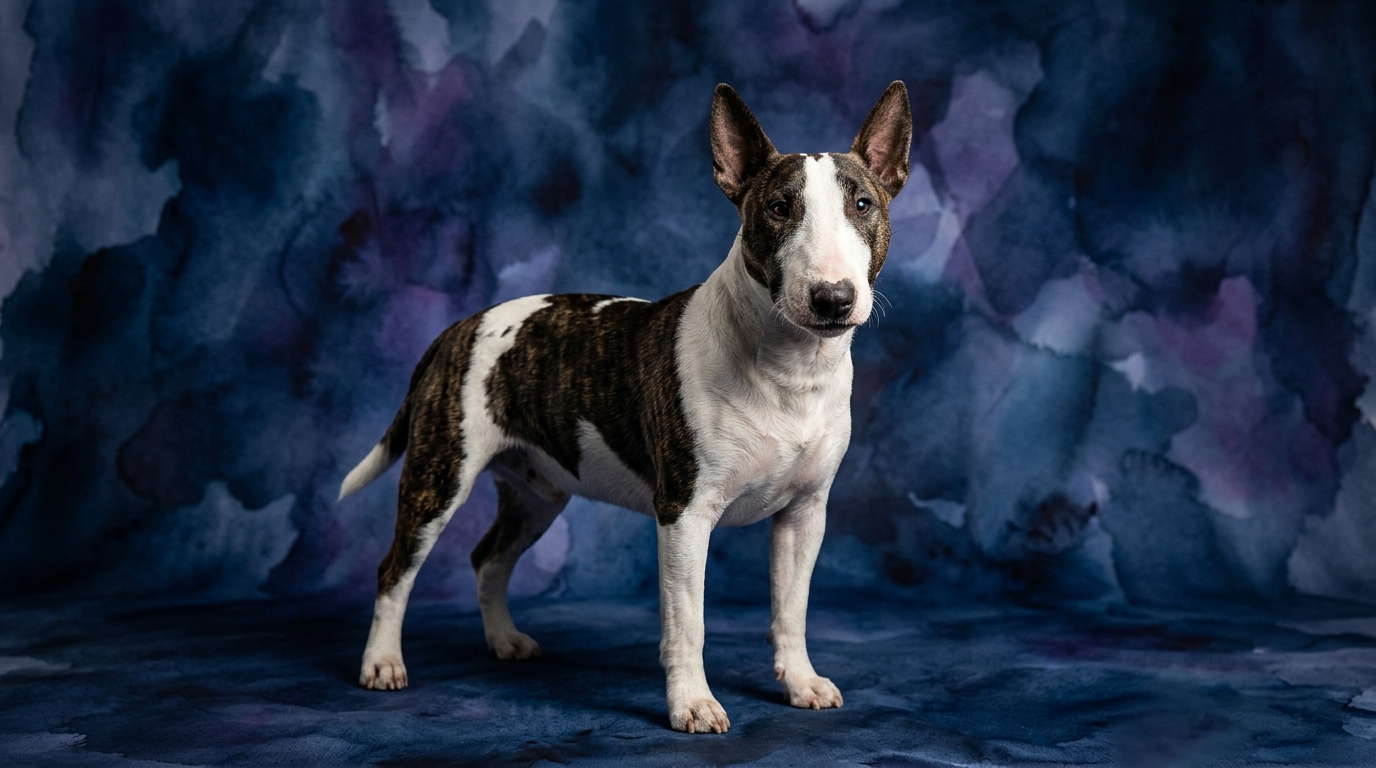
The Cosmic Pet Pet IQ Lab employs a five-dimensional framework to assess canine cognition, providing a nuanced view beyond simple rankings. For the Miniature Bull Terrier, a breed from the Terrier group, we observe a balanced but distinct profile across these dimensions.
Miniature Bull Terrier's cognitive scores are as follows: Problem Solving 3/5, indicating an ability to navigate challenges and find solutions, though perhaps not always with immediate efficiency. Training Speed is 3/5, suggesting they learn new commands and behaviors with consistent effort, requiring patience and varied motivation. Social Intelligence also scores 3/5, meaning they can interpret human cues and social situations, but maintain a degree of independence. Their Instinctive Drive is 3/5, reflecting a moderate inclination towards their historical terrier roles, such as scent work or chasing. Finally, Memory is 3/5, showing they retain learned information and experiences over time, but might not recall complex sequences instantly.
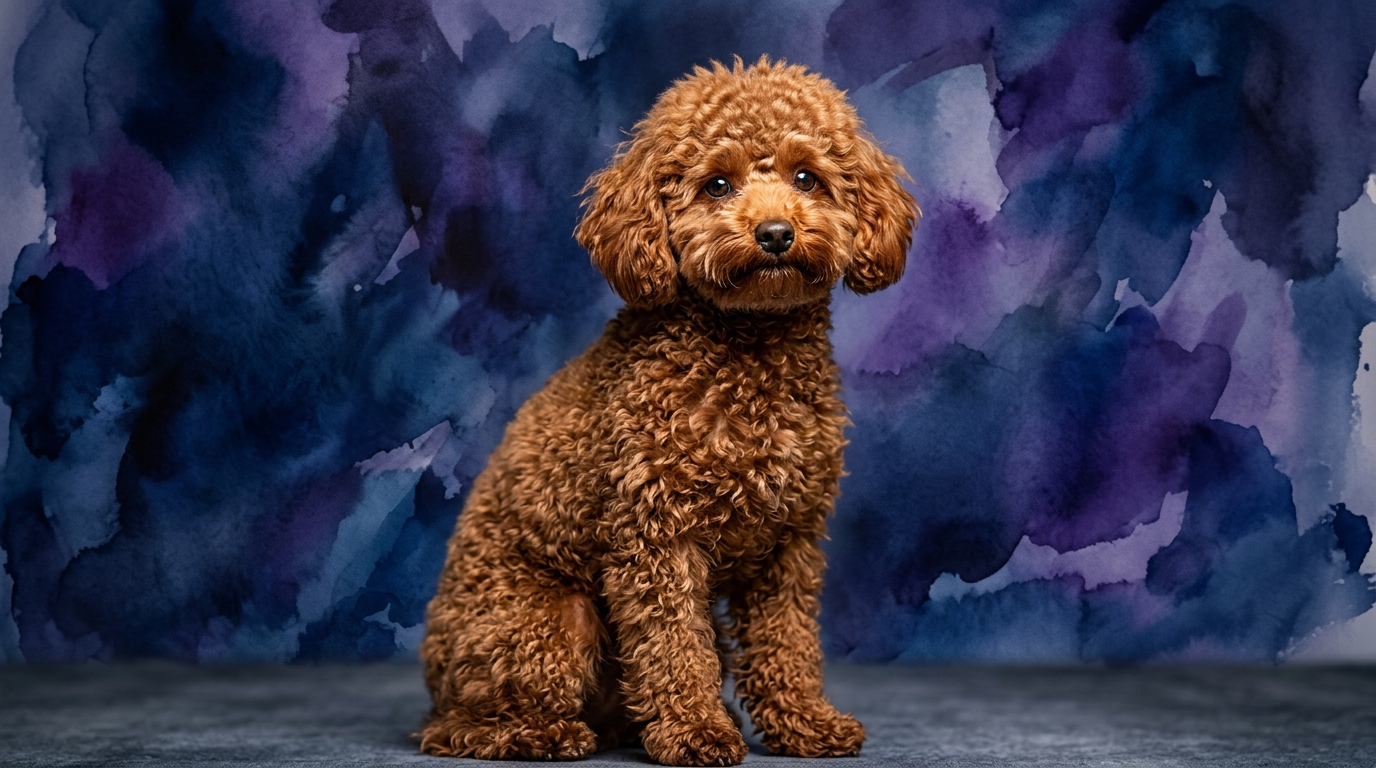
In contrast, the Toy Poodle, a member of the Toy group and a breed with a Coren rank of #2, presents a strikingly different cognitive blueprint. This breed's profile highlights exceptional aptitudes in specific areas that contribute to its celebrated adaptability and trainability.
The Toy Poodle's cognitive scores are notably higher in several key areas: Problem Solving 5/5, demonstrating an outstanding capacity to analyze situations, devise strategies, and overcome obstacles, often with surprising ingenuity. Training Speed is also 5/5, meaning they grasp new commands and routines with remarkable rapidity, often after just a few repetitions. Social Intelligence scores 3/5, indicating they are attuned to human emotions and intentions, fostering strong bonds, though sometimes displaying sensitivity. Their Instinctive Drive is 3/5, reflecting some ancestral retrieving traits but primarily geared towards companionship. Memory, at 5/5, signifies an impressive ability to retain a vast repertoire of commands, routines, and past experiences with long-term accuracy.
Where the Miniature Bull Terrier's Mind Shines
While not scoring at the extreme ends of the cognitive scale, the Miniature Bull Terrier possesses a mental tenacity that can be a unique asset. Their 3/5 in Problem Solving often manifests as a determined, sometimes singular focus on achieving a goal, even if it requires a less conventional approach. This isn't about rapid, elegant solutions, but rather a steadfast pursuit, leveraging their physical prowess and terrier grit to work through an issue.
Their balanced scores across all dimensions, particularly the 3/5 in Social Intelligence and Instinctive Drive, suggest a dog that is less prone to overthinking or seeking constant human validation for every action. This independence allows them to assess situations from a self-directed perspective, sometimes leading to creative, albeit stubborn, problem-solving in scenarios where a more eager-to-please dog might wait for guidance.
The Toy Poodle's Cognitive Apex
The Toy Poodle's cognitive strengths are undeniably pronounced, particularly in areas of learning and adaptation. Their 5/5 in Problem Solving means they excel at tasks requiring logical sequencing, understanding cause and effect, and manipulating objects to reach a desired outcome. This manifests in behaviors like figuring out how to open latches, navigating complex puzzle toys, or even anticipating routines based on subtle environmental cues.
Crucially, their 5/5 in Training Speed and Memory allows for an unparalleled capacity to absorb and recall a vast vocabulary of commands and tricks. This isn't just about simple obedience; it extends to learning intricate routines, differentiating between numerous objects, and executing multi-step instructions with precision. This makes them exceptionally adept at dog sports like agility or obedience, where quick learning and reliable recall are paramount.
Ease of Training: A Tale of Two Temperaments
When it comes to ease of training, the Toy Poodle undeniably holds an advantage. Their 5/5 Training Speed means they forge connections between actions and consequences with remarkable swiftness. If a 'sit' command is followed by a treat, a Toy Poodle will internalize that association in very few repetitions. This eagerness to please, coupled with their sharp problem-solving abilities, makes them highly responsive to positive reinforcement and eager participants in training sessions, viewing them often as engaging mental games.
The Miniature Bull Terrier, with a 3/5 Training Speed, requires a different approach. Their terrier heritage imbues them with a degree of independence and a strong will, meaning they might not always see the immediate benefit in complying with a command unless it's presented in an engaging and highly motivating way. They are capable of learning, but often need more varied reinforcement, shorter training sessions to maintain focus, and a handler who understands their unique blend of tenacity and occasional stubbornness. Expecting instant compliance like a Toy Poodle would lead to frustration; instead, patience and creativity are key to unlocking their learning potential.
Matching Minds to Lifestyles: Active vs. Relaxed Owners
For active owners seeking a canine partner for sports or consistent engagement, both breeds offer possibilities, but with different demands. A Toy Poodle thrives on structured mental and physical activity, such as agility, obedience, or trick training, where their rapid learning and memory can be fully utilized. They enjoy regular walks and playtime, but their exercise needs can often be met with moderate activity combined with significant mental stimulation indoors. Their adaptability makes them suitable for owners who enjoy a variety of activities, from competitive dog sports to simply learning new tricks in the living room.
The Miniature Bull Terrier, while also capable of activity, requires an owner who appreciates their robust, independent spirit. Their 3/5 instinctive drive means they can enjoy structured play and walks, but their problem-solving and social intelligence scores suggest they might not always be looking to their owner for constant direction. Owners who can provide consistent, firm-yet-fair leadership and channel their terrier energy into appropriate outlets, like earthdog trials or long, engaging walks, will find a rewarding companion. They might not be the dog for a purely relaxed, passive owner, as their independent streak requires thoughtful engagement to prevent boredom-driven behaviors.
The Verdict: When to Choose Each Distinct Companion
Choosing between a Miniature Bull Terrier and a Toy Poodle hinges on what you value most in a canine companion and your lifestyle. Both breeds offer unique joys, but cater to different expectations regarding cognitive engagement and daily interaction.
The Miniature Bull Terrier is an excellent choice for owners who appreciate a dog with a strong, independent personality and a tenacious spirit, who are prepared for a consistent and creative training journey. The Toy Poodle is ideal for individuals or families seeking a highly trainable, mentally agile companion who thrives on close interaction and excels at learning complex tasks and routines.
The Verdict
Choose the Miniature Bull Terrier if you value an independent spirit, are prepared for a rewarding training challenge, and appreciate a dog that thinks for itself.
Opt for the Toy Poodle if you seek a highly trainable, quick-witted companion who excels at learning and thrives on consistent mental engagement and close human interaction.
🧠 Find Your Pet's IQ Score
Our Pet IQ Lab assessment covers 25+ tests across 5 cognitive dimensions — personalized to your breed.
Take the Full IQ Test →Frequently Asked Questions
Is the Miniature Bull Terrier difficult to train?
The Miniature Bull Terrier scores 3/5 in Training Speed, meaning they are capable learners but require patience, consistency, and engaging methods. Their independent nature means they may not always be eager to please, necessitating varied motivation and understanding of their terrier temperament.
Do Toy Poodles need a lot of mental stimulation?
Yes, Toy Poodles, with their 5/5 Problem Solving and Memory, thrive on mental challenges. They benefit immensely from puzzle toys, learning new tricks, and engaging in dog sports, which helps prevent boredom and channel their considerable cognitive abilities constructively.
Which breed is better for a first-time dog owner?
For a first-time dog owner, the Toy Poodle might be a more manageable choice due to its exceptional trainability and eagerness to please, which can make the learning curve for both dog and owner smoother. The Miniature Bull Terrier, while rewarding, often requires an owner with prior dog experience or a strong commitment to understanding and managing a more independent and tenacious personality.