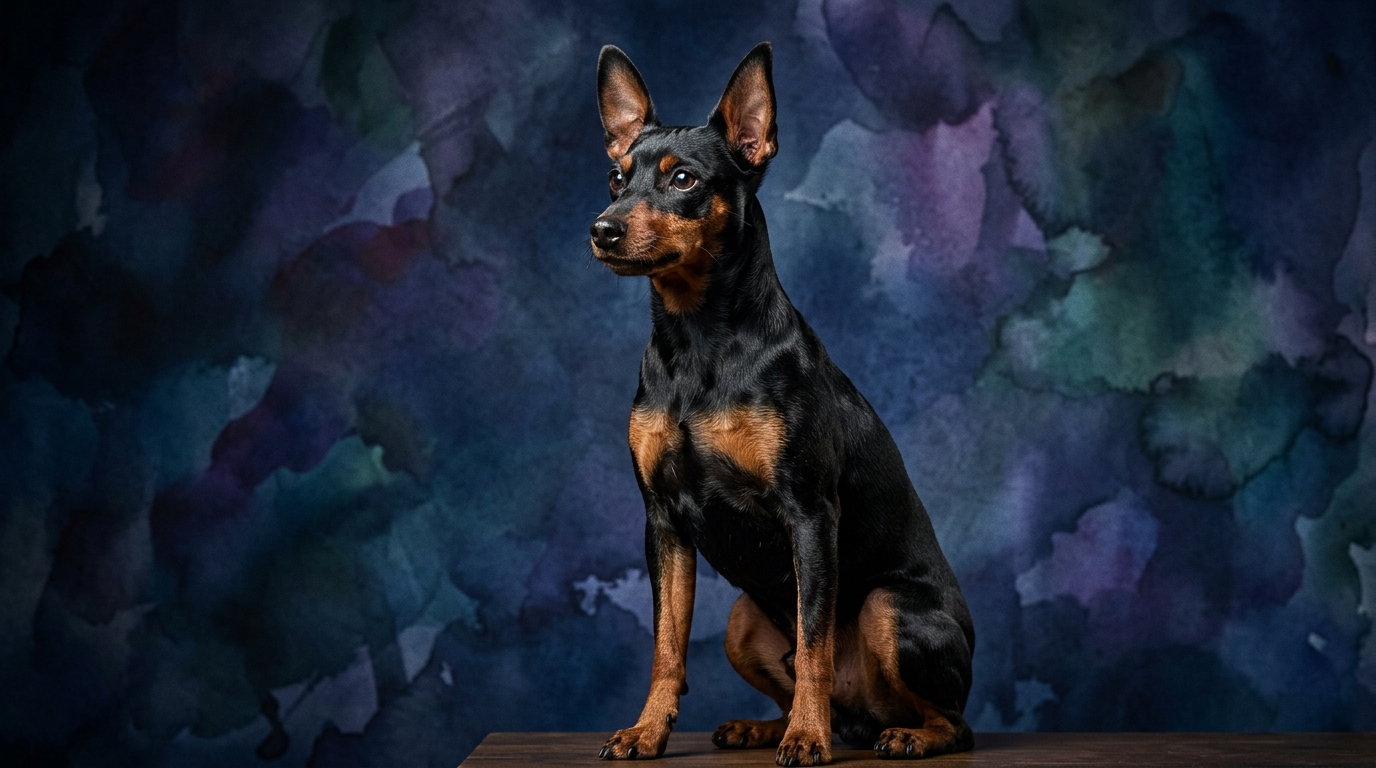

Side-by-Side IQ Profile: Miniature Pinscher vs. Russian Toy
**Problem Solving (3/5):** The Miniature Pinscher approaches challenges with a tenacious and independent spirit. A 3/5 suggests they can figure out moderately complex tasks like navigating obstacles for a prized toy or devising strategies to get attention, often through persistent trial-and-error reflecting their assertive "King of Toys" nature. The Russian Toy, also scoring 3/5, typically applies problem-solving within their social context. This manifests as cleverly communicating needs to their owner, such as signaling for a walk or subtly manipulating situations to be closer to their preferred person, leveraging their bond for domestic efficiency.
**Training Speed (3/5):** A 3/5 training speed means Min Pins grasp new commands at a moderate pace. Their independent streak and occasional stubbornness can sometimes slow progress, requiring consistent, engaging sessions. They are capable learners, but their focus needs careful management to ensure lessons stick. The Russian Toy also registers 3/5, learning new behaviors comparably. However, their strong desire to please their human companions often translates into a more eager and cooperative attitude. They thrive on positive reinforcement and gentle guidance, making the training experience feel smoother and more responsive.
**Social Intelligence (3/5):** The Min Pin's 3/5 social intelligence allows them to read cues, often through a watchful, protective lens. They interpret human moods and household hierarchies, reacting with alertness or cautious affection. With strangers, they might display reserve or a bold bark, assessing situations and deciding whether to engage or alert. The Russian Toy's identical 3/5 score emphasizes their profound connection with primary caregivers. Highly attuned to owner emotions, they interpret subtle body language and vocal tones, fostering closeness. Their social intelligence is primarily geared towards maintaining harmonious, intimate relationships within their trusted circle, making them adept at nuanced emotional communication.
**Instinctive Drive (3/5):** The Min Pin's 3/5 instinctive drive is rooted in their ratter history, manifesting as a strong prey drive, chasing small objects, and keen territoriality. Their alertness to sounds and movements, coupled with barking, reflects a deep-seated instinct to protect their domain, requiring consistent management. The Russian Toy's 3/5 instinctive drive is less about predatory pursuit and more about companionship and comfort. They possess an innate desire for closeness, seeking warmth and physical contact. While a mild prey drive may exist, their strongest instinct is often towards bonding and maintaining social proximity, making them excellent lap dogs.
**Memory (3/5):** With a 3/5 memory, Min Pins effectively retain commands, routines, and experiences. They remember boundaries, item locations, and past interactions, supporting their independent nature. This allows them to navigate confidently and recall actions leading to desired outcomes or consequences. The Russian Toy's 3/5 memory also allows reliable recall of routines, commands, and social interactions. Their memory is particularly strong concerning human companions and home comfort, remembering who provides affection and the sequence of events, fostering security and connection.
Where the Miniature Pinscher Wins Cognitively
While both breeds share identical IQ scores, the Miniature Pinscher's cognitive strengths lean towards a more independent and assertive application of their abilities. Their problem-solving (3/5) often involves a spirited determination to achieve a goal, even if it means trying unconventional methods. For instance, a Min Pin might persistently work at figuring out how to bypass a minor barrier to reach a valued treat, demonstrating a self-reliant approach that contrasts with a Russian Toy, who might more readily seek human assistance for the same task.
Furthermore, their instinctive drive (3/5), particularly their vigilance and territoriality, translates into a cognitive advantage in environmental awareness. A Min Pin is acutely attuned to changes in their surroundings, processing auditory and visual cues with a quick, decisive response. This makes them exceptional alert systems, able to discern unusual occurrences and react promptly, a manifestation of their problem-solving and social intelligence applied to security. Their memory (3/5) reinforces this by allowing them to quickly recall and react to past experiences with perceived threats or novel stimuli.
Where the Russian Toy Wins Cognitively
Conversely, the Russian Toy excels in the more subtle and relational aspects of cognition, even with identical scores. Their social intelligence (3/5) is finely tuned to human emotional states, giving them an edge in empathetic understanding and communication. A Russian Toy might more readily pick up on a subtle shift in an owner’s mood and respond with comforting gestures, demonstrating a sophisticated ability to interpret non-verbal cues. This makes them highly intuitive companions, adept at anticipating needs and offering emotional support without explicit commands.
Their problem-solving (3/5) is frequently channeled into optimizing their bond with their owners. This might involve learning specific routines that elicit affection or attention, or subtly "training" their humans to respond to their gentle nudges and gazes. Their memory (3/5) plays a crucial role here, allowing them to recall which behaviors consistently lead to positive interactions and reinforce their role as cherished companions. This focus on relational problem-solving and emotional attunement provides a distinct cognitive strength in fostering deep, reciprocal bonds.
Which is Easier to Train and Why
Despite both breeds scoring 3/5 in training speed, the Russian Toy often presents as the 'easier' to train for many owners, primarily due to inherent temperament differences. The Russian Toy’s strong desire to please and their profound emotional connection to their owners mean they are generally more eager to cooperate during training sessions. They respond well to positive reinforcement and gentle encouragement, thriving on the interaction and praise. Their sensitivity, while requiring a soft touch, also means they are highly attentive to their owner's cues, seeking to avoid disapproval and earn affection.
The Miniature Pinscher, while equally capable of learning at a 3/5 pace, can introduce more 'resistance' into the training dynamic. Their independent streak and sometimes stubborn nature mean they might question commands or try to assert their own agenda. Training a Min Pin often requires more patience, consistency, and a creative approach to make learning feel like a game or a challenge they choose to conquer, rather than a directive. While they learn, their inherent confidence means they might require more convincing that a command is truly non-negotiable, making the process of training feel more demanding.
Which Suits Active Owners vs. Relaxed Owners
When considering activity levels, the Miniature Pinscher generally aligns better with active owners, while the Russian Toy often suits those with a more relaxed lifestyle, though both are adaptable. The Min Pin's 3/5 instinctive drive and overall spirited disposition mean they possess a surprising amount of energy for their size. They thrive on regular walks, engaging play sessions, and mental stimulation that taps into their problem-solving and vigilance. Owners who enjoy brisk daily activities, dog sports like agility, or simply having a tenacious companion on their adventures will find a Min Pin a fitting match. Their cognitive engagement benefits from varied experiences and opportunities to explore.
The Russian Toy, while certainly enjoying walks and playtime, typically prefers a more sedentary lifestyle centered around companionship. Their 3/5 instinctive drive is primarily focused on comfort and proximity to their human, making them excellent lap dogs and homebodies. They are content with shorter, gentler strolls and indoor games, preferring to spend much of their time curled up with their owner. Owners who appreciate a devoted, quiet companion for relaxed evenings, or those with less demanding physical routines, will find the Russian Toy’s temperament and cognitive focus on relational well-being a perfect fit.
The Verdict
Choose the Miniature Pinscher if you value an independent, vigilant, and spirited companion who thrives on assertive problem-solving and engaging, active routines, ready to be your tenacious little shadow.
Opt for the Russian Toy if you seek a deeply affectionate, emotionally attuned companion whose cognitive strengths shine in fostering intimate bonds and navigating domestic life with gentle grace and eager cooperation.
🧠 Find Your Pet's IQ Score
Our Pet IQ Lab assessment covers 25+ tests across 5 cognitive dimensions — personalized to your breed.
Take the Full IQ Test →Frequently Asked Questions
Can Miniature Pinschers and Russian Toys live together peacefully?
Yes, they can. Both breeds, with proper socialization, can coexist. Their similar size and toy breed classification often mean they understand each other's play styles, though the Min Pin's bolder personality might require careful introduction to the Russian Toy's more delicate nature.
Are Miniature Pinschers or Russian Toys better for first-time dog owners?
The Russian Toy might be slightly more forgiving for a first-time owner due to their eagerness to please and less demanding exercise needs. Miniature Pinschers, while trainable, require an owner who can confidently manage their independent streak and provide consistent, firm guidance from the outset.
How do their 3/5 memory scores impact their daily routines?
For both, a 3/5 memory means they reliably recall routines, commands, and social interactions. A Min Pin might remember boundaries and past training challenges, while a Russian Toy will keenly recall comforting routines and the subtle cues of their favorite humans, contributing to their adaptability and strong bonds.