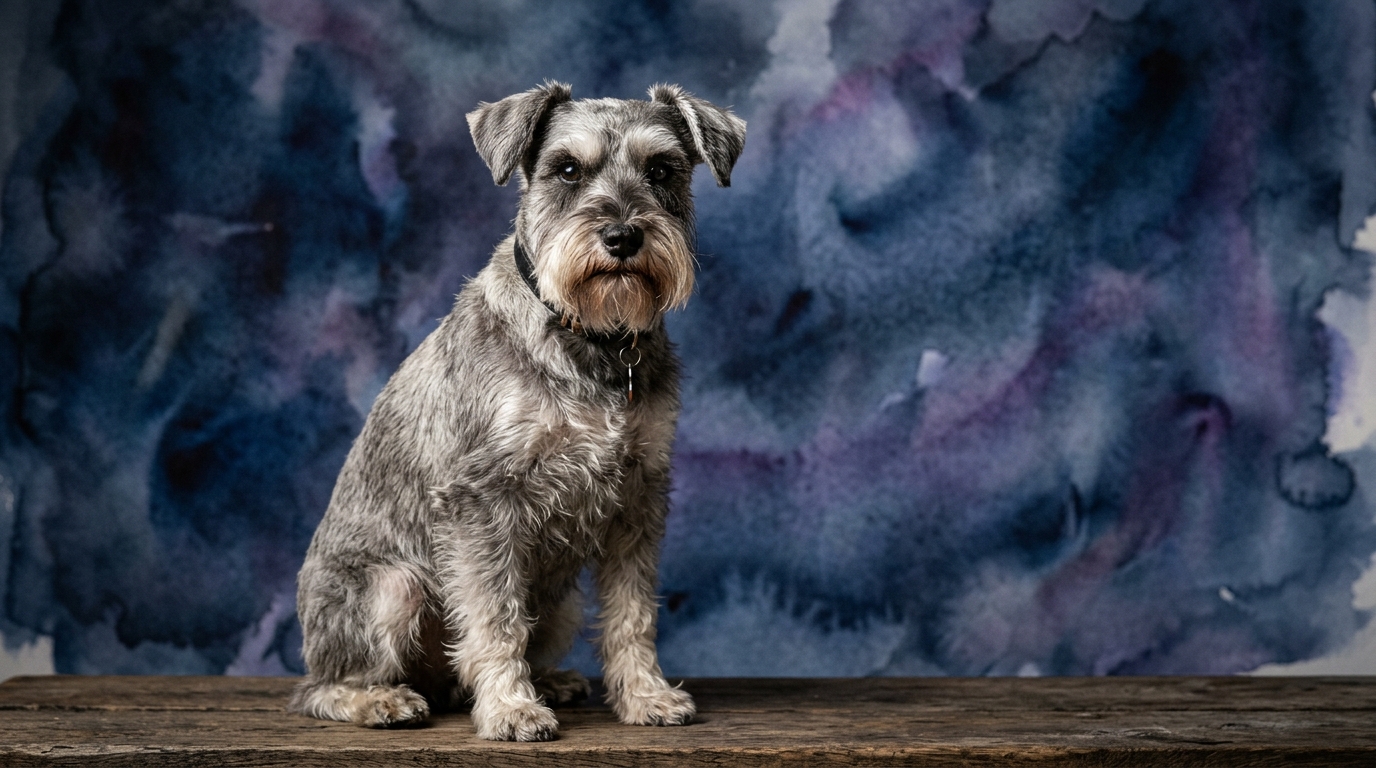
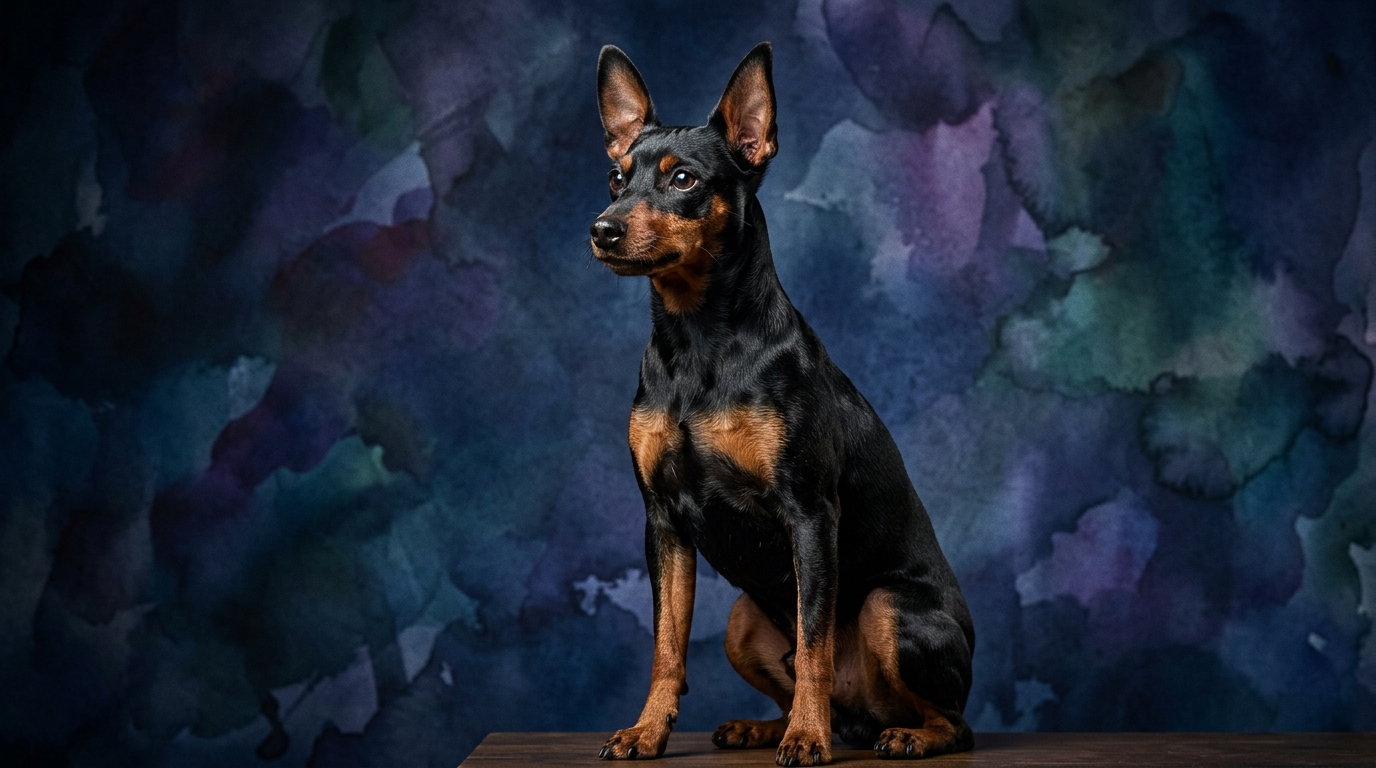
Side-by-Side Cognitive Profiles: Schnauzer vs. Pinscher
The Cosmic Pet Pet IQ Lab employs a five-dimensional framework to assess canine intelligence, providing a nuanced view beyond simple obedience. For the Miniature Schnauzer, its Coren rank of #12 places it among breeds with impressive working and obedience intelligence, a testament to its cognitive capabilities. In our lab, the Miniature Schnauzer scores a 4/5 in Problem Solving, indicating an adeptness at navigating novel challenges and figuring out solutions independently. Its Training Speed is an exceptional 5/5, meaning it grasps new commands and routines with remarkable rapidity. Social Intelligence, rated at 4/5, highlights its capacity to interpret human cues and form responsive bonds. An Instinctive Drive of 4/5 reflects its strong terrier heritage, encompassing a pronounced prey drive and protective instincts. Finally, its Memory scores 4/5, demonstrating solid retention of learned behaviors and experiences over time.
In contrast, the Miniature Pinscher, while not listed in the Coren ranking, presents a more uniformly moderate cognitive profile. Across all five dimensions – Problem Solving, Training Speed, Social Intelligence, Instinctive Drive, and Memory – the Miniature Pinscher consistently scores 3/5. This suggests a dog capable of learning and adapting, but at a pace and with an intensity that differs significantly from its Schnauzer counterpart. A 3/5 in Problem Solving indicates it can handle straightforward tasks but may require more guidance for complex puzzles. Its 3/5 Training Speed means it learns at a moderate pace, necessitating consistent repetition and patience. Social Intelligence at 3/5 points to an independent streak, potentially making it less attuned to subtle human social cues compared to more people-oriented breeds. An Instinctive Drive of 3/5 shows it possesses inherent drives for chasing and guarding, but perhaps with less intensity or focus. Lastly, a 3/5 in Memory suggests it retains information, though complex tasks might require more frequent refreshers to ensure long-term recall.
Where the Miniature Schnauzer Excels Cognitively
The Miniature Schnauzer's cognitive strengths are evident across multiple dimensions, making it a particularly engaging and capable companion for those seeking a mentally active dog. Its 5/5 Training Speed is a standout feature, indicating an almost effortless ability to absorb new commands and routines. This translates into a quicker mastery of basic obedience, advanced tricks, and even complex canine sport disciplines like agility or rally. Owners often report that Schnauzers pick up new concepts with minimal repetitions, making training sessions highly rewarding and efficient.
Beyond rapid learning, the Miniature Schnauzer's 4/5 Problem Solving aptitude means it's a dog that enjoys mental challenges and can independently work through puzzles. Whether it involves figuring out how to open a treat-dispensing toy, navigating a new environment, or even devising strategies to get what it wants, the Schnauzer displays notable cognitive flexibility. This capacity for independent thought and resolution means they thrive on enrichment activities that stimulate their minds. Furthermore, its 4/5 Social Intelligence fosters a highly responsive and intuitive bond with its human companions. Schnauzers are often adept at picking up on subtle shifts in owner mood or intention, leading to a deeper level of communication and making them excellent candidates for roles requiring sensitivity, such as therapy work. Their robust 4/5 Memory ensures that these learned behaviors and social understandings are not fleeting, contributing to a consistently well-behaved and understanding companion over its lifetime.
Distinct Cognitive Traits of the Miniature Pinscher
While the Miniature Pinscher's IQ scores are uniformly moderate at 3/5, this profile highlights a distinct set of cognitive traits that can be a 'win' for certain lifestyles and owner preferences. Its moderate Problem Solving score means the Min Pin is less likely to devise complex mischievous schemes, such as intricately planning escapes or figuring out how to open child-proof cabinets. For owners who prefer a companion that is less prone to outsmarting them in undesirable ways, this can be a significant advantage, leading to a more straightforward and less cognitively demanding household dynamic.
The Miniature Pinscher's 3/5 Social Intelligence often manifests as a more independent spirit. Unlike breeds that crave constant human interaction and validation, the Min Pin can be more self-reliant and content with its own company for periods. This independence can be a benefit for owners who appreciate a dog that is affectionate but not overly 'needy,' potentially reducing the likelihood of separation anxiety or excessive demand barking. Its 3/5 Instinctive Drive, while still present, might be less intense or focused than that of a high-drive terrier, potentially making it easier to manage around small prey animals or in environments where a strong chase instinct could be problematic. Overall, the Miniature Pinscher's cognitive profile suggests a dog that requires less intense mental stimulation to prevent boredom-driven behaviors, offering a charming and spirited companionship that is less cognitively complex to manage.
Ease of Training: Schnauzer vs. Pinscher
When it comes to ease of training, the Miniature Schnauzer stands out as the more amenable student, primarily due to its exceptional 5/5 Training Speed and robust 4/5 Problem Solving ability. Schnauzers are keen learners who quickly associate commands with actions and rewards, making the process of teaching basic obedience, house rules, and even complex tricks remarkably efficient. Their inherent eagerness to please, coupled with their sharp cognitive processing, means they typically require fewer repetitions to master a new skill. For example, a Miniature Schnauzer might learn to 'stay' reliably within a few dedicated sessions, often generalizing the command to various environments with ease. This rapid learning curve and cognitive flexibility translate into a dog that is generally easier to integrate into a structured household and can excel in competitive obedience or dog sports.
The Miniature Pinscher, with its 3/5 Training Speed, requires a more patient and consistent approach to training. While capable of learning, Min Pins absorb new information at a moderate pace, often needing more repetitions and a highly engaging reward system to maintain focus and motivation. Their 3/5 Social Intelligence can also contribute to a perceived challenge in training; they are often described as independent thinkers who might not always prioritize pleasing their owner over their own interests. This means trainers need to be creative, consistent, and highly motivating, utilizing positive reinforcement techniques that make training feel like a game rather than a chore. For instance, teaching a Min Pin to 'come' when called might require extensive practice in various settings, with high-value treats or toys, to overcome its independent nature and ensure reliable recall. Their moderate memory also means that skills might need more frequent refreshing to remain sharp.
Matching Breeds to Lifestyles: Active vs. Relaxed Owners
The cognitive profiles of these two breeds offer clear indicators for matching them with different owner lifestyles. The Miniature Schnauzer, with its high scores in Problem Solving (4/5), Training Speed (5/5), and Instinctive Drive (4/5), is an ideal companion for active owners who relish engaging their dog in both physical and mental activities. These dogs thrive on having a 'job' to do, whether it's participating in agility, advanced obedience, scent work, or simply daily puzzle toys and structured play sessions that challenge their keen minds. Their need for cognitive engagement means that a relaxed owner who cannot commit to providing consistent mental stimulation might find a Schnauzer prone to boredom-induced behaviors, such as excessive barking or destructive chewing, as they seek outlets for their active minds. They truly benefit from an owner who enjoys teaching new things and maintaining a stimulating routine.
Conversely, the Miniature Pinscher’s more moderate scores across the board (3/5 in all categories) make it adaptable to a wider range of owners, including those with a more relaxed lifestyle, though it's important to remember they are still an energetic Toy breed. While they enjoy activity, their 3/5 Instinctive Drive and Problem Solving suggest they don't require the same intensity of complex cognitive challenges as the Schnauzer to remain content. A relaxed owner will appreciate that the Min Pin can be entertained with simpler games and less formal training without necessarily developing significant behavioral issues from a lack of intense mental stimulation. Their 3/5 Social Intelligence also means they are often more content with their own company for periods, making them suitable for owners who might not be able to provide constant, direct interaction. Active owners can certainly enjoy a Min Pin in sports or long walks, but the breed is generally less demanding in terms of requiring constant intellectual engagement to prevent behavioral problems.
The Verdict
If you seek a cognitively nimble companion eager to learn, excel in training, and engage in complex mental activities, the Miniature Schnauzer's sharp mind and responsive nature make it an excellent choice for a highly interactive partnership.
If you prefer a spirited but more independent companion with moderate cognitive demands, content with simpler routines and less intense mental stimulation, the Miniature Pinscher offers a charming and self-reliant presence that thrives on consistent, positive guidance.
🧠 Find Your Pet's IQ Score
Our Pet IQ Lab assessment covers 25+ tests across 5 cognitive dimensions — personalized to your breed.
Take the Full IQ Test →Frequently Asked Questions
Is the Miniature Pinscher truly 'less intelligent' than the Miniature Schnauzer?
The IQ Lab scores indicate the Miniature Schnauzer demonstrates higher aptitude in areas like training speed and problem-solving, suggesting it processes information and learns new tasks more quickly. The Miniature Pinscher's profile suggests a more independent cognitive style, not necessarily a deficit in intelligence, but a different expression of it, requiring different training approaches and potentially less complex mental engagement.
Which breed is better for first-time dog owners?
The Miniature Schnauzer's high training speed and social intelligence can make it an easier breed for first-time owners to teach basic obedience and build a strong, responsive bond. The Miniature Pinscher might present more of a challenge due to its independent streak and potentially slower learning curve, requiring more consistent effort and patience from a novice owner.
Do these IQ scores predict a dog's overall behavior?
While IQ scores provide valuable insight into cognitive potential and tendencies in learning, a dog's overall behavior is a complex interplay of genetics, early socialization, consistent training, and environmental factors. These scores indicate how a dog might learn and solve problems, but individual personalities and dedicated human guidance significantly shape temperament and day-to-day conduct.