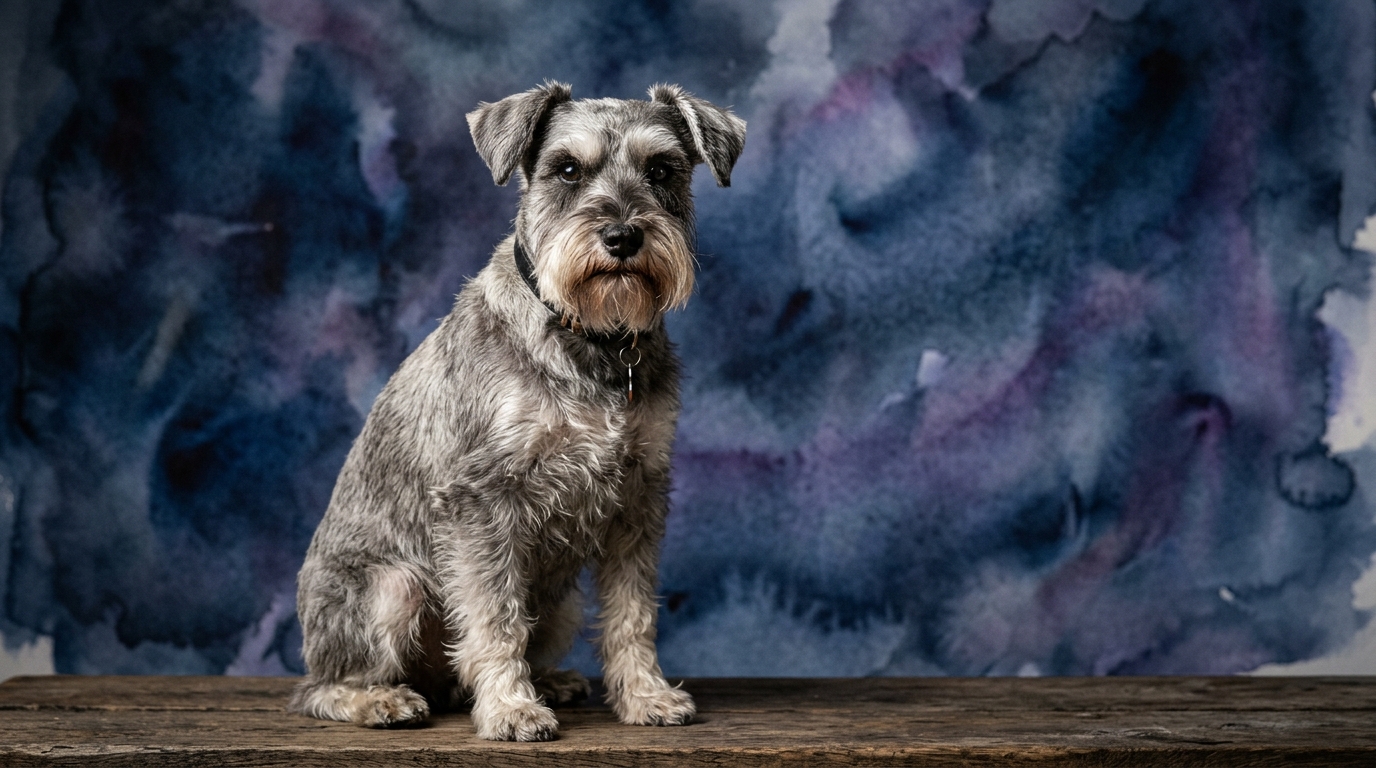
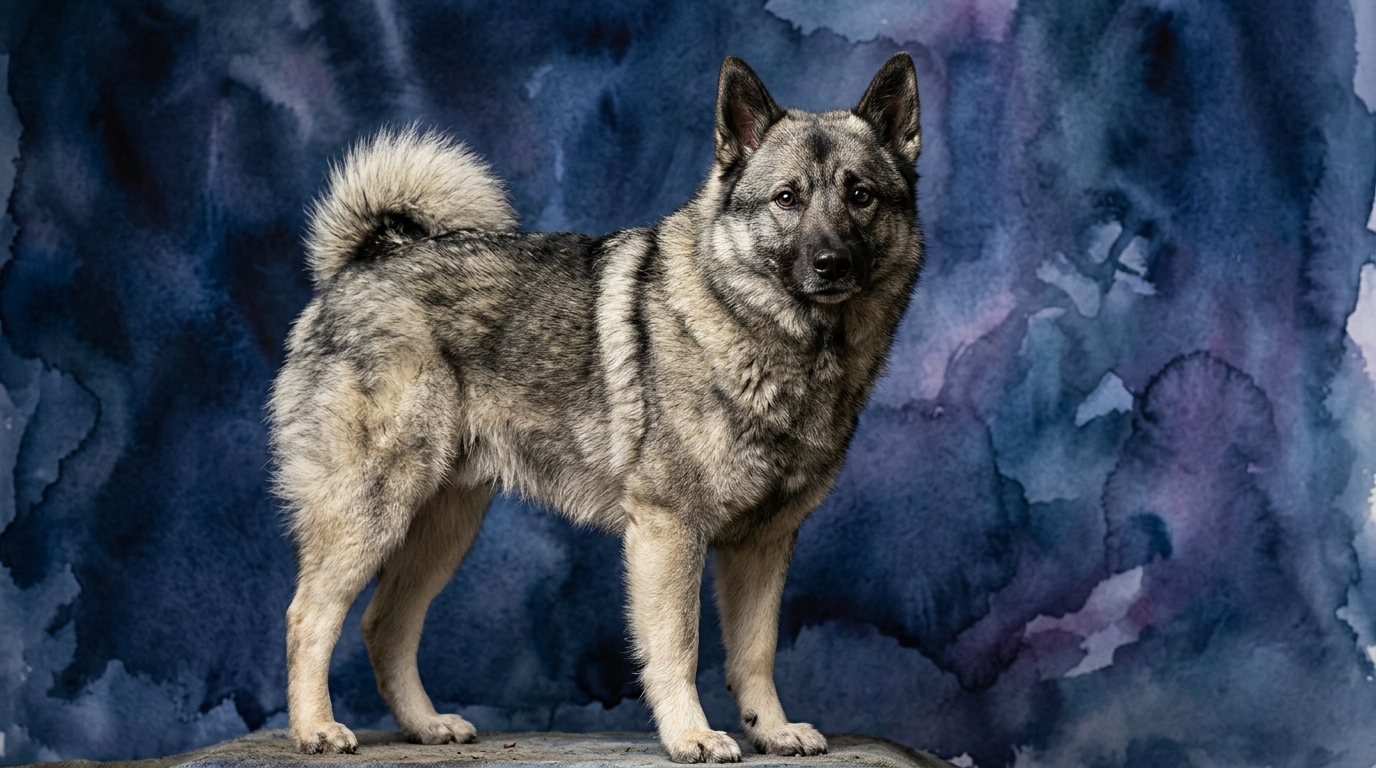
Side-by-side IQ profile
Miniature Schnauzer (Coren Rank #12): This Terrier group member exhibits a well-rounded cognitive toolkit. Its Problem Solving ability stands at a robust 4/5, indicating capacity to navigate novel challenges and find solutions. Where the Schnauzer truly shines is in Training Speed, earning a perfect 5/5, reflecting remarkable eagerness to learn and quick grasp of new commands. Social Intelligence, rated 4/5, suggests strong ability to interpret human cues and integrate into family dynamics, fostering deep bonds. An Instinctive Drive of 4/5 points to its terrier heritage—keen alertness, vigilance, and persistent drive for tasks. Finally, its Memory is solid at 4/5, retaining learned behaviors and associations effectively.
Norwegian Elkhound (Coren Rank #36): Hailing from the Hound group, the Elkhound presents a different, yet equally capable, cognitive makeup. Its Problem Solving skill mirrors the Schnauzer at 4/5, demonstrating similar aptitude for independent thought when faced with obstacles, often leveraging keen senses. Training Speed is a commendable 4/5, indicating it learns well, though perhaps requiring slightly more repetition. Social Intelligence is rated 3/5, suggesting it forms strong bonds with immediate family but may exhibit a more reserved demeanor around strangers. Its Instinctive Drive, at 3/5, reflects its hunting heritage, possessing a strong, independent tracking instinct, but perhaps less overt in daily interactions. Like the Schnauzer, its Memory is strong at 4/5, allowing it to recall complex scent trails or learned commands reliably.
Where Miniature Schnauzer wins cognitively
The Miniature Schnauzer clearly distinguishes itself in Training Speed and Social Intelligence. With a perfect 5/5 in Training Speed, the Schnauzer demonstrates exceptional capacity for rapid learning, quickly forming associations between commands and actions. Its 4/5 Social Intelligence further amplifies this, as Schnauzers are adept at reading human body language and vocal tones, making them highly responsive to subtle cues during training and daily interactions. This combination means they integrate into human households with remarkable ease, often anticipating needs and reacting sensitively. Their Instinctive Drive, also at 4/5, is often channeled into alert guardianship and focused play, proving highly engaging when directed.
Where Norwegian Elkhound wins cognitively
While the Norwegian Elkhound’s scores are consistently strong, its primary cognitive 'win' isn't necessarily in outperforming the Schnauzer, but rather in its unique application of its 4/5 Problem Solving and 4/5 Memory. The Elkhound's problem-solving often manifests through its independent working heritage; it excels at figuring out solutions to environmental challenges, particularly those involving scent or navigation, rather than relying solely on human direction. This independent streak, while sometimes perceived as stubbornness, is a testament to its self-reliant intellect. Its strong memory allows it to recall complex scent trails and past experiences with remarkable accuracy, making it adept at tasks requiring sustained focus. Where the Schnauzer's drive is often about vigilance, the Elkhound's 3/5 instinctive drive, though lower, is about persistent, methodical tracking and independent decision-making in the field, a nuanced form of intelligence distinct from the Schnauzer's reactive alertness.
Which is easier to train and why
Based on the IQ profiles, the Miniature Schnauzer is demonstrably easier to train. The Schnauzer's exceptional 5/5 Training Speed means it grasps new concepts with minimal repetition and eagerness. This rapid assimilation of commands, combined with its 4/5 Social Intelligence, makes it highly attuned to its handler's intentions and feedback. They are typically motivated by praise and treats, facilitating a smooth learning curve. In contrast, the Norwegian Elkhound, while possessing a good 4/5 Training Speed, may require more patience and consistency. Its 3/5 Social Intelligence suggests a more independent nature; while it forms strong bonds, it may not be as inherently driven to comply with every human directive, especially if its own problem-solving skills suggest an alternative. Training an Elkhound often requires a deeper understanding of its motivations and a more engaging, varied approach.
Which suits active owners vs relaxed owners
The choice between these two breeds depends significantly on an owner's lifestyle. The Miniature Schnauzer, with its 4/5 Instinctive Drive for vigilance and 4/5 Social Intelligence, often thrives with active owners who enjoy structured training, interactive play, and dog sports. Their energy is manageable, but they require consistent mental stimulation to prevent boredom, which their quick training speed and problem-solving can accommodate. They are adaptable to various living situations, provided their need for engagement is met. The Norwegian Elkhound, despite a lower 3/5 Instinctive Drive, is fundamentally a robust, independent working dog. Its problem-solving and memory are geared towards endurance and independent decision-making in the field. This means it suits highly active owners who can provide outlets for its strong desire to explore, track, and engage in sustained physical activity, such as hiking, jogging, or scent work. A truly relaxed owner might struggle with an Elkhound's need for purposeful activity and mental engagement, which, if unmet, can lead to boredom and potentially destructive behaviors. Its independent social intelligence (3/5) also means it might not always be seeking constant human interaction.
The Verdict
Choose the Miniature Schnauzer if you prioritize a highly trainable companion that excels in rapid learning and forms deeply responsive social bonds, thriving on interactive engagement and structured activities.
Opt for the Norwegian Elkhound if you are an active individual seeking an independent, robust partner for outdoor adventures, valuing its self-reliant problem-solving and enduring memory for exploration and sustained tasks.
🧠 Find Your Pet's IQ Score
Our Pet IQ Lab assessment covers 25+ tests across 5 cognitive dimensions — personalized to your breed.
Take the Full IQ Test →Frequently Asked Questions
Are Miniature Schnauzers good with children and other pets due to their social intelligence?
Miniature Schnauzers, with their 4/5 social intelligence, generally adapt well to family life and can be good with children and other pets, especially if socialized early. Their responsiveness to human cues helps them integrate smoothly, though supervision is always recommended with young children.
How does the Norwegian Elkhound's problem-solving ability manifest in daily life?
The Elkhound's 4/5 problem-solving often appears as independent decision-making; they might figure out how to open gates, reach desired objects, or navigate complex environments on their own, reflecting their heritage as self-reliant hunters. This requires owners to be mindful of secure perimeters and consistent training.
Does the lower instinctive drive score for the Norwegian Elkhound mean it's less active?
Not necessarily. While its 3/5 instinctive drive might mean it's less overtly driven by constant vigilance compared to a Schnauzer, it still possesses a strong, persistent drive for exploration and scent work inherent to its hound nature. This translates to a need for sustained physical and mental activity, often in the form of long walks, hikes, or scent games.