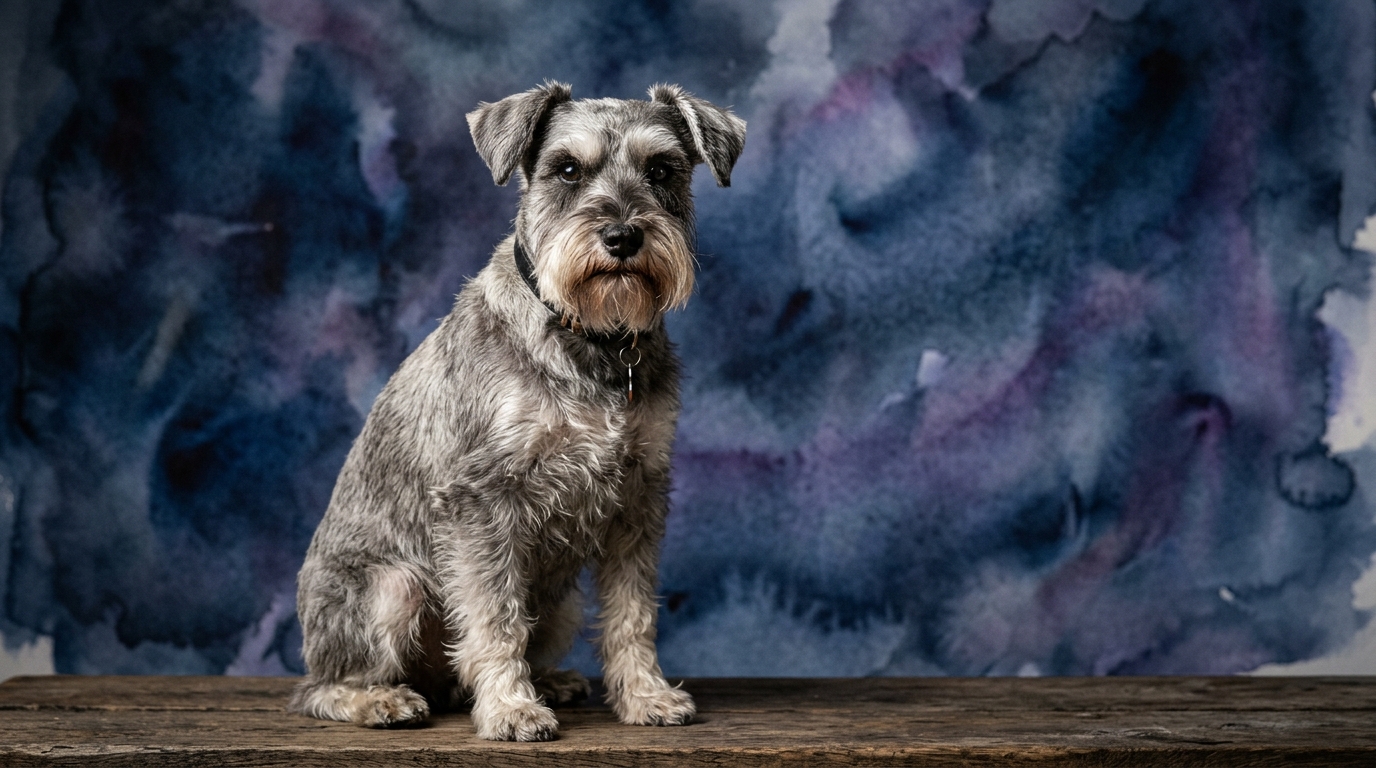
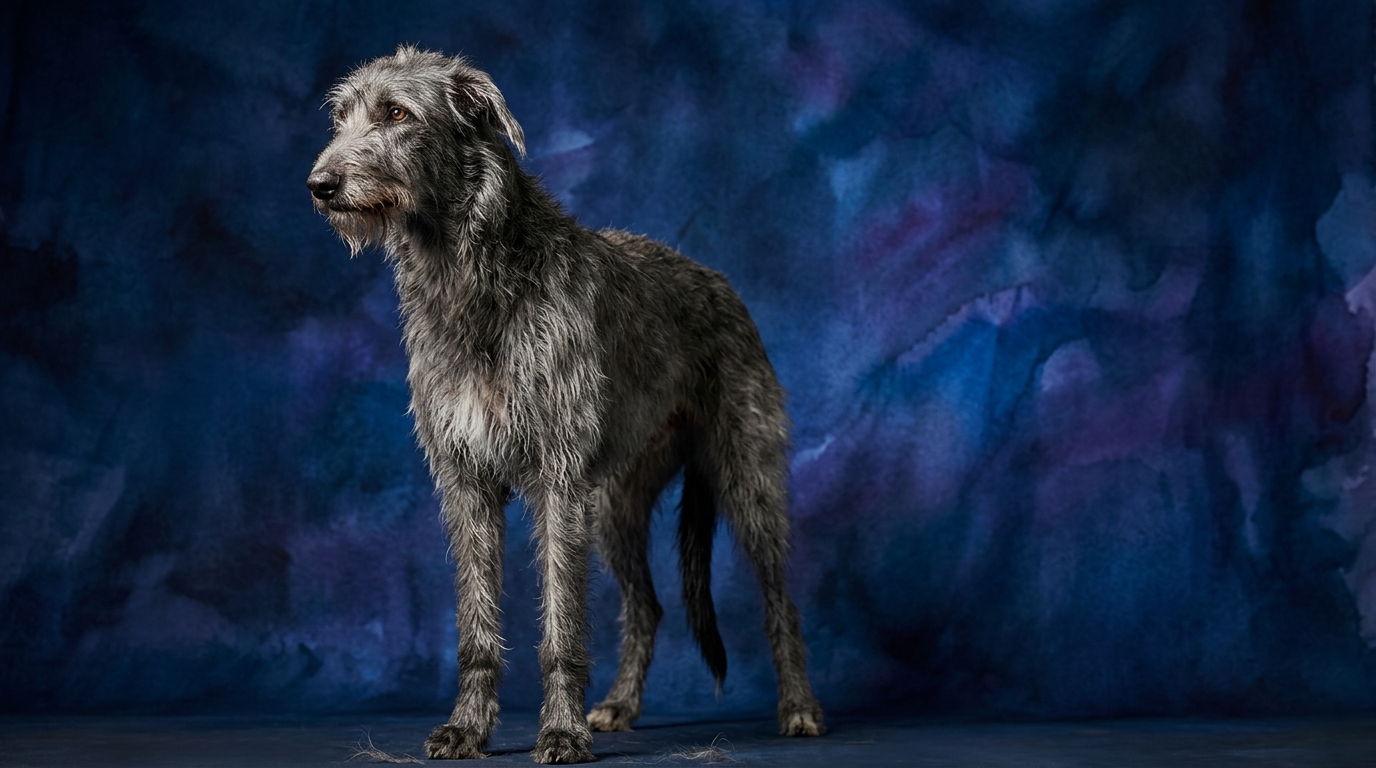
Side-by-Side IQ Profile: Miniature Schnauzer vs. Scottish Deerhound
At The Cosmic Pet Pet IQ Lab, we analyze canine cognition across five crucial dimensions, offering a nuanced view beyond simple labels. The Miniature Schnauzer, a vibrant Terrier with a Coren ranking of #12, presents a profile marked by alertness and adaptability. Its Problem Solving is rated 4/5, indicating an aptitude for figuring out challenges and navigating complex situations. Training Speed scores an impressive 5/5, reflecting their rapid grasp of new commands and routines. Social Intelligence stands at 4/5, showcasing their ability to read human cues and form strong, interactive bonds. Their Instinctive Drive is 4/5, often manifesting as a keen watchfulness and a persistent approach to tasks. Finally, Memory is rated 4/5, suggesting a reliable recall of experiences and learned behaviors.
In contrast, the Scottish Deerhound, a majestic Hound breed not specifically Coren-ranked, possesses a different set of cognitive strengths. Its Problem Solving is rated 3/5, suggesting a practical, often instinct-driven approach to challenges rather than complex strategizing. Training Speed is 3/5, indicating they can learn but often require more patience and repetition. Social Intelligence also scores 3/5, portraying a sensitive, gentle nature that forms deep connections but may be reserved with strangers. Their Instinctive Drive, rated 3/5, is largely centered around their sighthound heritage – the pursuit of visual prey over vast distances. Memory is rated 3/5, implying they retain essential information but might not exhibit the same level of detailed recall as the Schnauzer.
Where the Miniature Schnauzer Shines Cognitively
The Miniature Schnauzer's cognitive profile reveals several areas where it truly stands out. Its Problem Solving score of 4/5 is a testament to its resourcefulness; a Schnauzer might quickly assess a barrier, like a partially closed door or a treat puzzle, and employ various methods—nudging, pawing, or even a clever bark—to achieve its goal. This breed’s terrier tenacity means they are less likely to give up on a challenge, often iterating through potential solutions until success is achieved. This makes them engaging companions for owners who enjoy interactive toys and mental enrichment exercises.
Perhaps the most striking advantage lies in the Miniature Schnauzer's Training Speed, boasting a perfect 5/5. These dogs absorb new commands and routines with remarkable rapidity. A few consistent repetitions are often sufficient for them to grasp a new trick or obedience cue, and they frequently delight in the mental engagement that training provides. Their eagerness to please, combined with their quick cognitive processing, makes them highly responsive to positive reinforcement and capable of mastering a wide repertoire of behaviors, from basic manners to complex agility sequences.
Furthermore, their Instinctive Drive at 4/5 contributes to their exceptional vigilance. Schnauzers are natural watchdogs, quickly detecting novel sounds or movements and alerting their household. This drive isn't just about guarding; it translates into a focused attention during tasks, making them excellent candidates for activities requiring sustained concentration, such as advanced obedience or scent work, where their persistent nature and sharp senses are put to good use.
Where the Scottish Deerhound Excels Cognitively
While the Scottish Deerhound's cognitive scores may appear modest compared to the Schnauzer, their strengths lie in distinct, specialized areas. Their Social Intelligence, rated 3/5, often manifests as profound sensitivity and empathy. Deerhounds are deeply attuned to the emotional states of their close human companions, offering gentle comfort or withdrawing discreetly when sensing stress. This makes them exceptional emotional support animals for those they trust implicitly, providing a quiet, understanding presence rather than boisterous interaction.
The Deerhound's Problem Solving, also 3/5, is often highly practical and efficient for their primary purpose: sighting and pursuing large game. They exhibit superior spatial reasoning related to open fields and an innate ability to track visual cues over long distances. While they might not be inclined to dismantle a puzzle box, they are masters of navigating complex terrain during a chase, making swift, instinctual decisions to intercept. This specialized form of problem-solving, honed over centuries, is a testament to their unique cognitive adaptation.
Their Instinctive Drive (3/5) is singularly focused on their sighthound heritage. This isn't about guarding or continuous alertness, but rather an unparalleled ability to spot movement at vast distances and then execute a swift, coordinated pursuit. Their cognitive processes are honed for this specific, ancient task, requiring rapid assessment of speed, trajectory, and terrain. This specialized drive, while not translating to everyday 'cleverness' in human terms, represents a peak of highly specialized canine cognition, allowing them to perform their traditional role with an almost effortless grace and precision.
Training Dynamics: Schnauzer's Zest vs. Deerhound's Thoughtfulness
When it comes to training, the Miniature Schnauzer's 5/5 Training Speed means they typically thrive on structured learning. Their eagerness to please, coupled with a high motivation for rewards like treats or praise, makes them quick studies. They enjoy the mental stimulation that training provides and can pick up new commands with remarkable efficiency. While their terrier stubbornness can sometimes emerge if they perceive a task as pointless or if training isn't engaging, their inherent drive for activity and quick grasp of concepts usually allows for consistent progress with positive and engaging methods.
The Scottish Deerhound, with a 3/5 Training Speed, requires a more nuanced approach. They are not typically driven by an overwhelming eagerness to please in the same way a Schnauzer might be. Training often needs to be framed as a collaborative effort, appealing to their gentle nature and the deep bond they form with their owner, rather than through rote commands. Repetition is necessary, but it must be varied and interesting to prevent boredom. Deerhounds are sensitive dogs, and harsh corrections can be counterproductive, potentially leading to withdrawal. Their independent sighthound nature means they might, at times, choose to 'opt-out' if not sufficiently motivated, rather than actively defy, making patience and understanding key to successful training.
Matching Breeds to Lifestyles: Active vs. Relaxed Owners
The Miniature Schnauzer is an ideal match for active owners who enjoy daily engagement with their dog. Their need for consistent mental stimulation and physical activity (stemming from their 4/5 instinctive drive and problem-solving aptitude) makes them excellent companions for agility, obedience sports, or long, varied walks that offer new sights and smells. They thrive in environments where their cognitive abilities are regularly challenged and they have a 'job' to do, even if it's simply being a vigilant companion. Owners who appreciate a dog with a strong, interactive personality and a quick wit will find a Schnauzer highly rewarding.
Conversely, the Scottish Deerhound suits owners who appreciate a calm, gentle giant, but who can also provide essential bursts of intense, appropriate exercise. While they enjoy lounging regally indoors, their physical needs for galloping in a safe, expansive, fenced area are non-negotiable. These are not dogs for constant mental puzzles in the same vein as a Schnauzer, but rather for companionship and occasional, thrilling physical outlets that satisfy their sighthound instincts. Owners who value quiet dignity, a sensitive bond, and have the space for their magnificent sprints will find the Deerhound a profoundly loyal and serene companion.
The Verdict
Opt for a Miniature Schnauzer if you desire a sharp-witted companion eager for training challenges, quick to learn, and always alert. They thrive with owners who provide consistent mental engagement and appreciate their tenacious, problem-solving spirit.
Select a Scottish Deerhound if you seek a gentle, sensitive giant offering calm companionship and profound loyalty, understanding their unique need for expansive, safe running space. They are best for those who value quiet dignity and a deep, trusting bond over constant mental acrobatics.
🧠 Find Your Pet's IQ Score
Our Pet IQ Lab assessment covers 25+ tests across 5 cognitive dimensions — personalized to your breed.
Take the Full IQ Test →Frequently Asked Questions
Are Miniature Schnauzers good at learning tricks?
Yes, Miniature Schnauzers typically excel at learning tricks due to their high training speed and problem-solving abilities. Their eagerness to please and quick grasp of concepts make them enthusiastic participants in trick training sessions, often mastering new feats rapidly.
Do Scottish Deerhounds require a lot of mental stimulation?
Scottish Deerhounds benefit from mental engagement, but their needs differ from breeds like the Schnauzer. They appreciate thoughtful interaction and gentle training, rather than complex puzzle-solving, often preferring quiet companionship and observing their surroundings to constant mental challenges.
Which breed is better for a first-time dog owner?
The Miniature Schnauzer, with its higher training speed and adaptability, might be a more forgiving choice for a first-time owner willing to commit to consistent training and mental engagement. The Scottish Deerhound's independent nature and specific exercise needs could present a greater challenge without prior experience in managing sighthound traits.