Side-by-Side Cognitive Profiles: Newfoundland vs. Great Dane
To understand these magnificent breeds, we first examine their individual cognitive blueprints, as measured by The Cosmic Pet Pet IQ Lab.
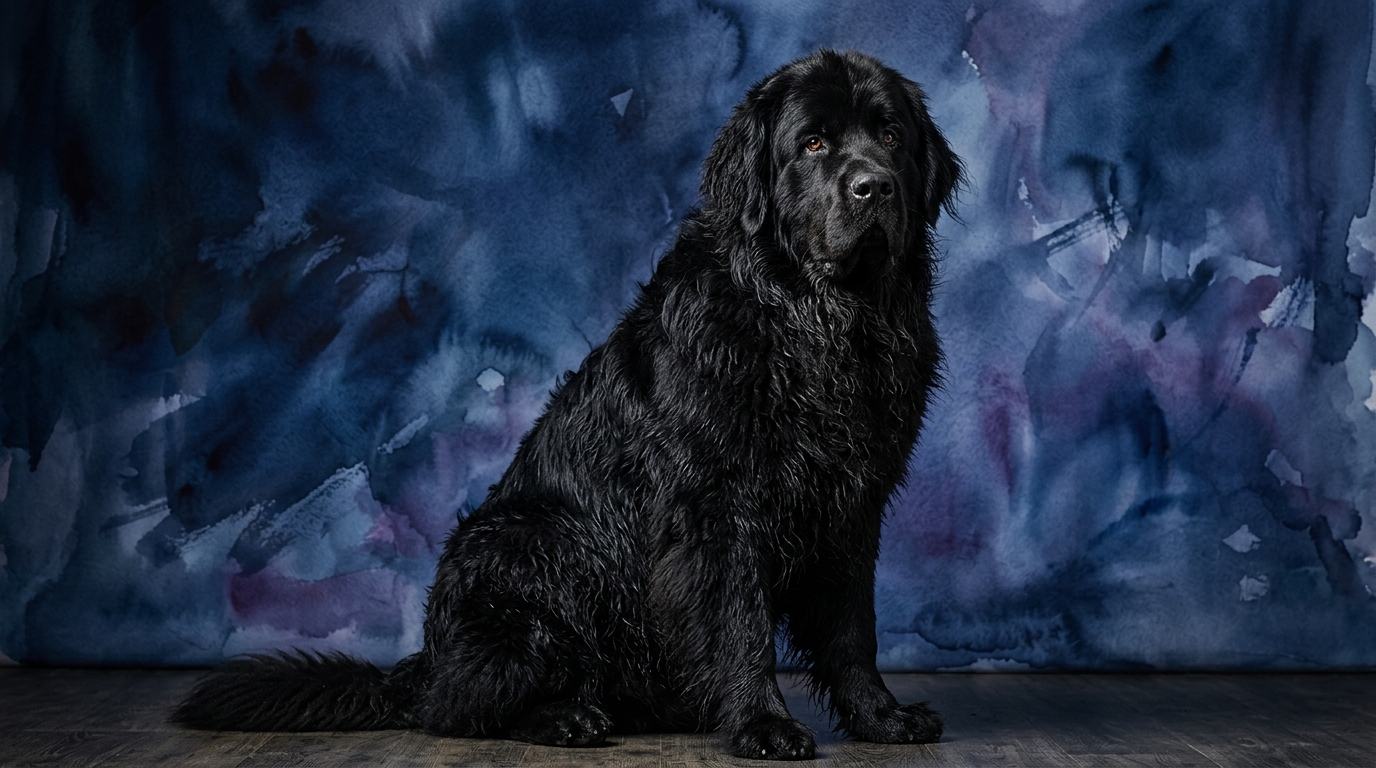
**Newfoundland:** With a Coren Rank of #34, Newfoundlands stand comfortably within the upper third of breeds for working intelligence and obedience. Their Problem Solving is rated 3/5, indicating competent ability in navigating new challenges, often relying on learned experience rather than immediate novel solutions. Training Speed is 4/5, meaning they typically grasp new commands and routines quickly, showing a strong readiness to learn and cooperate. Their Social Intelligence is an exceptional 5/5, reflecting a profound capacity for understanding human emotions and social cues, making them highly attuned companions. An Instinctive Drive of 5/5 highlights a powerful, inherent inclination to assist and protect, particularly in water rescue, a deep-seated working instinct. Finally, their Memory is 4/5, indicating effective retention of learned information and experiences, contributing to consistent performance.
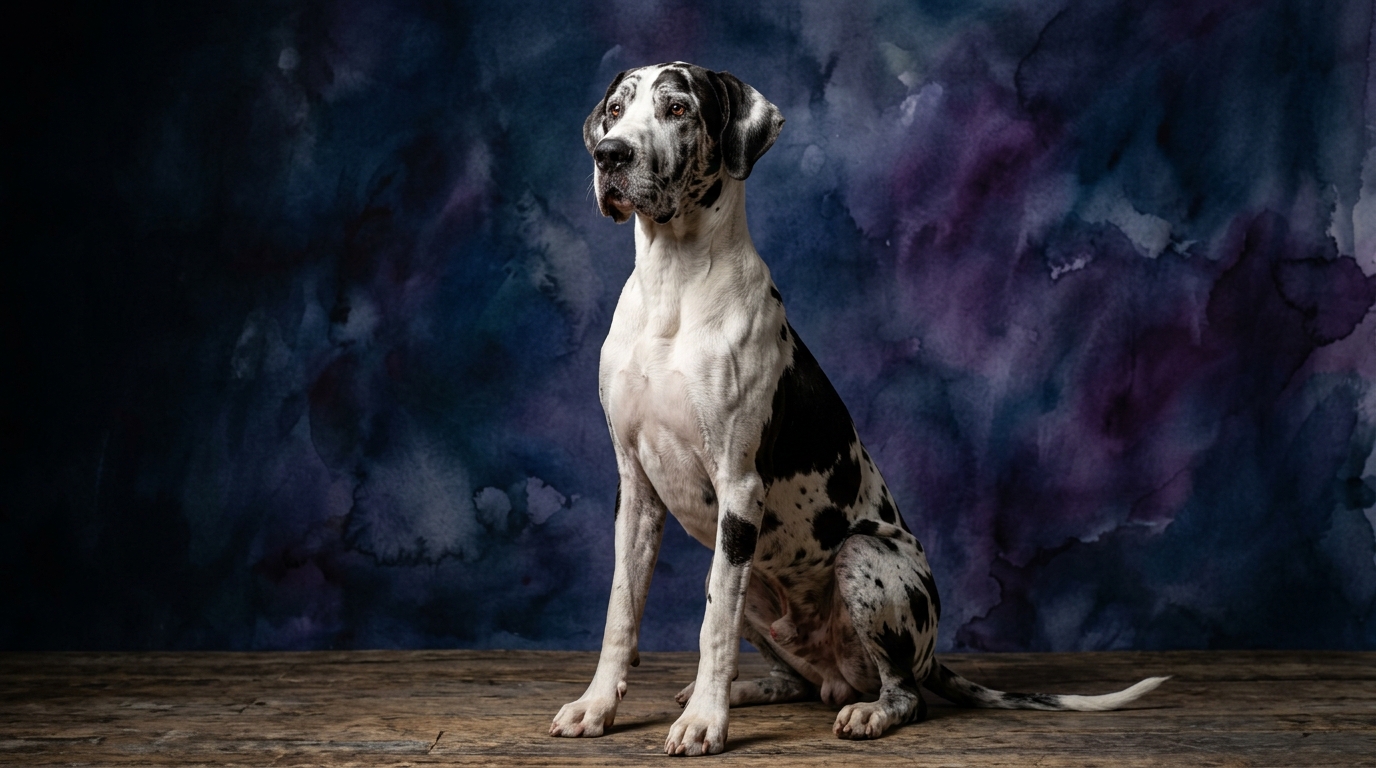
**Great Dane:** Positioned with a Coren Rank of #48, Great Danes fall into the middle tier, demonstrating a respectable, though not exceptionally rapid, capacity for working intelligence and obedience. Their Problem Solving is 3/5, suggesting they approach novel situations with a practical mindset, often solving problems through trial and error or established routines rather than complex reasoning. Training Speed is 3/5; while trainable, they may require more repetition and consistent reinforcement to master new commands compared to faster-learning breeds. Their Social Intelligence is 4/5, exhibiting a strong understanding of their human family’s dynamics and moods, forming deep, affectionate bonds. An Instinctive Drive of 3/5 reflects their historical role as hunters and guardians, manifesting in a moderate, protective drive, less specialized than the Newfoundland’s water rescue instincts. Their Memory is 3/5, indicating a functional retention for commands and routines, though it may not be as robust or long-lasting as breeds with higher scores.
Where the Newfoundland's Cognition Excels
The Newfoundland’s cognitive profile shines particularly bright in areas centered around cooperation and innate purpose. Their exceptional Social Intelligence (5/5) means they are profoundly attuned to human signals, often anticipating needs or moods without explicit commands, making them incredibly empathetic companions. Complementing this is their perfect score in Instinctive Drive (5/5), which isn't just a generic drive but a specific, powerful inclination towards protective and rescue behaviors, especially in aquatic environments; this is an inherent, deeply wired cognitive readiness to act in specific, helpful ways. Furthermore, their Training Speed (4/5) surpasses the Great Dane's, indicating a quicker grasp of new concepts and commands. This responsiveness, combined with a strong Memory (4/5), means a Newfoundland is likely to master complex sequences and retain them over time, making them highly reliable in tasks once learned. Their problem-solving, while not extraordinary, often benefits from this strong memory and social understanding, allowing them to apply past solutions effectively in new contexts.
Where the Great Dane's Cognition Finds Its Niche
While the Great Dane’s scores might appear lower in comparison, their cognitive strengths are distinct and valuable, particularly in their specific application. Their Problem Solving (3/5) matches the Newfoundland’s, suggesting an equivalent capacity for navigating practical challenges, often through observation and direct action rather than abstract thought, a pragmatic approach well-suited for their historical guarding and hunting roles. Their Social Intelligence (4/5), while one point below the Newfoundland, still demonstrates a robust ability to connect with their human family, understanding household dynamics and individual temperaments for deep, affectionate bonding. Their Instinctive Drive (3/5) reflects a more generalized protective instinct, historically geared towards confronting large game or intruders, which translates into a watchful, yet often gentle, presence in the home. This drive is less specialized than the Newfoundland’s but provides a solid foundation for their role as a family guardian. When considering their Coren rank of #48, it positions them as consistently capable, showing a reliable, though not exceptionally rapid, ability to learn and comply.
Ease of Training: Behavioral Differences
Based on The Cosmic Pet Pet IQ Lab data, the Newfoundland generally presents as the easier breed to train. Their Training Speed of 4/5 indicates a quicker uptake of new commands and routines compared to the Great Dane's 3/5. This difference isn't about one breed being stubborn but rather a reflection of their inherent responsiveness and strong motivation. Newfoundlands often possess a strong desire to please and a high social intelligence, which makes them highly receptive to human direction; they are eager to engage in cooperative learning experiences, absorbing lessons with fewer repetitions. For instance, teaching a Newfoundland a multi-step retrieve often progresses faster because they connect the actions to the desired outcome more readily.
In contrast, Great Danes, with their 3/5 training speed, might require more patience, consistency, and varied reinforcement methods. They are certainly trainable, but an owner might find themselves repeating cues more often or needing to break down complex tasks into smaller, more manageable steps. Their social intelligence, while strong, might not translate into the same immediate cooperative drive seen in Newfoundlands, meaning their motivation might need more external encouragement and consistent structure to achieve the same level of mastery.
Matching Breeds to Owner Lifestyles: Active vs. Relaxed
The Newfoundland's profile suggests suitability for owners who appreciate active engagement, particularly those interested in structured activities that tap into their robust instinctive drives. Their 5/5 Instinctive Drive makes them excel in roles like water rescue or carting, requiring owners willing to channel this innate energy into productive outlets. While not necessarily demanding constant, high-impact exercise, they thrive with purpose-driven activities that stimulate their mind and body. Their high social intelligence also means they crave significant human interaction and involvement in family life. A relaxed owner might find themselves with an under-stimulated Newfoundland if they don't provide outlets for their inherent desire to 'work' and connect, potentially leading to boredom or destructive behaviors.
The Great Dane, on the other hand, often aligns well with a more relaxed owner, despite their imposing size. Their Instinctive Drive (3/5) is present but less intense and specialized than the Newfoundland's, meaning they don't necessarily demand constant, task-oriented engagement. While they need regular exercise to maintain their physical health, they are often content with daily walks and lounging with their family. Their social intelligence (4/5) ensures they bond deeply, making them excellent companions for owners who value a calm, affectionate presence and are happy to share their couch. Owners who prefer a less demanding training regimen after the foundational basics are established, and who appreciate a watchful but generally mellow companion, might find a Great Dane a more fitting choice.
The Verdict
The Newfoundland is ideal for individuals or families who value a deeply empathetic, highly cooperative companion with a strong innate drive for purpose-driven activities, especially those involving water or structured tasks, and who appreciate a quicker learning curve in training.
Conversely, choose a Great Dane if you desire a devoted, gentle giant who forms strong family bonds, thrives in a more relaxed home environment, and whose protective instincts are more generalized, understanding that their training might require a touch more patience and repetition.
🧠 Find Your Pet's IQ Score
Our Pet IQ Lab assessment covers 25+ tests across 5 cognitive dimensions — personalized to your breed.
Take the Full IQ Test →Frequently Asked Questions
Do Newfoundlands and Great Danes get along with other pets?
Newfoundlands, with their 5/5 social intelligence, generally adapt well to other pets and children due to their gentle and patient nature. Great Danes, scoring 4/5 in social intelligence, also typically integrate smoothly into multi-pet households, especially if socialized early, though their sheer size can sometimes be a factor to manage with smaller animals.
Which breed requires more mental stimulation?
The Newfoundland, with its higher instinctive drive (5/5) and memory (4/5), often benefits more from consistent mental stimulation through training, puzzle toys, or purpose-driven activities like canine water rescue. While Great Danes need engagement, their lower instinctive drive (3/5) means they might be content with less structured mental work and more emphasis on social interaction.
Are there significant health differences related to their size and activity levels?
Both breeds are giant dogs and prone to certain size-related issues like hip and elbow dysplasia, and bloat. Newfoundlands, with their more active, water-oriented lifestyle, might require more attention to joint health and coat care. Great Danes, despite being less intensely active, still need careful management of their rapid growth and a balanced exercise routine to prevent skeletal problems.