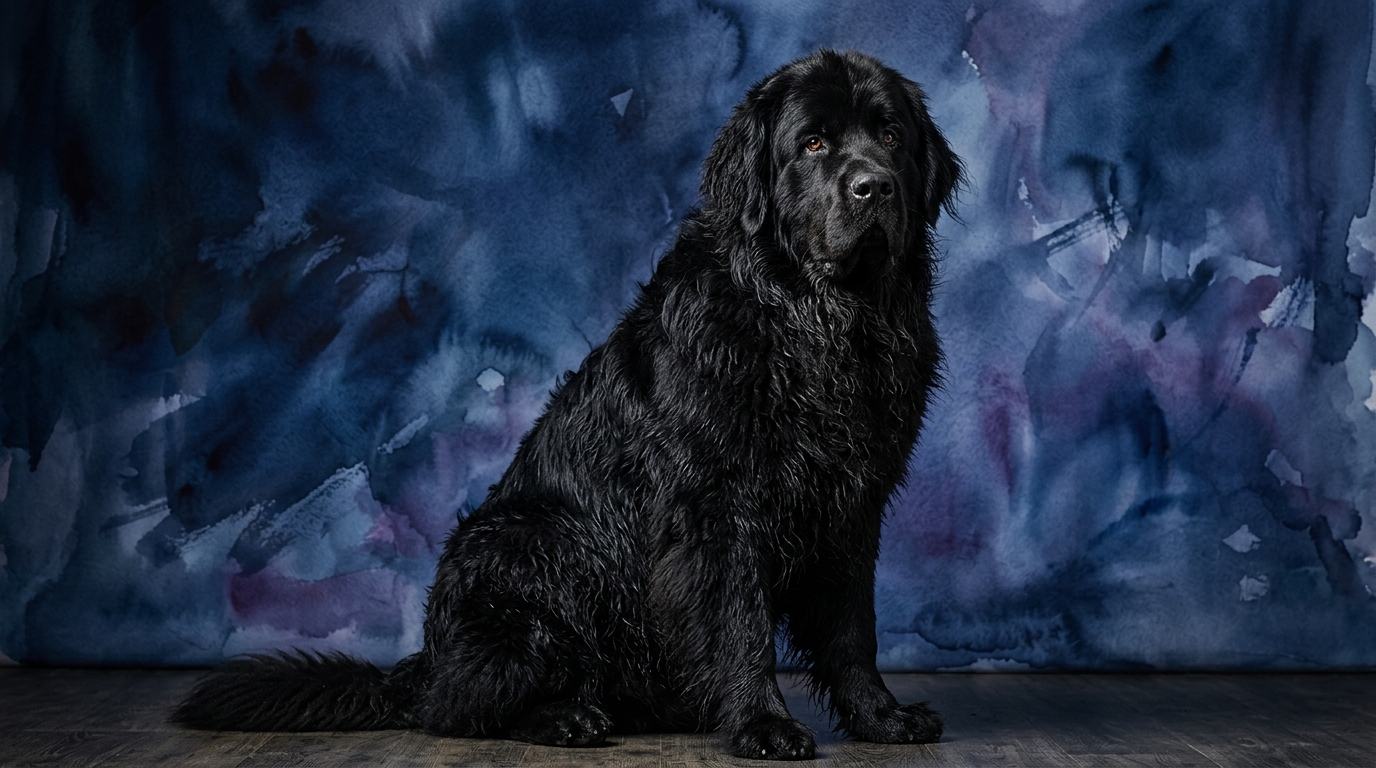
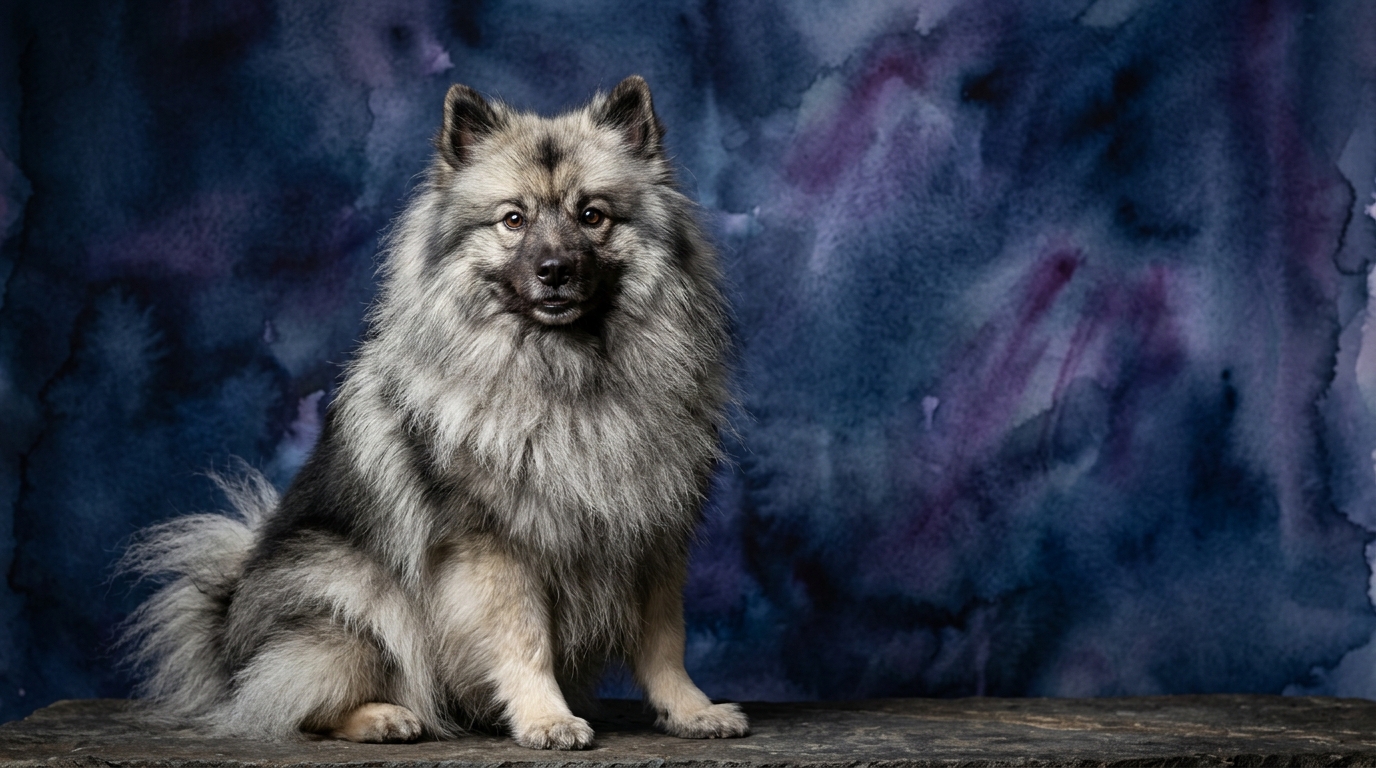
Side-by-Side IQ Profile: Newfoundland vs. Keeshond
The Newfoundland, a breed often associated with heroism and companionship, presents a robust cognitive profile. Its problem-solving ability scores a solid 3 out of 5, suggesting a capacity to navigate novel situations and find solutions, though perhaps not with the rapid ingenuity of some other breeds. Training speed is impressive at 4 out of 5, indicating these dogs typically grasp new commands and routines with relative ease. Where the Newfoundland truly shines is in its social intelligence, achieving a perfect 5 out of 5, highlighting an exceptional ability to read and respond to human cues and emotional states. Their instinctive drive is also remarkably strong at 5 out of 5, reflecting their deep-seated urges for protection, rescue, and companionship. Memory is rated at 4 out of 5, suggesting they retain learned information and experiences effectively over time.
In contrast, the Keeshond, with its distinctive 'spectacles' and lively disposition, offers a different cognitive blueprint. This breed demonstrates a superior problem-solving aptitude, scoring 4 out of 5, suggesting a keen ability to figure things out independently and adapt to new challenges. Their training speed matches the Newfoundland at 4 out of 5, indicating a similar pace in acquiring new skills and behaviors. However, the Keeshond's social intelligence is rated at 3 out of 5, implying they are responsive to humans but perhaps less overtly attuned to subtle emotional nuances than the Newfoundland. Instictive drive is moderate at 3 out of 5, reflecting a balanced, less intensely task-oriented natural inclination. The Keeshond's memory, however, stands out with a perfect 5 out of 5, signifying an outstanding capacity for recall and retention of complex information and sequences.
Where Newfoundland Excels Cognitively
The Newfoundland's cognitive strengths are deeply rooted in its profound social intelligence and potent instinctive drive. Scoring a perfect 5 out of 5 in both categories, this breed exhibits an unparalleled capacity for empathy and innate purpose. Their exceptional social intelligence means they are acutely sensitive to human emotions, intentions, and even subtle shifts in body language. This makes them profoundly intuitive companions, often anticipating needs or offering comfort without explicit commands. For instance, a Newfoundland might instinctively nudge a distressed owner or remain vigilantly by a child's side, driven by an inherent understanding of their role in the family unit. This trait also underpins their famous reputation as 'nanny dogs,' making them incredibly patient and gentle guardians.
Furthermore, their powerful instinctive drive manifests as a deep-seated desire to protect and assist. This isn't merely obedience; it's a fundamental, intrinsic motivation. This drive is particularly evident in their historical role as water rescue dogs, where their instincts to retrieve, pull, and save are not merely trained behaviors but extensions of their core being. This combination of high social intelligence and strong instinctive drive makes Newfoundlands exceptionally reliable in situations requiring a deep connection with their human counterparts and an unwavering commitment to a perceived duty. They are not just following commands; they are fulfilling a profound, internal directive, often making independent decisions based on their understanding of the situation and their bond with people.
Where Keeshond Shines Cognitively
The Keeshond's cognitive profile reveals a breed exceptionally adept at independent thought and information retention, scoring highly in problem-solving (4/5) and memory (5/5). Their superior problem-solving ability means they are often quick to assess new situations and devise creative solutions. This might manifest as figuring out how to open a child-proof gate, navigating a complex agility course with minimal guidance, or even finding novel ways to get attention. They are less likely to wait for direct instruction and more prone to experimenting and learning through trial and error, making them quite resourceful.
The Keeshond's perfect 5 out of 5 in memory is a truly standout trait. This isn't just about remembering basic commands; it extends to retaining elaborate sequences, complex routines, and the locations of favored objects or places over extended periods. For example, a Keeshond might remember a specific toy hidden months ago, or recall an intricate obedience routine even after a long break. This sharp memory, combined with their problem-solving skills, allows them to excel in activities that require sequential learning and strategic thinking, such as advanced trick training, competitive obedience, or even scent work where remembering scent patterns is crucial. They can build upon past experiences and apply learned knowledge to new, similar scenarios with remarkable efficiency.
Training Ease: Unpacking Behavioral Differences
Both the Newfoundland and the Keeshond share a training speed score of 4 out of 5, suggesting that neither breed is inherently difficult to train. They both learn new commands and behaviors at a commendable pace. However, the *nature* of their training experience and the *types* of tasks they excel at can differ significantly due to their other cognitive traits. A Newfoundland's high social intelligence (5/5) and strong instinctive drive (5/5) often translate into a deep desire to please and cooperate. They are highly motivated by positive reinforcement and the opportunity to engage with their human companions. Their training can feel like a partnership, as they are often eager to understand and fulfill expectations, especially for tasks that tap into their innate protective or helpful instincts, such as retrieving or staying close.
The Keeshond, while equally quick to learn, might approach training with a more independent spirit, influenced by their superior problem-solving (4/5) and outstanding memory (5/5), coupled with a slightly lower social intelligence (3/5) and instinctive drive (3/5). They excel at remembering complex sequences and figuring out tasks, but might require a trainer who appreciates their cleverness and potential for independent thought. While they learn commands quickly, they might also be more prone to 'testing the boundaries' or finding alternative solutions if they perceive a task as redundant or unstimulating. Training a Keeshond might involve more mental stimulation and variety to keep them engaged, leveraging their memory for intricate routines and their problem-solving for novel challenges, rather than relying solely on their desire to please.
Active vs. Relaxed Owners: Matching Canine Cognitive Profiles
The cognitive profiles of the Newfoundland and Keeshond lend themselves to different owner lifestyles. The Newfoundland, with its deep social intelligence (5/5) and powerful instinctive drive (5/5), thrives with owners who seek a profoundly bonded companion and are prepared to engage with their innate protective and nurturing instincts. While not a high-energy dog in the sense of needing constant vigorous exercise, they require active emotional engagement and a sense of purpose. Owners who appreciate a dog that is deeply attuned to their family's well-being, enjoys cooperative activities like long walks, swimming, or even therapy work, and offers a calm, reassuring presence will find a Newfoundland a perfect fit. They are ideal for families seeking a canine member that integrates seamlessly into a relaxed, yet emotionally rich, home environment.
Conversely, the Keeshond's strong problem-solving (4/5) and exceptional memory (5/5) make them an excellent match for more active, engaging owners who enjoy mental stimulation and structured activities. While their instinctive drive is moderate (3/5), their sharp minds need regular challenges to prevent boredom. Owners who are keen on dog sports like agility, obedience, rally, or even intricate trick training will find the Keeshond an eager and capable partner. They enjoy learning new things and excel when given opportunities to use their intellect. While they are affectionate, their social intelligence is not as overtly demonstrative as a Newfoundland's, meaning they might suit owners who value cleverness and spirited independence alongside companionship, and are prepared to provide consistent mental enrichment.
The Verdict
Choose the Newfoundland if you desire a profoundly empathetic, protective, and gentle companion deeply attuned to human emotion and driven by an innate desire to serve and bond.
Opt for the Keeshond if you seek a clever, independent, and highly trainable dog that excels at problem-solving and remembering complex tasks, thriving on mental challenges and engaging activities.
🧠 Find Your Pet's IQ Score
Our Pet IQ Lab assessment covers 25+ tests across 5 cognitive dimensions — personalized to your breed.
Take the Full IQ Test →Frequently Asked Questions
Which breed is better for first-time dog owners?
Both breeds can be suitable for first-time owners, but their needs differ. Newfoundlands are generally very forgiving and eager to please, making their training straightforward due to high social intelligence. Keeshonds are quick learners but require consistent mental engagement to prevent boredom, which might be a slightly greater challenge for a novice.
Do Newfoundlands and Keeshonds get along well with children?
Newfoundlands typically excel with children due to their exceptional social intelligence and gentle, patient nature, often acting as diligent 'nanny dogs.' Keeshonds are generally good with children too, but their lower social intelligence score means they might not be as instinctively attuned to a child's subtle cues and might prefer older, more respectful children.
Which breed requires more mental stimulation?
While both benefit from mental engagement, the Keeshond, with its higher problem-solving and memory scores, generally requires more consistent and varied mental stimulation to prevent boredom and destructive behaviors. Newfoundlands thrive on emotional connection and purpose-driven activities, rather than constant intellectual puzzles.