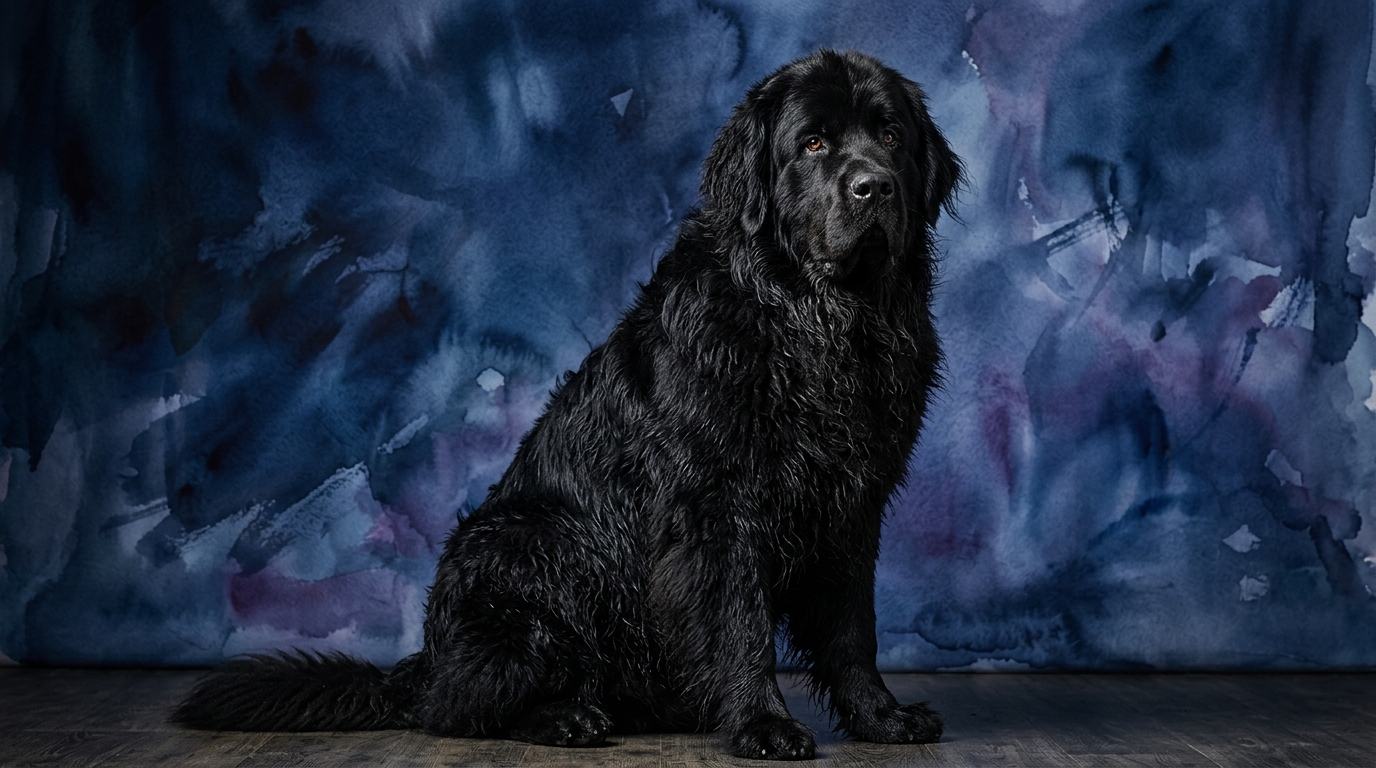
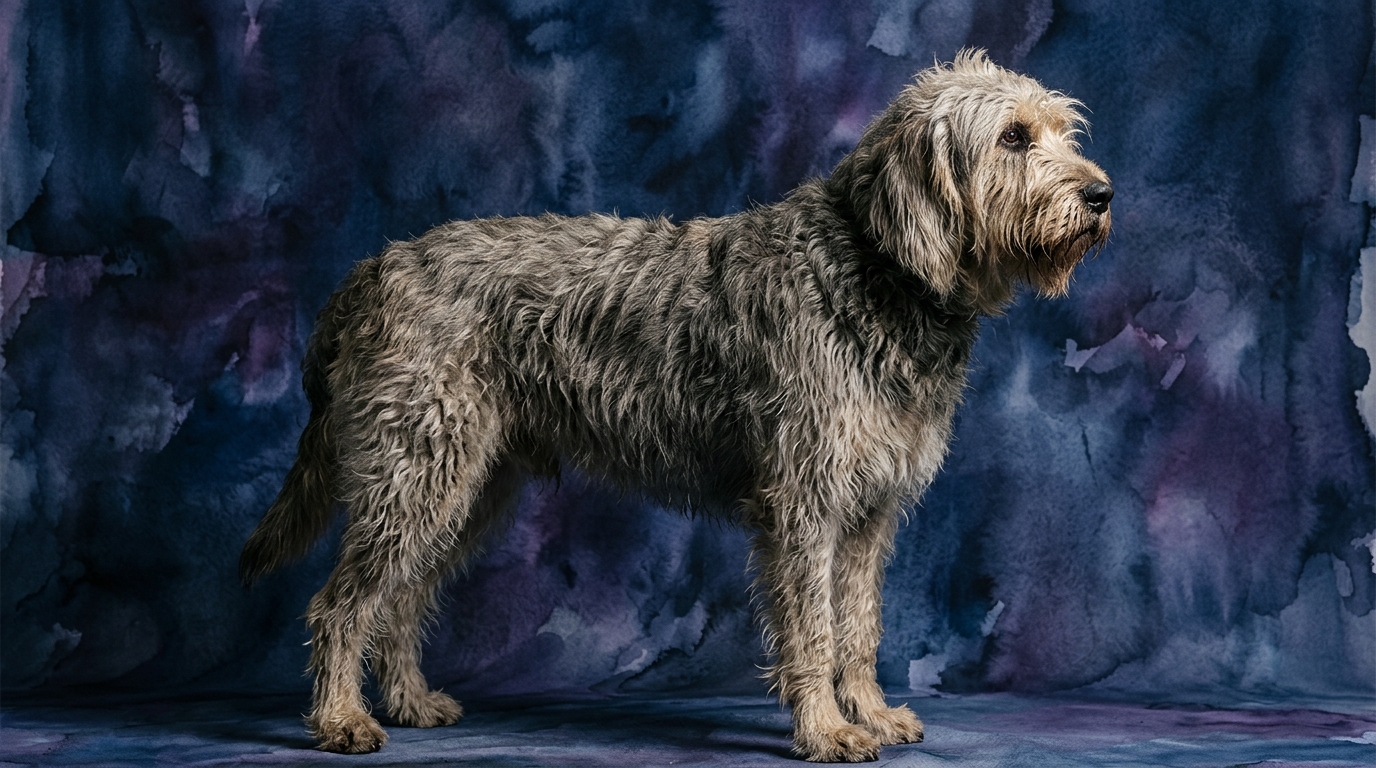
Side-by-Side IQ Profile: Newfoundland vs. Otterhound
At The Cosmic Pet Pet IQ Lab, we delve beyond simple labels to understand the nuanced cognitive strengths of each breed. The Newfoundland, a Working Group stalwart, and the Otterhound, a unique member of the Hound Group, present a compelling contrast when examining their intelligence across five critical dimensions.
Problem Solving: Both breeds score 3/5. For the Newfoundland, this often involves practical tasks like navigating obstacles to retrieve or assisting a human. The Otterhound’s problem-solving centers on deciphering complex scent trails, logically following faint or broken paths, a skill honed over centuries of hunting.
Training Speed: The Newfoundland shines with a 4/5, indicating a relatively quick grasp of new commands and routines, generally enjoying learning with their human. The Otterhound, at 3/5, suggests a more deliberate pace; their independent, scent-driven nature might require more repetitions and creative motivation.
Social Intelligence: The Newfoundland truly excels with a perfect 5/5, reflecting an exceptional capacity to understand human emotions and subtle cues, making them deeply empathetic and responsive. The Otterhound, with a 3/5, demonstrates a more moderate level, often more focused on its immediate sensory environment than intricate human social dynamics.
Instinctive Drive: The Newfoundland’s 5/5 drive is powerful, channeling energies into protective guardianship, gentle companionship, and water rescue. This drive is often expressed as a profound desire to be useful and involved. The Otterhound's 3/5 drive is almost exclusively directed towards scent hunting, manifesting as tenacious, single-minded focus on a compelling scent.
Memory: With a 4/5, the Newfoundland demonstrates strong memory retention for commands, past experiences, and routines, contributing to its reliability. The Otterhound's 3/5 suggests adequate retention, particularly for scent-related data, but might not recall general obedience or less engaging routines with the same consistent precision.
Where the Newfoundland Wins Cognitively
The Newfoundland's cognitive profile showcases distinct advantages, fostering deep human-animal bonds and cooperative endeavors. Its perfect 5/5 in social intelligence is a standout, enabling this breed to pick up on subtle human emotions and intentions with remarkable accuracy, often anticipating needs. Coupled with a 4/5 in training speed and memory, Newfoundlands are adept at mastering complex obedience and retaining vast repertoires of learned behaviors, making them highly responsive partners. Their 5/5 instinctive drive is a powerful motivation to perform tasks that benefit their human companions, whether retrieving an item or acting as a gentle guardian. This combination of empathy, quick learning, and a strong desire to cooperate positions the Newfoundland as a truly remarkable cognitive partner.
Where the Otterhound Wins Cognitively
While the Otterhound's overall IQ scores may appear lower, their cognitive strengths are highly specialized, perfectly suited to their ancestral purpose. Their 3/5 problem-solving isn't abstract; it’s the sophisticated logic required to interpret a scent trail hours old, crisscrossing varied terrain, obscured by other odors. This involves complex discrimination and persistent deduction. Their 3/5 instinctive drive, though moderate in intensity, is singularly focused on the hunt, manifesting as unyielding tenacity and almost obsessive dedication to a scent. This unwavering focus, combined with their 3/5 memory for scent patterns, means an Otterhound can commit to a task with incredible single-mindedness, a cognitive trait invaluable for persistent tracking. Their independence, often challenging in training, is also a cognitive advantage in hunting, allowing autonomous decisions when separated from their human.
Which is Easier to Train and Why
When considering ease of training, the Newfoundland holds a clear advantage, primarily due to its exceptional social intelligence and quicker training speed. With a 4/5 in training speed and a 5/5 in social intelligence, Newfoundlands are inherently motivated to please their people and are highly attuned to human feedback. They quickly understand expectations and are generally eager to comply, making positive reinforcement highly effective. Their 4/5 memory ensures that once a command is learned, it is retained reliably. This combination makes them receptive to a wide range of training, from basic manners to advanced tasks, often requiring fewer repetitions.
The Otterhound, with its 3/5 training speed, 3/5 social intelligence, and 3/5 memory, presents a different training landscape. Their independent nature, coupled with a powerful scent drive, means they are easily distracted by environmental stimuli. Gaining and maintaining an Otterhound's focus requires patience, consistency, and an understanding of their hound mentality. They are not as driven by human approval and might prioritize a compelling scent over a command. Successful training often involves incorporating their natural drives, such as scent games, and utilizing high-value rewards to make learning more appealing.
Which Suits Active Owners vs. Relaxed Owners
The choice between these two breeds also hinges on an owner's lifestyle and their definition of “activity.” A Newfoundland, despite its working classification, fits well with a relaxed owner who values companionship over intense physical exertion. While large, they benefit from regular, moderate exercise like gentle walks or swimming; their high social intelligence means their primary need is for interaction and inclusion in family life. They thrive on being present, even during quiet evenings, and their “work” often involves being a gentle, watchful presence. An owner who enjoys consistent, calm interaction and can provide ample space for this large breed would find a Newfoundland a delightful companion.
Conversely, the Otterhound, with its specialized hound intelligence, suits an owner who is “active” in a very specific sense. They don't necessarily need to be running marathons, but they require consistent opportunities to engage their powerful sense of smell. This means long, leisurely walks where they can explore scents, participation in scent work or tracking sports, and a secure environment. An owner who appreciates a dog's independent spirit and is willing to dedicate time to fulfilling their unique olfactory needs, rather than expecting constant human-focused interaction, would be an ideal match.
The Verdict
Choose the Newfoundland if you seek a deeply empathetic, cooperative, and gentle companion who thrives on close social bonds and is a willing participant in family life, offering a calm, reassuring presence and learning with relative ease.
Opt for the Otterhound if you appreciate an independent, tenacious spirit driven by an unparalleled sense of smell, and are prepared to engage with their unique cognitive world through scent-focused activities and patient, consistent training.
🧠 Find Your Pet's IQ Score
Our Pet IQ Lab assessment covers 25+ tests across 5 cognitive dimensions — personalized to your breed.
Take the Full IQ Test →Frequently Asked Questions
Is the Newfoundland difficult to manage due to its high instinctive drive?
The Newfoundland's high instinctive drive is primarily geared towards helping and companionship, not aggression. This drive manifests as a strong desire to please and participate in family activities, making them generally eager to cooperate rather than difficult.
How does an Otterhound's 'moderate' instinctive drive manifest?
An Otterhound's moderate instinctive drive is intensely focused on scent. While not as broadly driven as a working dog, this means they will pursue interesting smells with single-minded determination, requiring consistent recall training and secure environments.
Do Otterhounds struggle with learning commands due to their training speed score?
Otterhounds can learn commands, but their training speed of 3/5 suggests they require more patience and repetition than some breeds. Their independent nature and focus on scent means training must be engaging and consistent to capture and maintain their attention effectively.