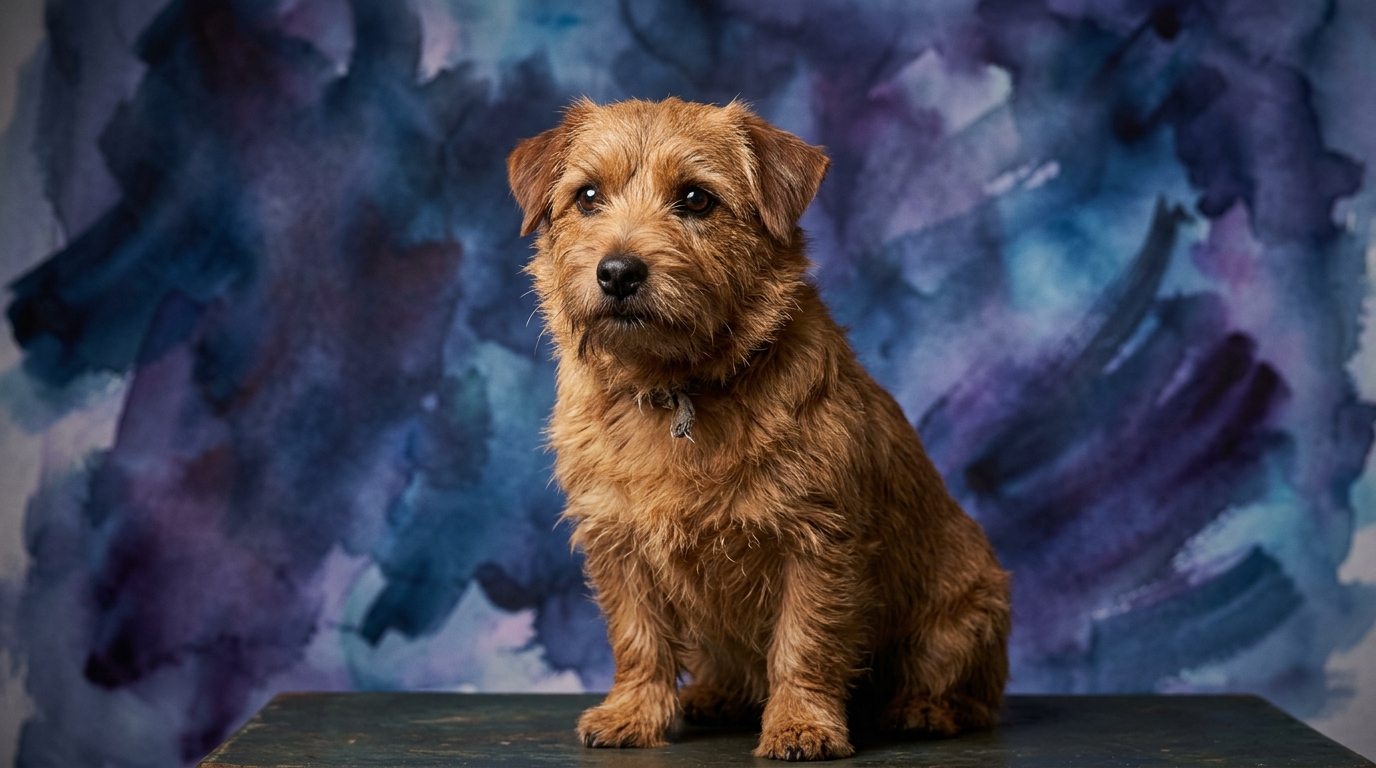
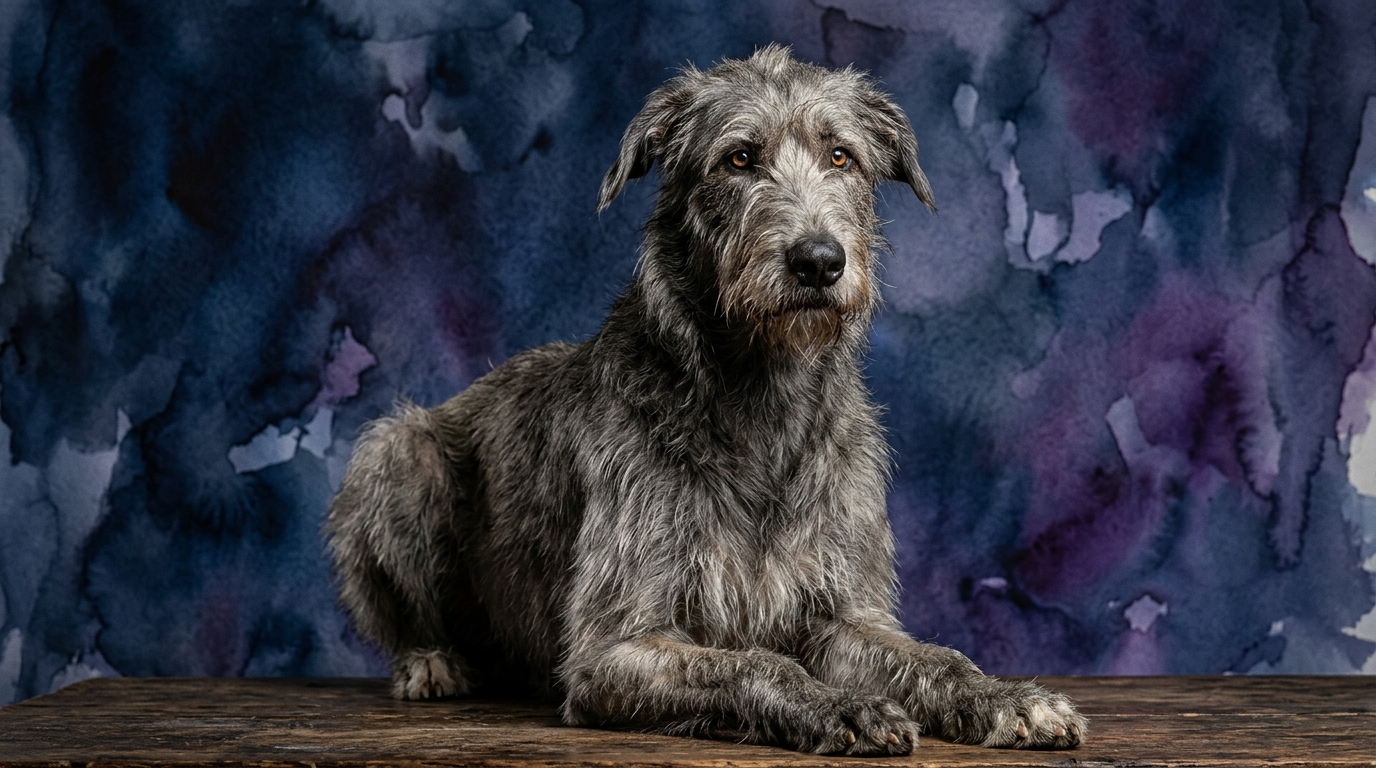
Side-by-Side IQ Profile: Interpreting Identical Scores
When both the Norfolk Terrier and the Irish Wolfhound register a 3/5 across all five intelligence dimensions, it doesn't imply identical cognitive processes, but rather a similar level of functional capability expressed through their breed-specific lenses. Each score must be understood within the context of their historical roles and inherent temperaments, revealing nuanced differences beneath the surface.
**Problem Solving (3/5):** For the Norfolk Terrier, a 3/5 in problem-solving often translates to ingenious persistence in navigating confined spaces or outsmarting small prey. This terrier excels at finding the most direct route to a perceived reward, whether it's a hidden toy or a perceived burrow. Their problem-solving is often hands-on and driven by immediate gratification or instinct. The Irish Wolfhound’s 3/5, conversely, manifests as a more measured, observational approach. Their ancestral role of tracking large game across open terrain fostered a different kind of strategic thinking – less about brute force, more about spatial awareness, pattern recognition, and understanding the movements of their environment. They might quietly assess a situation before acting, demonstrating a capacity for reasoned, if not always rapid, solutions.
**Training Speed (3/5):** A 3/5 for the Norfolk Terrier reflects their capacity to learn new commands and routines, but often with a caveat: their independent and often self-serving terrier nature. While they grasp concepts quickly, their willingness to comply can be conditional, requiring consistent, positive reinforcement that clearly demonstrates 'what's in it for them.' Distractions, especially small moving objects, can easily sidetrack their focus. The Irish Wolfhound's 3/5 in training speed indicates a breed that is generally willing to please and capable of absorbing instructions. However, their sighthound instincts mean they can be easily distracted by visual stimuli in the distance, and their sheer size necessitates patience and precise communication. They respond best to calm, gentle methods and can be sensitive to harsh corrections, which might slow their learning progress.
**Social Intelligence (3/5):** The Norfolk Terrier’s 3/5 in social intelligence often means they are acutely aware of family dynamics and can be quite assertive within their pack, whether human or canine. They understand boundaries, but also test them, exhibiting a charming audacity. They can read human moods and leverage them to their advantage, often seeking attention or comfort with a discerning eye. For the Irish Wolfhound, a 3/5 signifies a deep, empathetic connection to their human companions. They are often described as 'gentle giants' precisely because of their acute sensitivity to human emotions, offering quiet comfort or mirroring their owner's state. They navigate social interactions with a dignified grace, often acting as a calming presence, and are generally good at understanding and respecting the social order of a multi-pet household.
**Instinctive Drive (3/5):** With a 3/5, the Norfolk Terrier displays a strong, innate drive for what they were bred to do: hunt and dig. This translates to an enthusiastic pursuit of small moving objects, an inclination to explore subterranean possibilities in the garden, and a vigilant ear for unusual sounds. Their instincts are direct and often expressed with gusto. The Irish Wolfhound's 3/5 in instinctive drive is primarily focused on their sighthound heritage – an intense chase drive for anything moving at a distance. While they might not dig or bark with the same terrier tenacity, a squirrel across a field or a distant deer can trigger an immediate, powerful, and single-minded pursuit. Their instincts are geared towards open-field tracking and swift, decisive action.
**Memory (3/5):** A 3/5 in memory for the Norfolk Terrier means they are adept at remembering routines, where treats are stored, and past experiences with people or places. They quickly learn which behaviors yield rewards and which do not, allowing them to adapt their strategies. Their memory is practical and often tied to their self-interest and environment. The Irish Wolfhound’s 3/5 in memory reflects a capacity for recalling past interactions, routes, and individuals with remarkable clarity. They are known for forming deep bonds and remembering kindness or perceived slights. Their memory contributes to their consistent, gentle demeanor, as they build a mental map of their world and the people within it over time.
Where the Norfolk Terrier Wins Cognitively
Despite identical scores, the Norfolk Terrier's cognitive strengths shine in scenarios demanding tenacity and focused, close-quarters problem-solving. Their compact size and terrier mindset make them exceptionally adept at navigating complex, smaller environments. They excel at puzzle toys that require manipulation and persistent effort, often demonstrating a cleverness in uncovering hidden treats or escaping perceived enclosures. Their ability to quickly assess and react to immediate, localized stimuli, combined with their unwavering determination, gives them an edge in tasks requiring sustained, independent effort against a challenge that is directly in front of them. This manifests as a more 'hands-on' cognitive approach, where trial and error, coupled with a healthy dose of stubbornness, often leads to success.
Where the Irish Wolfhound Wins Cognitively
The Irish Wolfhound's cognitive advantages become apparent in situations demanding broad environmental awareness, subtle social interpretation, and a calm, observant nature. Their sighthound heritage means they excel at processing visual information over vast distances, making them adept at tracking movement and understanding spatial relationships in open areas. Cognitively, they often demonstrate a quiet wisdom, picking up on nuanced human cues and emotional states that might be overlooked by more boisterous breeds. Their problem-solving leans towards strategic observation and a deeper understanding of cause and effect in a broader context, rather than immediate, physical engagement. This makes them particularly skilled at adapting to new social situations with grace and understanding complex household dynamics.
Which is Easier to Train and Why
While both breeds score 3/5 in training speed, the 'ease' of training differs significantly due to their inherent behavioral patterns. The Norfolk Terrier, with its independent, often self-motivated nature, can be a challenge. They learn quickly but may choose to obey only if it aligns with their immediate interests. Training a Norfolk requires immense consistency, positive reinforcement, and a trainer who can make learning more rewarding than their inherent terrier distractions. Their small stature, however, makes managing their occasional stubbornness less physically demanding, and their quick wit means they thrive on engaging, varied training sessions. Consistency is key to overcoming their inclination to be their own boss.
The Irish Wolfhound, conversely, tends to be more eager to please and less prone to outright defiance. Their gentle disposition means they respond well to calm, patient, and positive reinforcement methods. However, their sheer size necessitates early and thorough socialization and obedience training; an untrained Irish Wolfhound is a significant physical challenge. While they grasp concepts, their sighthound instincts mean they can be easily distracted by distant movement, requiring a secure, distraction-free environment for initial training. Their sensitivity means harsh corrections are counterproductive, potentially leading to shutdown rather than compliance. Therefore, while their willingness might make them seem 'easier' in spirit, their physical presence demands a highly effective and committed training regimen from puppyhood.
Which Suits Active Owners vs. Relaxed Owners
For active owners, the Norfolk Terrier is often a surprisingly suitable companion. Despite their small size, they possess a boundless energy for walks, hikes, and engaging play sessions. They thrive on mental stimulation through training, agility, or earthdog activities. They need an owner who is prepared to provide consistent engagement, varied exercise, and who appreciates a dog with a robust personality that enjoys being part of every adventure, whether it's exploring a new trail or mastering a new trick. Their active nature means they are not content to be couch potatoes for extended periods, and they need outlets for their instinctive drives to prevent boredom and destructive behaviors.
The Irish Wolfhound, while requiring bursts of intense exercise like sprinting in a securely fenced area, is ultimately better suited for owners who appreciate a more relaxed, contemplative companion for much of the day. They are not endurance athletes for long-distance running or continuous, high-impact activities. After their necessary daily exercise, they are content to lounge, often in close proximity to their family, acting as a gentle, serene presence. Their large size means they need space, both indoors and out, but their activity level is generally lower than many other breeds. They thrive with owners who can provide a calm home environment, secure outdoor space for their sprints, and who enjoy the quiet companionship of a dignified, affectionate giant.
The Verdict
Choose the Norfolk Terrier if you seek a tenacious, engaging companion for a moderately active lifestyle, who thrives on mental challenges and close family involvement, and you appreciate a big personality in a small package.
Opt for the Irish Wolfhound if you desire a serene, empathetic giant who values calm companionship, requires short bursts of vigorous exercise, and you have ample space and patience for a truly gentle soul.
🧠 Find Your Pet's IQ Score
Our Pet IQ Lab assessment covers 25+ tests across 5 cognitive dimensions — personalized to your breed.
Take the Full IQ Test →Frequently Asked Questions
Do Norfolk Terriers bark a lot?
Norfolk Terriers can be quite vocal, using their barks to alert owners to perceived threats or to express excitement. Consistent training from a young age can help manage excessive barking, but their terrier nature means they are naturally alert and communicative.
Are Irish Wolfhounds good with children?
Irish Wolfhounds are generally known for their gentle and patient demeanor with children, often displaying a protective instinct. However, due to their immense size, supervision is always recommended, especially with very young children, to prevent accidental bumps or knocks.
Which breed is better for apartment living?
The Norfolk Terrier is generally better suited for apartment living due to its small size, provided it receives adequate daily exercise and mental stimulation. The Irish Wolfhound, despite its lower energy bursts, requires significantly more space due to its large stature and needs a secure yard for its essential sprints.