Side-by-Side IQ Profile: Herding Wit vs. Terrier Tenacity
At The Cosmic Pet Pet IQ Lab, we assess canine intelligence across five key dimensions. For both the Norwegian Buhund and the Australian Terrier, our evaluations show a consistent score of 3 out of 5 in each category, suggesting a solid, adaptable cognitive baseline. However, interpreting these scores through the lens of their breed groups — Herding for the Buhund and Terrier for the Australian Terrier — illuminates distinct cognitive styles.
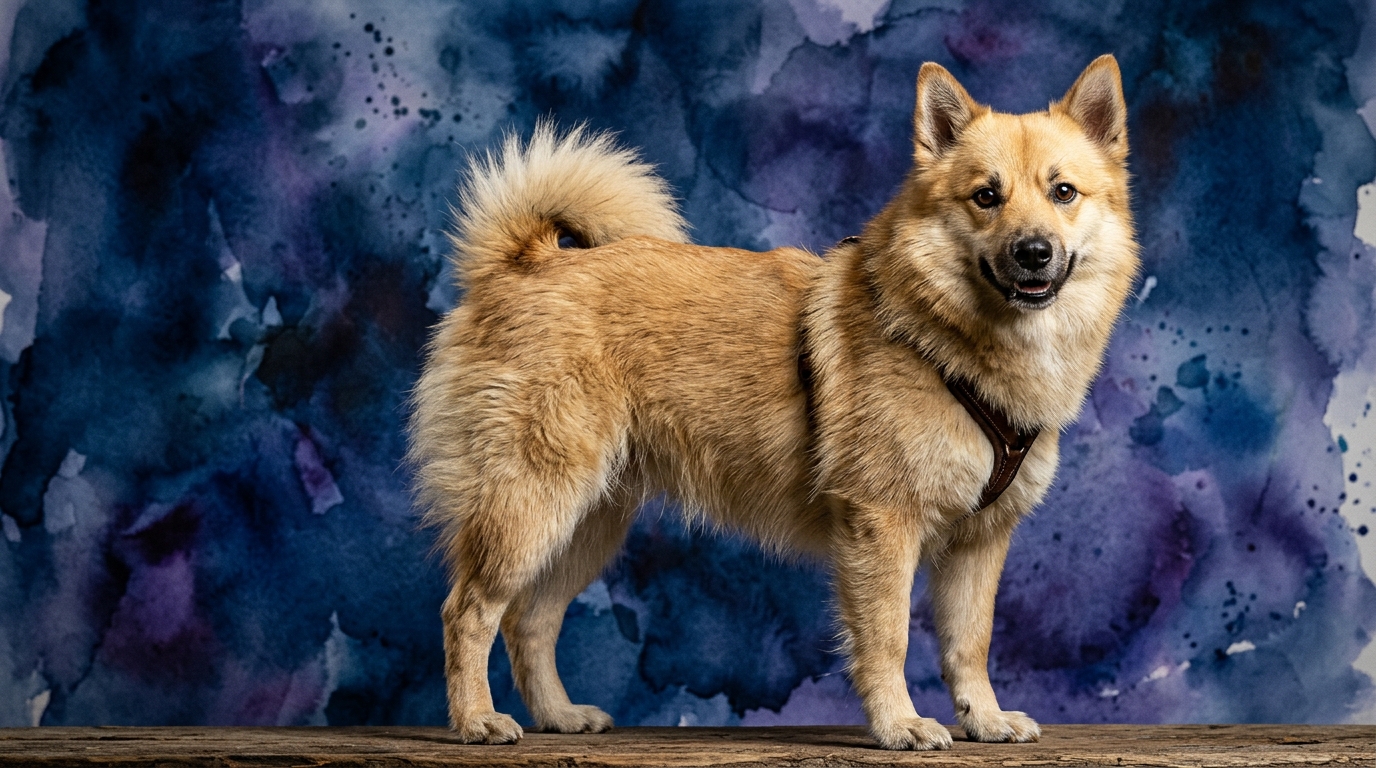
The Norwegian Buhund, a spirited spitz-type dog with a rich herding heritage, demonstrates its Problem Solving at a 3/5 by excelling in tasks requiring spatial reasoning and understanding of movement patterns. They are resourceful in figuring out how to guide or gather, often anticipating trajectories. Their Training Speed, also 3/5, reflects an eagerness to engage in cooperative learning; they tend to grasp new commands efficiently, especially when they perceive it as a joint effort. Social Intelligence (3/5) in a Buhund manifests as a keen awareness of human emotional states and family dynamics, making them attuned companions who read their 'flock' well. Their Instinctive Drive (3/5) is clearly rooted in herding, with a desire to control movement and maintain order, which can translate into playful 'herding' of family members. Finally, Memory (3/5) allows them to retain complex sequences of commands and recall past interactions and locations with good accuracy, crucial for their historical roles.
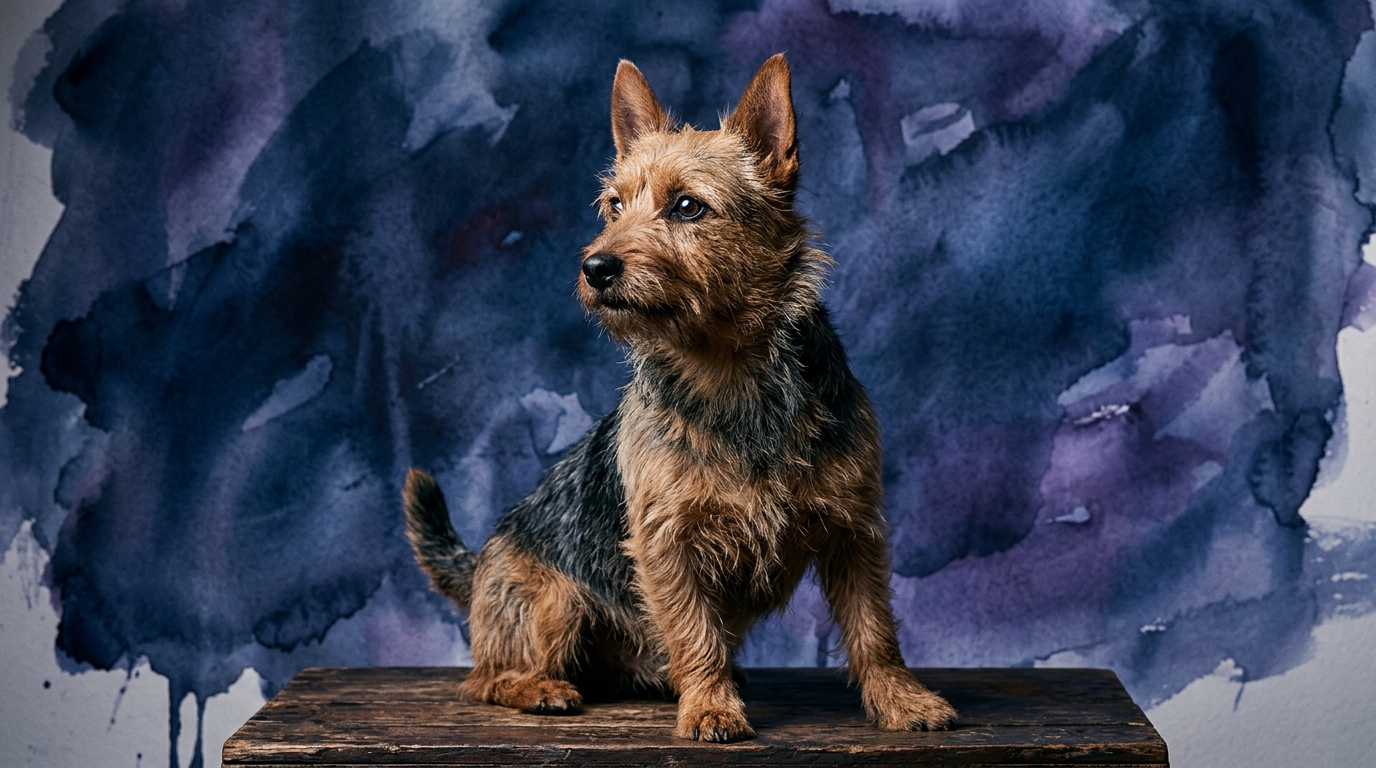
The Australian Terrier, a small but robust breed developed for pest control, applies its Problem Solving (3/5) with a different flair. They are adept at overcoming physical obstacles to reach a goal, such as navigating tight spaces or persistently working on a puzzle toy to extract a treat. Their solutions often involve tenacity and physical manipulation rather than broad spatial strategy. Training Speed (3/5) in an Australian Terrier is notable, though often paired with a strong independent streak; they learn quickly when motivated, but their focus can be diverted by environmental stimuli. Their Social Intelligence (3/5) is directed more towards their immediate family, showing deep loyalty, but they can be less concerned with pleasing a handler than a herding dog, often prioritizing their own objectives. Instinctive Drive (3/5) is powerfully geared towards hunting and chasing, expressed through digging, scent tracking, and a bold pursuit of small, quick objects. Their Memory (3/5) is particularly strong for scent trails and the locations of interesting 'prey' or hidden treasures, remembering successful strategies for independent endeavors.
Where the Norwegian Buhund Excels Cognitively
The Norwegian Buhund's cognitive strengths lie in their capacity for cooperative problem-solving and their social attunement. Their herding background has honed an ability to work in partnership with humans, understanding complex instructions and sequences within a structured environment. This makes them particularly adept at activities like obedience, agility, or even trick training where precision and responsiveness to cues are paramount. Their social intelligence, at 3/5, shines in their ability to anticipate human needs and moods, fostering a harmonious living environment. They are more likely to seek human input when encountering a novel situation, making them excellent communicators within a family unit. This collaborative approach means they often adapt more readily to varied training scenarios involving multi-step commands, interpreting human intent as part of the solution.
Where the Australian Terrier Demonstrates Unique Cognitive Strengths
The Australian Terrier's cognitive advantages are rooted in their independent spirit and relentless drive. Their 3/5 problem-solving ability is geared towards self-directed resourcefulness, particularly in tasks requiring persistence and exploration. Give an Australian Terrier a challenge like finding a hidden object or navigating a complex scent trail, and their tenacity comes to the forefront. They are masters of the 'figure it out myself' approach, often trying multiple strategies until success is achieved, even if it involves digging or squeezing into tight spots. Their instinctive drive (3/5) for pursuit and investigation means they are exceptionally good at tasks requiring focus on a specific, often small, target. This makes them formidable partners for activities like earthdog trials or barn hunt, where their natural inclinations are leveraged. Their memory, while rated 3/5, is particularly sharp for locations where they've found something interesting or for scent patterns, making them excellent independent explorers.
Ease of Training: Partnership vs. Persuasion
When considering ease of training, the differences between these breeds become more pronounced due to their inherent behavioral tendencies. The Norwegian Buhund, with its cooperative nature born from centuries of herding, is generally considered easier to train. Their 3/5 training speed is often amplified by a genuine desire to work alongside their human, viewing training as a shared activity. They respond well to positive reinforcement and clear guidance, eager to please and to understand what is expected of them. Their social intelligence means they are often attuned to their handler's cues and emotions, which facilitates a smoother learning process. They are less prone to 'inventing' their own agenda during a training session, preferring to follow direction.
The Australian Terrier, while possessing the same 3/5 training speed, can present a more challenging training experience due to its independent and tenacious terrier temperament. Their instinct is often to prioritize their own interests – a captivating scent, a perceived 'prey' item – over human commands. Training requires high levels of engagement, variety, and consistent motivation to keep their attention. Owners must be creative and patient, understanding that a terrier might question a command or explore an alternative if it seems more appealing. Their problem-solving skills, while excellent, are often self-directed, meaning they might use their intellect to outmaneuver a trainer rather than simply comply. Success with an Australian Terrier hinges on making training a highly rewarding game and establishing a clear, consistent leadership.
Lifestyle Match: Structured Engagement vs. Independent Adventure
Matching a dog's cognitive profile and energy levels to an owner's lifestyle is crucial. The Norwegian Buhund typically suits active owners who enjoy structured activities and seek a true canine partner. Their herding background means they thrive on having a 'job' and require consistent mental stimulation alongside physical exercise. Owners who enjoy dog sports like agility, obedience, rally, or even recreational herding games will find a Buhund eager to participate and excel. While affectionate indoors, they are not content to be solely couch companions; they need purpose and engagement to prevent boredom and channel their 3/5 instinctive drive constructively. An owner prepared to invest time in training and collaborative activities will find the Buhund a rewarding companion.
The Australian Terrier also requires active owners, but their activity needs manifest differently. While they don't demand vast open spaces for herding, they need outlets for their tenacious prey drive and independent spirit. Vigorous daily play sessions, walks that allow for ample sniffing and exploration, and opportunities for digging (perhaps in a designated sandpit) are essential. They can adapt to smaller living spaces if their physical and mental needs are consistently met, but a 'relaxed' owner who neglects their engagement will likely find their Australian Terrier inventing its own (potentially destructive) entertainment. Owners who appreciate a bold, spirited companion and are prepared for a dog with a strong, self-directed drive and an insatiable curiosity for its environment will find the Australian Terrier a delightful, albeit demanding, partner.
The Verdict
Choose the Norwegian Buhund if you seek a cooperative, communicative canine partner eager for structured activities and a deep bond built on mutual understanding and collaboration.
Opt for the Australian Terrier if you appreciate a bold, independent spirit, enjoy engaging in tenacious play and scent work, and are prepared to channel a strong, self-directed drive with patience and creativity.
🧠 Find Your Pet's IQ Score
Our Pet IQ Lab assessment covers 25+ tests across 5 cognitive dimensions — personalized to your breed.
Take the Full IQ Test →Frequently Asked Questions
Are Norwegian Buhunds good with children?
Their social intelligence and natural herding instinct often make them protective and patient with children, viewing them as part of their 'flock.' Early socialization is still vital to ensure gentle and appropriate interactions with all family members.
Do Australian Terriers bark a lot?
As typical terriers, their keen senses and alert nature mean they can be vocal watchdogs, barking at perceived threats or novel stimuli. Consistent training and addressing the root cause of barking can help manage excessive vocalization.
How much exercise do these breeds need?
Both breeds require daily exercise to thrive. The Buhund benefits from varied activities that engage both body and mind, like long walks, hikes, or dog sports. The Australian Terrier needs vigorous play sessions, opportunities for sniffing, and exploring to satisfy their energetic and curious drive.