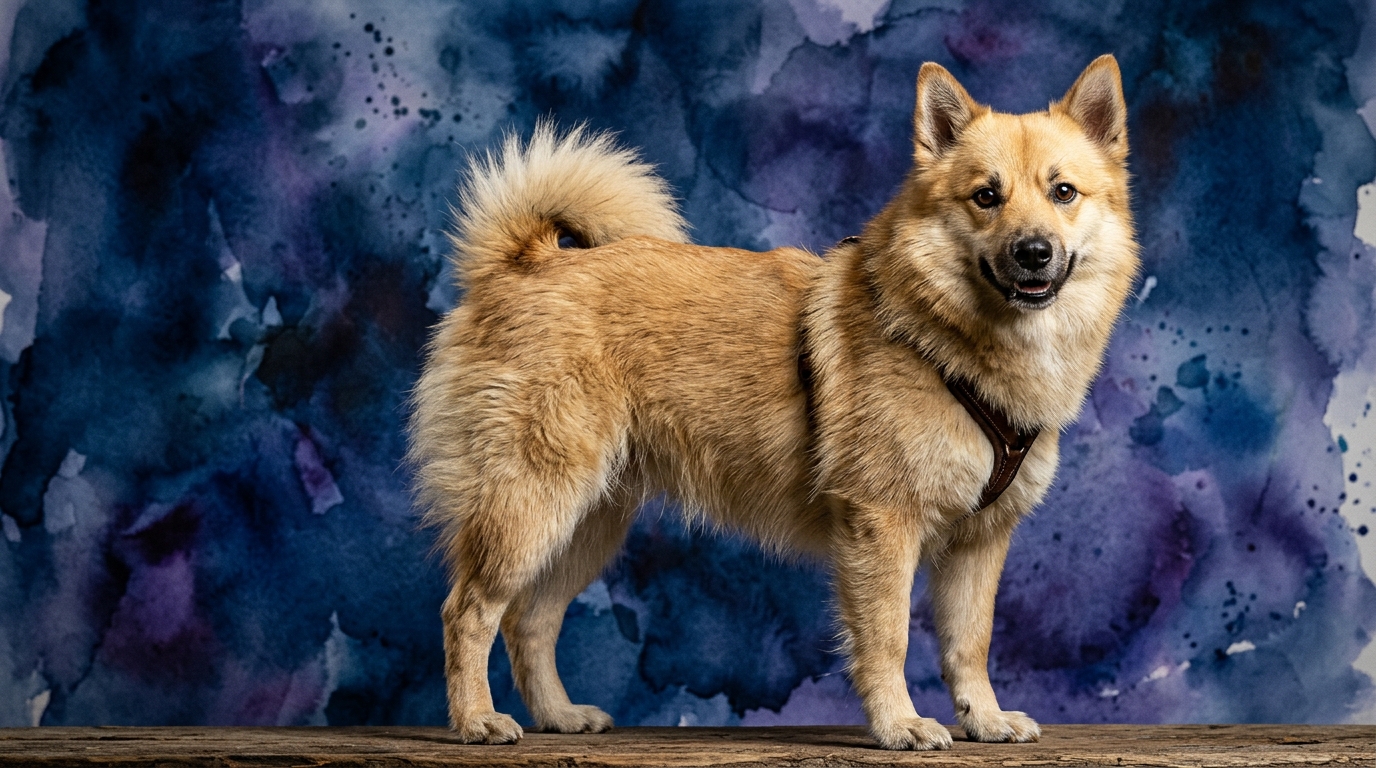
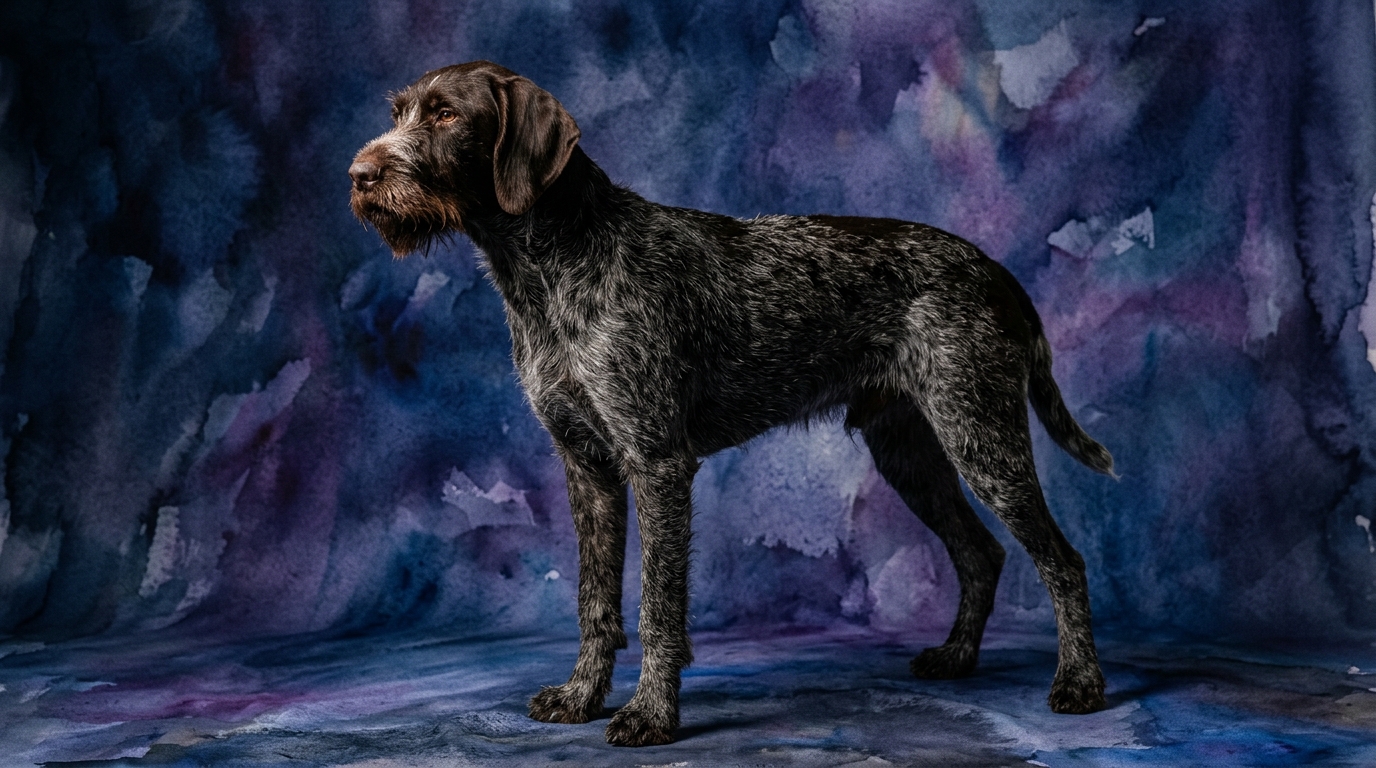
Side-by-Side IQ Profile: Buhund vs. GWP
The Cosmic Pet Pet IQ Lab assesses canine intelligence across five key dimensions: Problem Solving, Training Speed, Social Intelligence, Instinctive Drive, and Memory. While both the Norwegian Buhund and the German Wirehaired Pointer are capable and engaging breeds, their cognitive profiles present some notable distinctions.
The Norwegian Buhund, a member of the Herding group, registers a balanced 3 out of 5 across all five IQ dimensions. This suggests a dog with moderate abilities in figuring out novel situations, learning new commands at a steady pace, and interpreting human cues. Their instinctive drive is moderately focused on herding behaviors, and they retain information and experiences with average recall. This consistency across the board points to a versatile, adaptable intellect rather than extreme specialization.
In contrast, the German Wirehaired Pointer, a Sporting group dog with a Coren ranking of #28, demonstrates elevated scores in several areas. This breed scores 4 out of 5 for Problem Solving, indicating a strong capacity to analyze and resolve new challenges with initiative. Their Training Speed also rates 4 out of 5, meaning they typically grasp new commands quickly. Social Intelligence is a moderate 3 out of 5, similar to the Buhund, suggesting good adaptability to human and canine interactions. Their Instinctive Drive is also 3 out of 5, but is strongly geared towards hunting tasks like pointing and retrieving. Finally, their Memory scores 4 out of 5, reflecting a robust ability to recall commands, routines, and past experiences. These higher scores in specific areas highlight a more specialized, task-oriented cognitive makeup.
Where the Norwegian Buhund Excels Cognitively
While the German Wirehaired Pointer shows higher scores in specific dimensions, the Norwegian Buhund's cognitive strength lies in its remarkable balance and adaptability. With every IQ dimension rated at a consistent 3/5, the Buhund possesses a practical, well-rounded intelligence that allows it to adapt to a wide array of situations without being overly specialized or singularly driven. This equilibrium means they are neither excessively challenging nor overwhelmingly driven in one particular area, making them versatile companions.
Their moderate problem-solving skills, combined with a steady training speed and balanced instinctive drive, equip them to handle diverse daily life scenarios effectively. They are capable of independent thought, a trait valued in their original herding role where they often had to make decisions away from direct human guidance. This self-reliance, rather than an intense focus on pleasing a handler, can be a cognitive win for owners who appreciate a dog with a thoughtful, independent streak, capable of assessing situations and acting judiciously within a family context.
Where the German Wirehaired Pointer Shines Cognitively
The German Wirehaired Pointer's cognitive prowess is evident in its higher ratings for Problem Solving (4/5), Training Speed (4/5), and Memory (4/5). These strengths are directly linked to its demanding role as a versatile hunting dog. Their superior problem-solving ability allows them to skillfully navigate complex environments, such as dense cover or intricate scent trails, to locate and retrieve game effectively. This isn't just about physical prowess; it's a cognitive ability to strategize and adapt to changing conditions in the field.
Their accelerated training speed means they absorb and integrate new commands and sequences of actions with impressive efficiency, which is crucial for the precision required in hunting scenarios. A GWP's enhanced memory ensures they retain these complex instructions and past experiences, allowing them to perform consistently and learn from previous outings. This combination of quick learning, effective problem-solving, and robust recall makes the GWP exceptionally adept at structured tasks, complex obedience routines, and demanding fieldwork, where a keen, focused intellect is paramount for success.
Trainability: Which Breed is Easier?
When it comes to ease of training, the German Wirehaired Pointer generally holds an advantage due to its higher Training Speed (4/5) and Memory (4/5). These dogs are specifically bred to work in close partnership with a handler, taking direction and remembering intricate sequences of commands for hunting purposes. Their inherent eagerness to please and focus on tasks mean they typically grasp new instructions quickly and retain them reliably. This makes them relatively straightforward to teach, especially for advanced obedience, field work, or dog sports where precision and rapid response are key. Their Coren ranking of #28 further underscores their capacity for obedience and working intelligence.
The Norwegian Buhund, with its 3/5 ratings for Training Speed and Memory, is certainly trainable, but may require more patience and consistency. Their herding background often fosters a degree of independent thinking, meaning they might occasionally prioritize their own assessment of a situation over immediate compliance. They may require more repetition to solidify commands and benefit from varied, positive reinforcement methods that keep them engaged. While not 'difficult' to train, owners might find the Buhund's independent streak means they occasionally think for themselves rather than simply following instructions, requiring a trainer who understands how to motivate and engage their practical, adaptable intellect effectively.
Suitability for Active vs. Relaxed Owners
Both the Norwegian Buhund and the German Wirehaired Pointer are working breeds and are not suited for truly relaxed, sedentary lifestyles. Each requires significant engagement, albeit with different focal points.
The German Wirehaired Pointer thrives with active owners who can provide ample physical exercise and, crucially, structured mental stimulation that taps into their hunting drives. Their higher problem-solving and training speed mean they excel in activities like hunting, scent work, agility, or advanced obedience. Owners who can offer consistent, challenging 'jobs' will find the GWP to be an incredibly rewarding and focused companion. Without sufficient outlets for their keen minds and strong instincts, GWP's can become bored and potentially develop undesirable behaviors.
The Norwegian Buhund also needs regular exercise and mental engagement, but their needs are often more broadly adaptable. Their balanced 3/5 scores across all IQ dimensions make them versatile. They enjoy activities like hiking, agility, or interactive play, and their moderate herding instinct means they appreciate 'monitoring' and being involved in family activities. They suit active owners who can integrate their dog into a dynamic family life, providing both physical outlets and consistent social interaction. While they need activity, their slightly more independent yet social nature might allow them to adapt to a slightly less rigidly structured routine than a GWP, provided their needs for companionship and moderate activity are consistently met.
The Verdict
If you seek a well-rounded, adaptable companion with a moderate, balanced intellect, capable of independent thought yet eager to participate in family life, the Norwegian Buhund is a fitting choice. Its practical intelligence suits varied lifestyles, provided its needs for interaction and moderate activity are consistently met.
Opt for the German Wirehaired Pointer if you are an experienced owner prepared to harness a keen, task-oriented mind, excelling in rapid learning, problem-solving, and memory, particularly for structured activities like hunting or advanced dog sports. This breed thrives with consistent, challenging engagement.
🧠 Find Your Pet's IQ Score
Our Pet IQ Lab assessment covers 25+ tests across 5 cognitive dimensions — personalized to your breed.
Take the Full IQ Test →Frequently Asked Questions
Are Norwegian Buhunds difficult to train?
Norwegian Buhunds are moderately trainable, requiring consistent, positive reinforcement due to their 3/5 training speed. While they learn well, their independent herding nature means they might benefit from varied training approaches and patience, compared to breeds with higher eagerness to please.
Do German Wirehaired Pointers need a lot of mental stimulation?
Yes, German Wirehaired Pointers thrive on mental stimulation, leveraging their 4/5 problem-solving and memory abilities. Activities like scent work, advanced obedience, or field trials are crucial to keep their keen minds engaged and prevent boredom-related behaviors.
Which breed is better for a first-time dog owner?
Neither breed is typically recommended for entirely novice owners due to their working dog backgrounds and exercise needs. However, a Norwegian Buhund might be slightly more forgiving for a dedicated first-timer willing to learn, given its more balanced drives, while a German Wirehaired Pointer generally requires an owner experienced in channeling its focused working intellect.