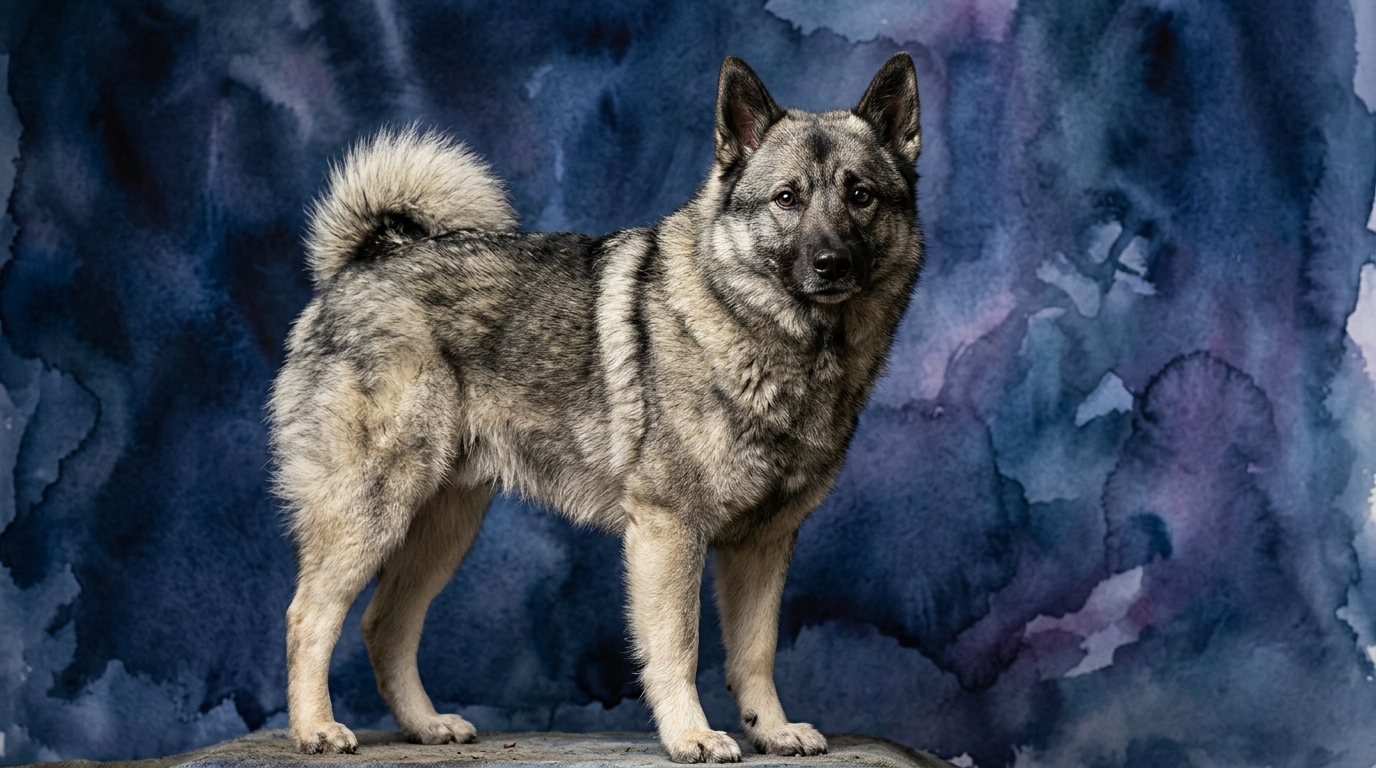
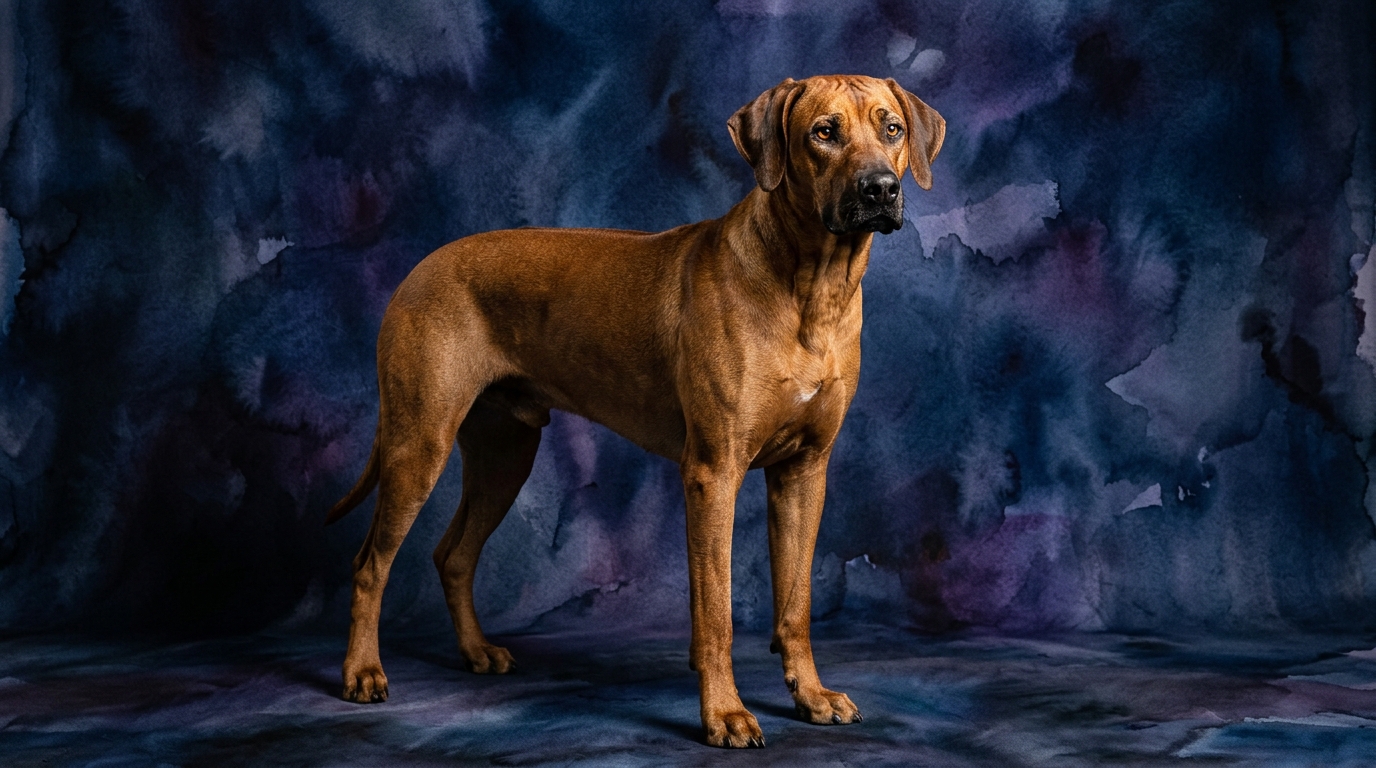
Side-by-Side Cognitive Profile: Elkhound vs. Ridgeback
The Norwegian Elkhound, ranking #36 in Coren's hierarchy, exhibits a cognitive makeup honed for independent decision-making in challenging environments. Their Problem Solving score of 4/5 reflects an aptitude for navigating complex situations, a trait crucial for holding large game at bay without direct handler input. A Training Speed of 4/5 indicates they grasp new concepts and commands with relative ease, though their independent streak means consistent motivation is key. Their Social Intelligence at 3/5 suggests a reserved nature, often forming deep bonds with their immediate family while being more aloof with strangers. An Instinctive Drive of 3/5 points to a strong, yet manageable, prey drive and a tendency to vocalize (bay). Finally, their Memory score of 4/5 underpins their capacity for retaining learned behaviors and environmental information over time.
In contrast, the Rhodesian Ridgeback, positioned at #52 on Coren's scale, presents a cognitive profile geared towards endurance, vigilance, and protective instincts. Their Problem Solving is rated 3/5, indicating resourcefulness in practical situations but perhaps less inclination for abstract puzzles. A Training Speed of 3/5 means they can learn, but often require patience and consistency due to their strong-willed nature and independent thought processes. Their Social Intelligence, also 3/5, manifests as a discerning loyalty, being wary of strangers but deeply devoted to their family unit. An Instinctive Drive of 3/5 highlights their historical role in tracking and holding dangerous game, coupled with a guarding inclination. Their Memory score of 3/5 suggests they learn effectively with repetition, but may not retain information as quickly or permanently as some other breeds without regular reinforcement.
Where the Norwegian Elkhound Wins Cognitively
The Norwegian Elkhound demonstrates a clear cognitive edge in areas demanding swift, independent thought and rapid learning. Their superior Problem Solving score of 4/5, compared to the Ridgeback's 3/5, reflects a breed that was historically required to think on its feet, making tactical decisions in the wilderness to contain large, potentially dangerous prey. This translates into a dog that often excels at figuring out how things work, whether it’s a new puzzle toy or navigating an unfamiliar obstacle course, showing a proactive approach to mental challenges.
Furthermore, the Elkhound's Training Speed of 4/5 outpaces the Ridgeback's 3/5, indicating a quicker uptake of new commands and routines. This efficiency in learning is further bolstered by their Memory score of 4/5, which is higher than the Ridgeback's 3/5. An Elkhound is more likely to solidify learned behaviors with fewer repetitions and retain them over longer periods, making training sessions often more fluid and rewarding. This combination of faster learning and robust memory means an Elkhound can build a more extensive repertoire of skills and commands with less ongoing reinforcement.
Where the Rhodesian Ridgeback Wins Cognitively
While the Rhodesian Ridgeback's scores may be numerically lower in some cognitive dimensions, their particular blend of traits results in distinct strengths. Their Instinctive Drive, rated 3/5, while matching the Elkhound, is channeled differently. Ridgebacks possess a deep-seated determination and perseverance, honed for tracking dangerous game over vast distances. This drive isn't just about prey; it's about a relentless focus on a task, an unwavering commitment once they are engaged, which can be a profound cognitive advantage in specific scenarios requiring sustained effort and vigilance.
The Ridgeback's Social Intelligence at 3/5, while numerically equal, manifests as a highly discerning nature. They are not overtly social butterflies, but their bond with their chosen family is profound and protective. This means they possess a nuanced understanding of their human companions' moods and routines, offering a quiet, steadfast companionship that is deeply intuitive. Their Problem Solving at 3/5, though lower, reflects a practical, goal-oriented resourcefulness. They may not be as quick to solve an abstract puzzle, but they are often highly adept at finding practical solutions to achieve their desires, whether it's outsmarting a gate latch or navigating a complex environment to reach a specific point, demonstrating a different form of applied intelligence.
Which Is Easier to Train and Why?
When considering ease of training, the Norwegian Elkhound generally presents a more straightforward path. Their Training Speed of 4/5 and Memory of 4/5 mean they tend to absorb new commands and routines relatively quickly and retain them well. Elkhounds often demonstrate an eagerness to engage in training activities, especially if they are mentally stimulating and provide a sense of purpose. However, their independent problem-solving nature means that while they learn fast, they might occasionally choose to interpret commands in their own way if the motivation isn't compelling enough, or if they perceive a more efficient route to a desired outcome. Early and consistent positive reinforcement is crucial to channel their mental agility effectively, and their tendency to bay as a communication tool requires specific training to manage.
The Rhodesian Ridgeback, with a Training Speed of 3/5 and Memory of 3/5, typically requires a more patient, consistent, and confident handler. Their historical role as independent hunters of dangerous game instilled a strong-willed and discerning nature; they are not inherently inclined to blindly follow commands. A Ridgeback often needs to understand the 'why' behind a request or perceive a clear benefit to complying. This means training can be slower, requiring more repetition and creative motivation to solidify behaviors. Their reserved social intelligence also means that building trust and a strong working relationship is paramount before significant training progress can be made. Their powerful build and strong prey drive necessitate careful socialization and firm, fair guidance to ensure they are well-adjusted and responsive to commands in various situations.
Which Suits Active Owners vs. Relaxed Owners?
For truly active owners who thrive on high-engagement activities and structured challenges, the Norwegian Elkhound is often the more suitable companion. Their higher scores in Problem Solving (4/5) and Training Speed (4/5) mean they excel in canine sports such as agility, obedience, and scent work, where mental gymnastics are as vital as physical exertion. Elkhounds possess formidable stamina, particularly in colder climates, and relish long hikes, runs, or any activity that allows them to use their keen senses and independent thinking. They require consistent mental stimulation to prevent boredom, making them ideal for owners who enjoy teaching new tricks, engaging in puzzle games, and constantly expanding their dog's skill set.
Neither breed is truly suited for a sedentary or 'relaxed' owner in the traditional sense, as both require significant physical exercise. However, if 'relaxed' implies less emphasis on complex, fast-paced mental games and more on endurance-based physical activity with a steadfast companion, the Rhodesian Ridgeback might align with specific lifestyles. Ridgebacks demand vigorous exercise, such as long runs, biking alongside their owner, or extensive free-running in a secure area, to satisfy their powerful physique and instinctive drive. While they benefit from consistent training, their lower scores in Problem Solving and Training Speed suggest they may not constantly seek novel intellectual puzzles to the same degree as an Elkhound. Instead, they often appreciate a routine that includes ample physical exertion followed by quiet companionship, making them suitable for active owners who prefer more predictable daily routines over constant, intricate mental challenges.
The Verdict
Opt for the Norwegian Elkhound if you seek a partner for intricate mental challenges and quick learning in various dog sports, thriving on consistent engagement and a clear purpose.
Select the Rhodesian Ridgeback for a devoted, discerning companion who excels in endurance activities and appreciates a confident, consistent leader, valuing loyalty within their trusted circle.
🧠 Find Your Pet's IQ Score
Our Pet IQ Lab assessment covers 25+ tests across 5 cognitive dimensions — personalized to your breed.
Take the Full IQ Test →Frequently Asked Questions
Are Norwegian Elkhounds good for first-time dog owners?
While Elkhounds are capable learners, their independent nature and strong baying instinct require consistent, early training and socialization. Their need for significant mental and physical stimulation might be challenging for first-time owners without prior commitment to understanding their specific breed traits.
How do Rhodesian Ridgebacks typically interact with children and other pets?
Ridgebacks can be excellent family dogs, forming strong, protective bonds with children when raised together and properly socialized from a young age. Their strong prey drive means careful introductions and constant supervision are necessary with smaller pets, though they can coexist peacefully with appropriate management and training.
What kind of mental stimulation do these breeds require daily?
Norwegian Elkhounds thrive on problem-solving games, interactive puzzle toys, and learning new commands or tricks to satisfy their high cognitive drive. Rhodesian Ridgebacks benefit from engaging scent work, consistent obedience drills, and opportunities to patrol a secure yard, tapping into their vigilance and determination for purposeful activity.