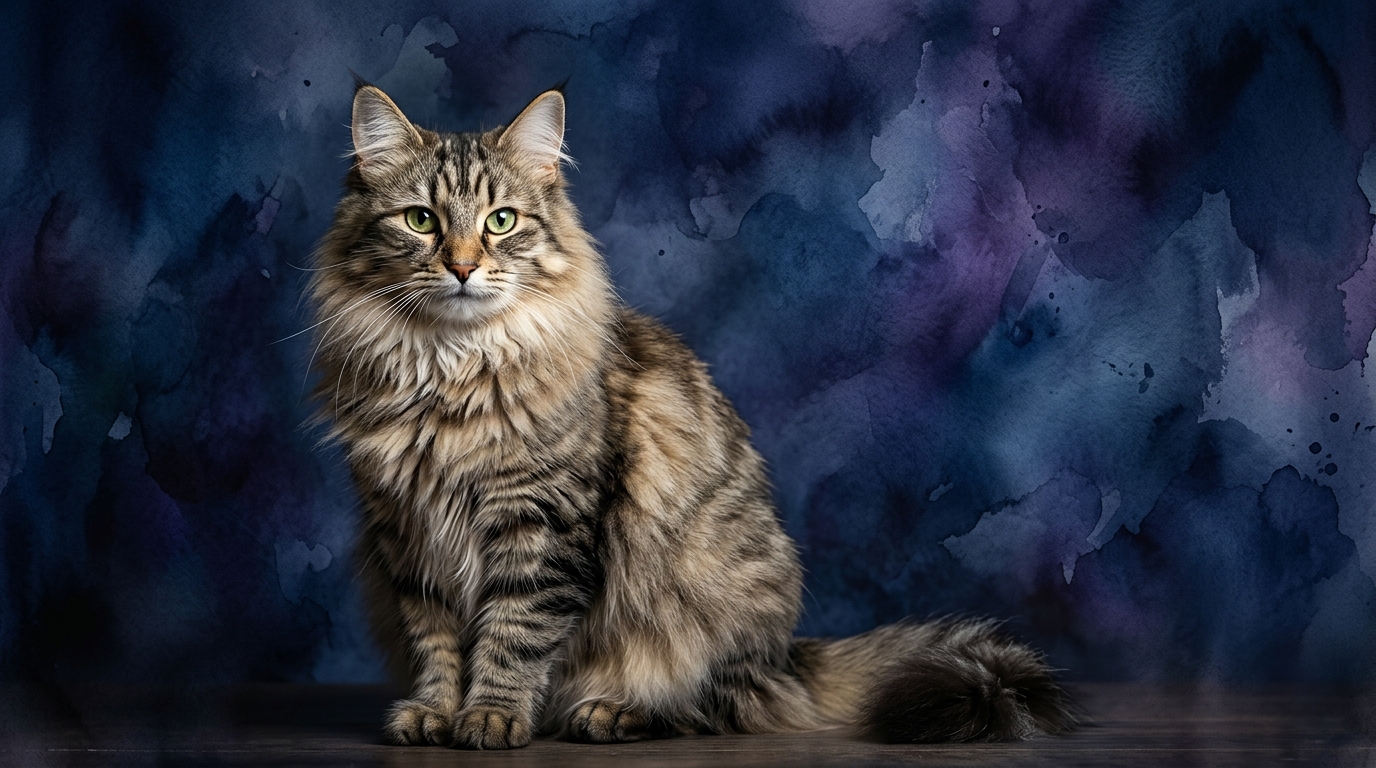
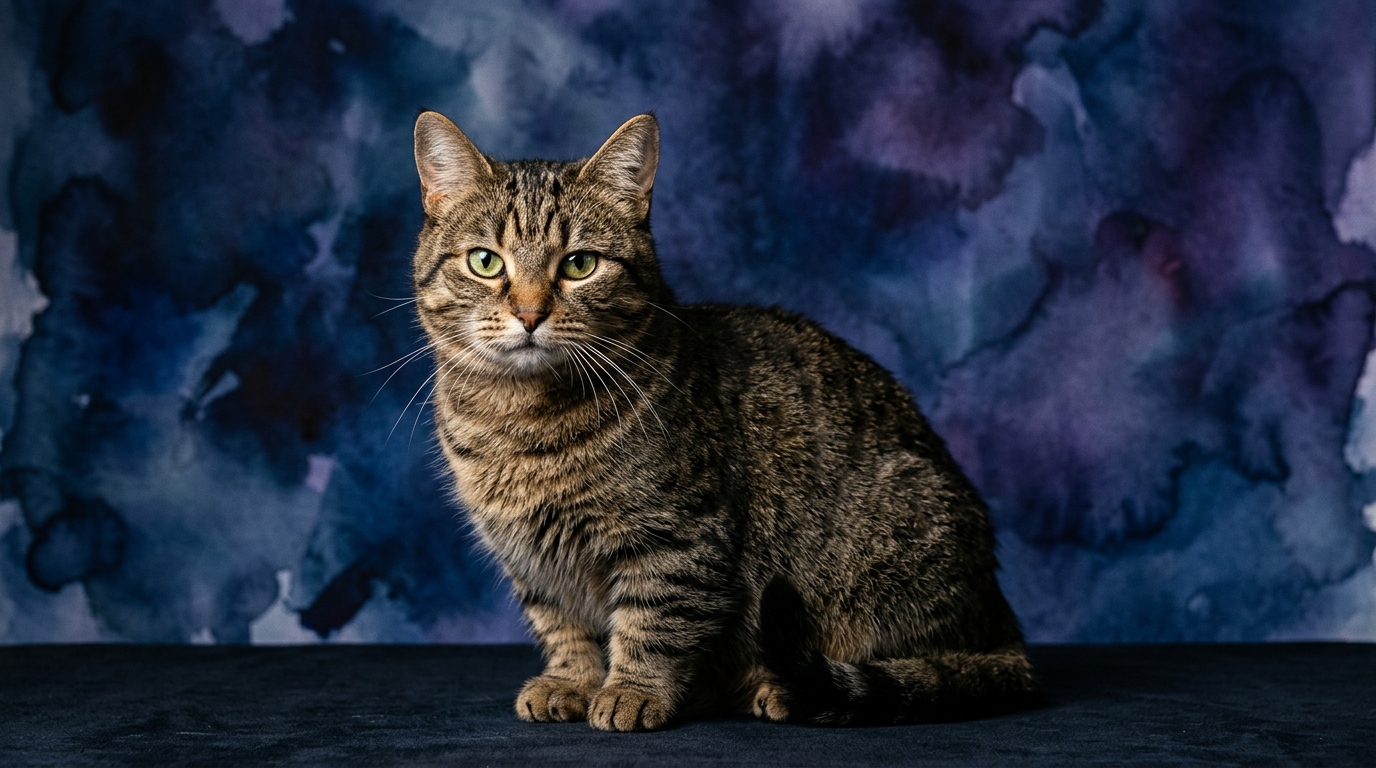
Side-by-Side Cognitive Profiles
The Norwegian Forest Cat, often called a 'Wegie,' presents a compelling cognitive profile tailored for resilience and adaptability. Its Problem Solving ability is rated at 4/5, indicating a strong capacity for navigating complex environments and figuring out how to achieve goals, whether it's opening a cupboard or devising a strategy to reach a high perch. Training Speed stands at 3/5, suggesting a moderate pace for learning new commands and routines, neither exceptionally quick nor slow. Social Intelligence is also 3/5, demonstrating a balanced ability to understand human cues and interact appropriately within a family dynamic without being overly dependent or aloof. A standout trait is its Instinctive Drive, rated at an impressive 5/5; this breed retains a powerful internal motivation for hunting, exploration, and territorial defense, reflecting its wild ancestry. Finally, its Memory is 4/5, indicating a solid capacity to recall past experiences, learned behaviors, and the locations of important resources.
In contrast, the Munchkin, recognized by its distinctive short legs, exhibits a cognitive makeup that emphasizes consistency and agreeable interaction. Its Problem Solving skill is rated at 3/5, showing it can handle typical household challenges but might not be as adept at intricate puzzles or elaborate escape artistry as some other breeds. Training Speed matches the Norwegian Forest Cat at 3/5, meaning it learns at a similar, steady pace when approached with patience and positive reinforcement. Social Intelligence is also 3/5, allowing Munchkins to form affectionate bonds and respond to human interaction effectively. Where it significantly diverges from the Norwegian Forest Cat is in its Instinctive Drive, scored at 3/5; this lower drive suggests a less intense urge for hunting or exploring vast territories, often making them content with indoor life and less prone to demanding constant stimulation. Its Memory is rated at 3/5, signifying a competent ability to remember routines, favored spots, and familiar faces, though perhaps not with the same detailed recall as breeds with higher scores.
Where the Norwegian Forest Cat Excels Cognitively
The Norwegian Forest Cat clearly outperforms the Munchkin in several key cognitive domains, making it a more independent and resourceful thinker. Its superior Problem Solving (4/5 vs. 3/5) means a Wegie is more likely to devise creative solutions to obstacles, such as figuring out how to open doors or manipulate toys to extract treats, showcasing a higher level of cognitive flexibility. This breed’s robust Memory (4/5 vs. 3/5) also contributes to its self-sufficiency, allowing it to retain complex spatial information, remember intricate sequences of events, and recall boundaries or rules established long ago with greater precision.
Furthermore, the Norwegian Forest Cat’s exceptional Instinctive Drive (5/5 vs. 3/5) highlights its deep connection to primal feline behaviors. This isn't just about hunting; it's about a profound intrinsic motivation to explore, patrol, and engage with its environment in a meaningful way. While this can translate to a need for more environmental enrichment, it also signifies a cat that is highly observant, keenly aware of its surroundings, and driven by a powerful internal compass, making it a formidable and self-reliant companion.
Where the Munchkin's Cognitive Profile Shines
While the Munchkin may not lead in raw problem-solving or memory scores compared to the Norwegian Forest Cat, its cognitive profile offers distinct advantages, particularly for certain household dynamics. Its consistent 3/5 scores across Problem Solving, Training Speed, Social Intelligence, and Memory indicate a well-rounded and predictable cognitive foundation. This balance suggests a cat that is generally adaptable, capable of learning, and socially agreeable without exhibiting extremes in any single cognitive area, which can be a significant 'win' for owners seeking a harmonious and straightforward companion.
Perhaps the Munchkin's most compelling cognitive advantage lies in its moderate Instinctive Drive (3/5 vs. the Norwegian Forest Cat's 5/5). This lower drive means Munchkins are less likely to exhibit intense hunting behaviors or feel a constant, demanding urge for extensive exploration and territorial marking. For owners who prefer a cat that is content with indoor living, less prone to destructive scratching due to boredom, or less inclined to bring 'gifts' from the garden, the Munchkin's calmer intrinsic motivation is a significant benefit. This cognitive trait often translates into a more relaxed and less demanding presence in the home, requiring less intense environmental management to satisfy deep-seated urges.
Training: Which Feline Learns More Readily?
Both the Norwegian Forest Cat and the Munchkin share a Training Speed rating of 3/5, suggesting they learn new associations and simple commands at a comparable, moderate pace. This means neither breed is inherently quicker or slower at grasping basic concepts like coming when called or using a litter box. However, the Norwegian Forest Cat's higher Problem Solving (4/5) and Memory (4/5) scores give it an edge when it comes to more complex training scenarios. A Wegie is more likely to understand multi-step commands, retain intricate tricks over time, and apply learned principles to new situations, demonstrating a deeper level of cognitive processing during training.
For instance, while a Munchkin might quickly learn to sit on command (Training Speed 3/5), a Norwegian Forest Cat is more apt to learn a sequence of actions, like 'sit, stay, then high-five,' and remember it consistently due to its superior problem-solving and memory. The Norwegian Forest Cat's strong Instinctive Drive (5/5) can also be leveraged in training, as they often enjoy task-oriented play that mimics hunting, making them highly motivated by puzzle feeders or interactive games. A Munchkin, with its lower instinctive drive, might be less driven by such complex challenges but will still respond well to consistent, positive reinforcement for simpler tasks, making both breeds trainable but for different levels of complexity and motivation.
Matching Cognitive Profiles to Owner Lifestyles
For active owners who relish engaging with a cat that possesses a strong sense of purpose and a keen intellect, the Norwegian Forest Cat is an exceptional match. Its high Problem Solving (4/5) and formidable Instinctive Drive (5/5) mean this breed thrives on mental and physical stimulation. They benefit immensely from interactive play that mimics hunting, challenging puzzle toys, and opportunities for exploration, whether supervised outdoors or within a richly enriched indoor environment. Owners who enjoy teaching complex tricks, providing vertical climbing spaces, and appreciate a cat that actively investigates its surroundings will find the Wegie's cognitive profile deeply rewarding, as it encourages a dynamic and stimulating companionship.
Conversely, relaxed owners who prefer a calmer, more consistently agreeable feline presence will likely find the Munchkin's cognitive makeup more suitable. With its balanced 3/5 scores across most cognitive domains and a moderate Instinctive Drive (3/5), the Munchkin is generally content with a less demanding daily routine. They are less prone to exhibiting intense urges for hunting or extensive exploration, making them excellent companions for apartment living or households where constant, high-energy engagement isn't feasible. These cats still appreciate affection and play but are less likely to become restless or destructive if their environment isn't constantly challenging, offering a peaceful and endearing companionship that aligns perfectly with a more laid-back lifestyle.
The Verdict
Choose the Norwegian Forest Cat if you desire a highly resourceful, independent, and intrinsically driven companion who thrives on complex mental and physical challenges.
Opt for the Munchkin if you prefer a consistently agreeable, adaptable, and less intensely driven cat that offers a calmer and more predictable presence in your home.
🧠 Find Your Pet's IQ Score
Our Pet IQ Lab assessment covers 25+ tests across 5 cognitive dimensions — personalized to your breed.
Take the Full IQ Test →Frequently Asked Questions
Do Norwegian Forest Cats need more mental stimulation than Munchkins?
Yes, Norwegian Forest Cats, with their 4/5 problem-solving and 5/5 instinctive drive, generally require more robust mental and physical enrichment. Munchkins, scoring 3/5 in these areas, are often content with moderate stimulation and less intense play sessions.
Are Munchkins difficult to train due to their short legs?
Munchkins are not difficult to train; they have a 3/5 training speed, similar to Norwegian Forest Cats. Their physical structure does not impede their cognitive ability to learn commands, though training might focus more on ground-level activities rather than complex agility.
Which breed is better for a multi-pet household based on social intelligence?
Both breeds score 3/5 in social intelligence, suggesting they are equally capable of adapting to multi-pet households. Their individual personalities and early socialization experiences will be more significant factors than their breed-specific social intelligence score in determining their compatibility.